A used machine brought from the UK into the EU must meet EU requirements: under the Commission Blue Guide, a product imported from a third country is treated as newly placed on the EU market. The British UKCA marking alone does not replace CE. Add the machine documents, proof of origin and an honest customs value.
Technical requirements: position as at August 2026
Machinery is still governed by the Machinery Directive 2006/42/EC; from 20 January 2027 it will be replaced by Regulation (EU) 2023/1230. A machine placed on the EU market should carry CE marking, a declaration of conformity and instructions in the user language. With a used machine from a third country, responsibility for conformity rests with the party placing it on the EU market, which is worth establishing before purchase, not after unloading. Assess the technical state of a specific unit with a notified body or an expert; here we only sketch the frame.
UKCA versus CE
Since Brexit the UK uses its own UKCA marking, which has no force in the EU: a machine with UKCA alone is not thereby compliant with EU requirements. An older unit may carry historical CE from the years when the UK was in the EU; that does not remove the question whether the machine still meets the requirements after years of use and modifications. The opposite direction, export to the UK, is covered in UKCA or CE.
Customs valuation of used equipment
The basis is the transaction value, the price actually paid, plus the elements the rules require, for example transport to the EU border depending on delivery terms. With machines bought at auction or from related parties, customs may query the value; purchase documents, payment records and expert appraisals help. Undervaluing "because the machine is old" is a short road to a dispute and a reassessment.
Duty, VAT and documents
- The zero rate of the EU and UK agreement requires proven preferential origin; for second hand equipment this often cannot be shown, and then the tariff rate for the code applies.
- Import VAT can be settled in the return under Polish article 33a; details in our piece on the importer paperwork in practice.
- If the machine returns to the EU after an earlier export, check returned goods relief with its three year limit.
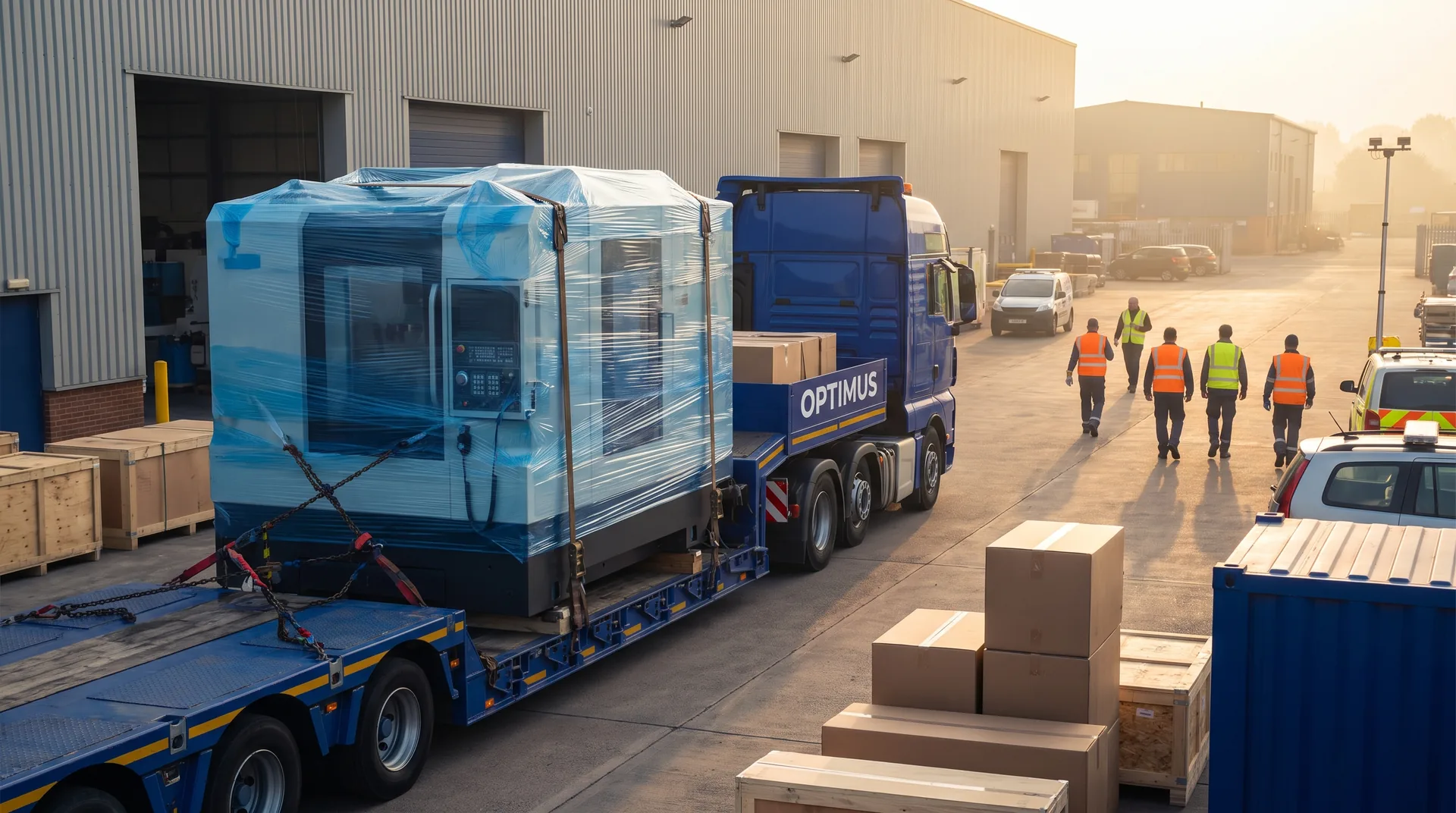
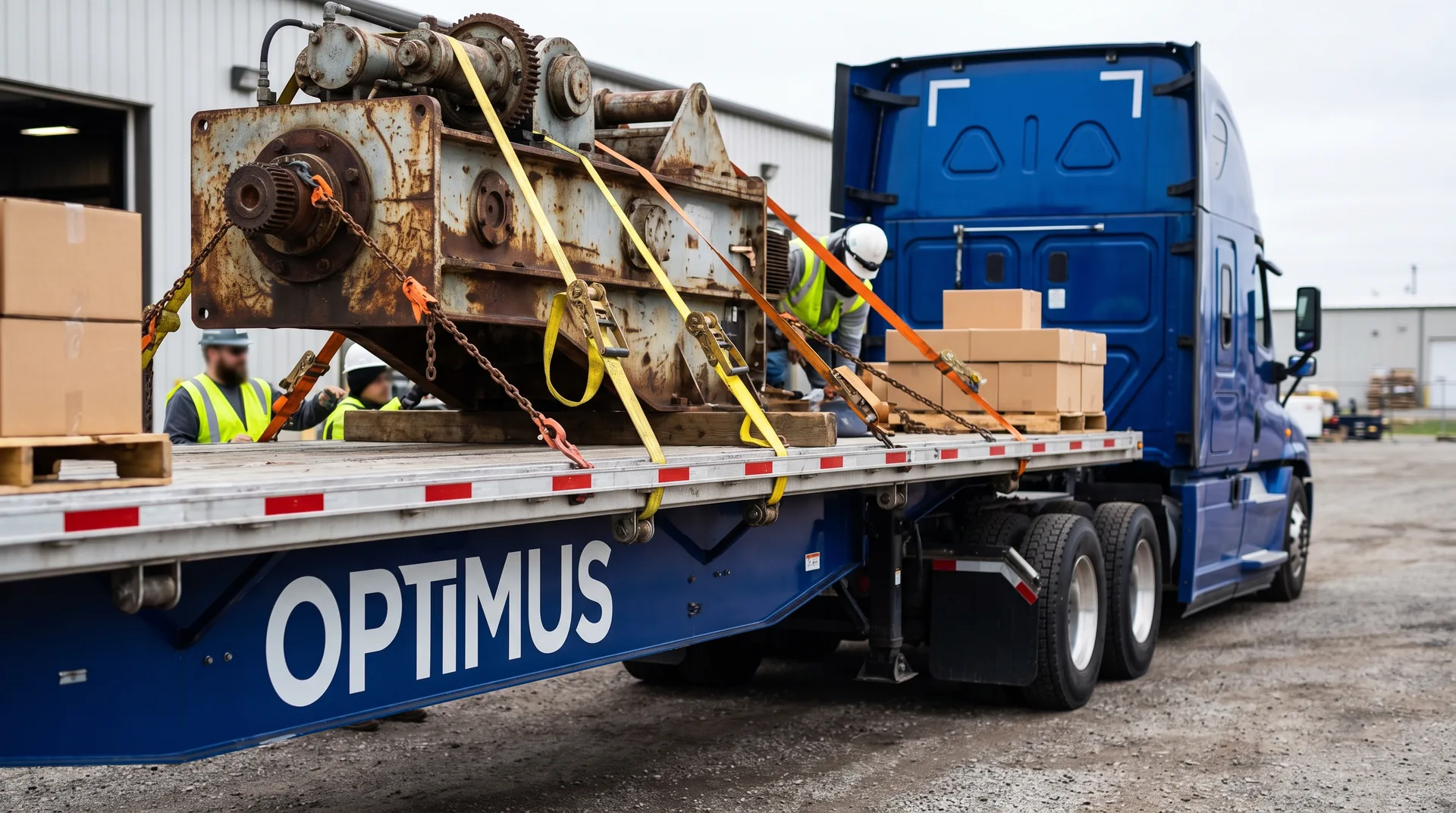
- Transport: dimensions, weight and the UK loading point decide the vehicle and securing; that part is ours.
What to prepare before collecting a machine
- Dimensions after dismantling and the real weight, not the catalogue one: the vehicle and the securing method follow from them.
- Whether the machine is disconnected from services, drained of oils and fluids and ready to be lifted.
- Lifting points and eyes, or the manufacturer drawing: without them the securing is improvised on site.
- Who provides the loading equipment on the British side and whether the yard is hard standing for an articulated vehicle.
- Documentation: declaration of conformity, manual, service history, purchase document with proof of payment.
- The auction or contract terms: check the removal deadline and which side is responsible for dismantling.
The most common mistake
The buyer arranges transport only after winning the bid, holding dimensions from the manufacturer brochure and a photograph of the machine standing in a hall. On site it turns out that the unit is taller once guards and base are counted, that the way out of the hall runs through a gate narrower than assumed, and that the access yard is unmade ground. Each of those changes the vehicle or the date. So we ask about dimensions and yard conditions before sending a truck, and we would rather hear "I do not know" than a figure copied from a catalogue.
Sources
- EUR-Lex: the Blue Guide on the implementation of EU product rules, Commission Notice 2022/C 247/01
- EU-OSHA: Machinery Regulation (EU) 2023/1230
- European Commission: customs union, customs valuation
Buying a used machine in the UK? Give us the dimensions, weight and pickup point in the contact form and we will arrange carriage with clearance under our customs service. Collections from any UK location are covered in a separate article.