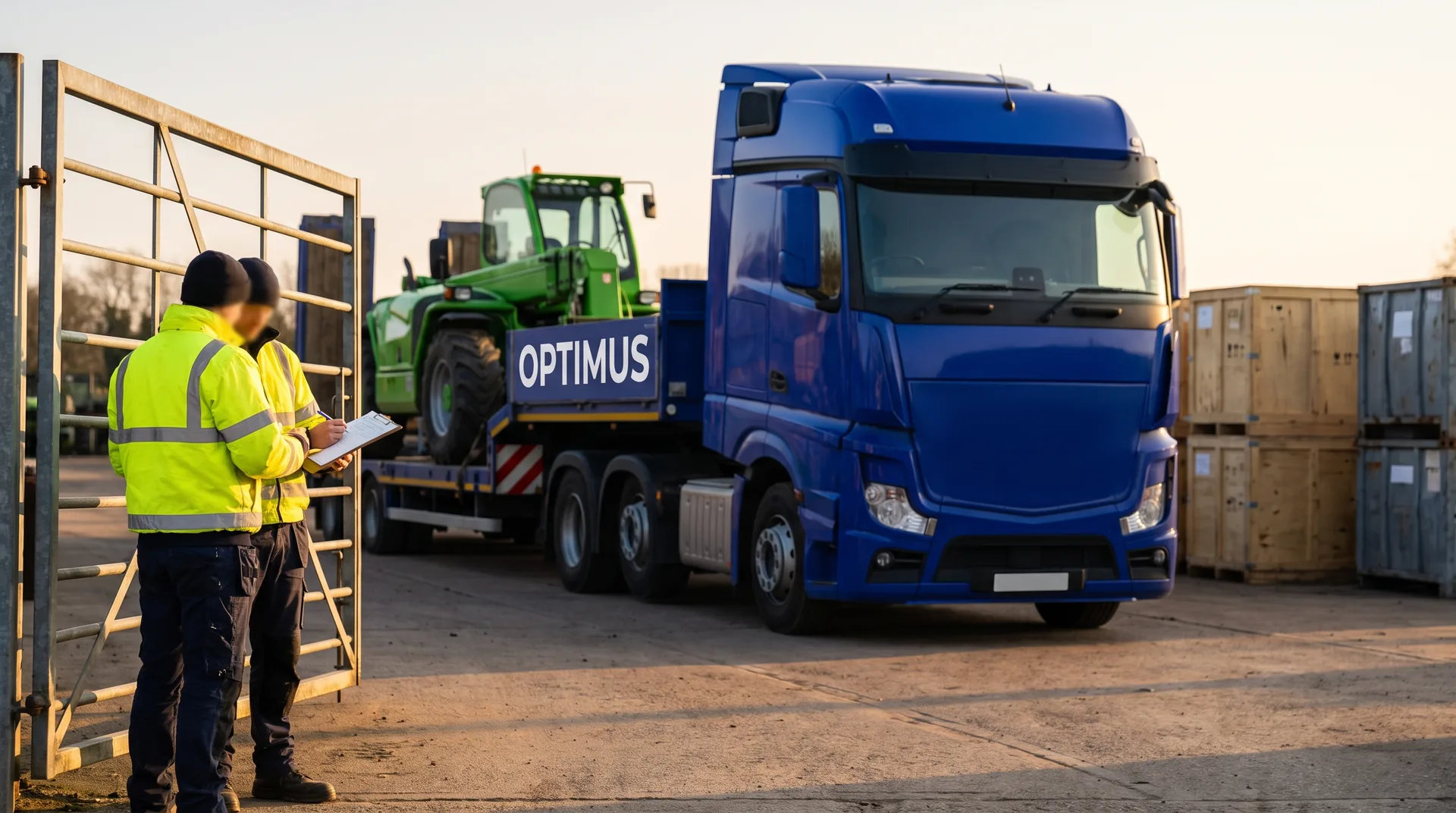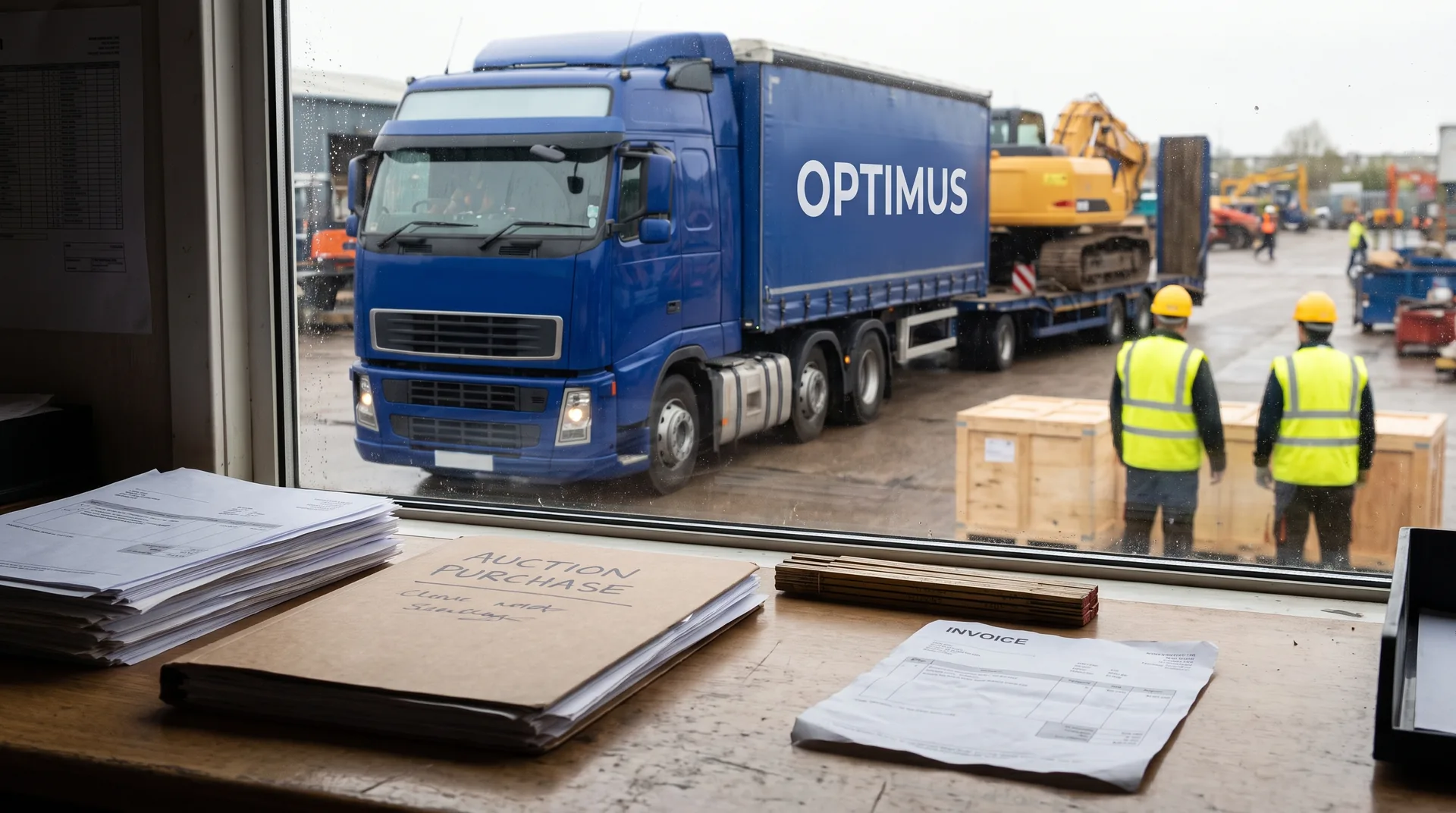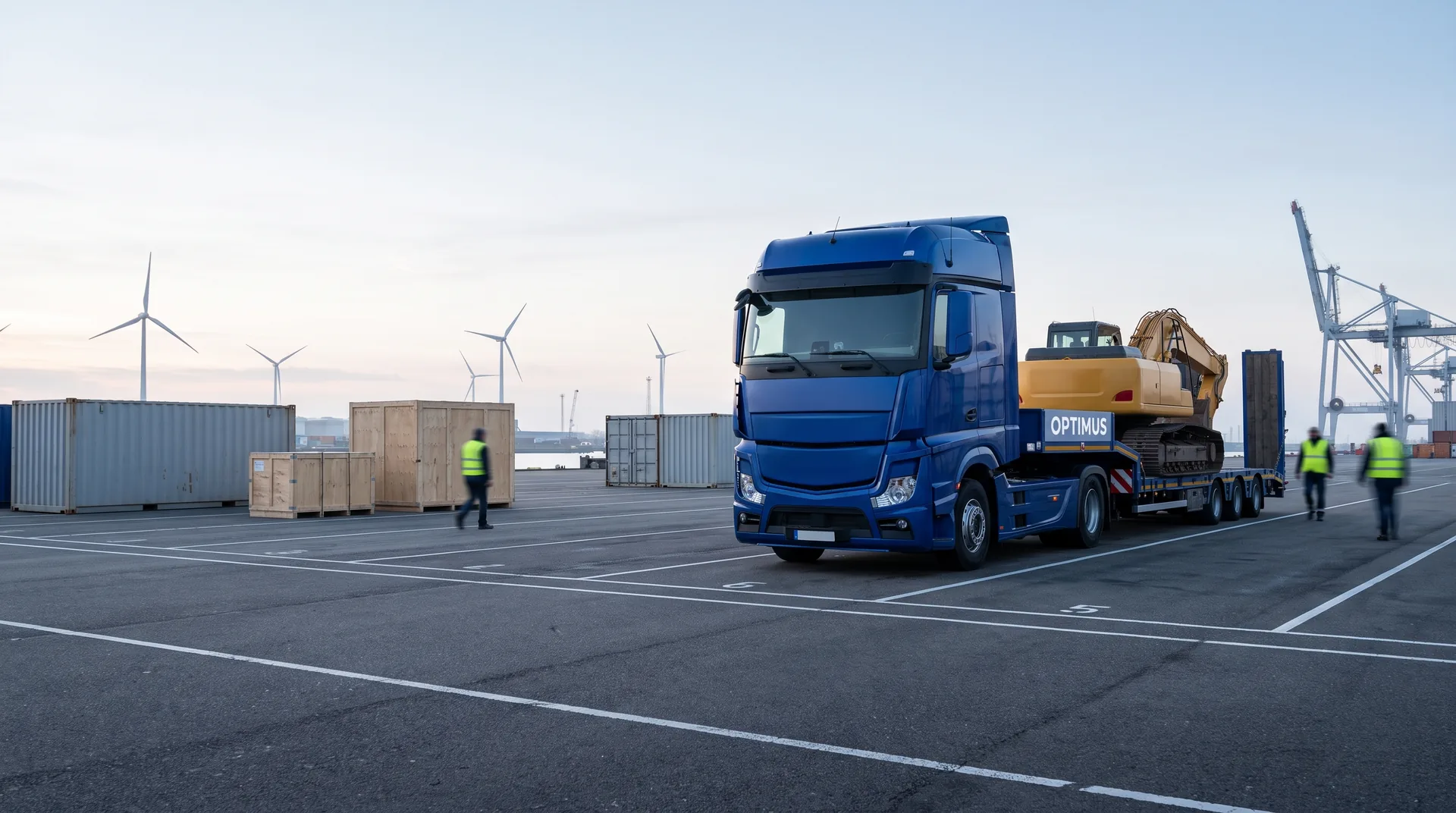
A machine bought in the United Kingdom does not have to be cleared in Poland. The customs declaration can be lodged in the EU country the goods actually enter, most often the Netherlands or France. Once released for free circulation the machine becomes Union goods and travels on without border formalities.
Why clearing outside Poland is allowed at all
The Union Customs Code leaves the choice to the declarant. Article 150 states that the declarant is free to choose the customs procedure under which to place the goods, irrespective of their nature or quantity, or their country of origin, consignment or destination. No rule requires an import to be cleared in the country where the buyer is established or where the machine will finally stand. Article 201(3) of the same code completes the picture: release for free circulation confers on non-Union goods the customs status of Union goods. Nothing there limits that status to the country of clearance.
What it does for the transport
A machine leaves a British yard, boards a ferry or the tunnel and enters the EU at a continental port. Clear it there and the load is Union goods immediately, so the rest of the run to Kielce, Ostrava or Budapest is an ordinary domestic and intra-EU movement. The alternative is to open external transit and haul the machine halfway across Europe under customs seal, with an obligation to present it at the office of destination on time and a guarantee covering the potential customs debt. That route works and is sometimes justified, and we describe it in our piece on the T1 procedure, but for a single machine it usually multiplies formalities rather than reducing them.
What changes for the tax
The biggest effect is on VAT. Clearing on entry into the EU opens the door to procedure 42, that is release for free circulation combined with an exempt intra-Community supply or a transfer of the importer's own goods to another Member State. The tax does not arise at the border; it is accounted for in the country of destination. We take the mechanism and its conditions apart in a separate article on procedure 42 when importing a machine from the UK. The second option, useful when the machine stays put or the buyer already holds a Dutch registration, is shifting the tax to the VAT return, covered in our piece on deferring import VAT in the Netherlands.
What the place of clearance does not change
Honesty matters here, because myths circulate. Duty is identical across the Union: Article 56 of the customs code provides that import duty due is based on the Common Customs Tariff. Clearing in Rotterdam will not produce a lower rate than clearing in Gdansk, or the other way round. Nor does it change the tariff classification of the machine, the rules for establishing customs value, or the rules of origin. Anyone hoping that a different country of clearance means cheaper duty is looking for a saving where none exists. The cost of a classification error, by contrast, is the same everywhere, whichever port you use.
Conditions to settle in advance
- The declarant must be established in the customs territory of the Union. Article 170(2) of the customs code requires it, with narrow exceptions.
- An active EORI number is needed, as described in EORI number for UK trade.
- For procedure 42 to work, the buyer must give at import a VAT identification number in the country of importation or the number of a tax representative there, plus the customer's number or the buyer's own number in the country of destination.
- You need to know in advance where the machine is going and to hold transport evidence for it, because the authorities ask later, not on clearance day.
- The mandate for the agency must cover the right form of representation, which we set out in customs representation and the agency.
When clearing in Poland is the better call
Clearing on entry is not always right. If the machine is going into a Polish warehouse to await a decision, if the purchase paperwork is incomplete and needs work, or if the buyer wants to account for import VAT in the Polish return under domestic rules, it makes more sense to move the goods in transit and clear them at home. The same goes for transactions where value is likely to be queried: it is easier to hold that conversation with an authority in a language you speak and with documents to hand. We gather the Polish side of the paperwork in VAT and duty on imports from the UK to Poland.
How we run this
We organise and run clearance on both sides as part of the job, working with our regular customs agencies. In practice that means agreeing with the buyer before the auction where the machine will be cleared and what that requires at their end, rather than finding out at the port. We collect the purchase documents, keep the declaration and the consignment note consistent, and pass confirmations into the job file. We do not give tax advice and we do not represent clients before a tax authority: that stays with their accountant or adviser.
Sources
- EUR-Lex: Union Customs Code, Regulation 952/2013, Articles 56, 150, 170 and 201 (accessed 2026-08-20)
- EUR-Lex: Directive 2006/112/EC, Article 143(1)(d) and 143(2) (accessed 2026-08-20)
- European Commission: the customs union (accessed 2026-08-20)
Buying a machine at a British auction and unsure where to clear it? Describe the machine, the collection point and the delivery address in the contact form and we will propose a route with clearance included. The scope of the formalities is set out on our customs clearance page. This text is general information, not tax or customs advice.