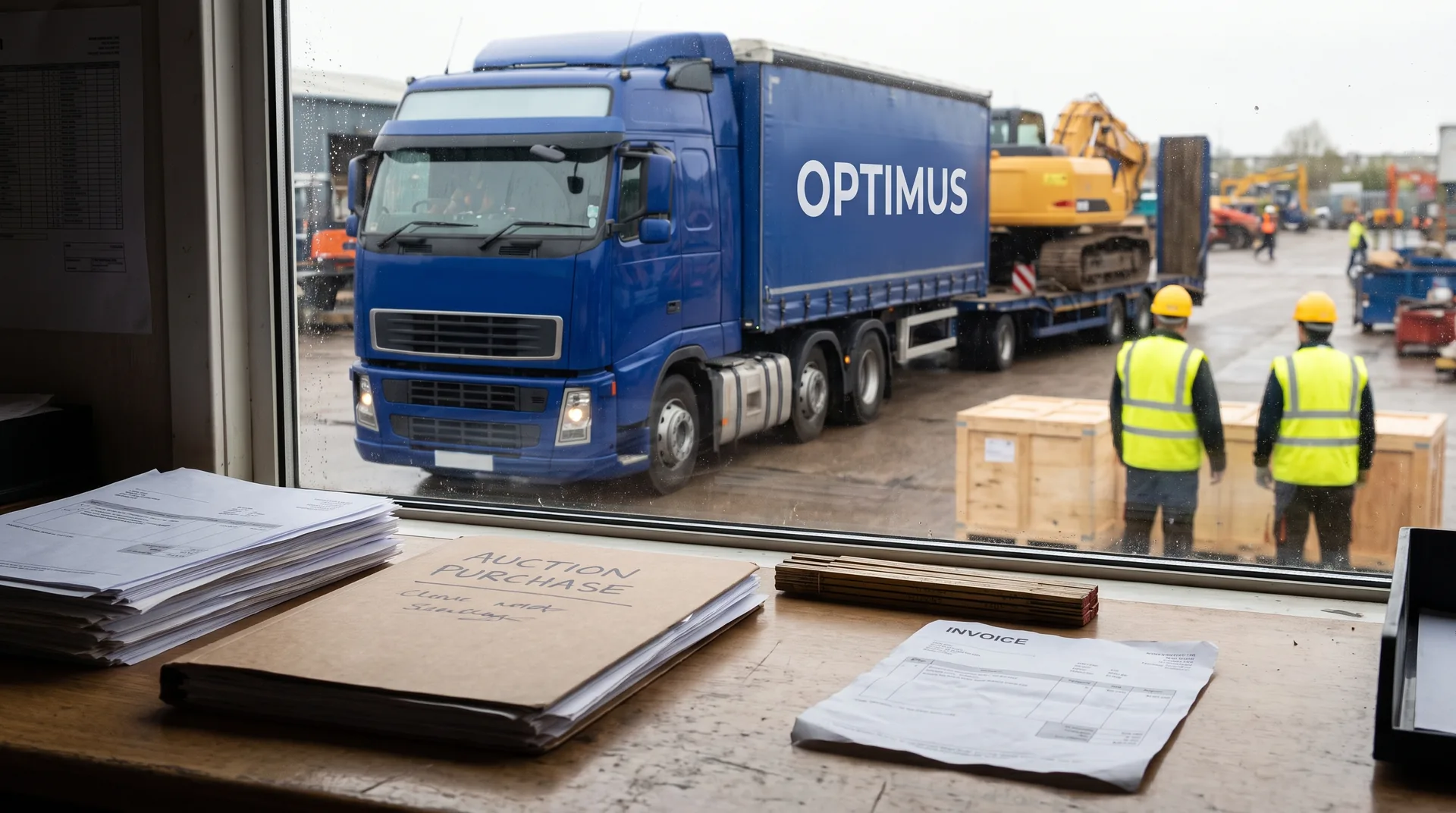
In customs terms the importer is the declarant, the party in whose name the declaration was lodged, and that party is the customs debtor. Under indirect representation the person on whose behalf the declaration was made is also a debtor. Who did the bidding, or who paid, does not settle the question by itself.
Two forms of representation and what follows from them
Article 18 of the customs code provides that any person may appoint a customs representative, and that representation may be direct, where the representative acts in the name of and on behalf of another person, or indirect, where the representative acts in their own name but on behalf of another person. Article 77(3) states the consequence: the declarant is the debtor, and in the event of indirect representation the person on whose behalf the declaration is made is also a debtor. The same provision adds something worth remembering when data is supplied in a hurry: where a declaration is drawn up on the basis of information leading to all or part of the import duty not being collected, the person who provided that information and who knew, or ought reasonably to have known, that it was false is also a debtor.
You have to say in what capacity you act
Article 19 of the customs code requires a customs representative to state that they are acting on behalf of the person represented and to specify whether the representation is direct or indirect. The consequence of not doing so bites hard: persons who fail to state that they are acting as a customs representative, or who state that they are acting as one without being empowered to do so, are deemed to be acting in their own name and on their own behalf. In other words, accidental silence on this point moves the whole customs debt onto whoever stayed silent. The forms of representation and the content of a mandate are covered more fully in customs representation and the agency.
Typical set-ups on an auction purchase
- You buy, you bid, you clear on your own number. The simplest case: you are the declarant and the debtor, and the machine lands in your books.
- An agent bids for you under instructions. The agent acts on your behalf at the purchase, but that does not make them the importer: the importer is whoever appears on the customs declaration.
- Somebody offers to clear it on their number, because their formalities are already in place. They then become the declarant and the debtor, and the settlement between you is purely contractual and does not bind the authority.
- The agency acts as indirect representative because it is easier. You are then both liable, which is precisely why agencies use that form sparingly.
- The machine is bought jointly but one party lodges the declaration. The customs debt falls on whoever appears on the declaration, whatever the internal agreement on splitting costs.
Tax runs on a separate axis
Who is the customs debtor and who may deduct import VAT are two different questions. On the tax side, Article 201 of Directive 2006/112/EC provides that on importation VAT is payable by any person or persons designated or recognised as liable by the Member State of importation. The right to deduct is different again. In Case C-187/14 DSV Road the Court of Justice held that the directive does not preclude national legislation excluding deduction of import VAT for a carrier that is neither the importer nor the owner of the goods, because the value of the goods carried does not form part of its own costs. The practical conclusion: appearing on the declaration does not by itself create a right to deduct, if the party does not dispose of the goods as owner and does not use them for its own taxed transactions. Clearing a machine on an obligingly lent number can therefore end with nobody deducting the tax at all.
What to settle before bidding
Three things, in this order. First, who will be the declarant, whether they are established in the EU and hold an active EORI number, as described in EORI number for UK trade. Second, in what capacity the agency acts and whether the mandate states that capacity expressly. Third, who acquires ownership of the machine and in whose books it belongs, because the tax position follows from that. Settling this after the event is expensive and sometimes simply impossible: a declaration cannot be reassigned to a different party retrospectively just because that would be more convenient.
How we run this
We organise and run clearance on both sides as part of the job, working with our regular customs agencies, and before the first job we establish plainly who the declarant is and in what capacity the representative acts. We support the bidding, the transport quotation and the collection from the yard. We do not act as importer for a client, we do not lend our number for clearing somebody else's goods, and we do not give tax advice. That line matters to us, because a customs debt is not a matter of courtesy but of law. The Polish paperwork is gathered in VAT and duty on imports from the UK to Poland, and the choice of where to clear in clearing a machine in the Netherlands, not Poland.
Sources
- EUR-Lex: Union Customs Code, Articles 18, 19, 77 and 170 (accessed 2026-08-20)
- EUR-Lex: Directive 2006/112/EC, Article 201 (accessed 2026-08-20)
- Court of Justice of the EU: judgment in Case C-187/14 DSV Road (accessed 2026-08-20)
Buying a machine through an agent and unsure who should appear on the declaration? Describe the structure of the transaction in the contact form and we will set out what has to be arranged before the bidding. This text is general information, not legal or tax advice: confirm the tax consequences with your own adviser.