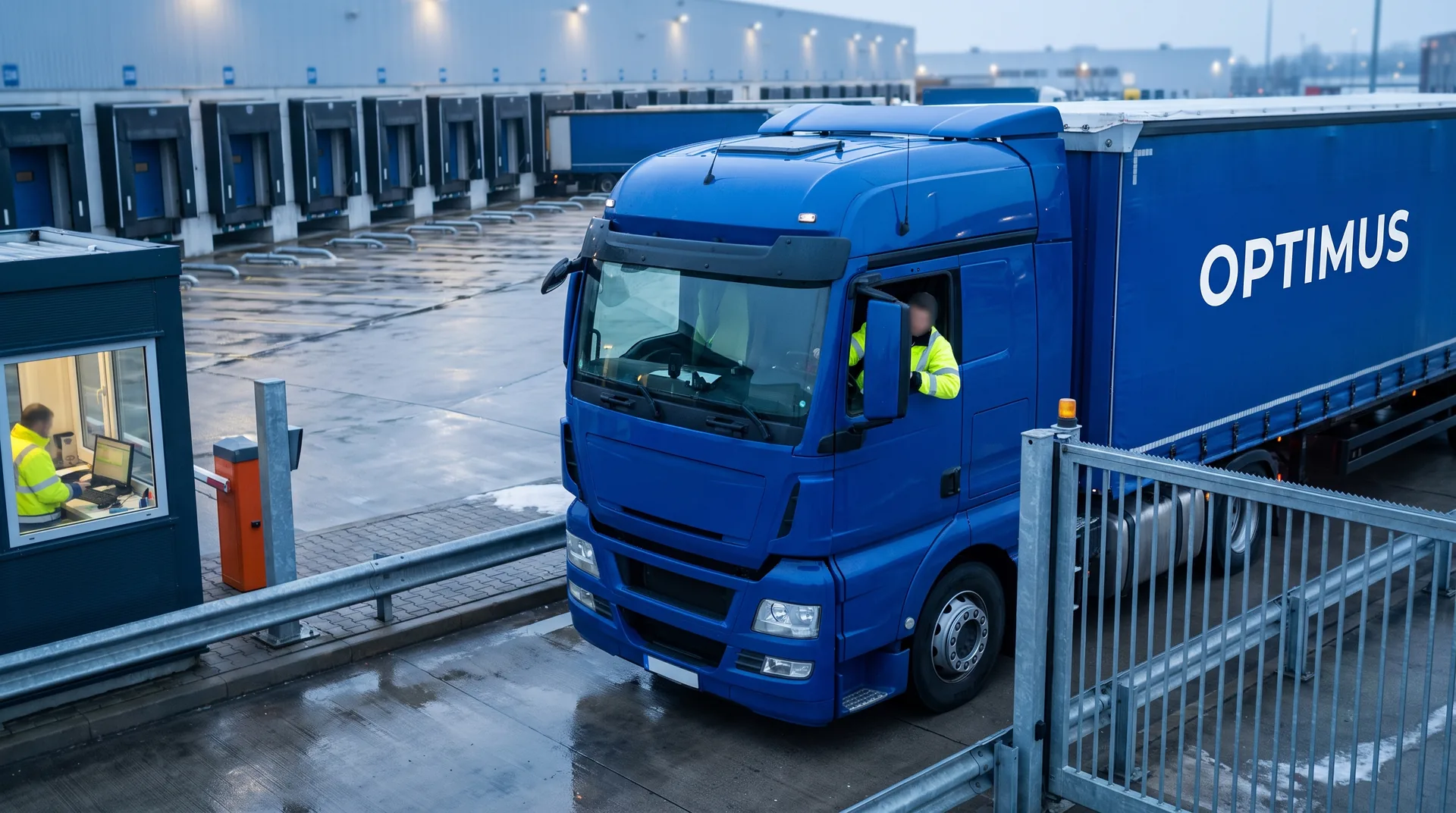
The Milton Keynes warehouse works around the clock, weekends included. Outside standard hours we handle receipts, releases, emergency transhipment and moving sensitive loads into a chilled or frozen zone. Work requiring a decision from the goods owner usually waits for a working day, because what is missing is not hands but a ruling.
Why this matters to a carrier at all
Because a driver day is a resource you cannot recover. A vehicle reaching Milton Keynes at ten in the evening and finding the gate shut loses the night and the morning, and with them the next day slot. A vehicle unloaded at eleven starts back after its rest and stays inside the plan. The constraints a driver works within are described in drivers hours rules. Round-the-clock warehousing does not add driving time, but it places the rest period where it belongs rather than in front of a closed gate.
Friday afternoon, the most expensive hour of the week
A receiver refuses a delivery at three on Friday. Their goods-in closes at four and reopens on Monday. With nowhere to put the load, the vehicle stands all weekend with goods aboard, and for chilled cargo there is the further question of the reefer unit and fuel. Accepting the load on Saturday morning solves both: the goods stand in the conditions they need and the vehicle returns to work. The refusal scenario itself is covered in rescuing loads rejected by retail chains.
What we do at night without asking anyone
Unloading and loading a booked vehicle. Trailer-to-trailer transhipment when a crossing or a receiver window has to be saved. Moving sensitive goods into a chilled or frozen zone, because here every hour counts and waiting until morning costs more than caution. Restacking and securing pallets that arrived in a state threatening their stability. All of these are reversible or neutral for the value of the goods, so none of them needs an owner ruling.
What we will not do at night, even with the crew on site
We do not filter a load against criteria nobody has confirmed. We dispose of nothing. We do not release goods to a person whose authorisation cannot be verified. We do not decide to move goods onto a different carrier where that changes the unit count in the paperwork. The reason is common to all of them: these are irreversible acts, and an irreversible act performed without an owner decision becomes a dispute by morning. What the night shift can do is prepare everything, so that at eight one reply is enough.
Emergency transhipment out of hours
The most common night scenario is a vehicle that must make a crossing while the load must stay. We split the trailer: part travels on, part stays in the warehouse for the next run. The mechanics are described in emergency cross-docking. For planning purposes remember that a night transhipment needs notice of at least an hour, because the bay and the equipment have to be prepared.
How to book night and weekend deliveries
Exactly as any other, only earlier. We need the vehicle registration, expected time, pallet count and whether the load requires a temperature zone. For emergency deliveries the booking can be short, but it must carry those four items. The full list and the receipt sequence are in pallet receipt and release. If a breakdown happened en route and you do not yet know how many pallets survive, say so plainly: a qualified estimate beats silence until arrival.
A 24-hour rota does not replace a plan
Round-the-clock working shortens the consequences of trouble but does not remove it. A load accepted on Saturday still waits for an owner decision where one is needed. A delivery booked for an hour when nobody answers the phone in Poland ends with a pallet standing rather than a vehicle standing, which is a gain but not a solution. The companies that get most out of this treat it as a safety buffer inside a plan, not as a substitute for having one.
Have a route arriving out of hours, or an emergency to handle? Describe it through the quote form. The facilities in England are on the Milton Keynes warehouse page.