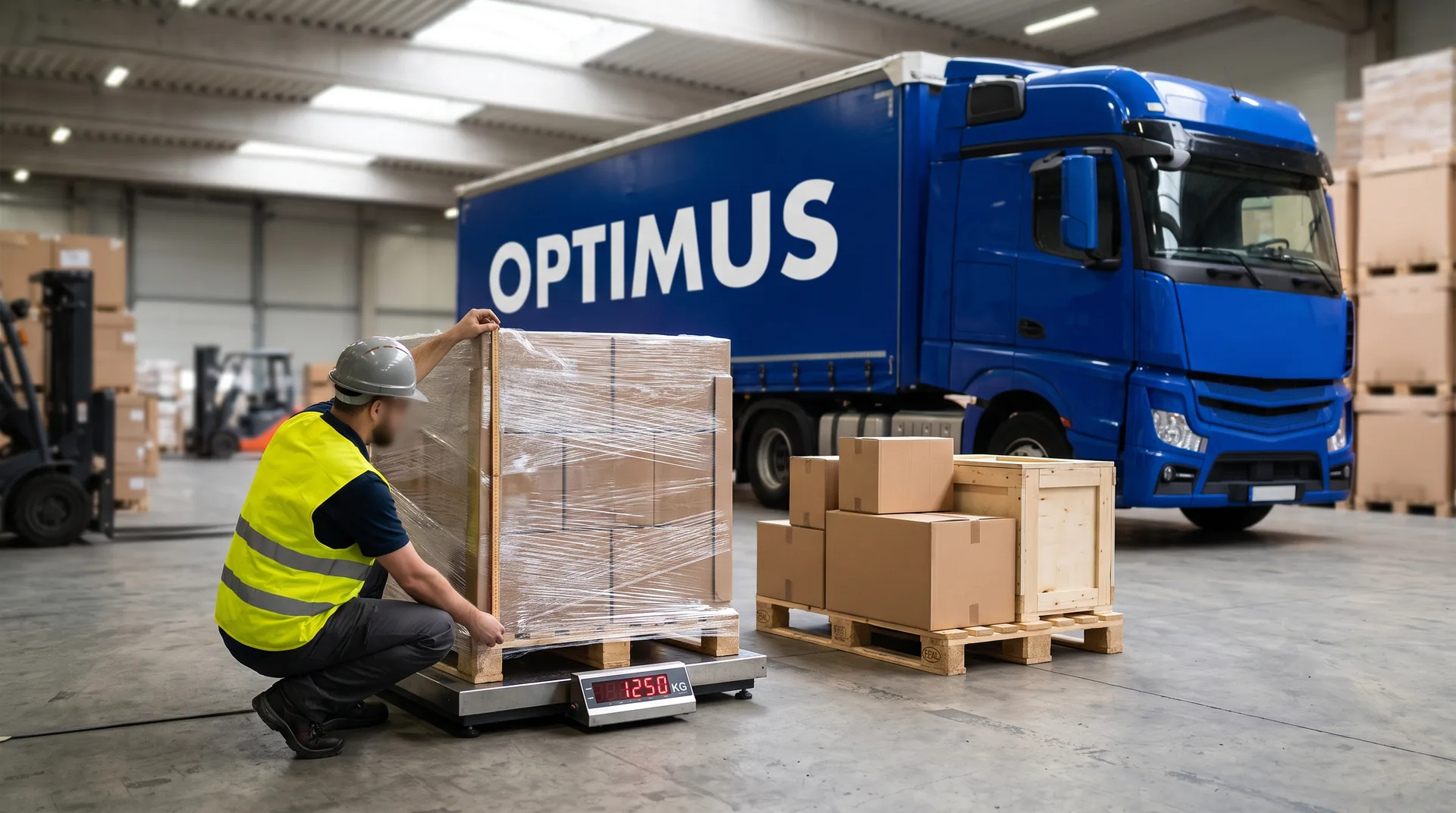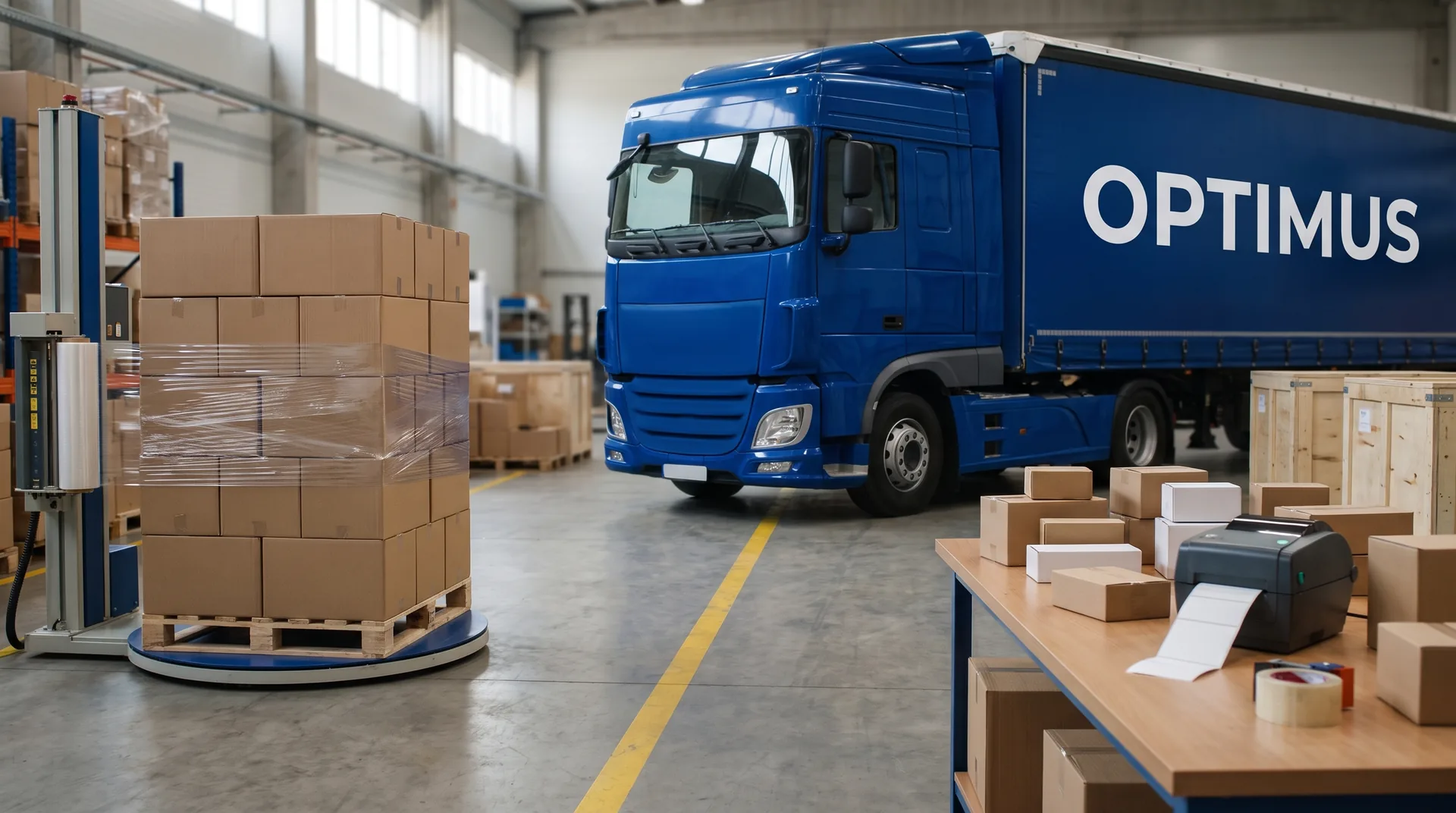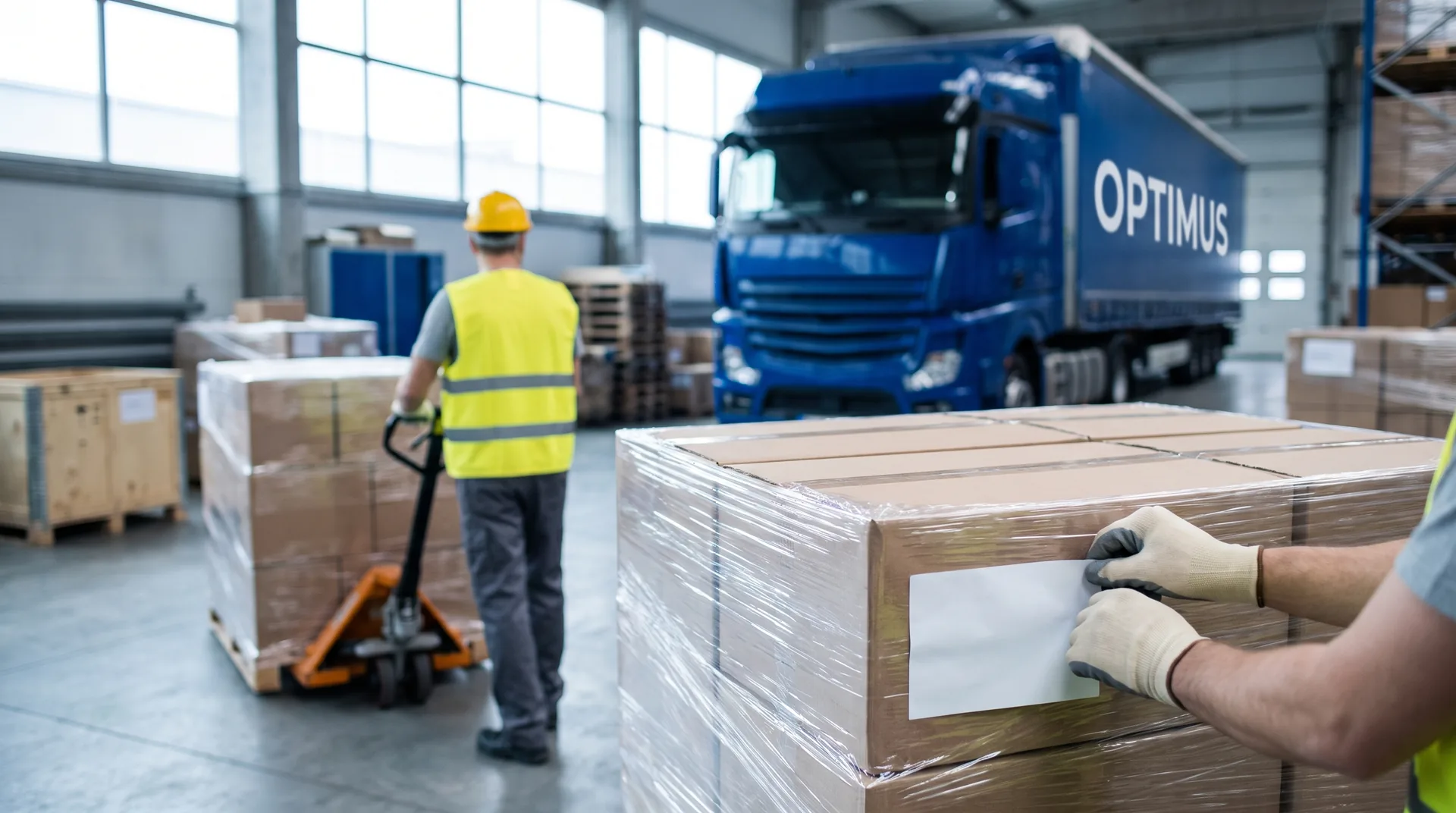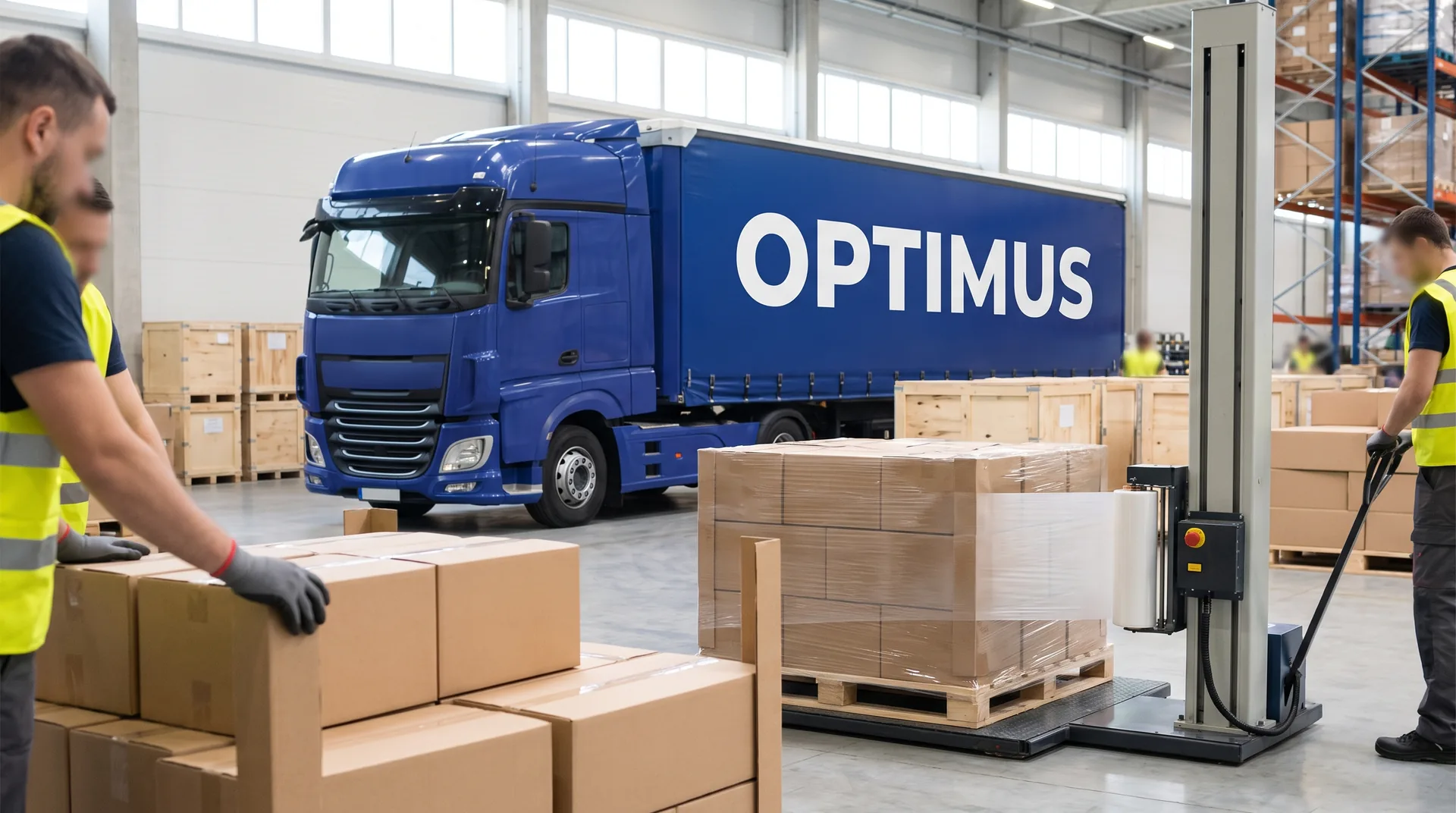
Preparing a pallet before an Amazon delivery is work at the level of the pallet unit and the outer case: breaking down layers, rebuilding the stack, checking three measurements, re-wrapping, applying the pallet label, photographing and weighing. We do it in a warehouse, where there is space and equipment, rather than in the consignee’s yard, where handling a load is normally prohibited.
The order of work at the bench
- Unloading and inbound check. Unit count, condition of the film, condition of the base, readability of existing marking. Discrepancies are recorded before the goods move on.
- Breaking down layers. We take off as much as it takes to reach the cause of the problem, not the whole pallet out of habit.
- Rebuilding the stack. Heavy cases at the bottom, level layers, corners squared to the edge of the base, no voids inside, no steps.
- Three measurements. Height including the base, footprint in both axes, unit weight. More on this below.
- Securing. Film from the base upwards, corner boards on heavy loads or sharp edges, a vertical strap on tall units.
- Marking. The pallet label on two adjacent faces, on a flat surface, clear of the film.
- Documentation. Photographs from the side and from above, a record of unit numbers, confirmation of weight.
The three measurements that decide
Height is measured including the base, because that is how the consignee measures it. A few centimetres over can be the difference between a unit that goes down an automated path and one set aside for manual handling. The footprint is checked in both axes and we treat zero millimetres of overhang as the target, not as a guideline, because a protruding case is damaged the first time it meets a neighbouring unit. Why warehouses are unbending about this is unpacked in the article on overhang beyond the pallet footprint. Weight is confirmed because it decides what equipment lifts the unit and whether it can be stacked at all, which we cover in the article on pallet stacking.
We do not quote specific figures, because the consignee sets them and changes them without notice. What binds is the specification in force on the day of delivery, collected in the article on Amazon pallet requirements in the UK.
Pallet labels: we apply them, we do not invent them
We apply pallet labels ourselves, from files supplied by the shipper or generated for the specific shipment. We do not create identifiers, we do not change numbers and we do not carry marking over from shipments that were cancelled, because that is the simplest way to stop a delivery at scanning. The practical rules we hold to: a flat surface, two adjacent faces, nothing under the film, nothing on a fold or on packing tape. An old, superseded printout is removed or blanked out rather than having a new one stuck next to it.
The base and what we do with it
Where a pallet arrives damaged, the unit is transferred to a sound base and the damage is recorded. We do not repair a base under a load and we do not send on a pallet with a cracked bearer, because that unit will stop at the first lift. Repair options are described in the article on damaged pallet repair, and how a unit is secured for the road in the article on securing a pallet on the Poland to Britain route.
Where our work stops
We do not prepare individual retail units, we do not apply sales marking to products, we do not combine products into sets and we do not run assembly work. We work on the pallet and the outer case. The full list of what the warehouse does not do is collected in the article on the limits of the warehouse service, and the standard receipt and release procedure in the article on pallet receipt and release in Milton Keynes.
How long it takes and how to plan it
We do not quote fixed times, because the gap between fixing the wrapping and rebuilding ten pallets layer by layer is a multiple, not a margin. What we do offer is a rule: pallet work has to be finished with enough slack to report corrected details before the delivery, not on the way to the gate. In practice that means one full working day between receipt into the warehouse and departure for the appointment, and more on larger batches. The warehouse runs around the clock, so receipt and release themselves can be arranged outside standard hours.
More on this: Amazon pallet labels: what we apply and what we do not.
More on this: Where our job ends and the seller prep begins.
Sources
- Amazon Seller Central UK: preparation and labelling requirements for palletised shipments
- GOV.UK: wood packaging material and ISPM 15 requirements
Have pallets that need bringing up to specification before delivery? Describe the batch in the quote form and we will send back the scope of work and a date. The site is described on the Milton Keynes warehouse page.