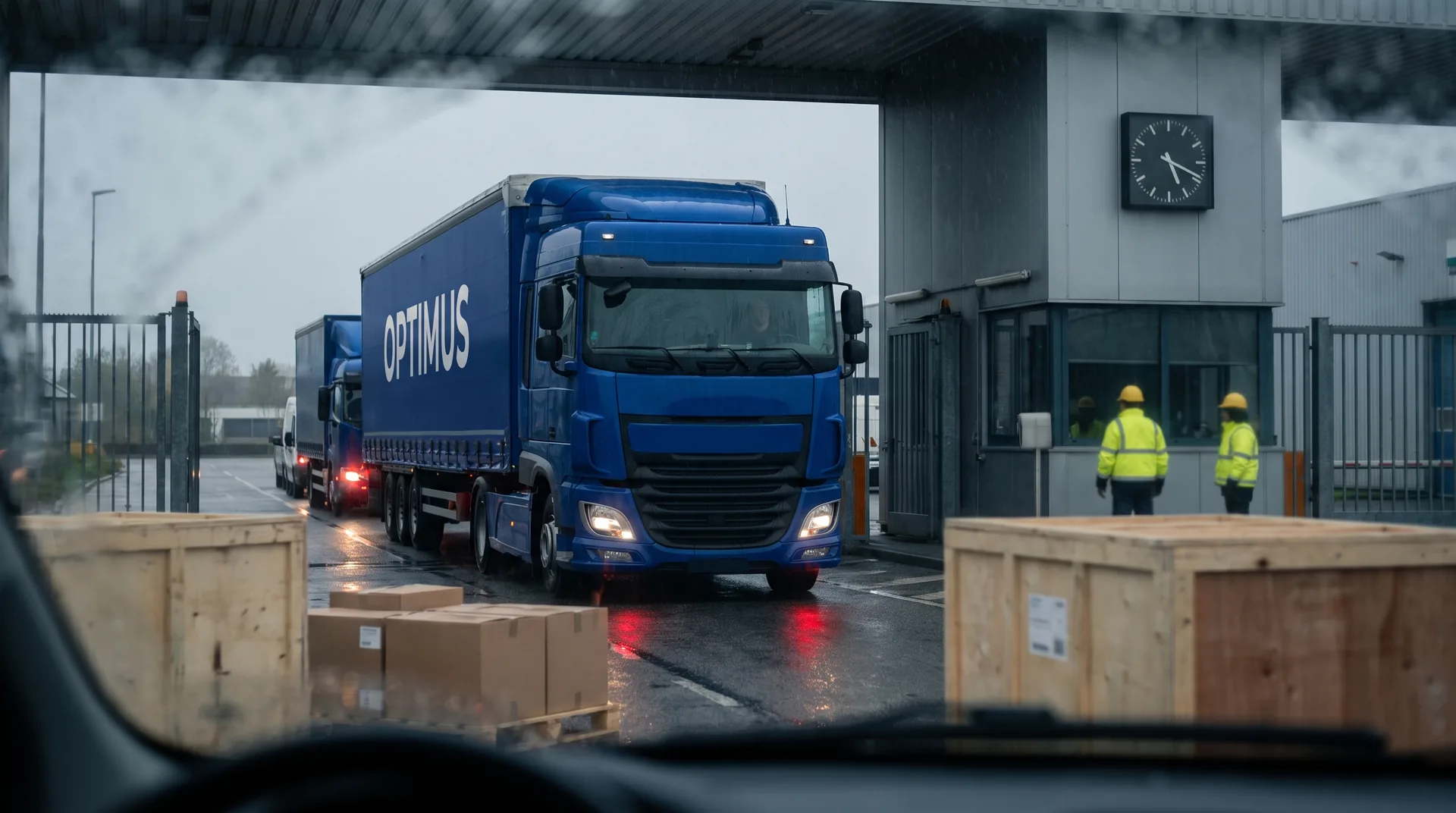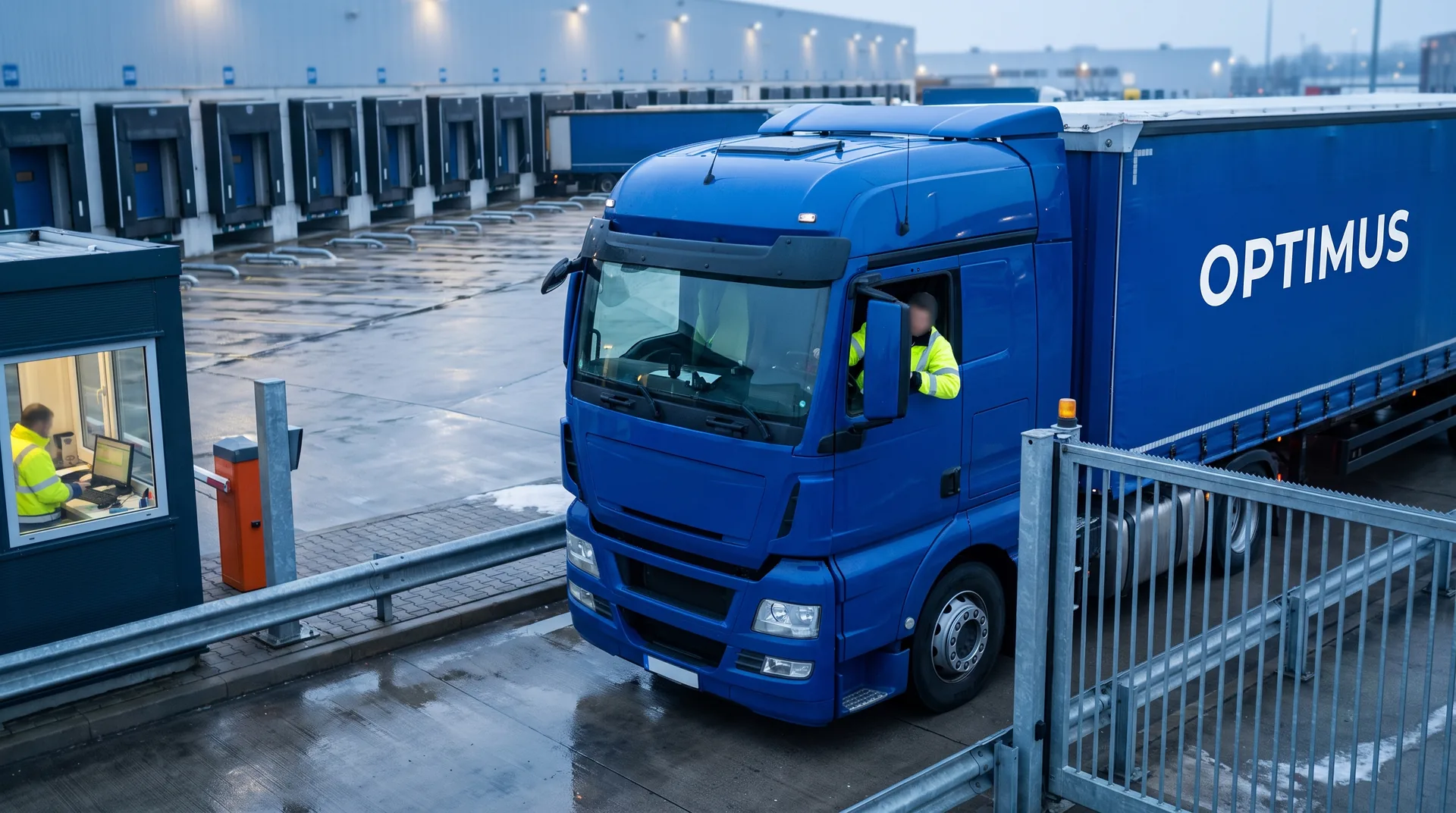
At the warehouse gate the driver books in, gives the appointment reference and the vehicle registration, and the gatehouse checks them against the system. Only then comes a dock number and entry to the yard. The rest is following somebody else rules: the route across the yard, where to wait, the rules at the dock and the moment it is permitted to leave the cab.
Booking in: what has to match
Three things are always checked and three things can stop a vehicle at the entrance. The appointment reference, because without it the vehicle is an arrival with no slot. The registration number, because the appointment is tied to a specific vehicle and swapping the tractor unit at the last minute voids the consent to enter. And the carrier and driver details exactly as given at booking. The booking mechanism itself is covered in our article on booking the delivery appointment, and what happens when the slot is lost in our piece on running late for an appointment.
Yard rules are the warehouse rules
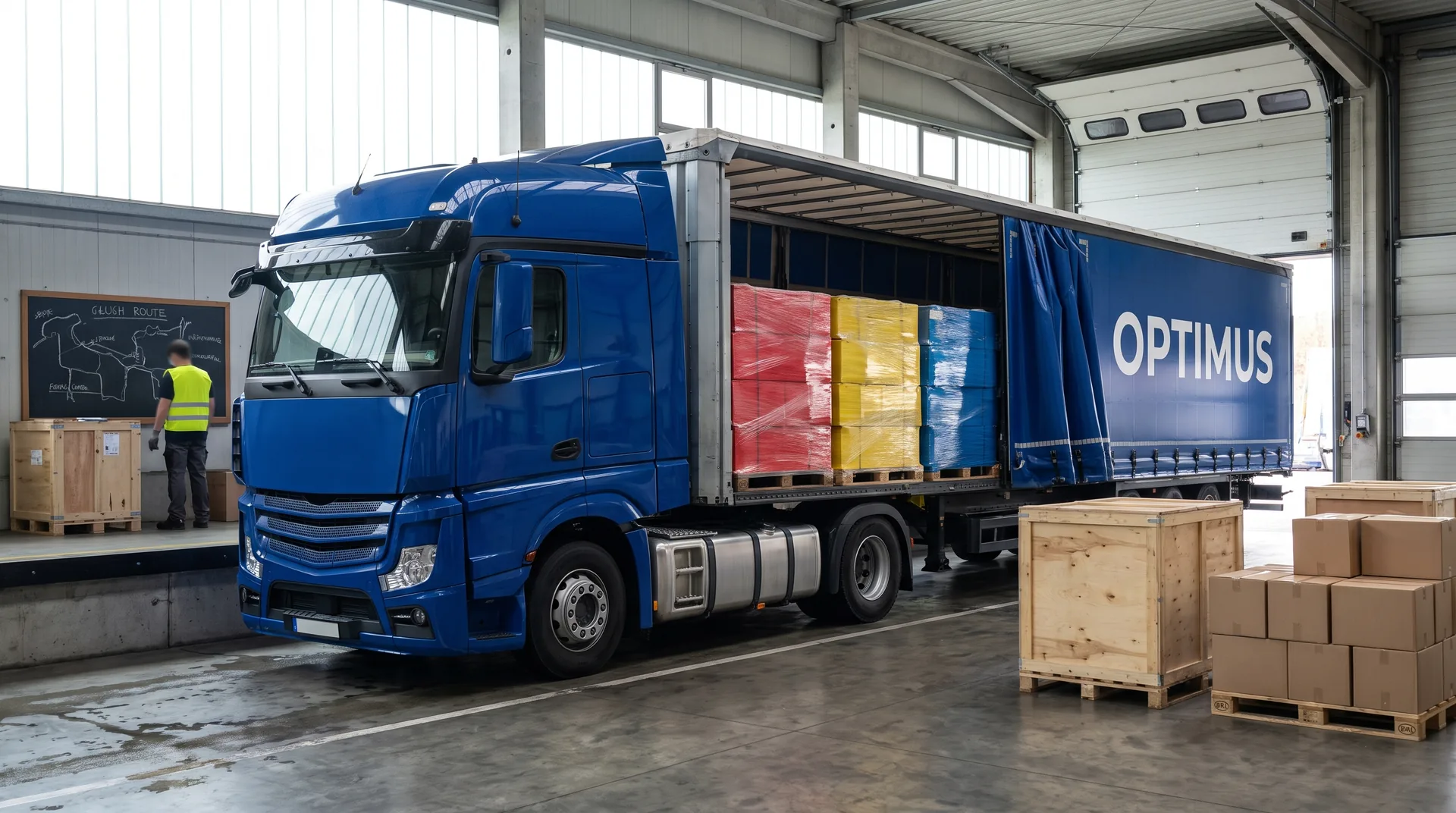
A warehouse yard is a workplace, not a public road. Internal signage applies, with marked vehicle and pedestrian routes, a speed limit and usually a requirement to wear a high-visibility vest outside the cab. Manoeuvring onto the dock follows the yard staff directions, not the driver own judgement. Some sites require the driver to apply the brake, get out and wait in a designated area while unloading proceeds; others require the driver to stay in the cab. There is no single rule across all warehouses, which is why the question about the rules is asked at check-in, not halfway through a manoeuvre.
The order that shortens the stop
- Documents ready as one set: the appointment, the consignment note, the pallet specification. Hunting for paperwork at the gate window is the most common waste of time.
- Curtains and straps released where it is permitted to do so before approaching the dock. Many yards have an area set aside for it.
- Pallets built in unloading order. On a run to several sites that decides whether the second address works at all, which we cover in our article on one collection and several warehouses.
- A call to the traffic desk, not to the seller, when something does not add up. The seller has no way of influencing what happens on the yard.
Waiting time against driving time
Standing on a warehouse yard is working time and eats the same hours as driving. That is a real variable in route planning, particularly with two addresses in a day or an appointment falling late in the afternoon. When planning we allow for unloading running long and for the crossing back having its own window. The same arithmetic returns at peak, which we cover in our article on the fourth-quarter peak.
When something goes wrong at the gate
A refusal to receive splits into documentary and physical, and each has a different recovery route; the catalogue of causes is set out in our article on refusal at the warehouse gate. From the driver point of view one thing matters: do not improvise. The vehicle leaves the yard with a note on the document and returns to the traffic desk, and the decision on where the goods will stand is taken in the office. Where we have a buffer on the British side, the pallet goes to the Milton Keynes warehouse for short-term storage rather than back to Poland.
What we do not quote
Lateness tolerance thresholds, unloading times and the rules of any particular site. Those come from the receiver current carrier guidance and that is the only place to read them. We describe the mechanism so that the driver knows what to expect and the planner builds the wait into the calendar.
Sources
- HSE: workplace transport safety in the United Kingdom
- EUR-Lex: Regulation (EC) 561/2006 on driving times and rest periods
- Amazon: Fulfilment by Amazon in the United Kingdom, seller information
Planning a delivery to a UK warehouse and want a calendar that holds? Send the window and the address through the quote form. See also booking in at UK warehouses.