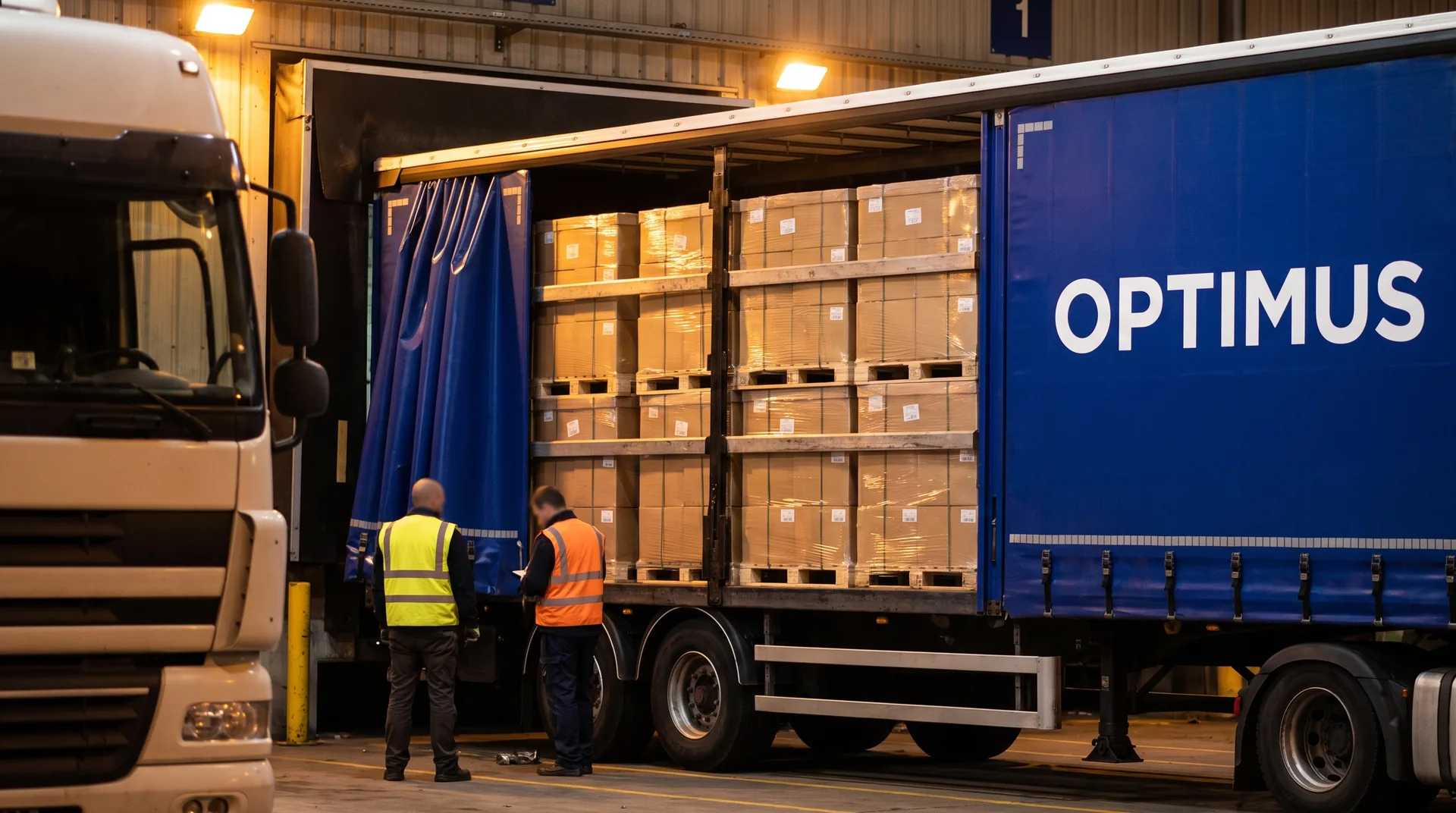
An ASN (advance shipping notice, EDIFACT DESADV) is an electronic pre-advice of a delivery sent to the chain before the truck arrives: the order number, lines, quantities and the pallet SSCC numbers. At goods-in the warehouse scans the SSCC labels and compares them with the ASN. A match means fast acceptance, a mismatch means manual checking and delays.
How the chain works from order to gate
- The chain places a purchase order (PO) with the supplier, usually over EDI as well.
- The supplier picks the goods, assigns SSCC numbers to the pallets and prints logistics labels.
- Before the truck arrives it sends the ASN: what, how much and under which SSCCs is coming against that PO.
- At the RDC gate a scanner reads the SSCCs off the pallets; the system knows what has arrived without opening a single carton.
What must match for a smooth goods-in
Three things: the SSCC numbers on the labels must be identical to those in the ASN, the ASN quantities must reflect what is physically on the truck, and the ASN must arrive before the vehicle, not after it. Typical failures are sending the ASN from the picking plan instead of the actual stock, swapping a pallet after the labels were printed, and splitting one ASN's delivery across two trucks. Each of these turns automatic acceptance into manual carton counting.
The role of the carrier and the UK warehouse
The ASN is issued by the seller, not the carrier: we do not know the content of the order. Our responsibility starts where the physical pallets must stay consistent with the electronic pre-advice. When we repack goods or fix labels at Milton Keynes, we do it so that the SSCC numbers still agree with the ASN, or we re-identify the units in agreement with the customer. The details of that service are in our article on GS1 and SSCC labelling in the UK.
And when the chain does not use EDI
Smaller chains and wholesalers often replace EDI with a supplier portal or an email pre-advice. The mechanics stay the same: announce exactly what is coming and mark the pallets so they can be identified beyond doubt. Slot booking rules are covered in our article on booking-in at UK warehouses.
An ASN and a delivery booking: two different announcements
Both are casually called pre-advice, and that is where half the misunderstandings start. The ASN announces the goods: it tells the warehouse system what is coming and under which SSCC numbers. The window booking announces the vehicle: it reserves a specific bay at a specific hour. Neither replaces the other. A vehicle with a booking but no ASN will sit at the bay waiting for a manual goods-in. An ASN sent without a booked window will not get the vehicle onto the site. On the supplier side the two are usually handled by different people, so before a first delivery it is worth agreeing in writing who files which.
The most common mistake: a delivery split after the ASN went out
A typical groupage situation: the supplier sends an ASN for the complete order, while physically the goods split across two departures, because some pallets did not fit on the first vehicle. The consignee's warehouse system then sees a pre-advice that does not match what arrived, and goods-in switches to manual for the whole delivery, including the pallets that were faultless. The fix is simple as long as you think of it in time: the ASN is raised for what actually leaves on that vehicle, and the split order is notified to the chain before the first vehicle moves. We flag such a split as soon as it emerges at loading.
Sources
Delivering to UK chains and need a partner who understands SSCCs, pre-advice and slots? See our UK warehousing services and write through the contact form.