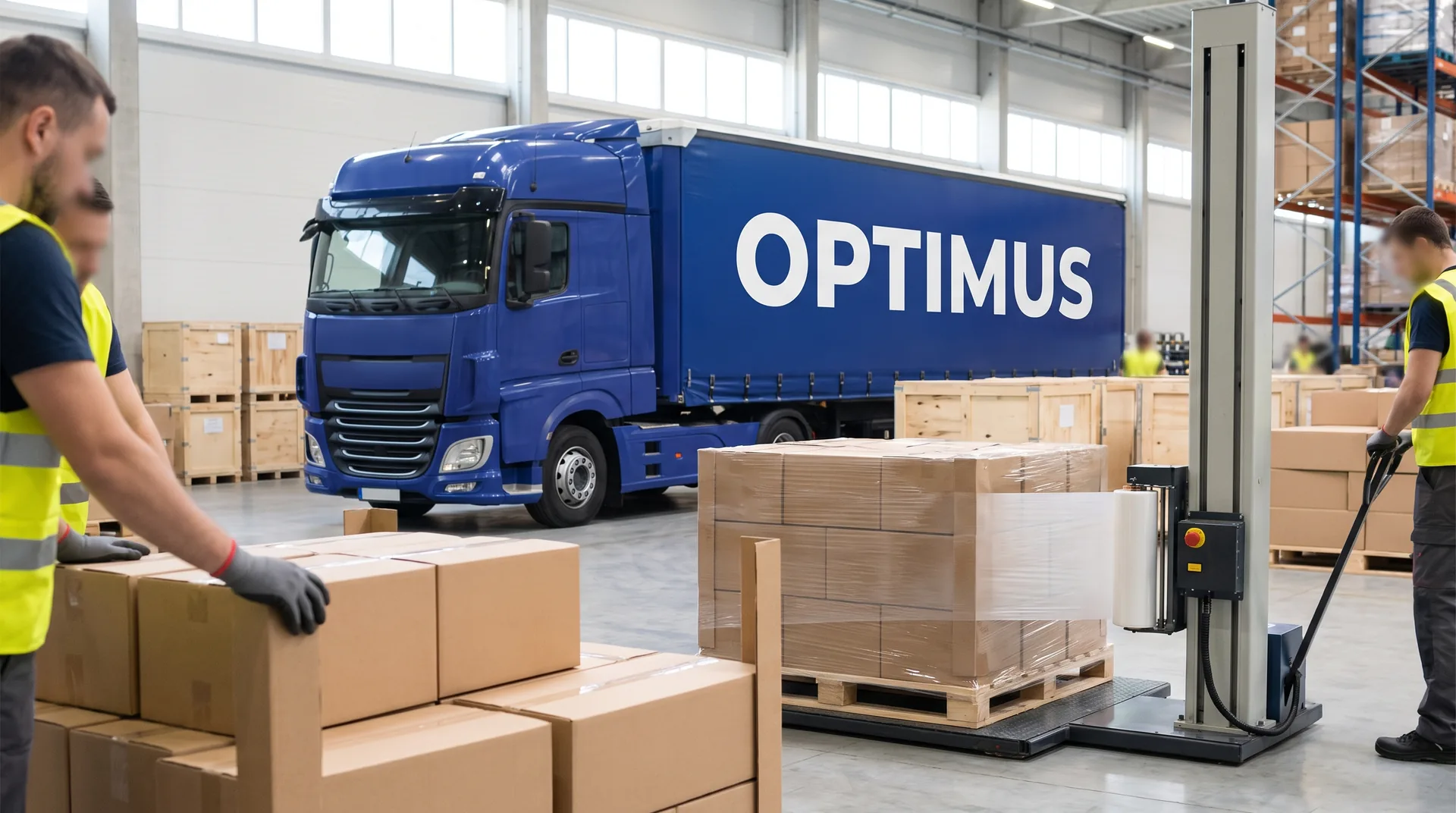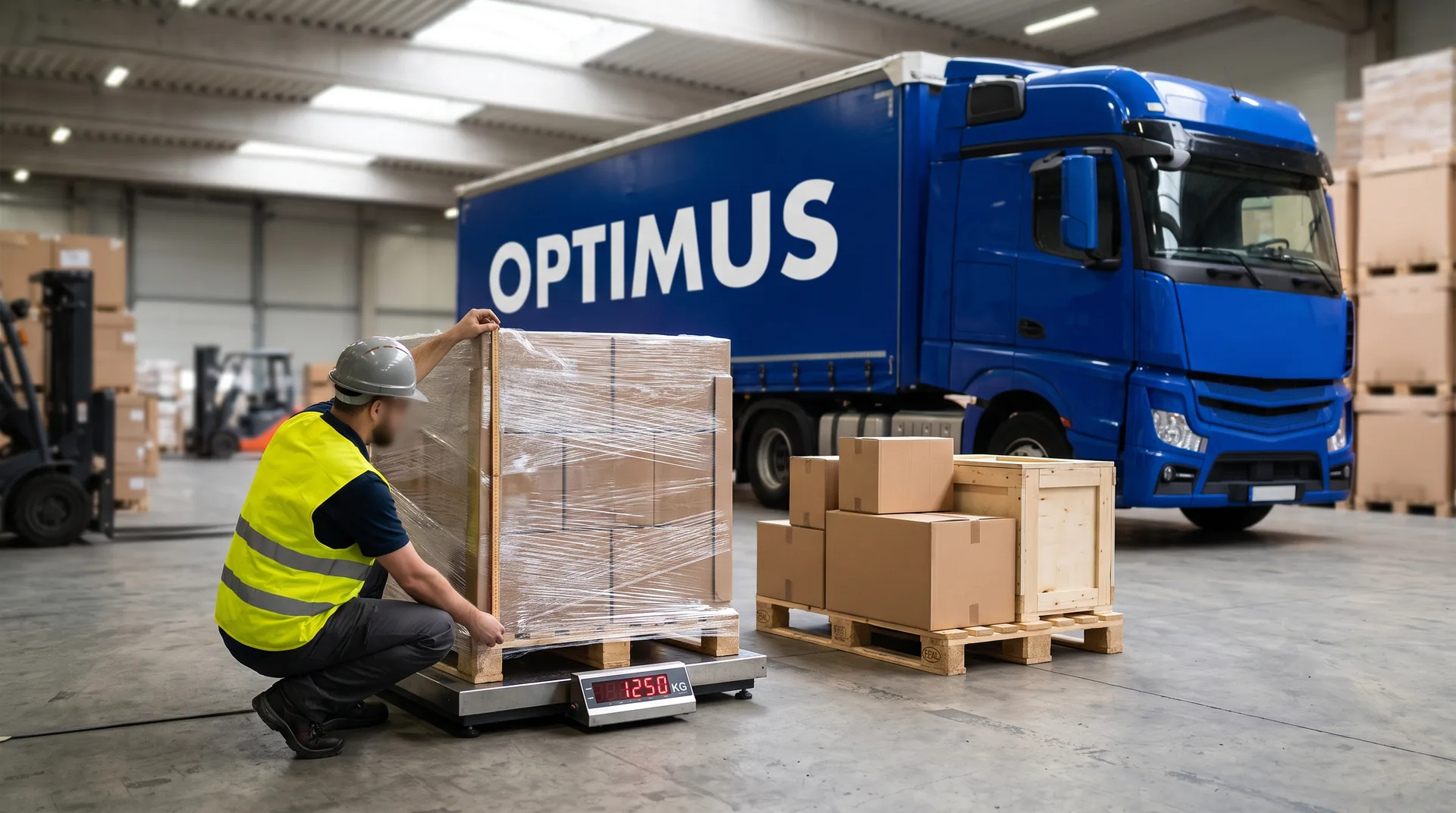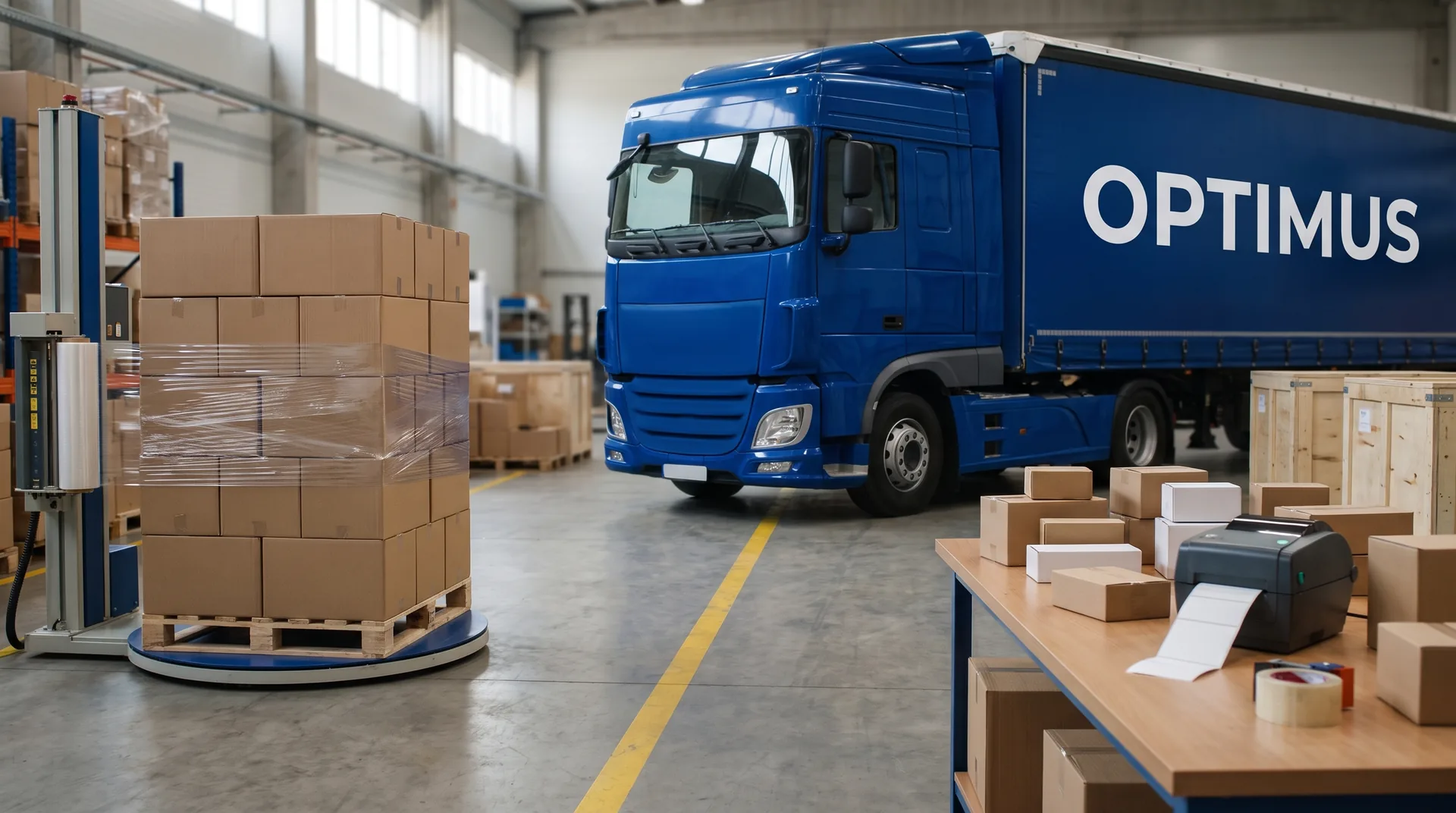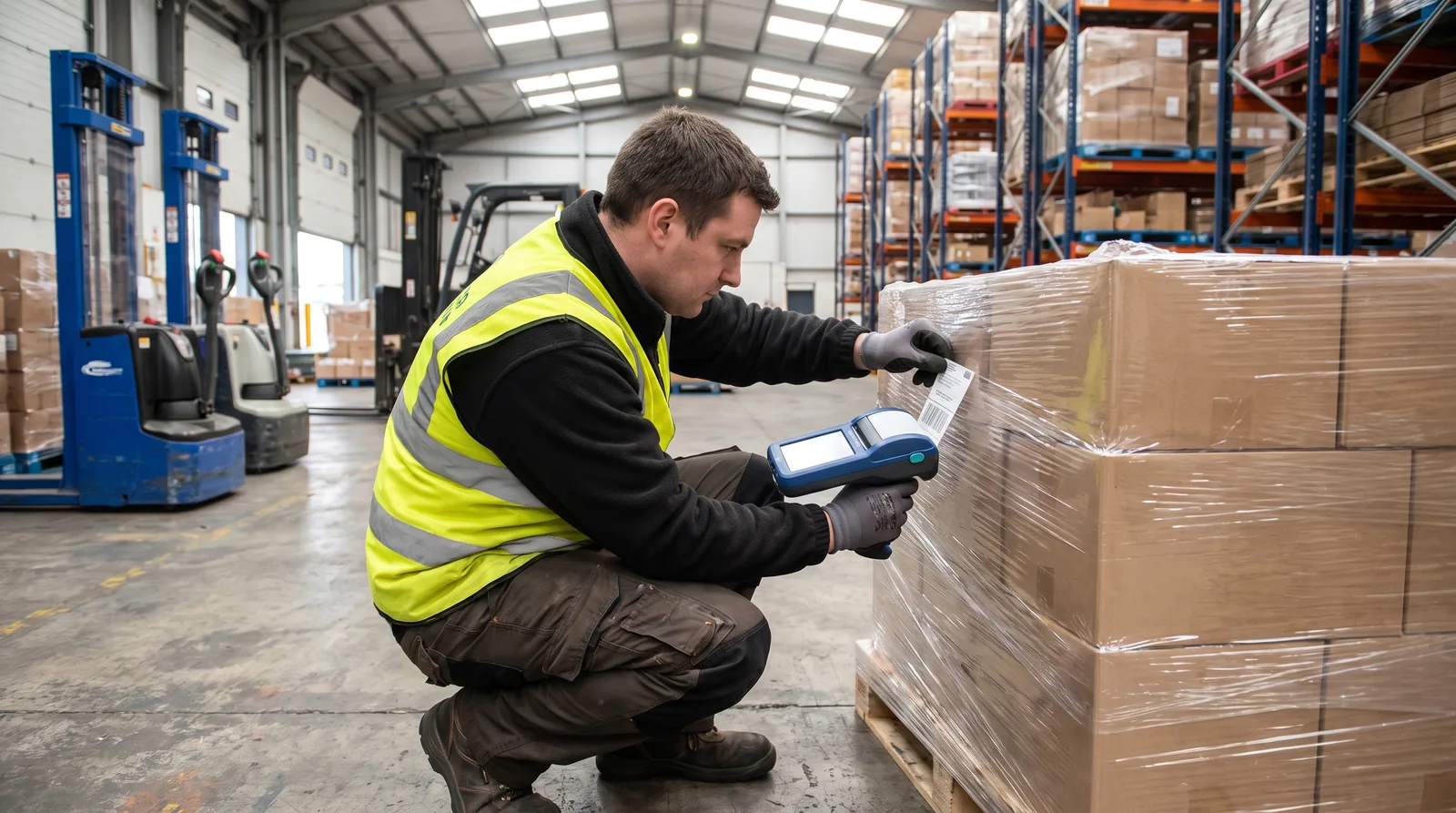
Re-labelling for UK retail means applying or replacing product and pallet labels so a consignment meets the receiving standard of a British retailer: a readable GS1 barcode on the selling unit and an SSCC label on each pallet. In Milton Keynes we handle the pallet and outer-carton side, printing and applying SSCC pallet labels and carton markings. We do not label individual selling units and we do not prepare consignments for Amazon FBA, which stays with the client or their prep operator.
Why a UK retailer refuses a delivery over a label
UK grocery and general-merchandise chains book goods in by scanning, not by reading. If the barcode does not scan, the number does not match the purchase order, the pallet has no SSCC or the label is in the wrong place, the receiving bay stops the delivery. A rejected consignment goes back on the truck, misses its delivery slot and, with many retailers, triggers a fine or a charge-back. The label is not paperwork, it is the key that opens the goods-in door.
Four levels of marking, and who does each
| Level | Label | What it carries | Whose side |
|---|---|---|---|
| Each selling unit | GS1 retail barcode (GTIN) | the number the till and goods-in scan | client or their prep operator |
| Each carton or case | case marking, sometimes GS1-128 | trade item, quantity, batch, best-before | OPTIMUS |
| Each pallet | SSCC pallet label | a unique 18-digit code per logistics unit | OPTIMUS |
| Each Amazon item | FNSKU label | the item identity inside Amazon fulfilment | client or their prep operator |
At pallet and outer-carton level we over-label (a clean new label placed over the old one so nothing shows through), replace markings outright, or apply a first label to an unmarked unit. We check that the code scans, that the number matches the booking and that the label sits where the receiver expects it. The selling-unit level we leave to whoever owns it, and the limits of the warehouse service are set out in our article on what our warehouse does not do.
Amazon FBA: what it requires and who does it
Goods going into Amazon FBA need an FNSKU label on every unit and prep that follows Amazon's receiving rules: poly-bagging, bundling, expiry-date formatting and box content readiness. Send stock in without it and Amazon can refuse the shipment or charge a per-unit prep fee. That is unit-level work and sits outside our scope: the seller does it in-house, or a specialist prep operator in the United Kingdom does it. Our part starts once the labelled units already stand in cartons on a pallet: we store them, restack and stabilise the load, apply the SSCC pallet label and run the consignment to the fulfilment centre. The delivery requirements themselves are covered in our article on Amazon FBA deliveries to the UK.
When goods arrive already wrong
The cases we fix on site concern the logistics unit: a pallet with no SSCC, a pallet label damaged or unreadable to a scanner, an outer carton with no marking, a load built against the receiver's requirement. Rather than send the consignment back across the Channel to be corrected at origin, we correct it in the United Kingdom and release it to the retailer. Errors at unit level, meaning labels in the language of the origin country, missing UK importer details or a GTIN that does not match the UK purchase order, need work on the individual product and stay with the client or their prep operator. We can still help logistically: take the goods in, hold them until the correction is done and move them on. Where a carton itself is breached and the load has to be restacked on the pallet, we do that together with the unit marking, as described in our article on repacking in the UK warehouse.
Why mark pallets in the UK, not back at origin
Bringing a consignment up to standard in the destination market keeps the delivery window. The trailer reaches the warehouse, we re-label the pallets and re-palletise where needed, and the goods move on to the store, the distribution centre or the fulfilment centre as a clean, bookable delivery. Sending a mis-marked consignment back to origin loses two crossings and several days, and usually the slot with it.
What we need from you
To mark logistics units correctly we need the receiver's specification (pallet label type, placement, data fields), the SSCC numbering or your agreement for us to generate it from your GS1 company prefix, and the booking and purchase order the goods will be received against. If you hold a GS1 company prefix, the GTIN and SSCC numbering flows from it; if not, GS1 assigns the prefix, not us. We print and apply, we do not invent numbers. Selling-unit barcodes are prepared and applied by your prep operator.
Where we do it
We mark pallets and outer cartons in our Milton Keynes warehouse between London and Birmingham, within our warehousing and cargo handling services. The central location means the trailer barely diverts and the retailer or fulfilment centre gets a compliant delivery on time.
Sources
- GS1: Global Trade Item Number (GTIN), the number behind the retail barcode
- GS1: Serial Shipping Container Code (SSCC) for logistics units
Has a UK retailer flagged the markings on your pallets, or do you want to pre-empt it? Describe the consignment in the contact form: we will prepare SSCC pallet labels and outer-carton markings, build the load and get it there inside the delivery window.