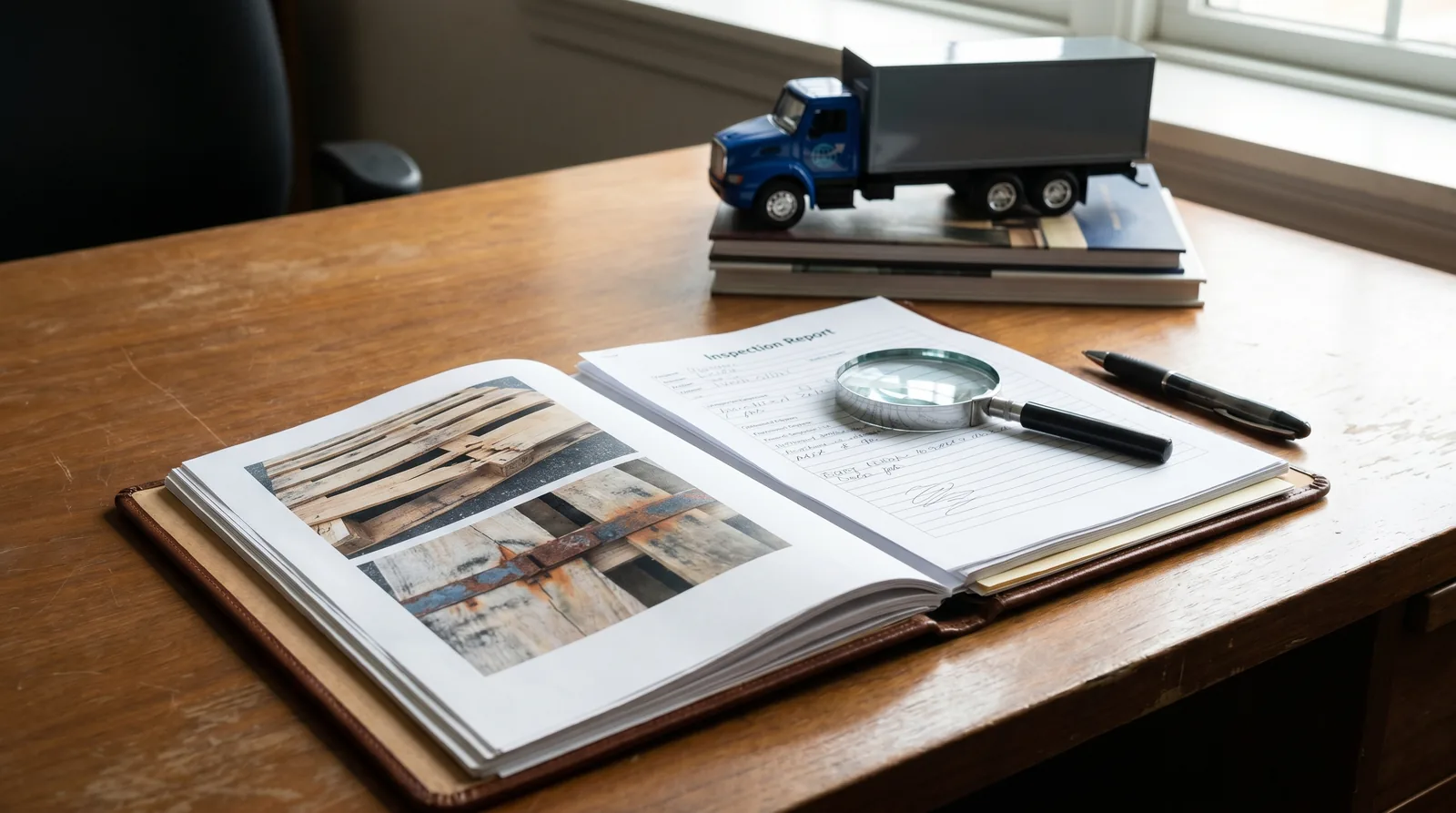
An inspection report for the insurer documents the condition of cargo after an incident and forms the basis of a claim. It contains the circumstances, batch identification, photographs before and after the work, an assessment of fitness for onward trade and a conclusion: distribution, repacking, downgrading or withdrawal.
Why the report comes before the load disperses
Once pallets go out for distribution the factual state ceases to exist. The goods are mixed with others, packaging goes into waste, and all that remains is people's recollections and a few phone photographs taken at the wrong angle. An insurer assesses evidence, not intentions. So the rule is simple: documentation first, decisions about the goods second. For consignments held in the United Kingdom we route the load to our Milton Keynes warehouse, where inspection happens under controlled conditions rather than in a consignee's yard.
The structure of the report
- Identification: job and consignment note number, vehicle details, date and place of inspection.
- Circumstances: what happened, when it was noticed and who reported it.
- Cargo description: pallet count, packaging type, batch numbers, quantities.
- Condition found: damage described pallet by pallet and package by package, without generalisations.
- Photographic record: general and detailed shots, before work starts and after it finishes.
- Work performed: repacking, pallet rebuilding, separation of sound units from unsound ones.
- Outcome: how much is fit for trade, how much for withdrawal, with reasons.
- Recommendations: what to do with the batch and which documents will still be needed.
Photographs that actually prove something
The commonest failing is photographs taken from one distance and one angle. Useful documentation has three levels: a general shot establishing that this is the load and the place, a shot of the pallet showing the batch marking so the image can be tied to a document, and a close-up of the damage itself. Add photographs of the seal, the number plate and the trailer interior where the incident concerns the carriage. Suspected trailer tampering follows a separate procedure, described in cargo inspection after trailer tampering.
What the insurer does with it
An adjuster assesses three things: whether the event falls within cover, the size of the loss, and whether the claimant acted reasonably to limit it. That last point is often underrated. A report showing that part of the goods was recovered instead of the whole batch being destroyed strengthens the owner's position rather than weakening it. The difference between carrier liability cover and goods insurance is taken apart in cargo insurance, and reservation deadlines in claims and the CMR damage report.
Special cases
Not every incident fits the same template. Wet or toppled cargo requires an assessment of whether moisture reached the inside of the packaging, described in wet or toppled cargo. With temperature-controlled goods what matters is time outside range and the record of conditions, covered in a broken cold chain. With food comes an additional layer of traceability and safety flowing from general food law.
When goods must be withdrawn
A conclusion to withdraw a batch does not end the matter, because an insurer usually expects confirmation that the goods really did not return to trade. So disposal is carried out with a confirming document rather than on trust. The path is described in certified disposal. Experience shows that with a properly conducted inspection the share of a batch requiring withdrawal is far smaller than it first appears.
Sources
Have cargo after an incident and need documentation before the goods move on? Describe the situation through the quote form and we will start an inspection with a report. The scope of work is on the cargo inspection page.