If unauthorised people are found in a trailer, the cargo must be treated as compromised and held before any further distribution. The order is fixed: secure the vehicle, report to the authorities, photograph everything, inspect the goods and let the owner decide. For food and cosmetics the precautionary principle applies, because packaging integrity can no longer be assumed.
Why this is not only the driver's problem
Trailer tampering has two layers. The first affects the carrier: civil penalties on the British side, a missed sailing, interviews and paperwork. The second affects the cargo owner and is usually the more expensive one: a delivery the receiver refuses, a batch pulled from sale, or a claim from a retail chain. The driver brings the problem to the gate, but it is settled in a warehouse and on paper. That is why the response has to be a procedure, not improvisation in a lay-by.
The first hours, in order
- Do not open the trailer further or move goods around unnecessarily, so evidence is not disturbed.
- Report the incident to the authorities in the country where it was found, and get a reference.
- Notify the shipper and cargo owner before anyone starts distribution.
- Photograph everything: seals, curtains and panels, pallet arrangement, visible damage to wrap and cartons.
- Route the vehicle somewhere a controlled inspection is possible, rather than unloading at the receiver.
Inspection: what we actually check
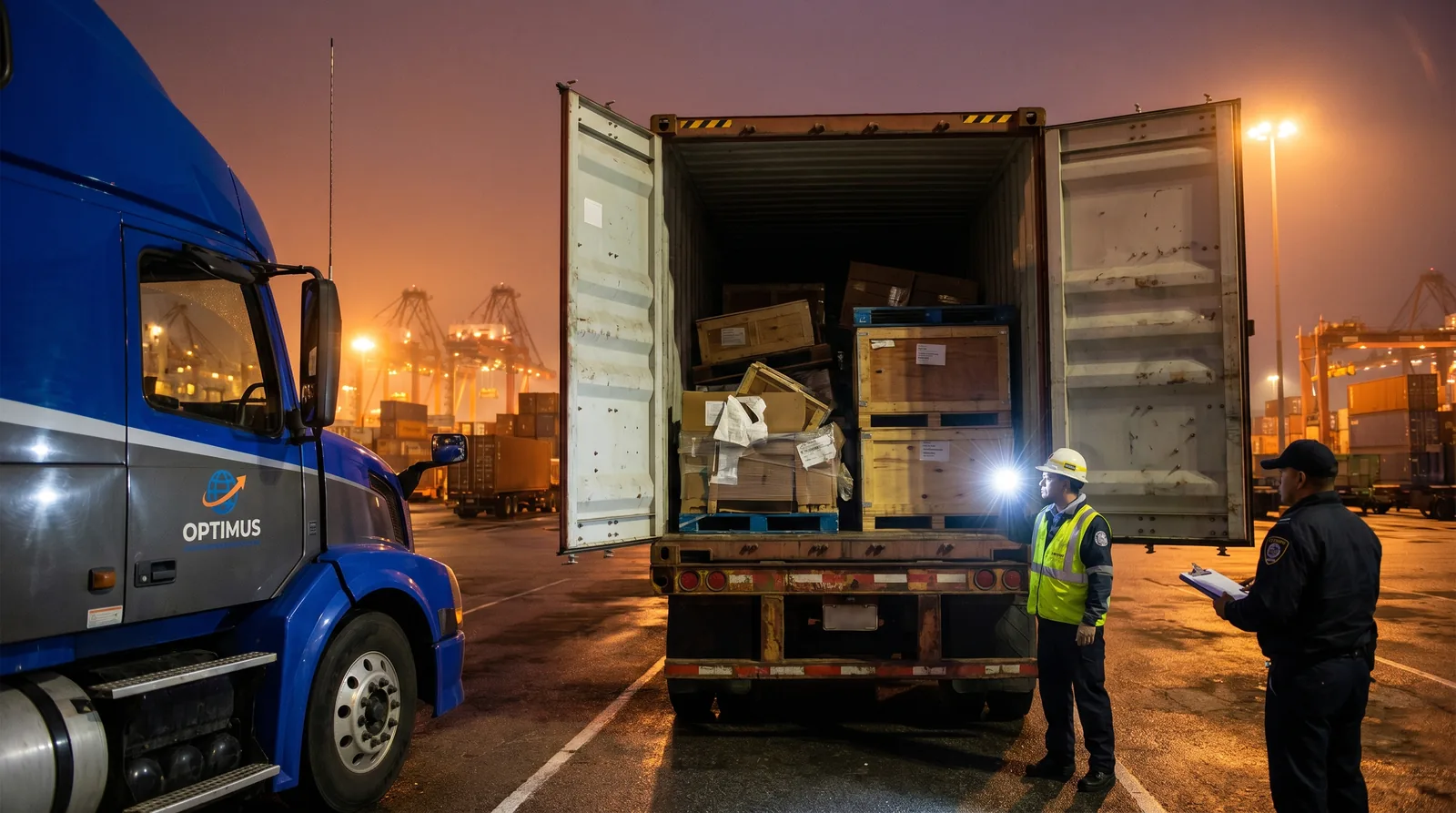
We unload pallet by pallet and work through the load in layers. We check wrap, tape and seals on retail units, look for foreign objects, moisture and mechanical damage, verify quantities against the packing list and confirm batch numbers. The output is not a verdict of good or bad: it is a count of saleable, doubtful and unfit units, backed by photographs. That report is the basis for the owner's decision and the material an insurer needs. How we build it is described in the inspection report for the insurer, and the wider sequence in cargo inspection after trailer tampering.
Food and sensitive goods: a higher bar
For food, feed, cosmetics and medical devices the precautionary principle of EU food law applies: goods about which there is reasonable doubt should not enter the market. In practice that means retail packs that were breached, or could have been reached, go to write-off even when they look untouched. It is not worth arguing: the cost of one pallet is normally lower than the cost of recalling a batch from shops. Sorting and repacking take place in our Milton Keynes warehouse, which has chilled and frozen zones and UV inspection and decontamination.
Quarantine instead of a snap decision
The commonest mistake is an immediate call made under pressure from the receiver: either release everything or destroy everything. Both can be costly. A short quarantine is wiser: the goods are held, the owner gets a report with counts and photographs, and only then comes the decision to release, repack or dispose. The hold and release mechanism is described in quarantine, hold and release, and documented destruction in certified disposal of rejected goods.
Penalties and insurance
Carrying people into the United Kingdom attracts civil penalties on the carrier, the driver and the vehicle owner; the scope and calculation are covered in civil penalties for clandestine entrants. Cargo loss is a separate question: some claims fall inside carrier liability under the CMR Convention, but cargo insurance often responds better, as discussed in when to add cargo insurance.
Prevention that actually works
- Stops only at lit, monitored parking on the leg before the port.
- A check of curtains and seals after every stop, with the time and place recorded.
- Numbered seals whose number is written onto the consignment note.
- The vehicle kept locked from loading, and never opened at a stranger's request.
Sources
- GOV.UK: Clandestine Entrant Civil Penalty Scheme
- EUR-Lex: Regulation (EC) No 178/2002 (general food law)
Have a load after a trailer breach and need a fast decision? Write through the quote form and we will take the goods in for inspection and produce a report. The full scope is on the cargo inspection page.