SIVEP (Service d'Inspection Vétérinaire et Phytosanitaire aux frontières) is France's veterinary and phytosanitary border inspection service. On import to France, it checks goods of animal origin and plants and plant products for health. It requires advance pre-notification, a full set of certificates and routing of the load to a designated border control post, where documentary, identity and, where needed, physical checks take place.
What SIVEP is and what it covers
SIVEP handles border checks for two groups of sensitive goods. The first is products of animal origin: meat, dairy, fish, composite products and other goods for which EU law requires a veterinary check. The second is plants and plant products subject to phytosanitary requirements. The common thread is that it is not about value or a duty rate but about health: whether the goods carry a sanitary or phytosanitary risk to people, animals and plants in the Union. The specific categories, and whether a given item is subject to a check, follow from EU rules and depend on the type of product, so each consignment must be classified on its own.
Pre-notification before arrival
A SIVEP check does not start at the border but earlier, with a filing. A load subject to inspection must be pre-notified at the designated border control post in advance, before the trailer reaches the border, so the service knows what is arriving and when and can plan the check. The lead time required and the details of the filing depend on the country and the category of goods, which is why we treat them as an item to confirm for the specific direction and product, not a fixed number. The principle stays the same: no pre-notification means no scheduled check, and so a standstill.
The full set of documents
The check needs a full set of health documents. For goods of animal origin this is above all a health certificate issued by the competent authority of the exporting country, confirming that the goods meet EU requirements. For plants and plant products it is a phytosanitary certificate. Added to these are commercial and transport documents consistent with the filing: the data must match, because a discrepancy between paper and load is one of the more common reasons for a hold. The documents must be in place and correct before the load arrives, not sent on afterwards.
Border control posts
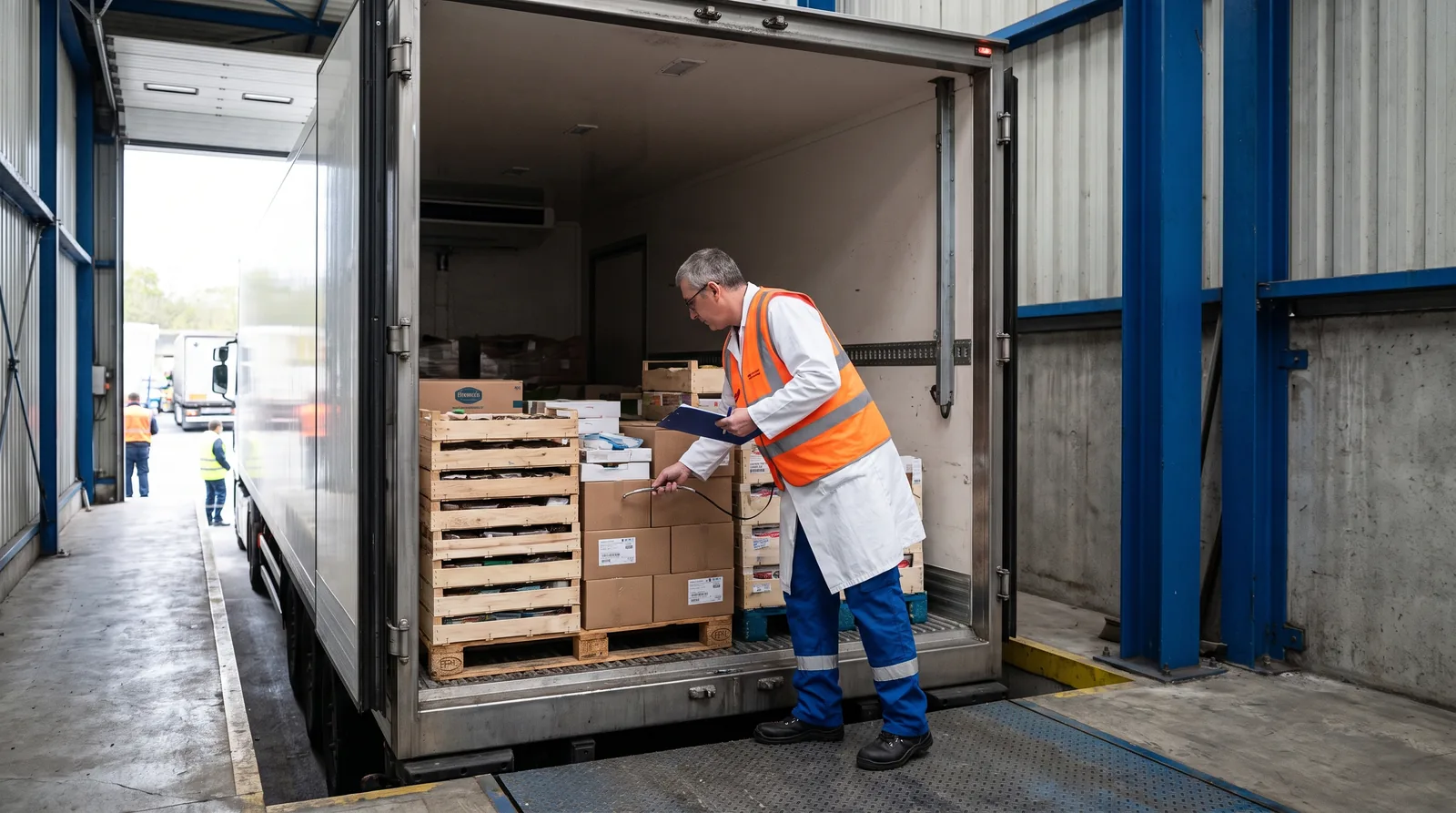
A SIVEP check takes place at a designated border control post, not at any point of crossing. This matters for routing: a sensitive load must be directed to where the appropriate post for that category of goods operates, because not every post handles every type of product. At the post there is a documentary check, an identity check (whether the load matches the filing) and, where required, a physical check of the goods. Only a positive result allows the load to be released for onward transport within France and the Union.
SIVEP and the UK's BTOM: two mirrors of the same idea
Direction matters, because France and the United Kingdom control the same risk with their own systems. On import to France, including from Great Britain, SIVEP applies. The other way, on import to the United Kingdom, the UK's BTOM model applies, based on CHED certificates and filings in the IPAFFS system, which we cover in the article on SPS checks on import to GB. The idea is the same, a health check of the goods at the border, but the system names, forms and control posts differ. Two-way transport, for example food between the UK and the continent, therefore needs both regimes handled, each on its own side.
What you lose if you skip it
Skipping SIVEP is not a fine to pay later, it is the load held at the border. Without pre-notification or without a complete certificate, the load is not released and waits at the control post. For sensitive goods, chilled cargo especially, time works against you: exceeding the allowed temperature or time can mean the goods are no longer fit to be placed on the market and go for destruction, in which case you lose the whole load, not just time. Add to that the cost of the reefer and the vehicle standing, contractual penalties for late delivery and a missed window at the consignee. The worst case is not hypothetical: a trailer of food that stands too long is often cargo for disposal.
The difference in practice
The average carrier hauls the load and leaves SIVEP to the client, or discovers it only at the border. We establish it before the trailer moves. We check whether the goods are subject to a veterinary or phytosanitary check, assemble the correct certificates, pre-notify the load at the right border control post for the category and plan the route so it reaches where it can be checked. Thresholds, deadlines and fees depend on the goods and the import country's rules, so we confirm them for the specific shipment. For sensitive cargo, where temperature and time are critical, this difference decides whether the goods arrive fit to sell.
How we work and what happens next
SIVEP concerns us when a load from Great Britain returns to the continent through a French port on its way to Poland: we then prepare the SPS paperwork for the SIVEP check on the UK→PL leg, so the check is not a surprise at the border. We establish the classification of the goods, assemble the certificates, pre-notify the load at the designated post and synchronise it with customs clearance, which we run as part of customs clearance and, more broadly, our services. The regime on the other side of the Channel we cover in the article on SPS checks in GB. Moving animal-origin food or plants from Great Britain to Poland through a French port and want them to clear first time? Describe the consignment in the contact form and we will run the transport and SIVEP together.