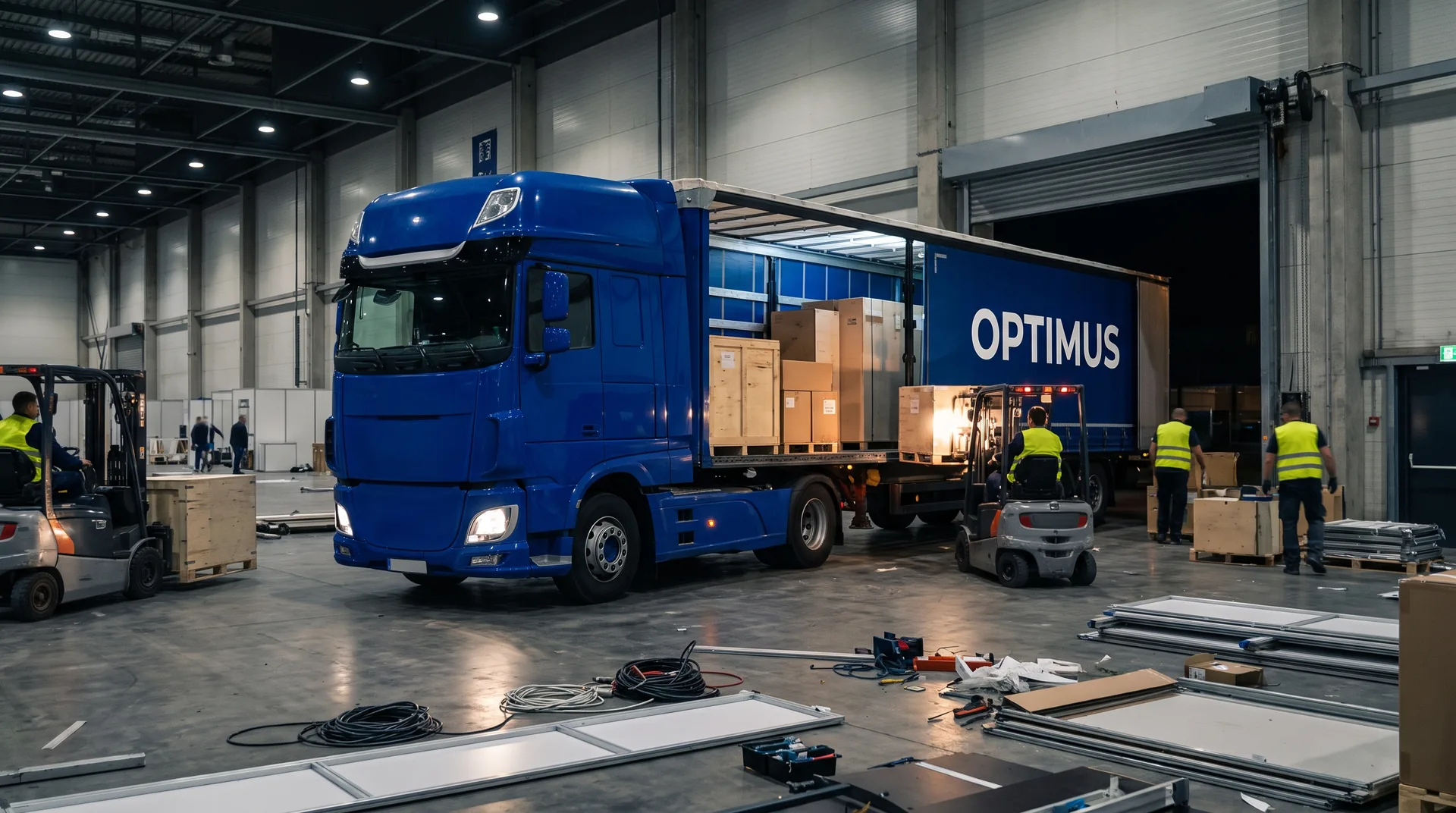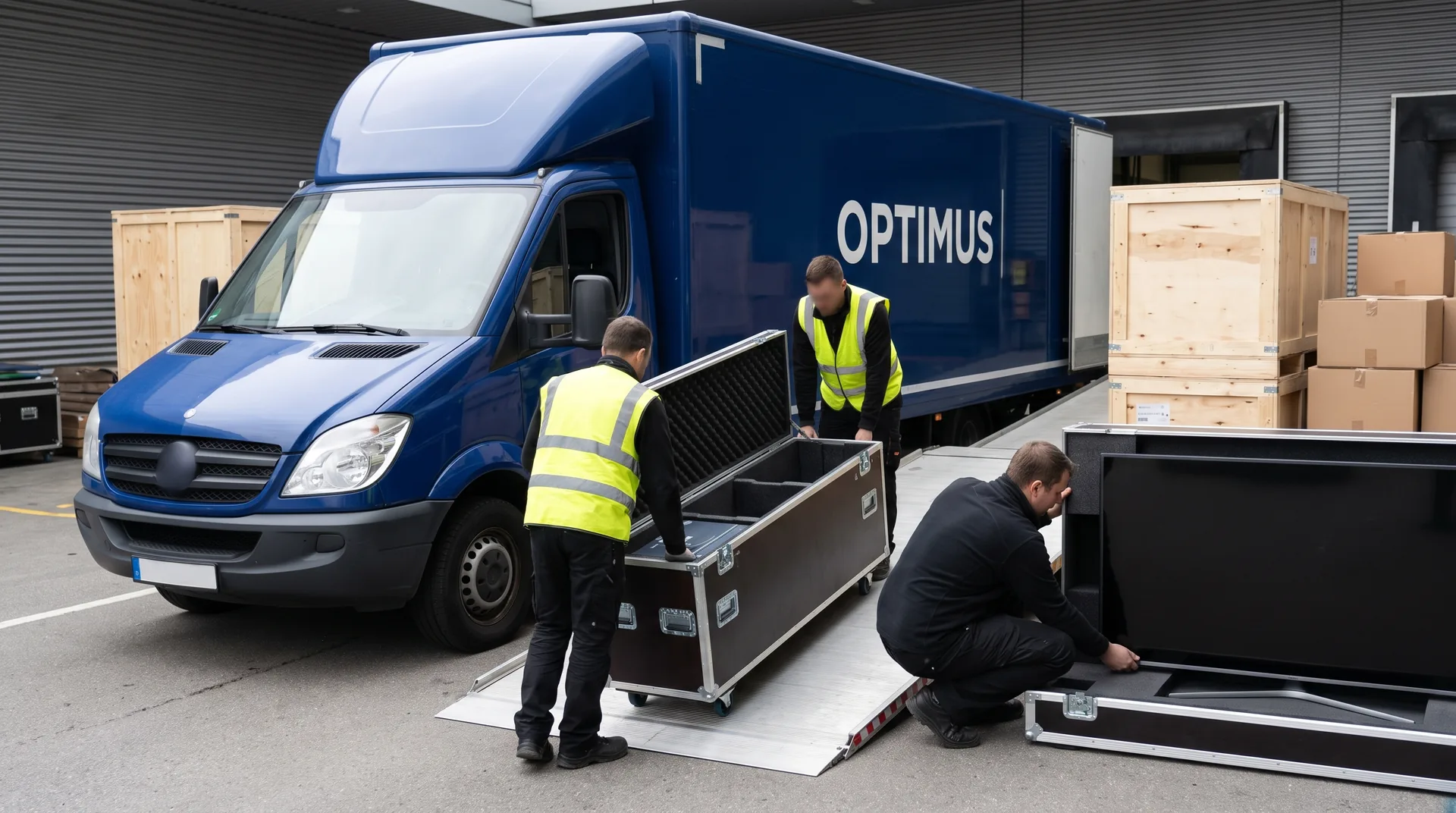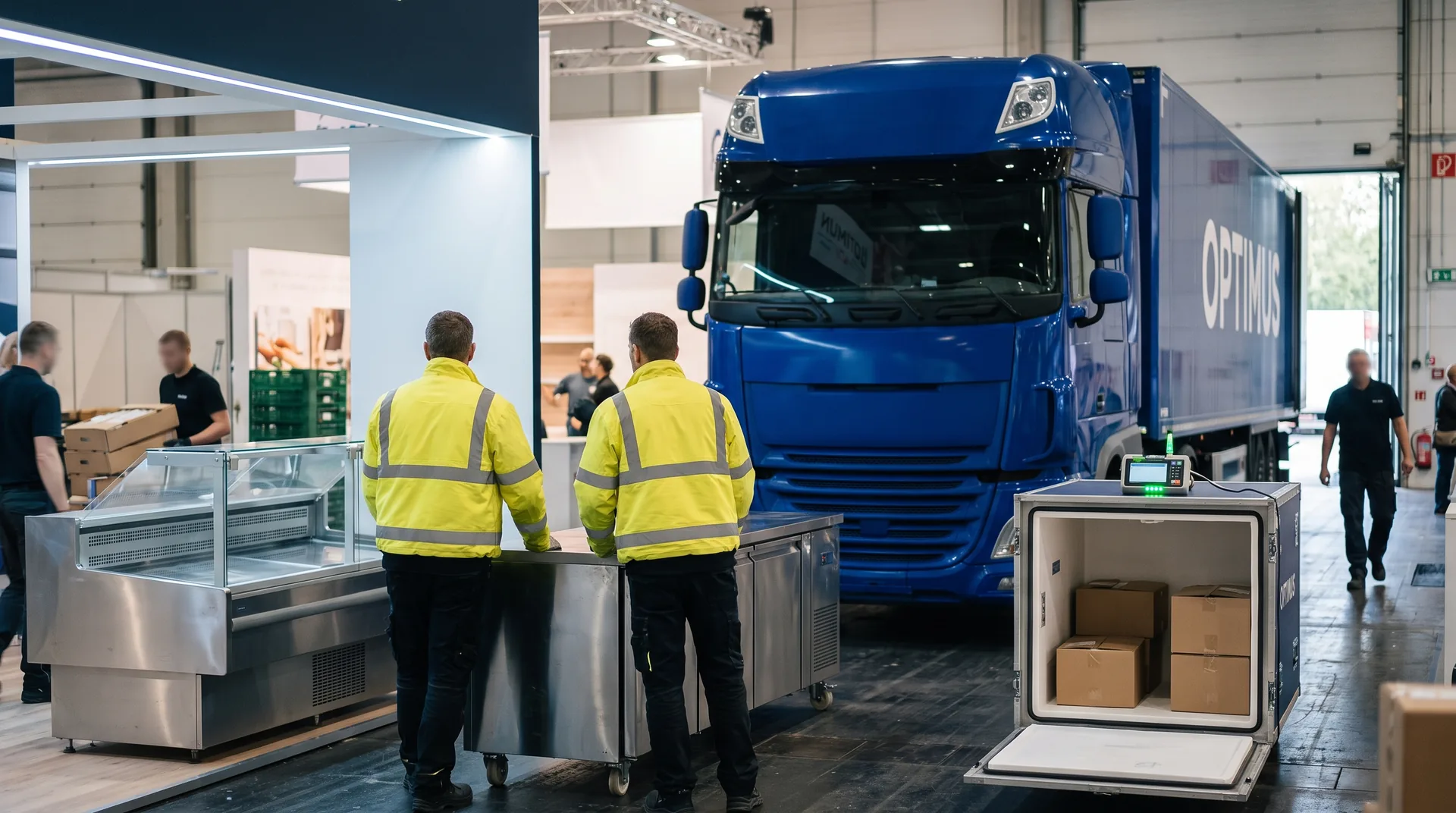
A stand with a catering display carries three different streams in one delivery: refrigeration equipment and fittings, temperature-sensitive product, and single-use materials. Each has its own transport regime, its own customs status and its own addressee for compliance questions. The carrier answers for transport conditions and the temperature record, not for the product's admissibility or for the rules of tasting on the stand.
Three streams to separate at packing stage
The first is equipment: chilled cabinets, counters, demonstration appliances, serving ware. It travels as ordinary freight, returns as a complete set and usually qualifies for temporary admission. The second is sensitive product: whatever has to look fresh through four days of the show or be served to visitors. It needs a set temperature range and does not return. The third is single-use material: packaging, napkins, cups, printed matter. It needs nothing special in transport, but does not belong on a temporary admission document, because it stays in Britain.
Separating those streams at packing is cheaper than separating them at the border. We describe the same split for stand structures in ATA carnet or temporary admission.
What we do with sensitive product
We carry it within a set temperature range, record the trace and hand the record over with the documents. The range is given by the shipper, because the shipper knows the requirements of the product. A fair delivery adds one element absent from an ordinary warehouse delivery: the load queues at the gate, and then waits on the stand where power is often switched on only after the technical inspection. That stretch is outside the vehicle and outside our control, so it is planned in advance: either the product travels on the last possible build-up day, or it waits in a temperature-controlled facility and is brought in on opening day.
The rules of controlled-temperature carriage are set out in temperature-controlled transport to the UK, and the consequences of a break in a broken cold chain. The scope of the British-side facility is on the Milton Keynes warehouse page, where we handle pallet receipt and release, short-term storage, cross-docking, repacking, inspection and temperature control.
What we do not do, and why saying so matters
We do not act as a food business operator, we do not hold HACCP as an establishment standard, and we issue no statements about a product's fitness for consumption. If your product requires the carrier or the warehouse to hold approved establishment status, that has to be settled before the order, because it changes who can do the job. We say this plainly, because in this field an unspoken assumption costs more than a refusal.
The border: food from Poland to Britain
Products of animal origin and some plant products are subject on entry to Britain to a separate regime of sanitary and phytosanitary checks, with required certificates and pre-notification in the British system. This applies to small quantities carried for tasting too, because the regime follows the type of goods, not their value. A missing document does not produce a delay, it produces a detained consignment. The requirements are collected in a missing SPS certificate or pre-notification and in chilled fresh food transport between Poland and the UK.
The practical conclusion for an exhibitor is simple and inconvenient: some products are easier to buy locally than to bring. Where a tasting uses products of animal origin, cost both options before the stand concept is fixed.
Rules on the stand itself belong to someone else
The conditions for preparing and serving food on the event site are governed by the organiser together with the competent authorities, and responsibility for food safety rests with the exhibitor as the operator of the stand. The exhibitor registers the activity where that is required, and answers for temperatures on the stand, equipment and hygiene. A carrier cannot substitute for any of that. Check these requirements alongside the technical regulations, as they usually arrive in the same pack of documents.
Refrigeration equipment as freight
Cabinets and chilled appliances are heavy, contain glass and protruding parts, and usually have to travel upright with vibration limited. Refrigerant adds another layer: some appliances are subject to separate requirements in carriage and later in disposal. Electrical items have to match the British supply standard, which we cover in AV equipment and electronics on a stand.
What to include in your enquiry
The type of product and its origin. The required temperature range, stated numerically. The date and hour the product has to be on the stand. Whether the stand will have power at the moment of delivery. The split between what returns and what stays. And whether the product is subject to sanitary checks on entry. With that set the delivery can be planned without surprises at the border.
Sources
- Food Standards Agency: food requirements in the UK
- GOV.UK: Border Target Operating Model
- GOV.UK: the IPAFFS pre-notification system
Planning a tasting on a stand in Britain? Send the product type and the required temperature range through the quotation form and we will check the border regime and plan delivery for the right day. The scope is on our exhibition logistics page.