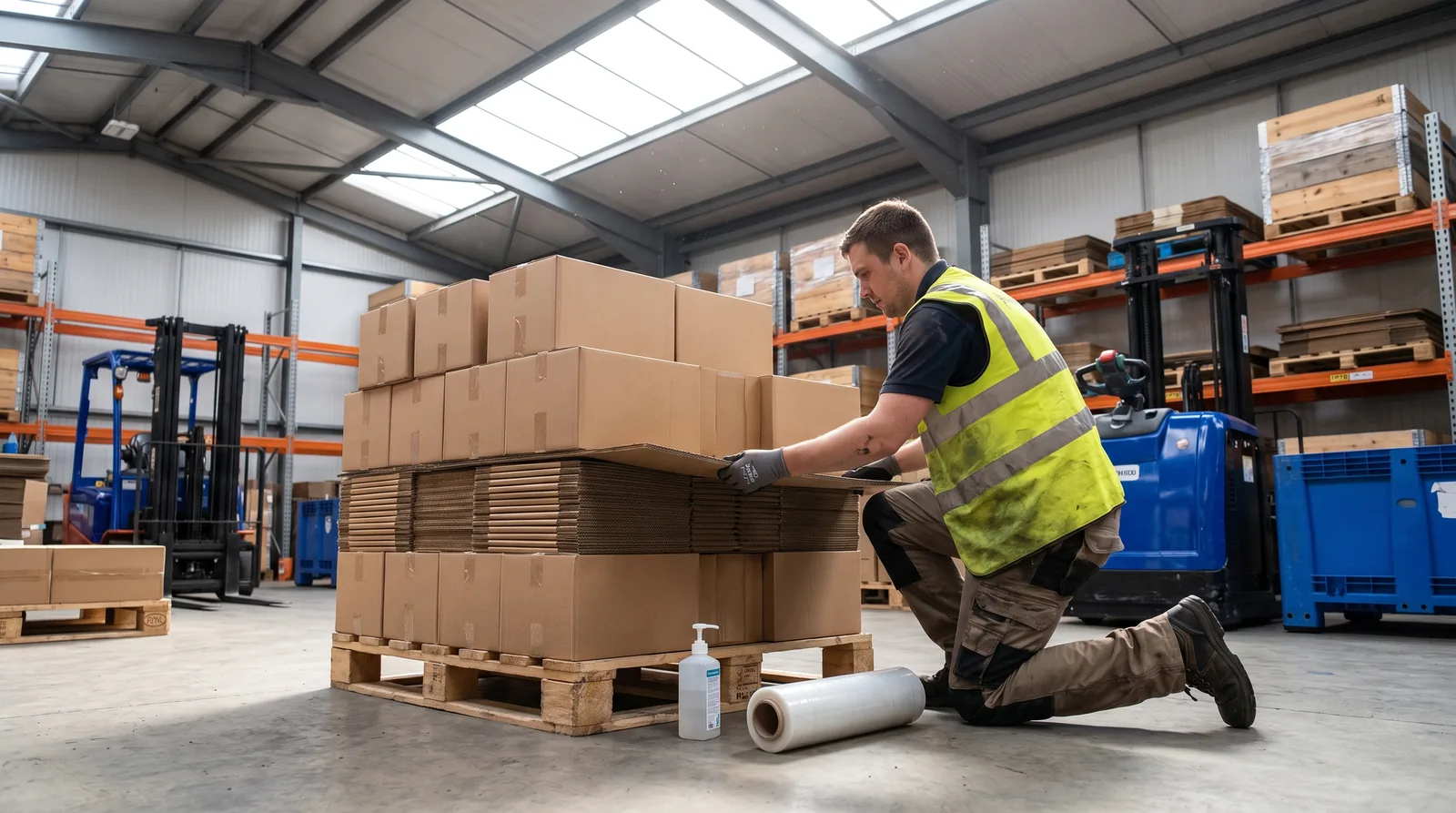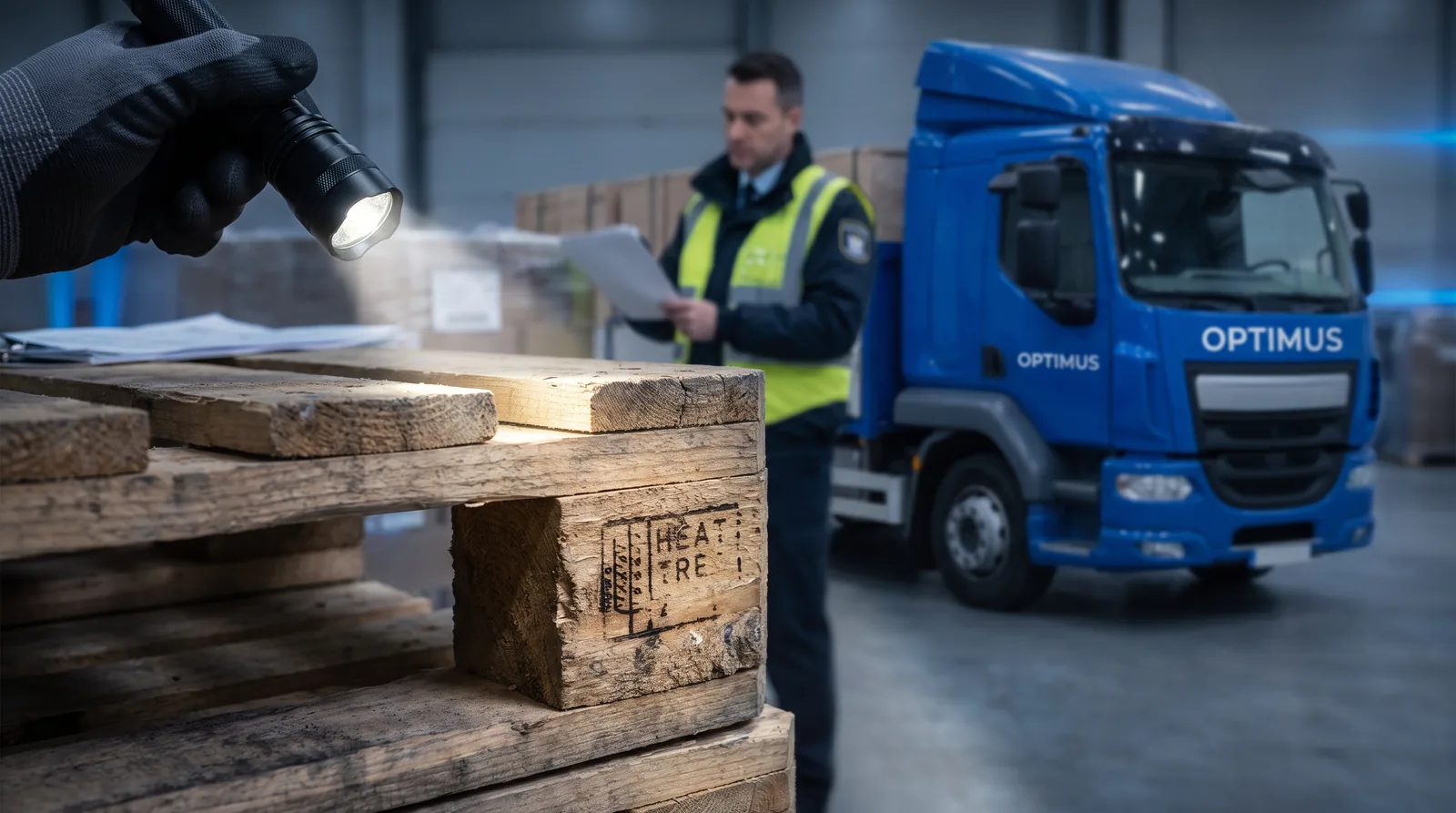
A wooden pallet without a legible ISPM 15 mark can stop the whole trailer at the border, not just one consignment. Since 1 January 2021 Great Britain requires wood packaging from the EU to be treated and marked to the ISPM 15 standard. We check pallets at loading and swap doubtful ones at our hub before the crossing.
Why can an ordinary pallet stop cargo at the UK border?
Before Brexit pallets circulated between Poland and England with no phytosanitary requirements, because both sides sat in the same regulatory area. After the UK left the EU, wood packaging in both directions follows third-country rules. British inspectors may check pallets at the border or at the delivery point, and an unmarked pallet is treated as a potential carrier of timber pests. In groupage the effect can be painful: one non-compliant pallet in a trailer carrying a dozen consignments raises questions about the whole vehicle. That is why we check every consignment separately during consolidation, as described in our guide on how to prepare a pallet for the UK.
What does a correct mark look like?
The ISPM 15 mark is branded or durably printed on at least two opposite sides of the pallet. It shows the IPPC wheat-ear symbol, a two-letter country code such as PL, the producer's registration number and a treatment code. The most common code is HT, heat treatment: wood heated to a core temperature of at least 56 degrees Celsius for a minimum of 30 minutes. DH, dielectric heating, also appears. MB stands for methyl bromide fumigation, which is no longer used in the EU. The mark must be legible: smudged, painted over or hidden under a label means, in practice, no mark at all. A pallet repaired with untreated wood loses compliance until it is re-treated and re-marked.
What is exempt from the requirement?
ISPM 15 applies to solid wood. Processed materials are outside the scope: plywood, OSB, chipboard and presswood pallets, as well as raw wood up to 6 mm thick, cardboard, sawdust and wood wool used as filling, plus plastic and metal pallets. If you ship to the UK regularly, a plastic or presswood pallet can be the simplest way to remove the issue entirely, though you should check its load rating, something we also cover when discussing EPAL pallet dimensions and exchange.
What do we do when a pallet has no certificate?
- We catch the problem at booking or loading: the driver and the warehouse check the mark before the consignment enters a UK-bound vehicle.
- If the mark is illegible or missing, we transfer the goods onto an EPAL pallet with a valid ISPM 15 mark at our hub in Kielce or Legnica.
- For larger batches we agree a pallet swap at the shipper's site or deliver compliant pallets before the main loading.
- We photograph the repack, so the consignee and any inspector can see exactly what the goods travelled on.
A swap before departure costs a fraction of a trailer standing at the border and an emergency repack in England.
What happens if a non-compliant pallet reaches an inspection?
British plant health officers can order the packaging to be treated, destroyed or sent back, and the costs fall on the party responsible for the consignment. In practice that means a stopped vehicle, a transfer onto compliant pallets and an invoice nobody planned for. In groupage there is the extra risk of delaying every other consignment in the trailer. Our groupage runs as regular LTL departures from 1 pallet, so we police pallets at origin: that is the cheapest moment to fix them.
Returning pallets and packaging loops
The requirement works both ways. The European Union demands ISPM 15 on wood packaging arriving from third countries, which now includes the UK. If your pallets come back from England to Poland in a returnable loop, they need the same valid mark. With steady trade it pays to standardise the pallet pool: one standard, one pallet supplier, periodic checks of the marks. That closes the subject for exports and returns alike.
Sources
- GOV.UK: Wood packaging material for import and export (accessed 17 Aug 2026)
- IPPC: ISPM standards, including ISPM 15 (accessed 17 Aug 2026)
Not sure your pallets will pass the border? Send a photo of the mark via our contact form; we will check it before loading and, if needed, repack your goods onto compliant pallets at our hub.