Before the first bid is placed, the buyer opens an account with the auction house, passes company verification and accepts the conditions of that particular sale. Only then does the right to bid exist. A bid placed in the auction is binding and the equipment sells as seen: you cannot walk away because the machine turned out to be worse than it looked in the photographs.
An account is not the same as being approved to bid
Opening an account takes a few minutes and means nothing beyond the auction house knowing an email address. Approval to bid is a separate step: the auctioneer checks who the buyer is and only then unlocks the bidding button. On industrial and plant sales that check is often manual and takes time, so registration is done in advance, not on the morning of the sale. A buyer who decides at the last minute can miss the lot not because someone outbid them, but because approval did not come through in time.
Company verification and the deposit
The auction house usually asks for company registration details, identification for the person acting on its behalf and proof of address. On higher-value lots, or on a new account, a deposit appears: a holding amount, a card authorisation or a prepayment, released after the sale closes. We do not quote the size of that deposit, because the conditions of the particular sale set it and it differs between houses, and sometimes between sales run by the same house. The practical point is this: the document you sign at registration is the same document that later settles any argument about the removal date and about who loads the machine.
A bid is binding, and that is the heart of it
A raise in a live auction, a maximum bid in a timed sale and a click in an online sale all have the same effect: a declaration to buy at that figure. It cannot be withdrawn because one more cost turned up that the buyer had not thought about. So the arithmetic is done before, not after, which is why we wrote separately about a transport quote before the auction. What changes between sale formats is not the force of the bid but the rhythm of the operation: live, timed and online auctions set the payment date and the departure date differently.
Sold as seen
Conditions of sale in the trade normally exclude implied terms as to quality and sell the equipment in the state it stands in on the yard on the day. The lot description, the hours shown and the photographs are information, not a warranty. There is one practical conclusion: look at the machine, either before bidding or before collection. We carry out an inspection of the machine before collection from the yard and send back photographs and a description of what is visible. That is not a valuation of the machine and not an assessment of its mechanical condition; we do not offer either and we do not pretend to.
What is added for a buyer outside the United Kingdom
Registration looks the same, but three things are added. The first is an EORI number, without which neither the British export declaration nor the EU import declaration can be filed. The second is the decision on which country the machine enters the Union through, because that determines who declares and who accounts for the tax; we come back to it in our pieces on clearing in the Netherlands instead of Poland and on customs procedure 42. The third is the paperwork the auction house releases after payment, and what it contains is set out in our article on documents for a machine bought at auction.
Where our part ends
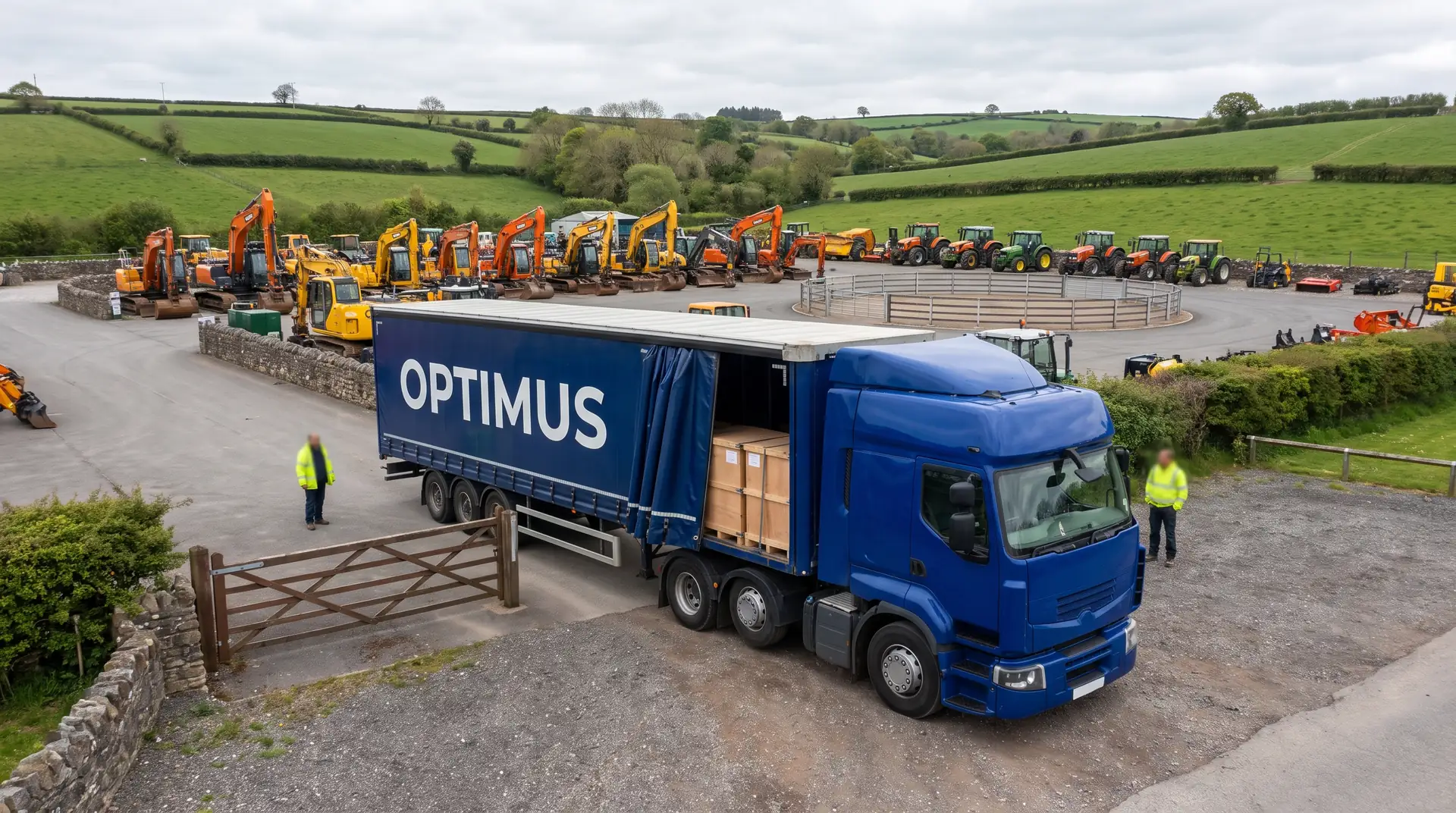
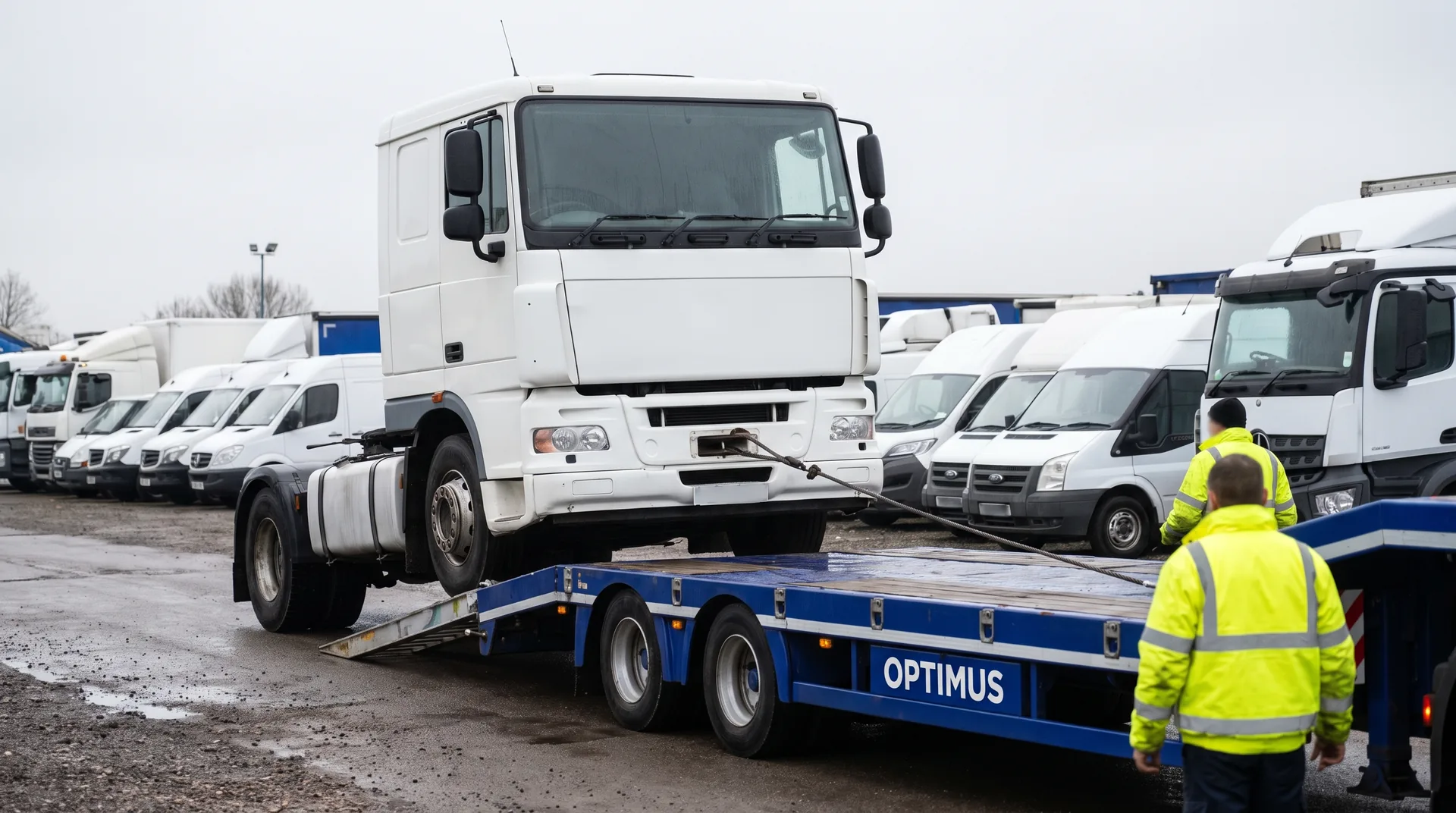
We help with the bidding in the ways we actually can: we cost the delivery of the machine to the address you give, we check dimensions and the loading method, we go and look at the equipment on the yard, we arrange clearance working with our regular customs agencies, and we haul the machine out. We do not bid on a client behalf, we do not act as an agent towards the auction house and we do not pay for the machine. Those are the buyer acts and nobody else.
What you will not find here
Buyer premium, the size of the deposit, payment terms or the removal deadline. Every one of those figures is set by the conditions of the particular sale, which is the only source for them. From those conditions we need one date in order to plan a vehicle: by when the machine has to be off the yard.
Sources
- GOV.UK: EORI number
- GOV.UK: exporting goods from the United Kingdom
- legislation.gov.uk: Sale of Goods Act 1979
Got a lot in mind and want to know what it costs to deliver it to an address in Poland? Send the lot number, the yard address and the removal date through the quote form. See also our guide to the UK auction market.