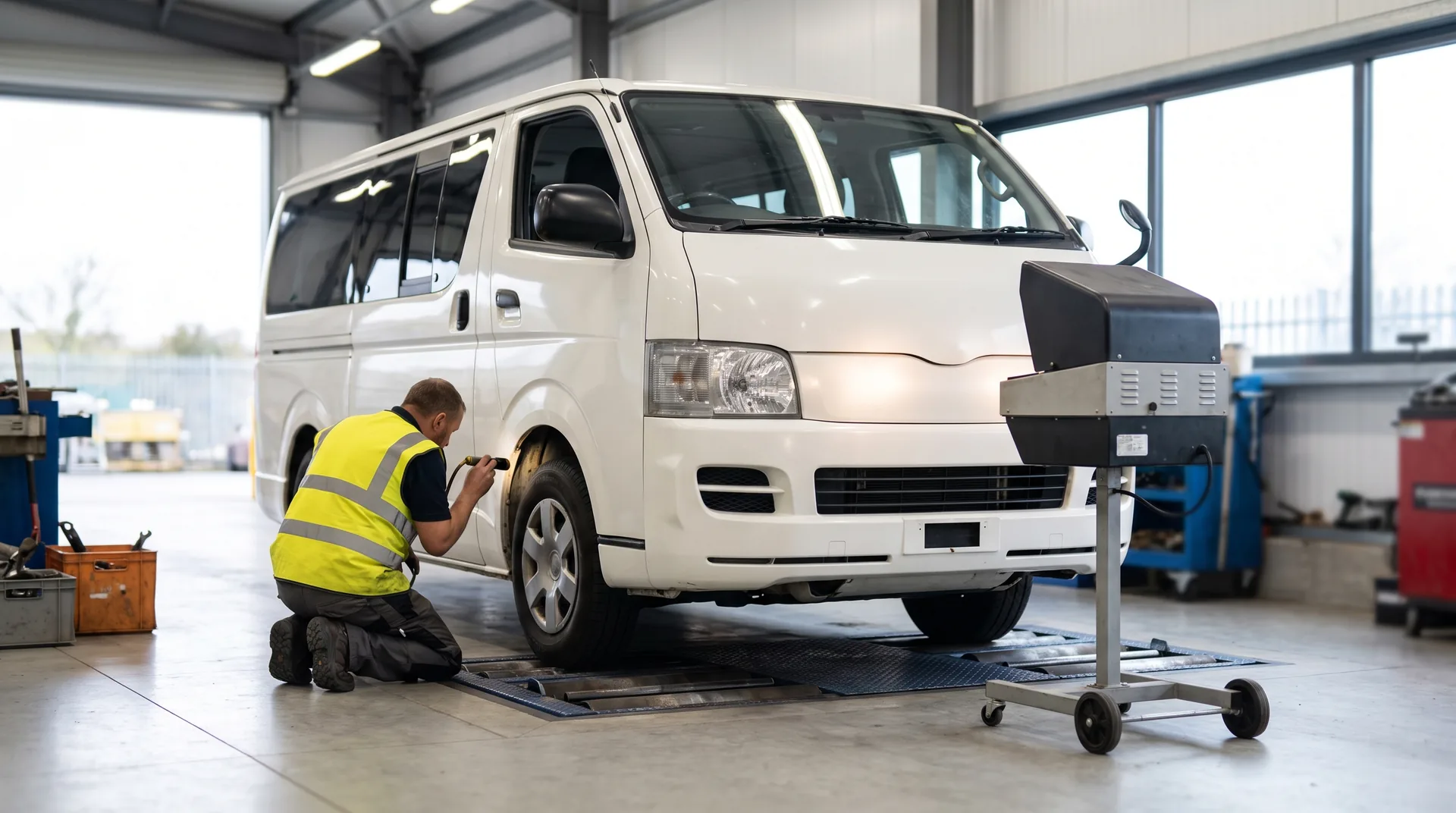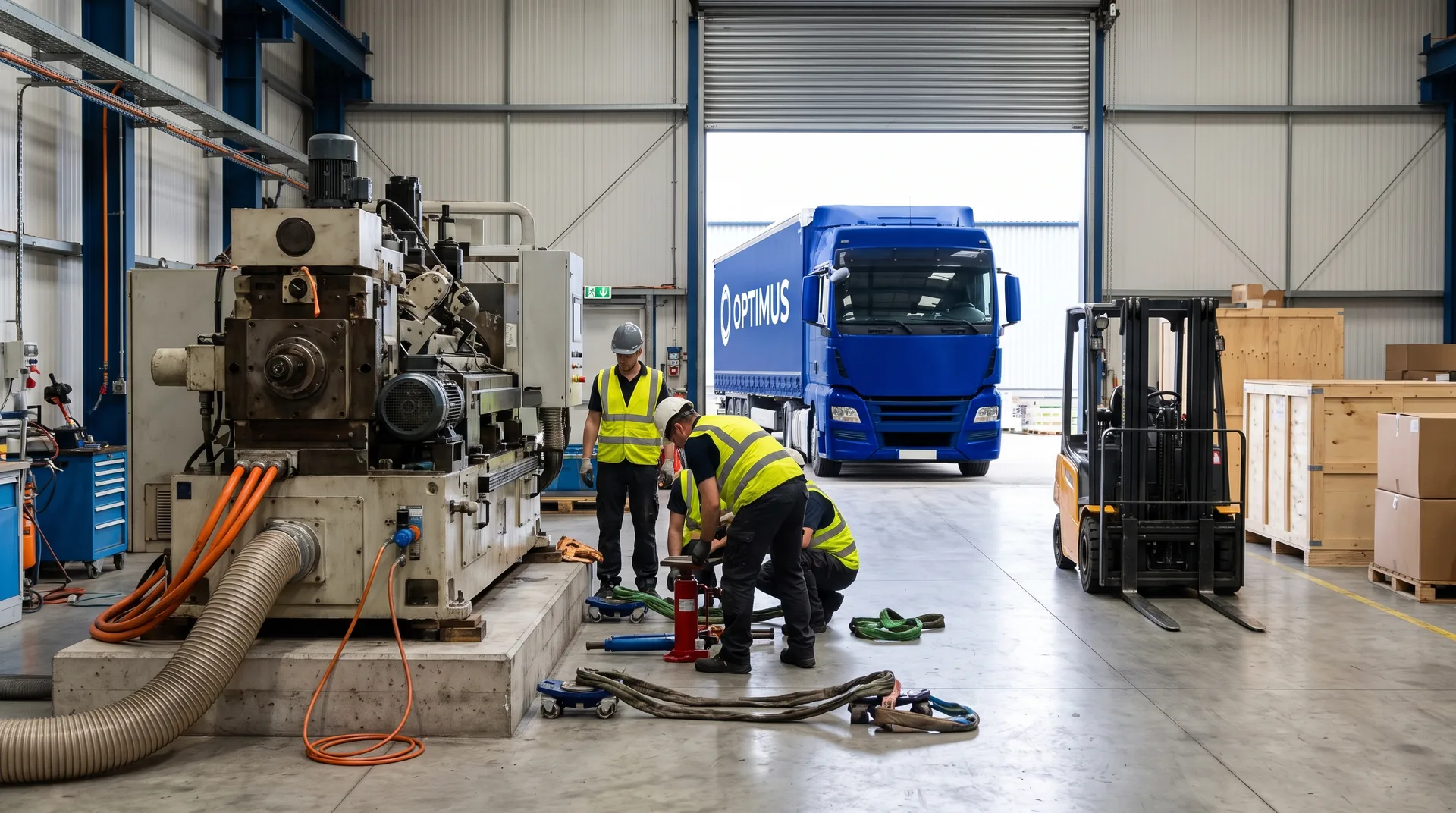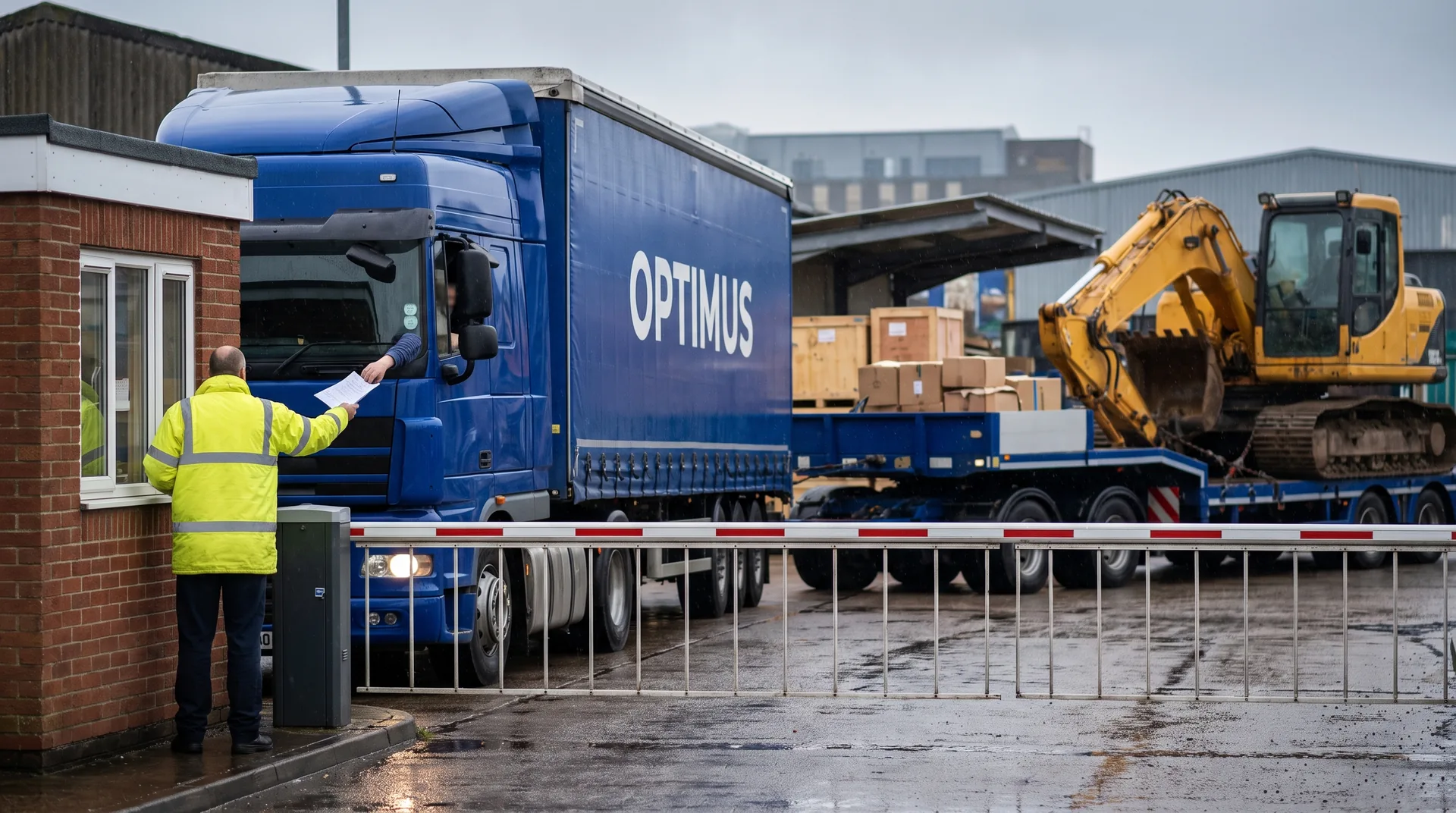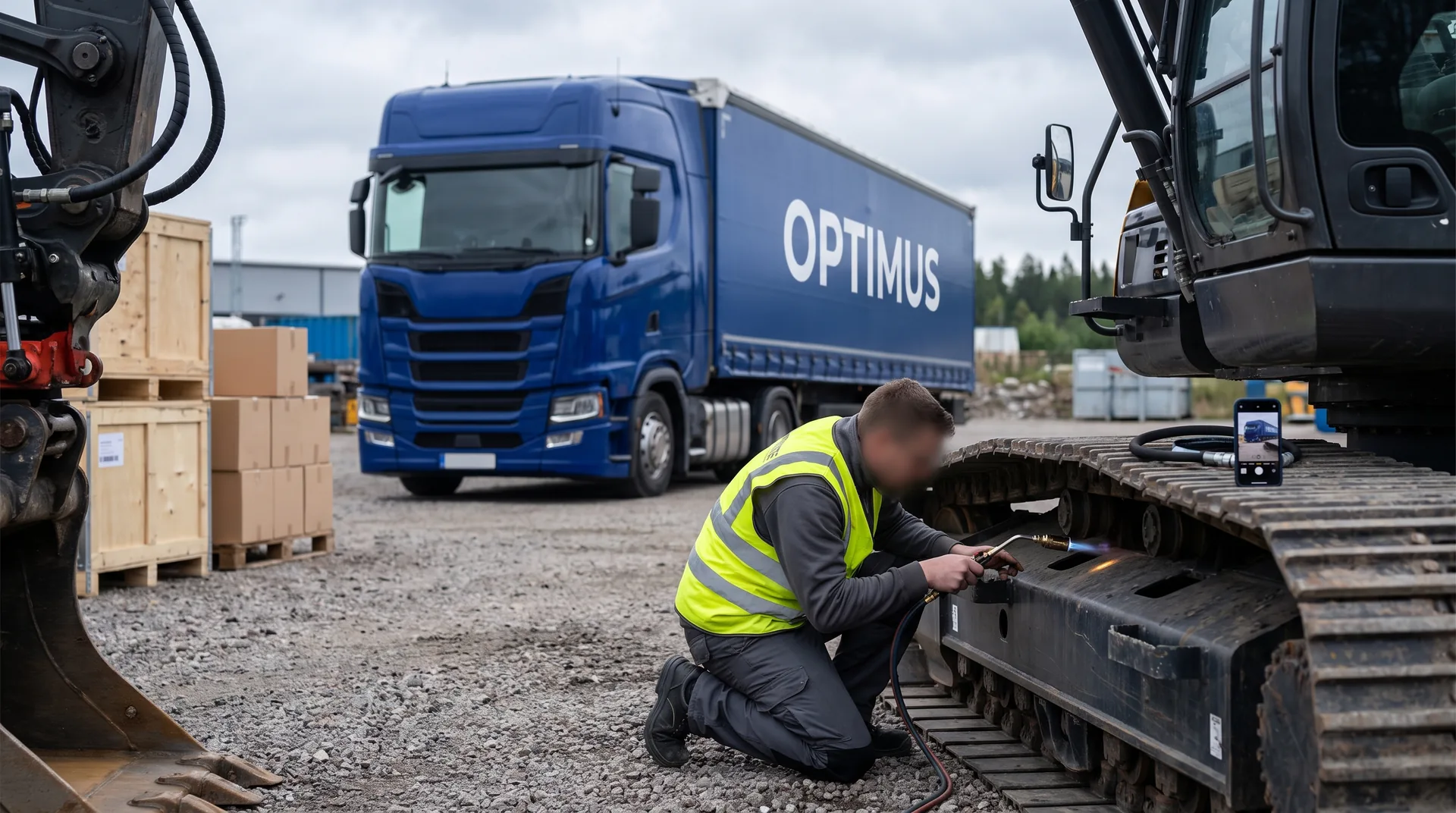
A pre-collection inspection is not a technical appraisal but a record of the state in which a machine stands in the yard before it goes onto our vehicle. We take photographs, list visible damage and missing parts, and check what matters for the carriage: completeness, leaks, tyres and whether loading is possible at all. We do not pronounce on whether the machine works or what it is worth.
What we check
- Whether the machine matches the listing: model, serial number, presence of the attachments named in the lot.
- Visible damage: cracked glass, dents, missing panels, the state of the tracks or tyres.
- Leaks and traces of them under the machine, because they decide whether the item can travel beside other goods.
- Whether loading is possible: does the machine start, are the brakes seized, do the wheels turn, can it be steered.
- The small things: keys, remote, manual, spare wheel, extra buckets and any parts the buyer regards as included in the purchase.
- Yard conditions: surface, access, room to manoeuvre and the loading equipment available on site.
What we deliberately do not do
We do not issue opinions on technical condition, do not assess hours or mileage, do not run load tests, do not repair or service machines and do not appraise market value. Where an appraisal is needed, the buyer commissions it from a surveyor and we adjust the collection date so that it can take place before the item leaves the yard. The boundary exists so that nobody bases a purchase decision on a note made in passing during loading.
Why photographs from the yard decide a claim
Carrier liability starts when the goods are taken over and ends on delivery. Everything that happened earlier, and with an auction machine plenty happened, has to be visible in the documentation from the moment of collection, otherwise it lands on the carriage account. So the photographs are taken before loading, from every side of the machine, with separate shots of the damage and of the nameplate, and visible shortcomings go onto the consignment note as reservations. How that mechanism works is set out in our articles on filling in a CMR consignment note and on claims and damage reports.
Sold as seen, and what follows
Auction terms usually limit the seller liability for the condition of the item, and the extent of that limit is written into the terms of the particular sale, which is what has to be read before bidding. An inspection after winning will not undo the purchase, but it changes two things: it allows the right loading method to be chosen and it provides evidence of the condition from which the carriage starts. If the machine turns out to be in worse shape than the listing suggested, the buyer learns that before it goes onto the trailer rather than after unloading in Poland. What else is worth copying from the terms into the transport order is collected in our article on auction formats and their effect on logistics.
When an inspection changes the transport plan
Four cases come up most often. The machine does not start, so instead of driving aboard it needs a winch or a crane, which is different equipment and a longer slot in the yard. The machine leaks, so it drops out of groupage and has to travel alone or on a mat. The attachment differs from the description and changes a dimension, turning the move into an abnormal one. Finally, the yard turns out to be unmade or blocked and the combination cannot get to the machine. Each of these caught in the yard costs an hour; caught on the day of dispatch it costs a run. Choosing equipment for the situation is covered in our article on loading a machine at the auction yard.
Inspection en route and after unloading
The yard inspection is the first point but not the only one. Cargo passing through the warehouse is also examined on receipt and release, and where tampering or damage is suspected we open a separate procedure. It is described in our articles on cargo inspection after trailer tampering and on damaged goods in storage. Documentation from each of these points forms a single chain that shows where the condition of the machine changed.
Sources
- UNECE: CMR Convention on the contract for the international carriage of goods by road
- HSE: health and safety in transport and warehousing
- GOV.UK: securing loads on HGVs and goods vehicles
Want someone to look at the machine before it leaves the yard? Write through the contact form with the lot number. See also our cargo inspection service.