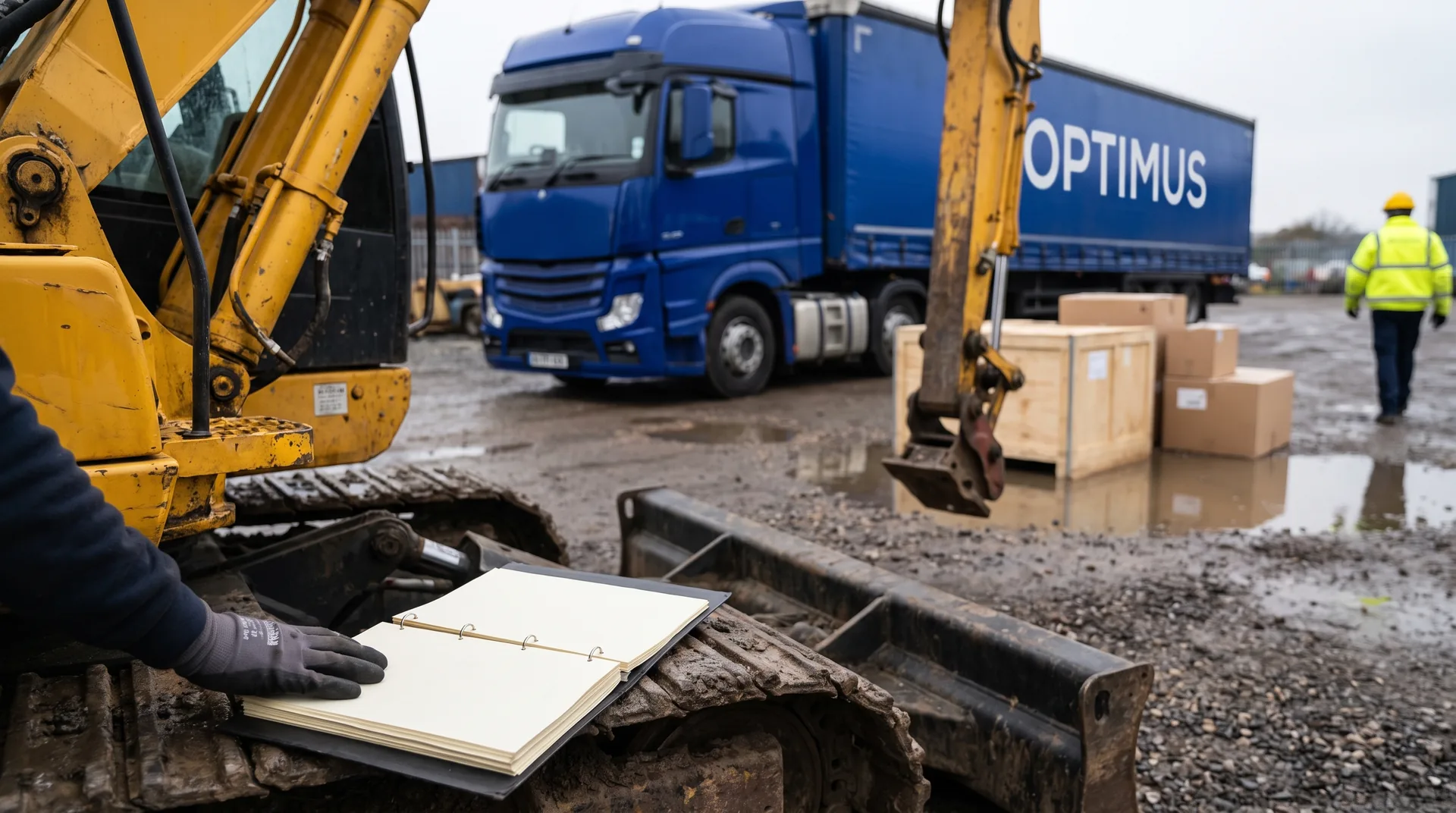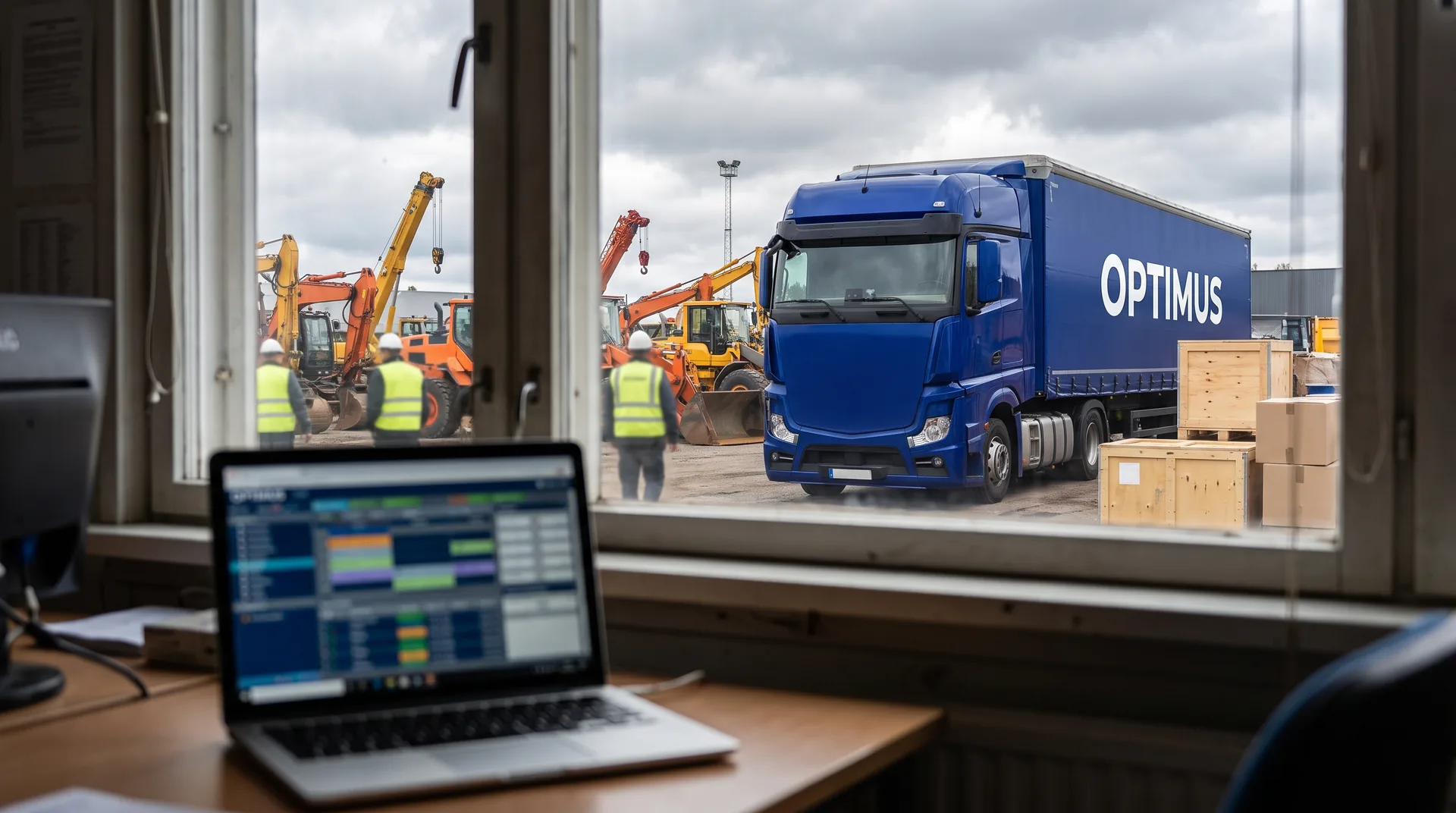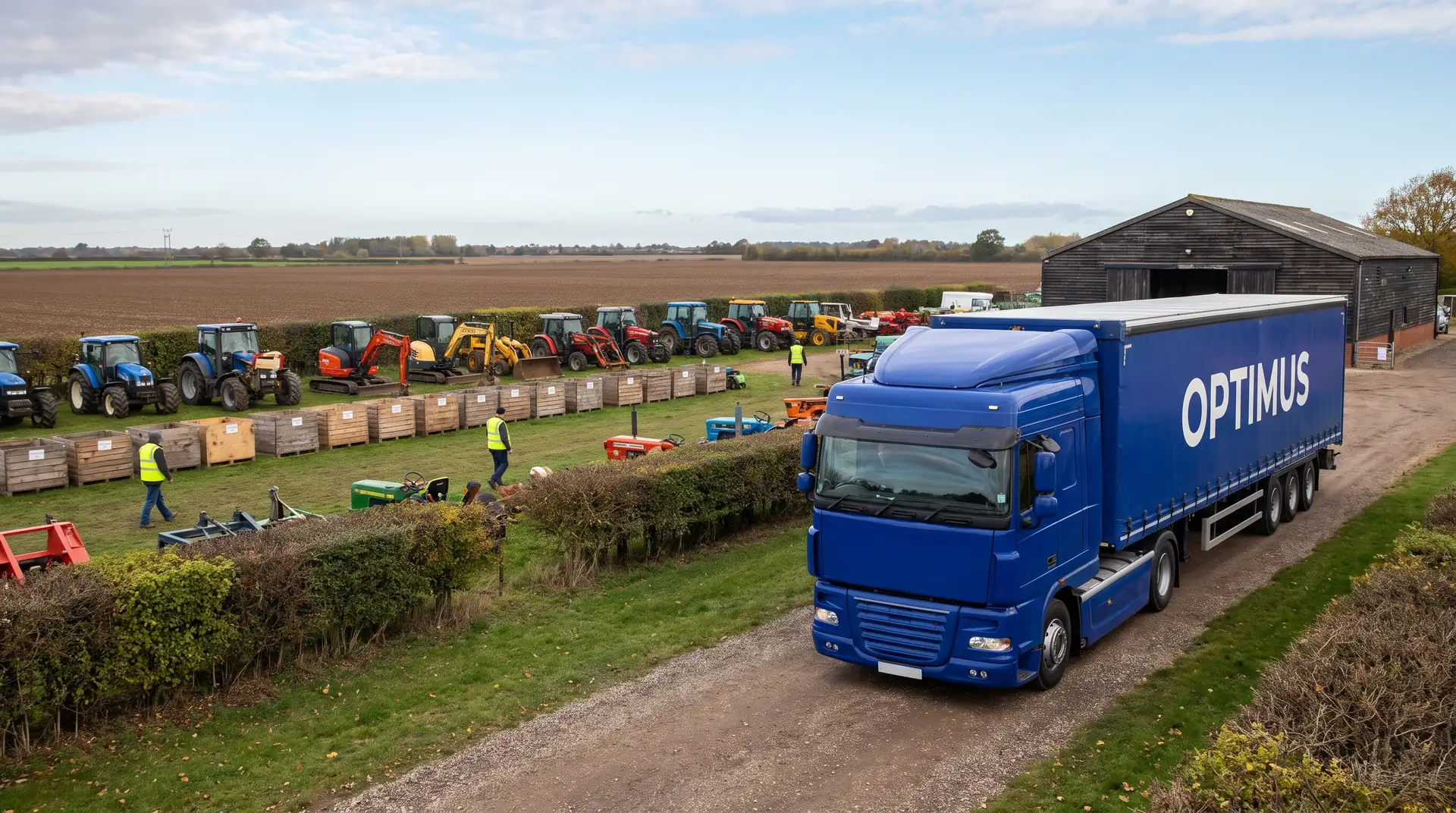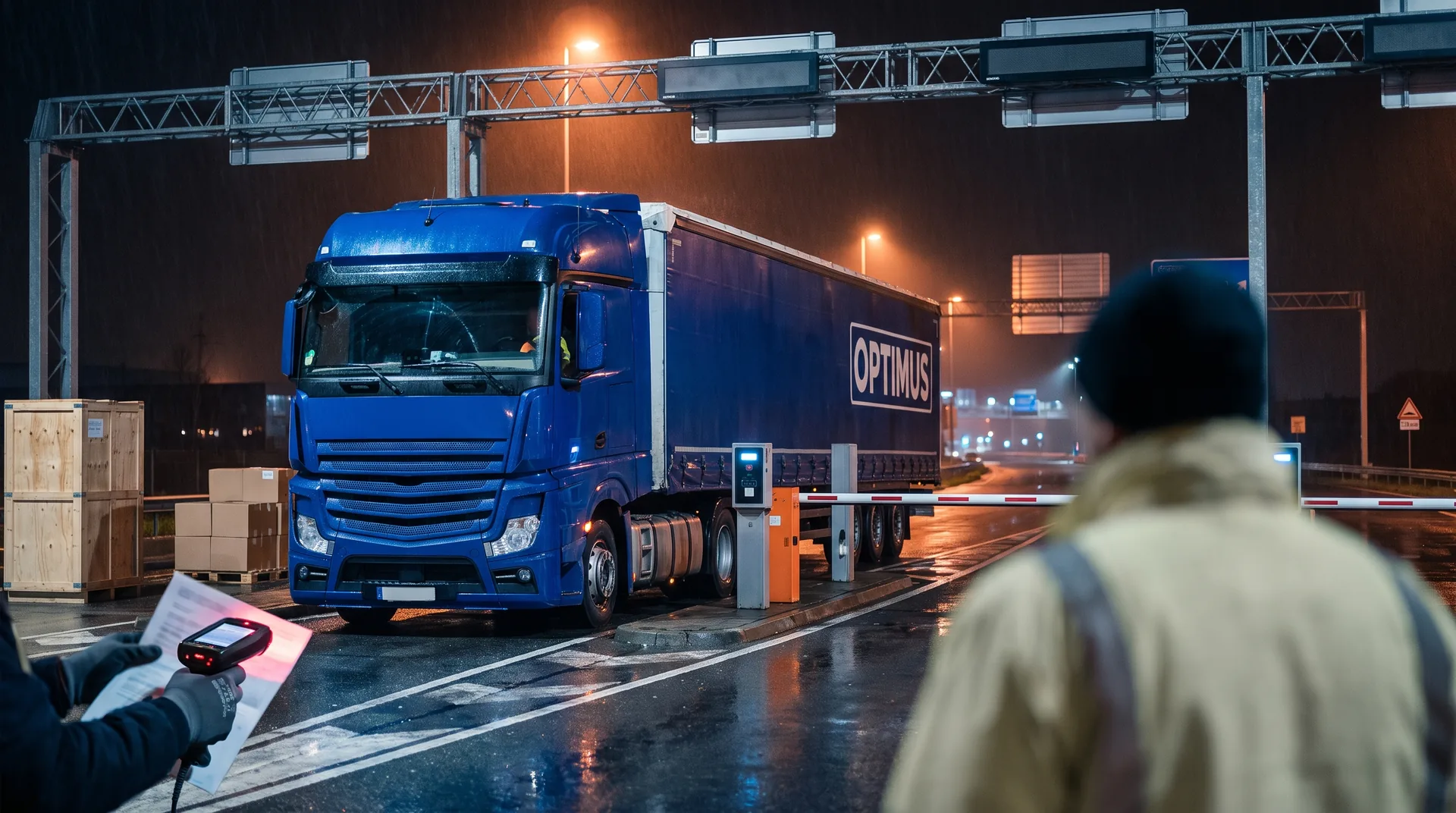
The French smart border rests on lodging the customs declaration in advance and attaching a barcode to it, which the driver carries. The barcode links the declaration to the vehicle registration plate, and once scanned the system directs the lorry into either the green or the orange lane.
The three principles it stands on
The French administration describes the system in three principles. The first is early completion of customs procedures before arriving at the border, by giving the barcode of the customs declaration to the driver. The second is identification of the means of transport together with the barcode of the customs declaration for the goods carried. The third is automatic sending of crossing notifications to the customs declarant, to avoid stopping the vehicle. Declarations must therefore be identified with a barcode in the driver's possession, and that barcode establishes the link between the number plates of the vehicle and its customs or transit declarations.
Pairing, and what happens at the terminal
On arrival at the customs facility, a port or the Eurotunnel terminal, the vehicle number plate and the customs forms are registered electronically. The French administration calls this pairing. It allows the vehicle to be tracked as it goes through the facility, particularly as it crosses the border. One consequence is worth knowing: after the border has been crossed, the vehicle is not permitted to turn back. On arriving in France the haulier is automatically directed to one of two lanes depending on the status of the customs declarations for the goods carried. The green lane means no stop and straight on to the motorway; the orange lane means going through a check area.
The logistics envelope and the duty from 20 April 2026
This is the change to know about, because it is recent and hard-edged. The logistics envelope allows several customs declarations, both import and export, to be grouped under a single document. Since 20 April 2026 presenting it is mandatory: the French administration announced that an ELO, the Enveloppe Logistique Obligatoire, is required for all transport units crossing the smart border with the United Kingdom. The rule is one truck, one ELO. A transport unit without an ELO may be refused boarding by the ferry or shuttle operator, and if it is allowed to board, its customs formalities may not be processed during the crossing.
What must not go into the envelope
The French administration is explicit about this, and mistakes here cost time at the terminal. The ELO must not carry formalities processed in UK IT systems, must not carry the GMR reference, which is the UK's equivalent of the ELO, and must not carry the number plates of the transport units. The envelope groups, under a single reference materialised by a barcode, the information relating to the goods together with the references for the safety, security and customs formalities required for the flow in question. The aim is to reduce processing times and give more secure management of formalities in both directions.
What this means for a single auction machine
A machine bought at auction usually travels as one load on one vehicle, so the whole logic reduces to a simple conclusion: the declaration must be ready before the vehicle joins the queue for the ferry, and the driver must hold the full set of references. On an oversized machine, or one needing dismantling before transport, the bottleneck is often not the clearance but the removal deadline at the auction yard and the availability of lifting equipment. That is why we gather the documents alongside arranging the transport rather than after it. Collection and preparation conditions are covered in importing used machinery from the UK.
France or the Netherlands
The choice of entry port usually follows from the geography of the purchase and the availability of crossings, not from customs rules. The tax mechanism is the same in both countries, because procedure 42 comes from an EU directive rather than national law, as covered in procedure 42 when importing a machine from the UK. What does differ is the crossing formalities: the French route means the smart border and the ELO, the Dutch route its own port arrangements. A comparison of the place of clearance itself is in clearing a machine in the Netherlands, not Poland.
How we run this
We organise and run clearance on both sides as part of the job, working with our regular customs agencies, and the crossing formalities sit with us as the carrier: we make sure declarations are lodged before the crossing, that the driver holds the full set of references, and that the data matches the consignment note. The buyer supplies the purchase documents and the machine's technical details. How long the steps take and what happens at a check is covered in how long clearance takes.
Sources
- French customs: the smart border, operating principles, pairing and lanes (accessed 2026-08-20)
- French customs: ELO becomes mandatory on 20 April 2026 (accessed 2026-08-20)
- French customs: the ELO logistics envelope in RoRo trade with the United Kingdom (accessed 2026-08-20)
Collecting a machine from a yard in England and want it in Poland without standing at the terminal? Describe the machine and the collection point in the contact form and we will arrange the crossing with clearance included. The scope of the formalities is on our customs clearance page. Check the current crossing requirements before departure, because administrations change them.