Missing technical documentation does not block clearance. It blocks putting the machine lawfully into use. A customs declaration needs the invoice showing the price paid, a description of the goods, a tariff code and an identification of the machine. The declaration of conformity, the manual and the technical file are needed later, for use, and that is a line that must not be blurred.
What customs actually sees
An import declaration describes the goods, their value, their origin and their intended use. For that, the auction invoice, the transport document, the importer EORI number and the tariff code are enough. A used machine sits in the same tariff heading as a new one: age changes the customs value, not the code, as we set out in our pieces on the customs tariff code and on the customs value of an auction machine. None of those documents says anything about mechanical condition or about compliance with safety requirements.
What the person switching the machine on sees
Here an entirely different body of law applies. A machine placed on the EU market should carry marking, a declaration of conformity and instructions in the language of the country of use. On second-hand equipment bought at auction the auction house usually supplies no declaration of conformity, because it is neither the manufacturer nor the entity placing the machine on the market. We set out that scenario and its consequences in our articles on importing used machinery from the UK and on documents for a machine bought at auction. We do not advise on this and we issue no technical documents; we only say where the line runs, so that nobody discovers it after unloading.
A different matter: no nameplate and no serial number
A missing declaration of conformity is a problem to be solved. A missing nameplate and serial number is a problem of another kind, because the machine cannot be identified unambiguously on the declaration, its history cannot be checked, and theft cannot be ruled out. Those lots are better left alone. How machine identification works from the customs side is covered in our article on serial numbers and nameplates.
What can be done before bidding
- Read the lot description to the end and check whether the auction house mentions documentation, keys and attachments.
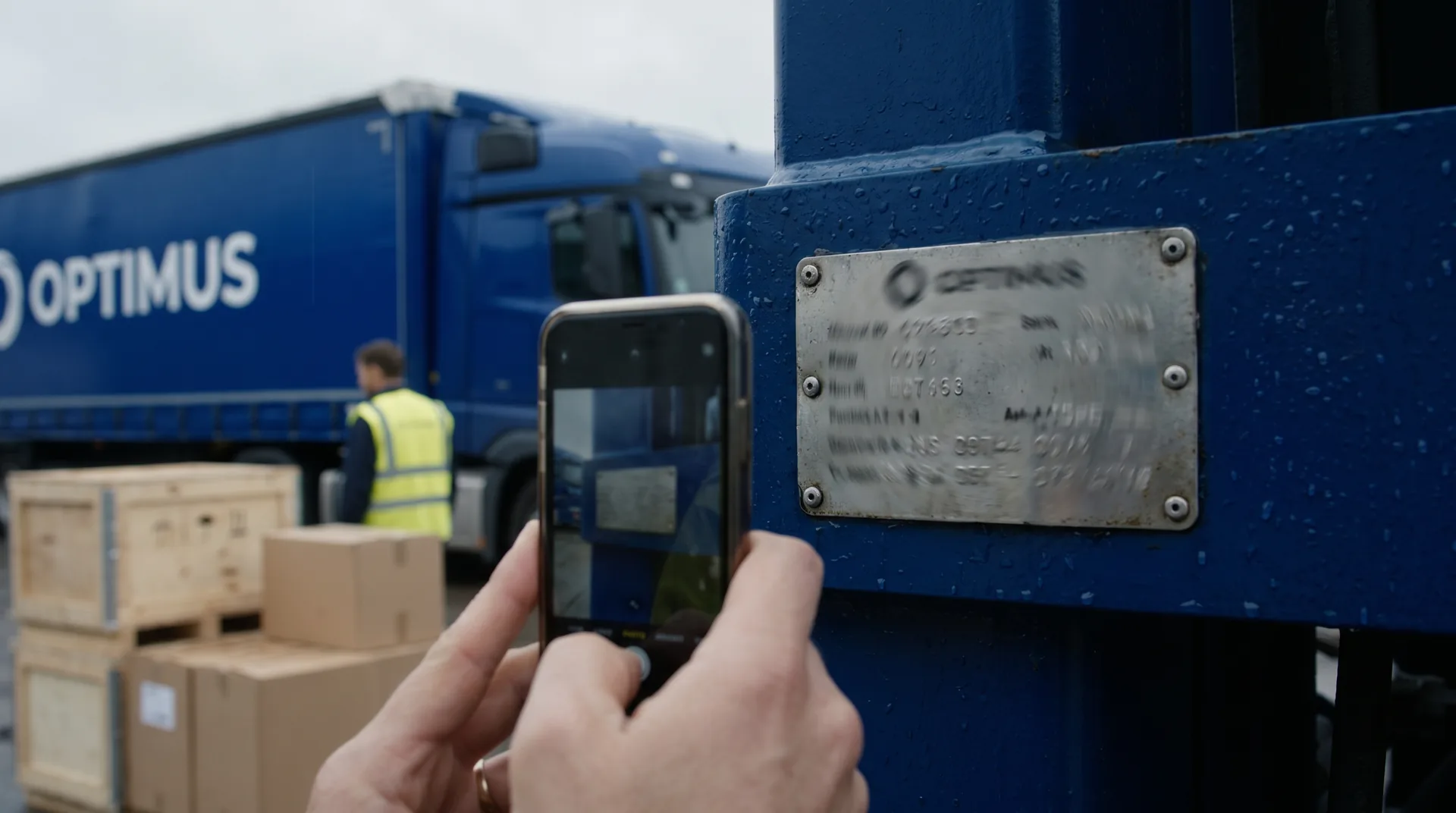
- Order an inspection on the yard and ask for a photograph of the nameplate and the serial number. We do this as part of inspection before collection.
- Establish whether the machine worked in agriculture or forestry, because a phytosanitary strand then appears, described in our piece on farm machinery auctions in the UK.
- Cost the delivery before the bid is placed, which we come back to in our article on a transport quote before the auction.
Where our part ends
We arrange clearance working with our regular customs agencies, we haul the machine and we can go and look at it on the yard. We do not issue declarations of conformity, we do not assess mechanical condition, we do not value machines and we do not run approval testing. Those sit with the buyer and with bodies competent to do them.
Sources
- EUR-Lex: Regulation (EU) 2023/1230 on machinery
- European Commission: calculation of customs duties and customs value
- GOV.UK: EORI number
Got a lot with no documentation and unsure whether to touch it? Send the lot description and photographs through the contact form and we will tell you what can be done on the transport and clearance side. See also our guide to the UK auction market.