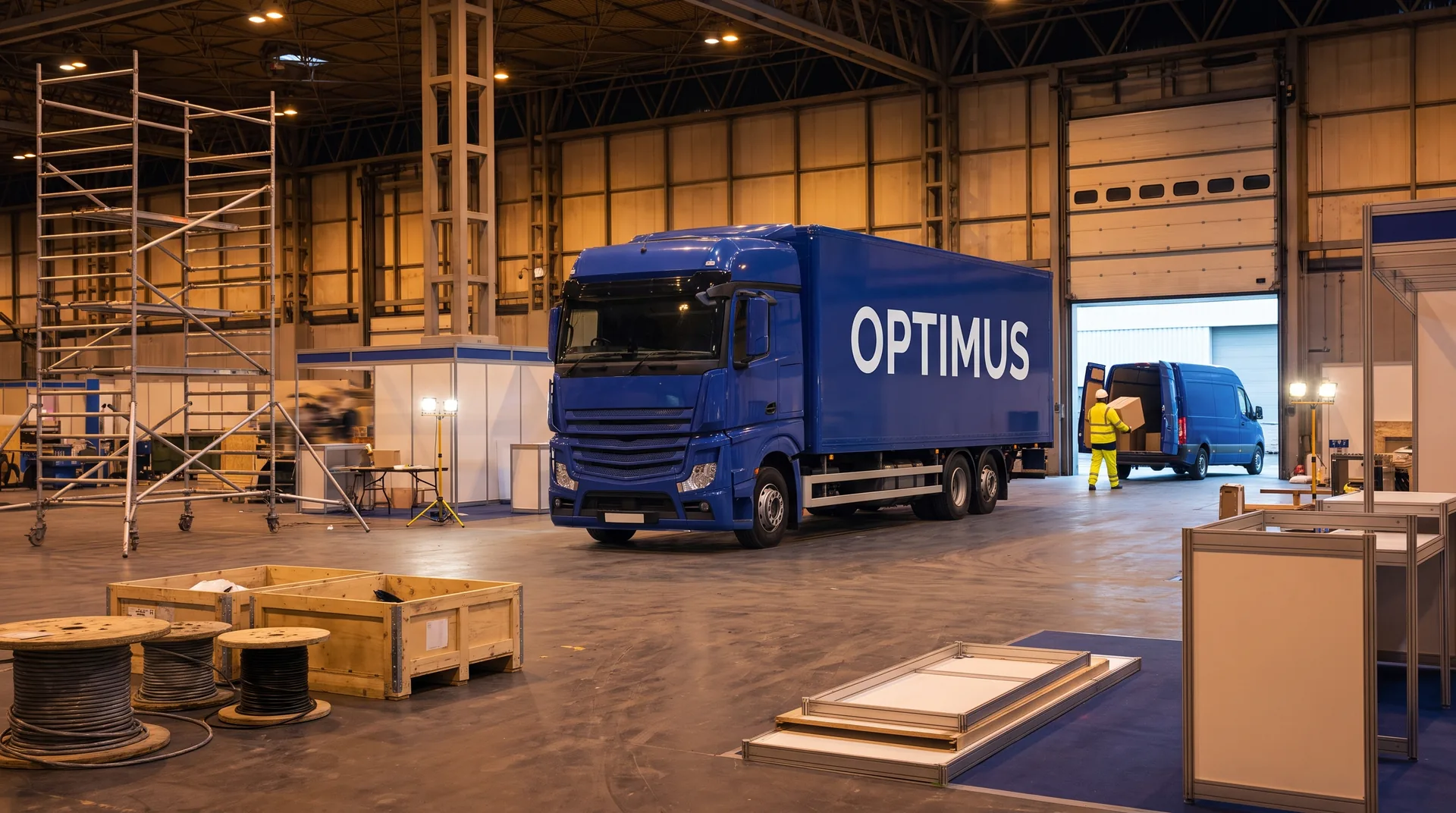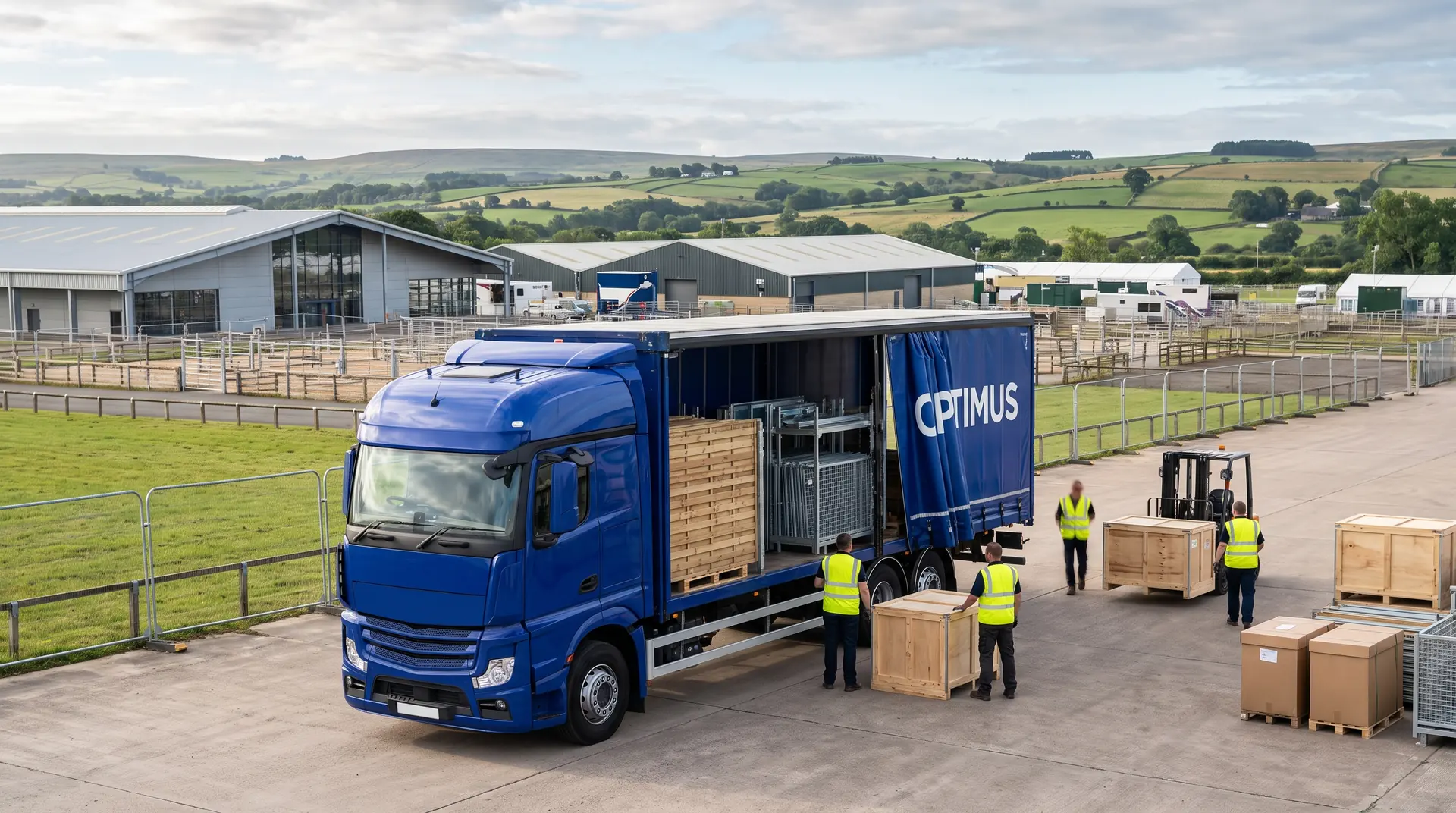
The Yorkshire Event Centre in Harrogate now trades as the Great Yorkshire Events Centre. In 2025 the site owner brought the former Yorkshire Event Centre, the Pavilions of Harrogate and the showground itself under one brand, split into parts described as the halls, the pavilions and the grounds. For delivery it is one of the most straightforward venues in England: everything is on one level, the halls have dedicated loading bays, and the venue publishes its door dimensions. We carry stands and exhibits here from Poland.
The name change: what to correct in the paperwork
The name Yorkshire Event Centre still circulates in older exhibitor materials, in map listings and in search results. The current brand is Great Yorkshire Events Centre, and the venue former domain now redirects to the new one. The owner and operator remains the agricultural society that runs the site, so the change is one of branding rather than ownership: the ground, the address and the infrastructure are unchanged. For a carrier that means one thing: the current name goes on the order and the booking, so the registration does not stall on verification, and the driver is given a postcode rather than a name.
The nearest motorway is twenty minutes from the gate
Harrogate has no motorway. The nearest road of that standard is the A1(M) east of the town, and the venue lists access via the A1(M), the A59 and the A61. In practice, from the south and east you leave the A1(M) at junction 47 onto the A59, and the site itself lies on the A661 south of Harrogate town centre. The last stretch therefore runs on single-carriageway roads, and on the biggest event days the organiser operates a one-way system on the A661. We describe the region more fully in the article on transport to Liverpool, Leeds and Yorkshire.
Why unloading here is among the easiest in England
The venue consistently emphasises that everything sits on one level, and that is not a marketing line but a real advantage. There are no goods lifts, no stairs between the unloading level and the hall, no split between ground floor and upper floor. On top of that come figures most venues do not publish at all.
Hall one has over four thousand square metres, is pillar-free, rises in height from the eaves into the structure, and has two dedicated loading bays. The venue publishes four loading doors for it, at one common height and two different widths, so the vehicle can be matched at a desk rather than on arrival. Hall two is smaller, has a single loading door of even greater width plus its own dedicated off-road bay, and opens directly onto the outdoor ground.
The third element is open ground of around two hundred and fifty acres with several kilometres of internal roads. For an outdoor display that means vehicles move on the venue own network rather than on public roads. The venue does not, however, publish a breakdown of that ground into hard and grassed surfaces, so the surface under a specific pitch is confirmed with the organiser.
Careful: Harrogate has two different venues
This is a source of confusion. The Great Yorkshire Events Centre lies on the A661 on the showground outside the centre, while Harrogate Convention Centre is a separate venue in the town centre itself, on Kings Road, with a completely different approach and a different booking system. A show described as taking place in Harrogate may be at either, and the approach and entry procedure differ fundamentally. We cover the town-centre venue separately in the article on delivery to Harrogate Convention Centre. The venue name always comes from the stand confirmation, never from the town name.
Zones and restrictions
No charging clean air zone applies in Harrogate. The British list of charging zones covers Bath, Birmingham, Bradford, Bristol, Portsmouth, Sheffield and Tyneside. Britain separately operates air quality management areas declared by local authorities, but such an area carries no charge and no ban on heavy vehicles: it places duties on the authority, not on the carrier. We explain the difference between a charging zone and a monitored area in the article on UK clean air zones.
What to settle before arrival, and what we do
To the organiser: hall or pitch number, the designated door and bay, how vehicles are booked in, who supplies the forklift, and where the vehicle goes after unloading. We do not quote hours, because the organiser sets them for each edition. At our end: collection in Poland, consolidation through the hub including exhibitors from Czechia, Slovakia, Austria and Hungary, and a buffer at the Kielce base, which sits about 4 km from the fairground, a few minutes away, and works around the clock. A groupage vehicle waits for the next scheduled line departure. On the British side the load usually goes through a cross-dock in Milton Keynes, giving two transhipments across the route, and at the venue we deliver to the handover point and commit to an hour at the gate rather than an hour of unloading. We count the schedule backwards using the method in the article on the build-up and breakdown calendar.
Groupage or a dedicated vehicle
The threshold is the usual one: roughly a third of a trailer, about twelve pallets. Because unloading here is well documented and happens on one level, groupage works better than at venues with goods lifts and upper floors: a transhipment in Milton Keynes does not then cost hours on site. For a single heavy exhibit a dedicated vehicle still wins. We break the arithmetic down in the article on choosing between FTL and groupage.
Sources
- Great Yorkshire Events Centre: halls, loading bays, door dimensions and directions
- GOV.UK: list of British charging clean air zones
Exhibiting at the Harrogate showground? Send the hall number and item list through the quotation form and we will set the delivery to the right bay. See also the exhibition logistics page.