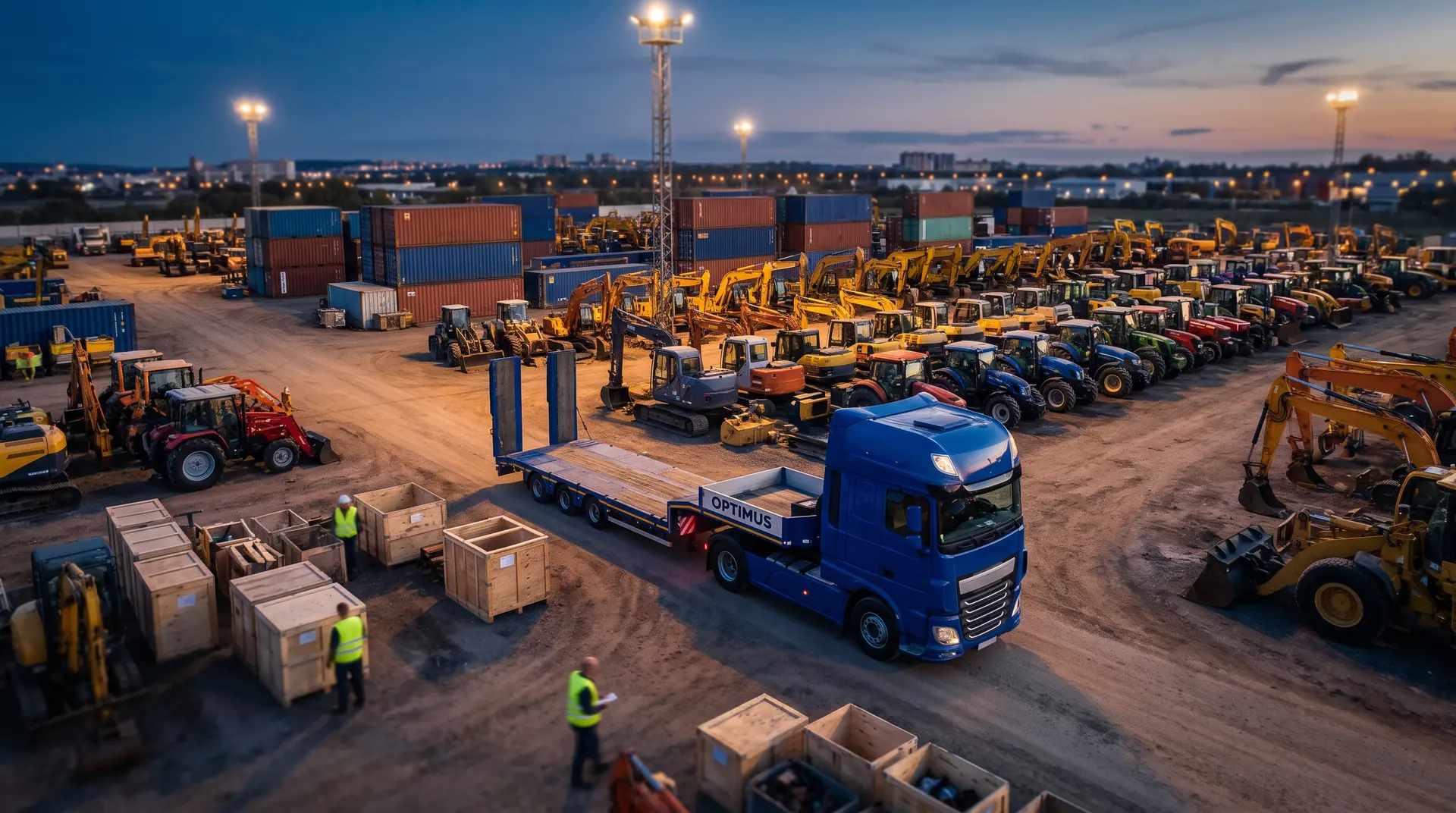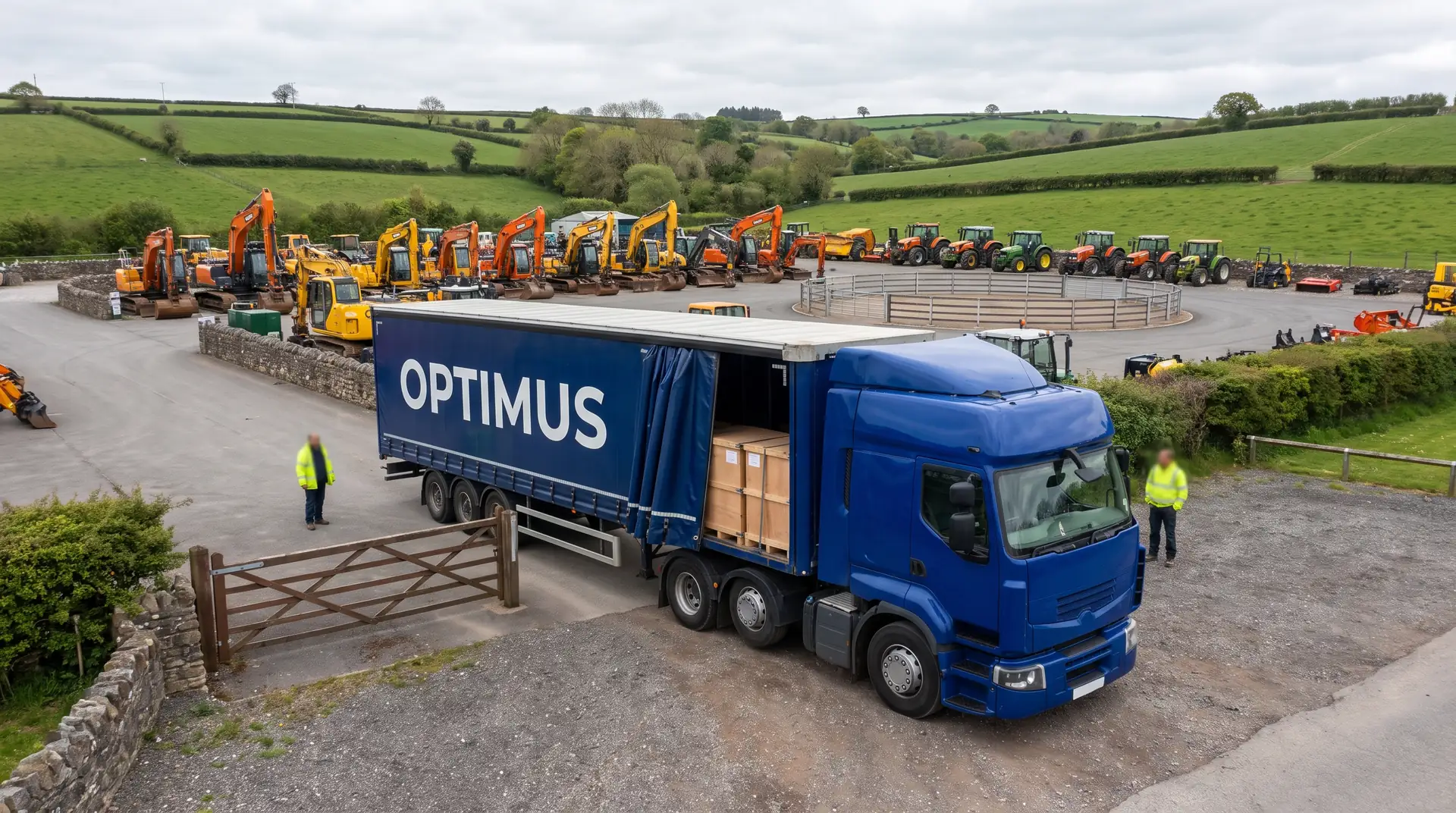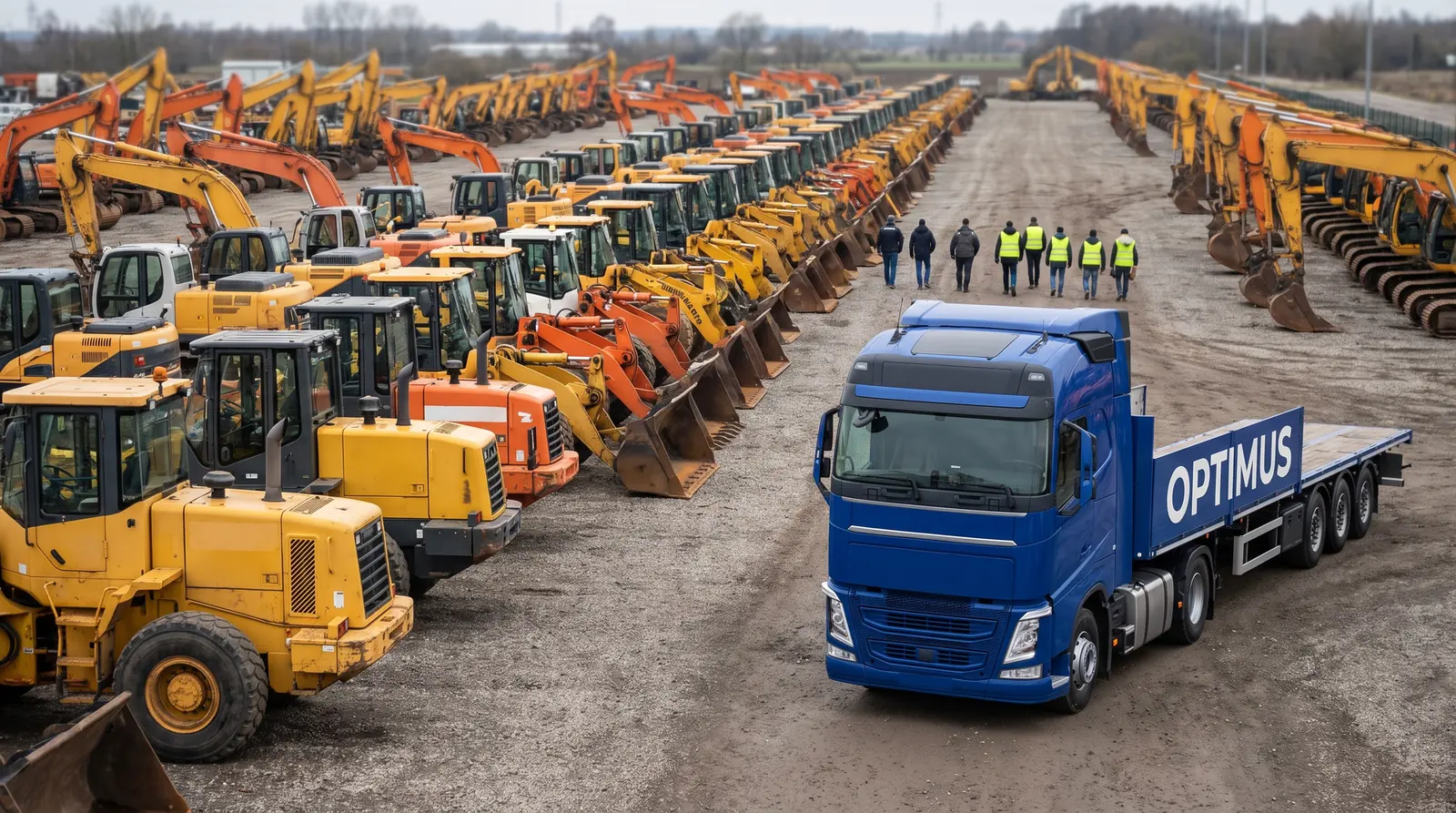
Euro Auctions runs two permanent UK auction yards: one near Leeds in England and one at Dromore in Northern Ireland. A buyer in Poland can bid on site or online. Winning the lot is only the start, though: the machine still has to leave the yard inside the removal window the auction house sets, clear export in the UK, clear import in Poland and then travel to its destination.
Who they are and where the yards sit
Euro Auctions UK Ltd has its registered office at 72–74 Omagh Road, Dromore, County Tyrone, Northern Ireland. Alongside Leeds and Dromore, the company’s calendar regularly features Mountrath in the Republic of Ireland, Zaragoza in Spain, Dormagen in Germany and Abu Dhabi, while the associated Yoder & Frey brand sells in the United States. That matters for transport planning: one name covers yards on both sides of the EU customs border, and those are not the same job.
The second thing that surprises first-time buyers is that the yard called Leeds is not in Leeds. The address is Roall Lane, Kellington, near Goole, more than thirty kilometres south-east of Leeds city centre, on the road between the A1(M) and the M62. Access for an articulated vehicle is good, but a driver given only the word Leeds on the job sheet will head the wrong way and lose half a day. We copy the full yard address from the purchase confirmation into the job, never the town name from the listing.
What is sold there
The core of the offer is construction and materials handling equipment: tracked and wheeled excavators, loaders, dumpers, rollers, compactors, access platforms, forklifts, tractor units and trailers, containers and site accommodation. Separate tool auctions run online only. That range feeds straight into the choice of vehicle: a forklift will go on a curtainsider once the mast is off, while a tracked excavator needs a low loader and a height check along the whole route.
Bidding on site and online
Euro Auctions runs on-site sales with simultaneous online bidding as well as internet-only sales. The practical difference for a buyer in Poland is that at an on-site sale everything is settled on the day and the removal clock starts immediately, whereas at an online sale where lots close one after another you can win outside office hours. Registration conditions, the level of the buyer’s premium, the payment method and deadline and the removal window are all set by the terms of the individual auction, and they differ between locations. We do not guess them and we do not quote ranges: read them before you register, because the removal deadline decides whether we can get the right vehicle there in time.
Clearance and machine paperwork
Buying at a UK auction is an import from outside the European Union. You need an export declaration on the British side and an import declaration on the Polish side, an EORI number for the buyer, the correct tariff code and a customs value based on the real purchase price plus whatever the rules require you to add. The auction invoice and proof of payment are the backbone of the file. Second-hand equipment usually cannot demonstrate preferential origin, so the tariff rate for the code applies; there is more on this in our article on importing used machinery from the UK. If the machine has been used in agriculture or forestry, a plant health inspection comes into play, which we cover under UK farm machinery auctions.
What decides the vehicle
- Real dimensions with the boom folded and the height over the cab, not catalogue figures.
- Actual machine weight, and whether the yard has a weighbridge you can use.
- Whether the machine runs and can be driven onto the trailer under its own power.
- Lashing points and lifting eyes; without them the securing gets improvised on site.
- Yard surface and the width of the exit gate for a low loader combination.
- Whether an abnormal load permit will be needed, which we cover in our piece on oversized transport.
What we do
We support the bidding from the logistics side, price the transport before you make an offer, collect the machine from the yard, arrange clearance with the customs agencies we work with regularly, and then carry the equipment to Poland and onward to Czechia, Slovakia, Austria and Hungary. We do not bid for clients with our own money, we do not finance purchases, and we do not assess the technical condition or the market value of a machine. What you get from us is a costed price for carriage, a realistic date, and a list of what is missing from the paperwork before the machine leaves the yard.
Sources
- Euro Auctions: auction calendar and yard locations
- CMA: merger inquiry into the anticipated acquisition of Euro Auctions Group by Ritchie Bros (the deal did not proceed; inquiry cancelled 3 May 2022)
Got a lot lined up at the next sale? Send the lot number, the yard and the expected collection date through our contact form and we will price carriage and clearance before you bid. For the wider picture, see our guide to the UK machinery auction market.