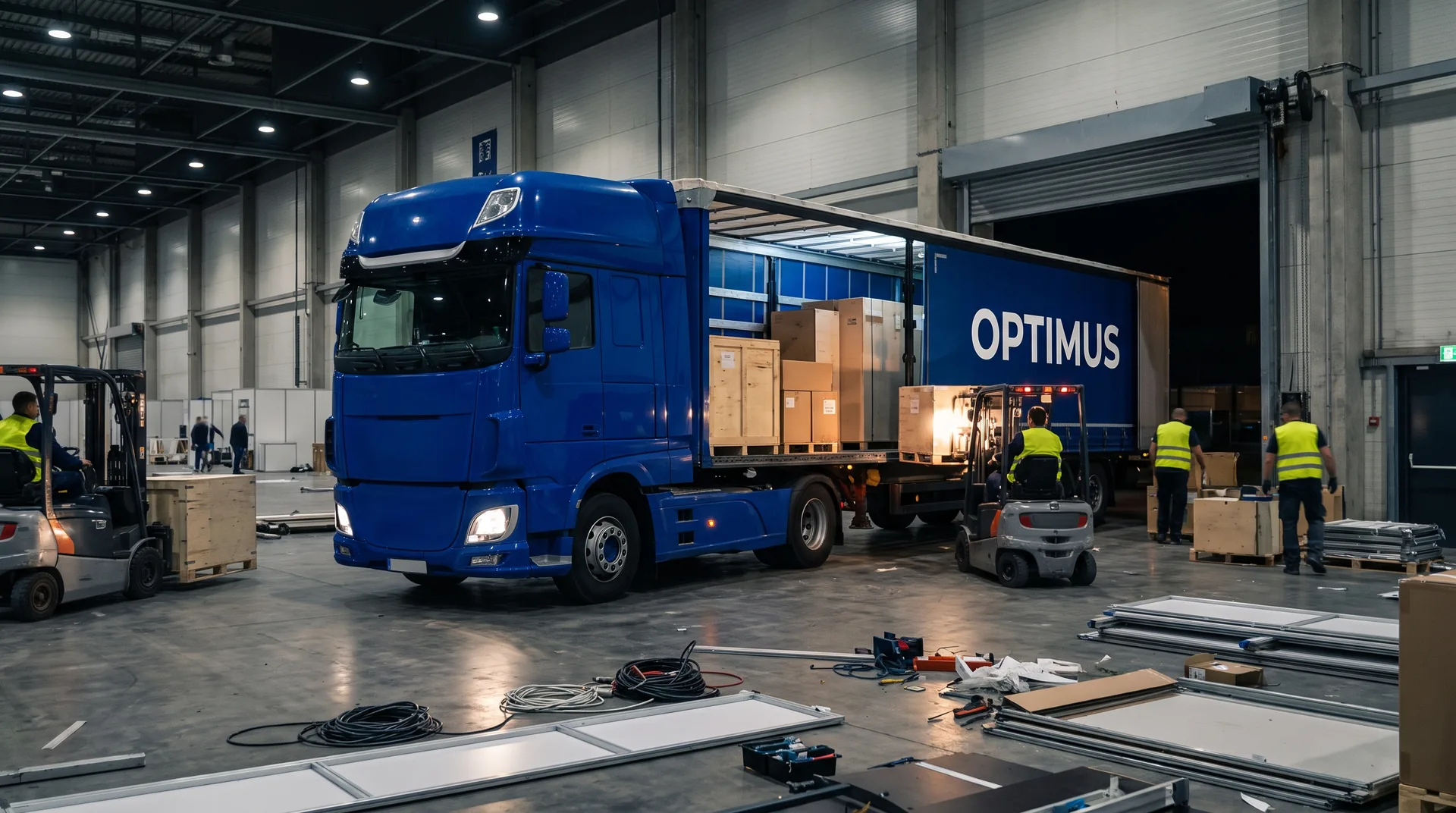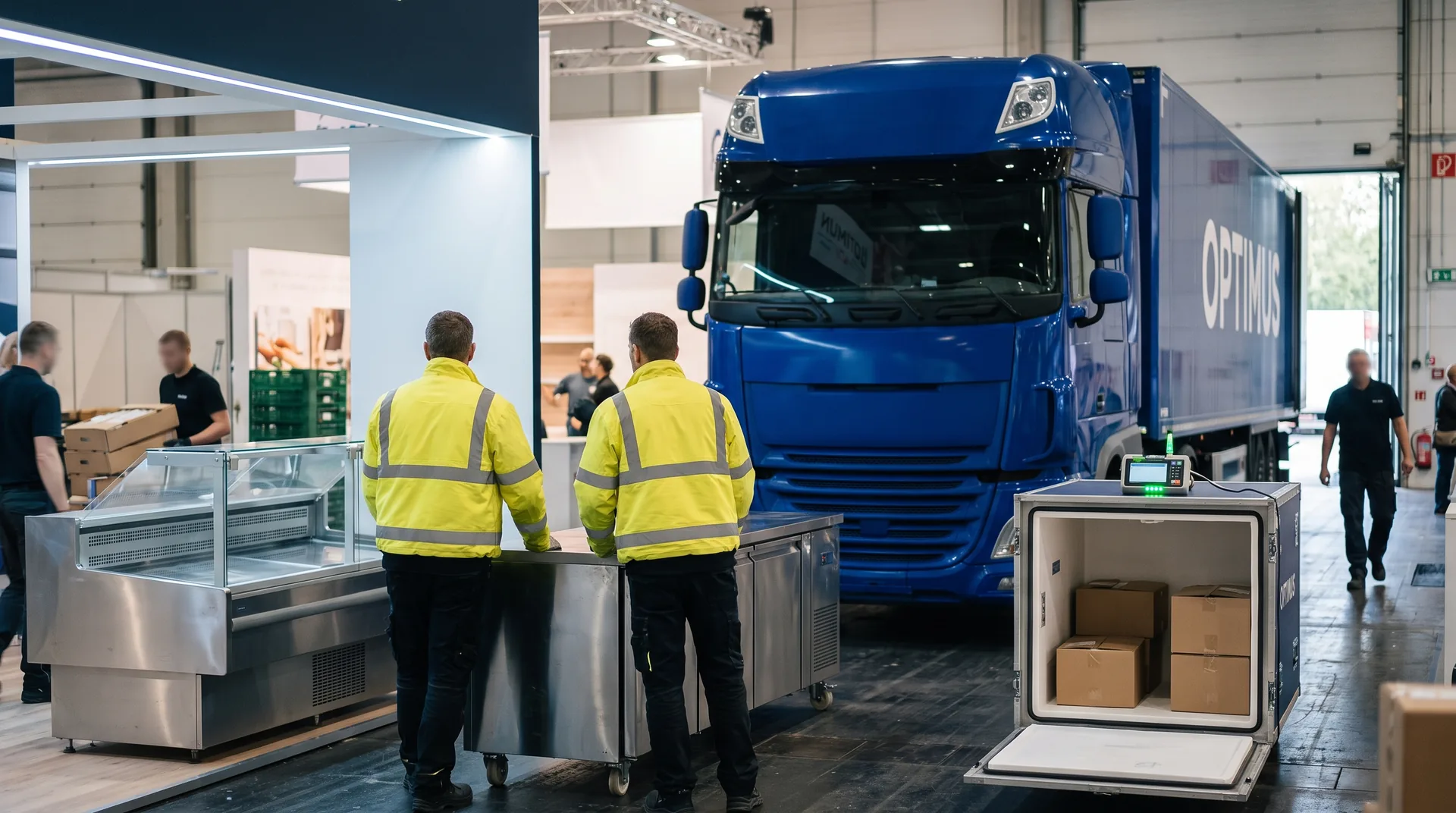
Exhibit transport differs from ordinary groupage on three points: packing (crates and frames instead of stretch film), cargo value (which forces a conversation about OCP and CARGO insurance) and timing, the exhibit must reach the stand within a rigid build-up slot window and be collected after the show within the breakdown window. Being late means an empty stand, not just a delayed delivery.
Packing: a crate instead of stretch film
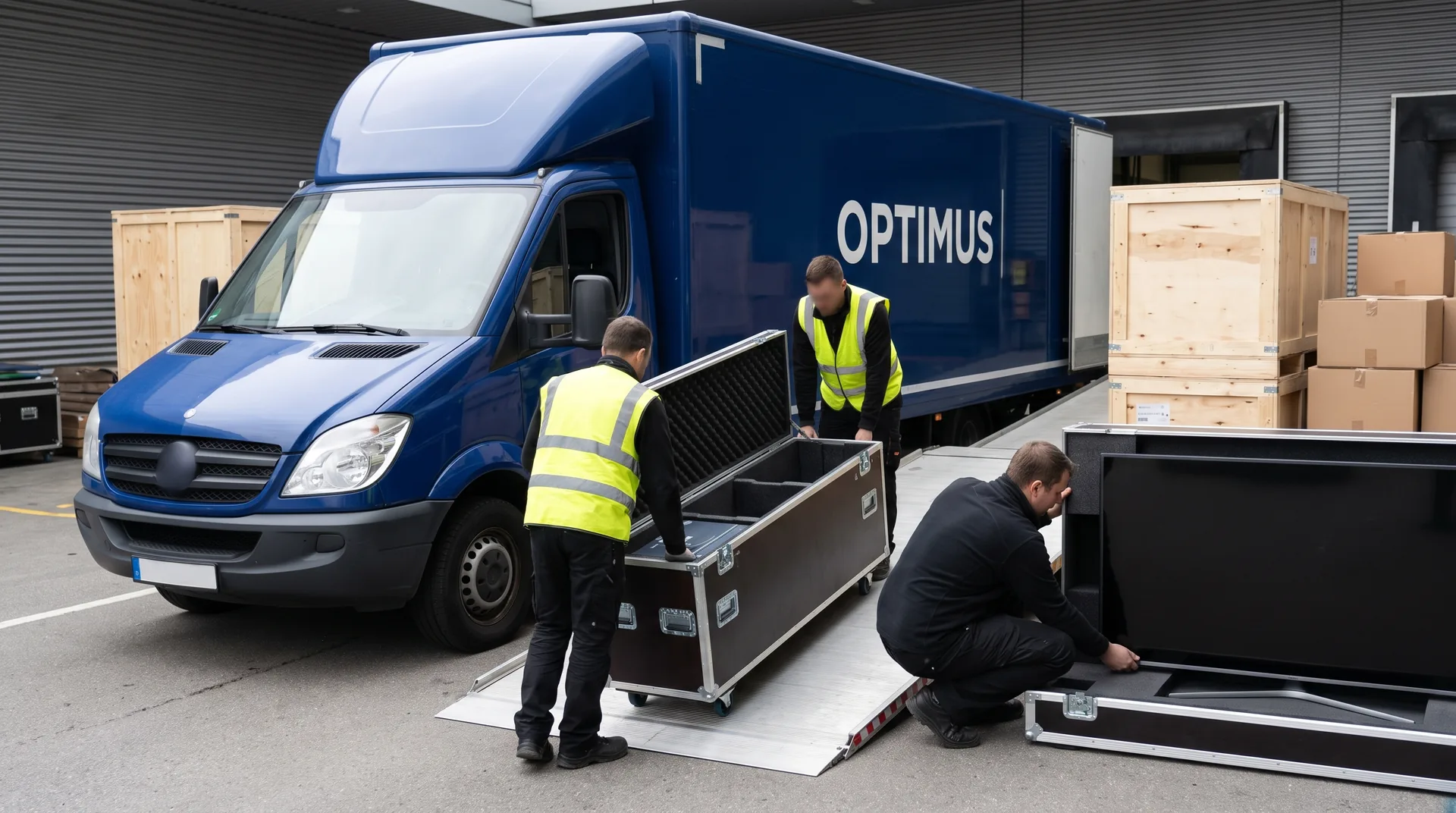
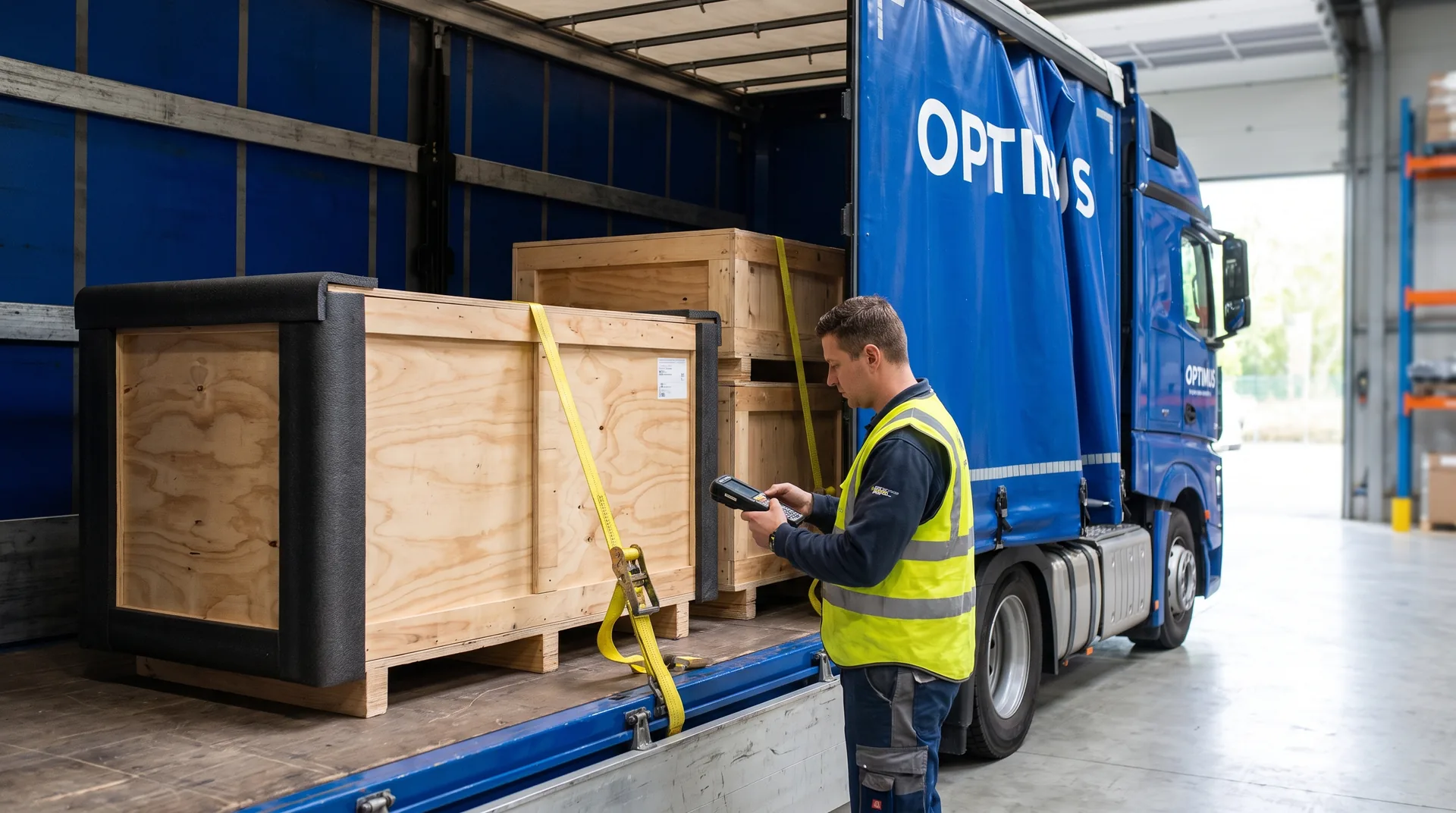
A standard groupage pallet is stretch-wrapped and travels in a trailer next to other cargo. An exhibit: a demo machine, stand structure elements, electronics, a prototype, usually needs a transport crate, a frame or returnable packaging with padding. Good packaging protects not only on the road but also during repeated handling: loading, transhipment, carrying into the hall and setting up on the stand. Once unpacked, the crates also need to be stored somewhere until the show ends.
- Crates, frames and separators matched to the nature of the exhibit.
- Orientation and lifting-point markings for the technical crews.
- Reusable packaging returning with the exhibit after the fair.
- Storage of empty packaging for the duration of the exhibition.
Value and insurance: OCP versus CARGO
Exhibits often have a value out of proportion to their weight: and carrier liability under an OCP policy is limited: it depends on the carrier being at fault and on limits set by the CMR Convention, calculated from cargo weight, not its actual value. For expensive electronics, prototypes or demo machines it is worth considering CARGO insurance, which covers the cargo itself regardless of carrier fault. This is general information, not insurance advice: the insurer always confirms the policy scope.
Rigid time windows: build-up and breakdown
Ordinary groupage can arrive a day earlier or later and the world does not end. An exhibit must be on the stand within the build-up window set by the organiser and be collected after the show closes within the breakdown window: afterwards the hall is locked or prepared for the next event. We confirm the dates with the organiser and plan transport with a buffer, often storing goods in a warehouse near the venue so we can arrive exactly on the slot.
Handling and documents
On top of that comes venue logistics: bookings, traffic restrictions inside the halls, unloading without a ramp (tail-lift, pallet truck), handover at the designated point. For fairs in the United Kingdom add customs formalities: most often an ATA carnet for exhibits returning in full. After the show there is still the return: collection from the stand, transport and settling the documents, which we describe in the article on post-show logistics.
How to prepare an exhibit for transport
Good preparation starts long before the truck arrives. Draw up a list of exhibits with descriptions, values and weights: it will serve the quotation, the insurance conversation and, for fairs in the United Kingdom, the ATA carnet as well. Check whether the exhibit needs dismantling for transport and who will assemble it on the stand. Agree the slot and booking details with the organiser, then pass them to the carrier together with the contact for the person present at the stand during build-up. If the packaging is to return after the fair, also plan the storage of empty crates: they cannot stay in the hall.
What this means for the exhibitor
- Start planning earlier than for a regular shipment: slots and documents take time.
- Take care of transport packaging and an exhibit list with values.
- Discuss insurance adequate to the cargo value.
- Entrust the delivery to a carrier that knows how fair venues work.
You will find the full scope of exhibition support on the exhibition logistics page. If you are preparing exhibits for a fair, write to us: we will plan the transport from packaging to the return from the stand.