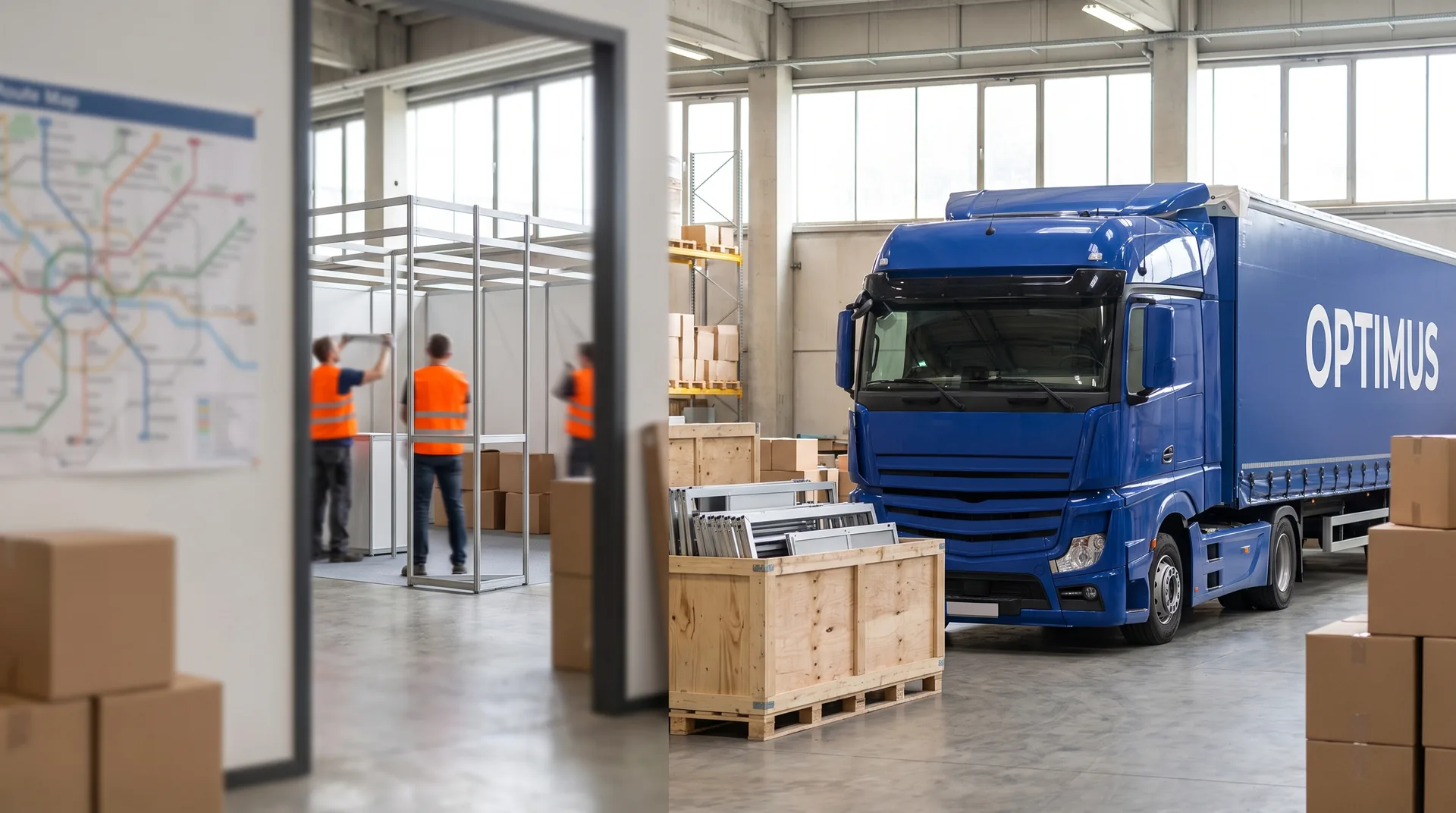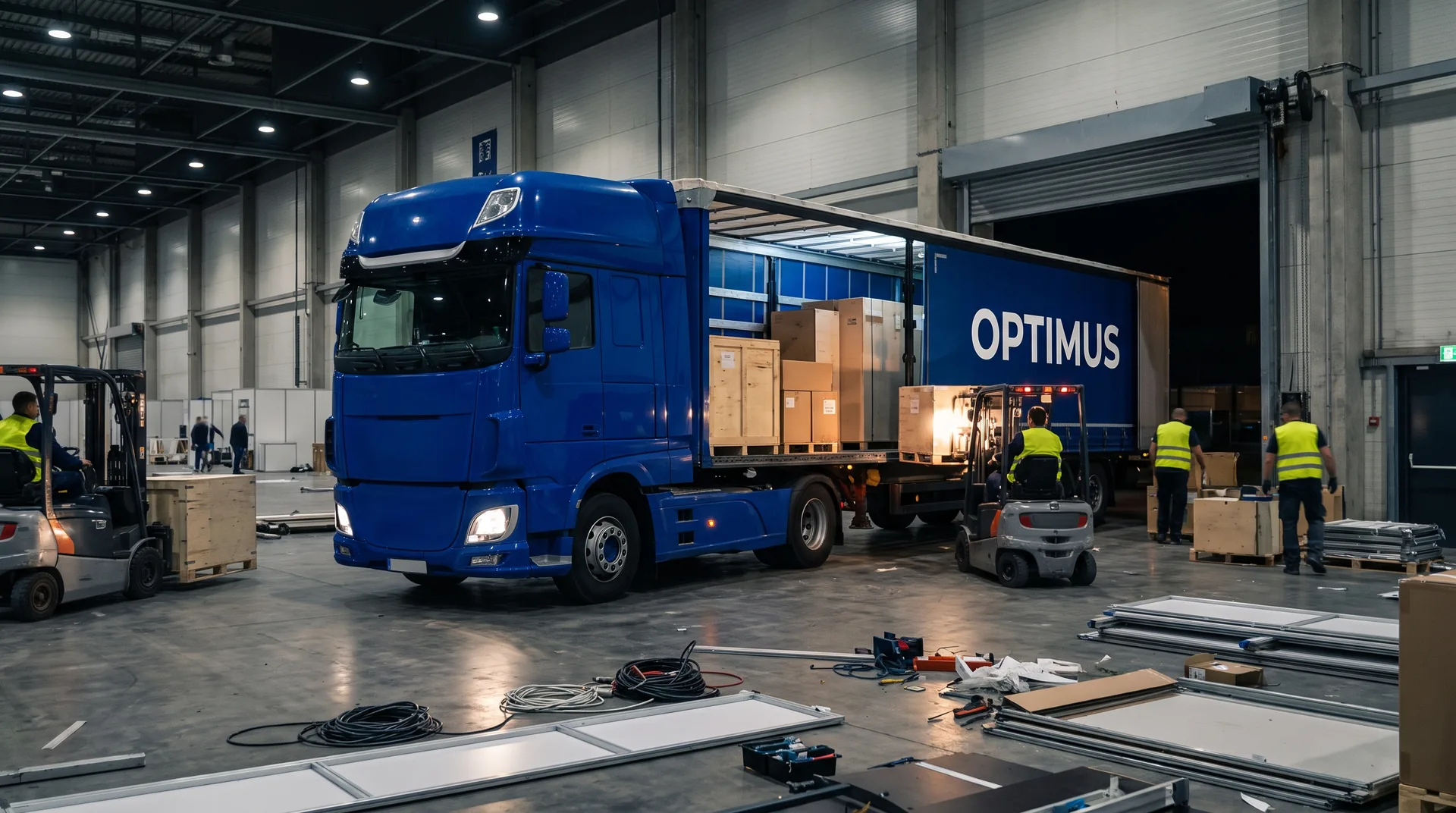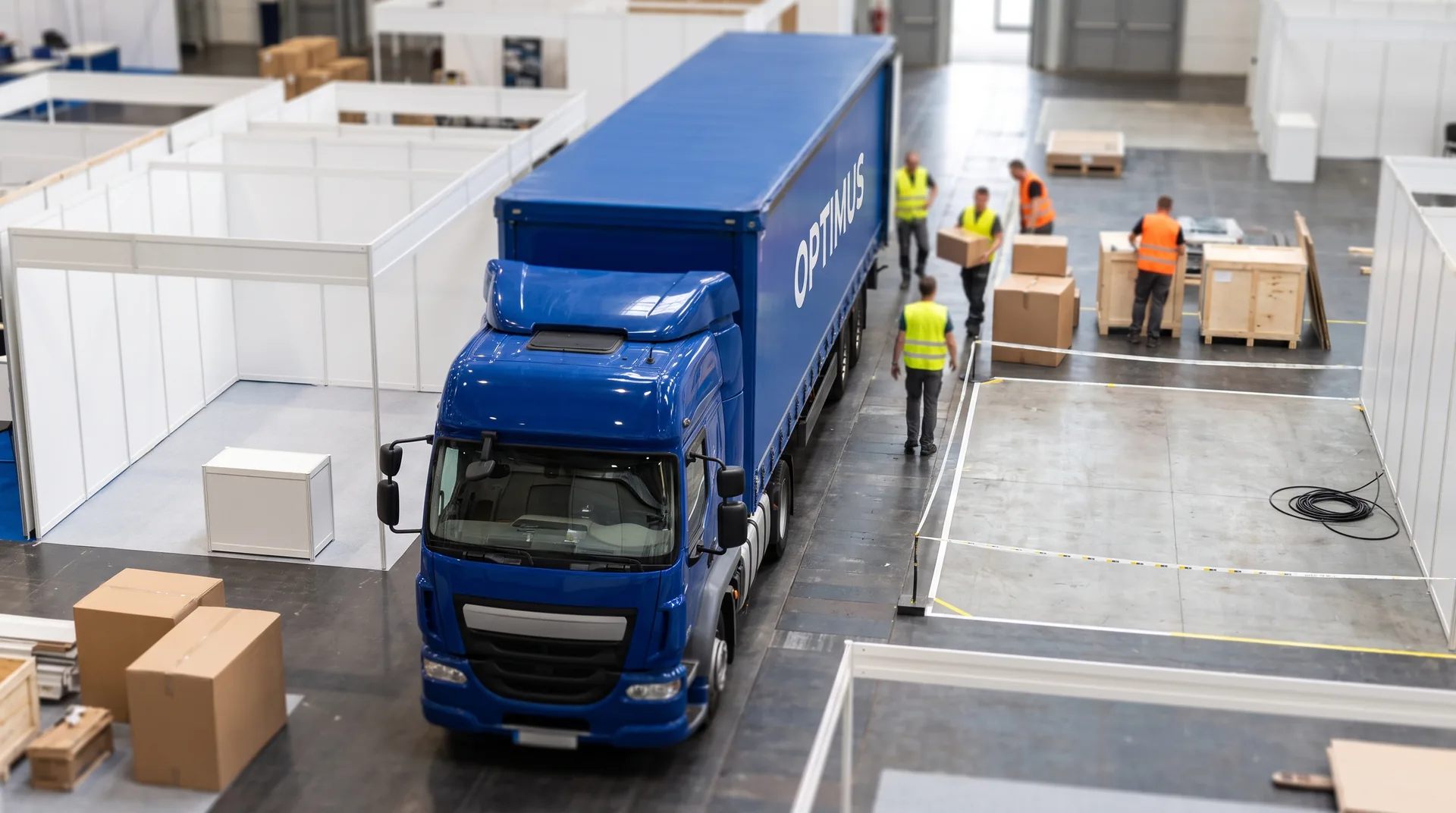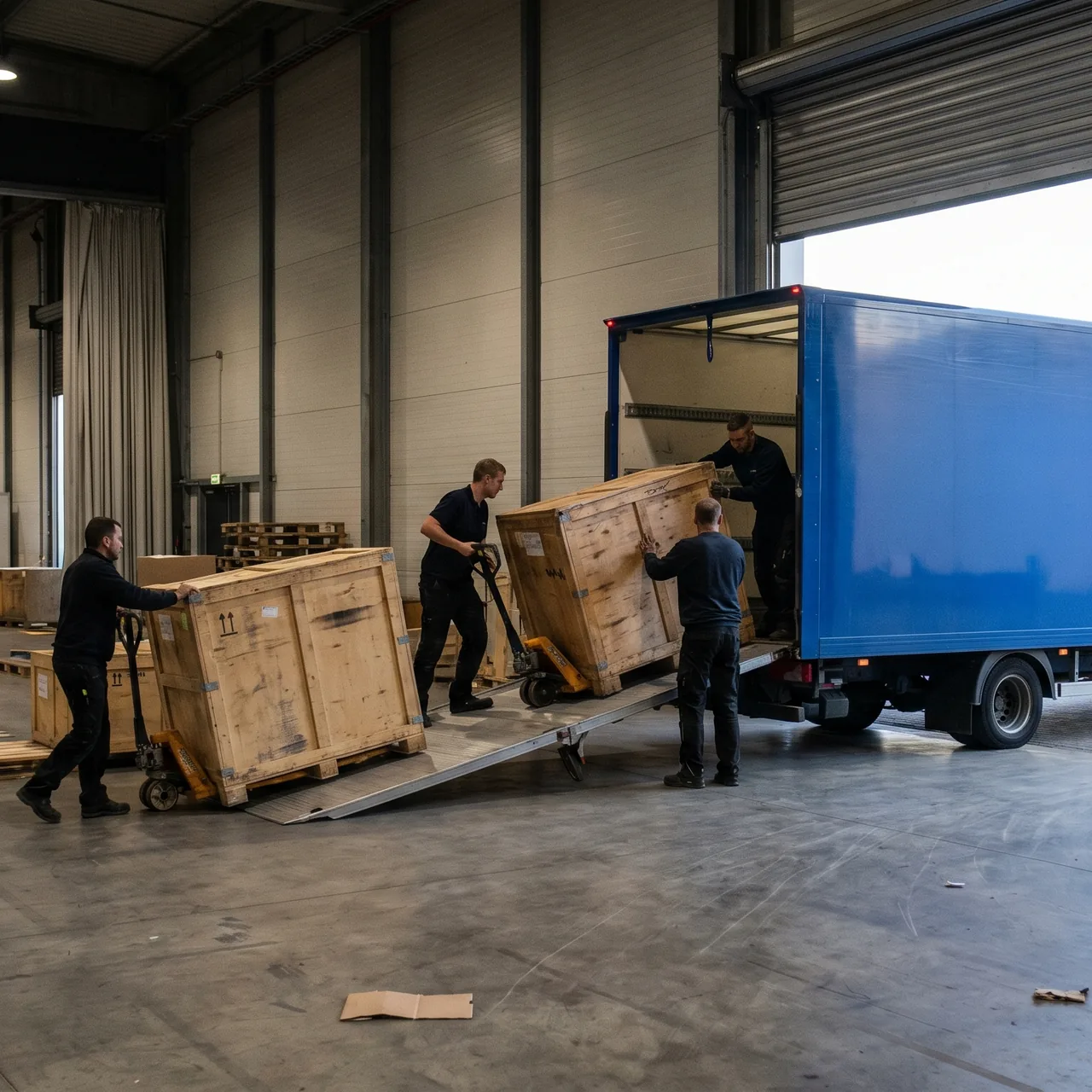
Post-show logistics means collecting from the stand once the fair closes, the return journey and discharging the customs procedures. Collection can only start after the halls close to visitors, inside the breakdown window set by the organiser. With an ATA carnet the key is that exactly what came into the hall leaves it, in the same quantity.
Why the return leg is harder than the delivery
Inbound can be planned a week ahead: you know what is travelling, what it weighs and when it must arrive. The return happens in a few hours, after the show closes, while every exhibitor packs at once and gate access is rationed. On top of that the load has changed: some exhibits were sold, some given away, packaging is scattered and print material is used up. If nobody records this on site, reconciling the paperwork afterwards turns into an investigation. The reason is organisational rather than technical: breakdown starts for every exhibitor in the same minute, once the doors close to visitors; we take it apart in breakdown after a show.
The return plan worth agreeing before departure
- The breakdown entry time and gate, and the vehicle registration notified to the organiser.
- Where empty crates and packaging will be stored during the show.
- The person on the exhibitor's side who hands over the load and signs the documents.
- A list of what returns and what stays behind or has been sold.
- The delivery address and goods-in window after the return to Poland or elsewhere.
Empty packaging: a small subject, a large problem
Crates and flight cases cannot stand beside the stand for the duration of the show, and venues rarely offer hall storage. If packaging disappears or comes back damaged, the exhibits travel home less protected than they arrived. So storage is arranged together with the transport, not on dismantling day. The subject is developed in empty crate storage during UK fairs.
The ATA carnet: discharge drives the cost
An ATA carnet allows temporary admission of exhibits without duty or taxes, provided they return unaltered. Discharge works by customs certifying, on exit and on return, that the movement matches the general list. Shortfalls mean the goods stayed inside the customs territory and must be regularised on normal terms, drawing on the guarantee. The return procedure is described in carnet return and discharge, and selling an exhibit from the stand in the ATA carnet and goods sold at the fair.
What to do with goods that are not coming back
Not everything is worth hauling home. Printed material, used stand build, samples and giveaways are often cheaper to regularise locally than to carry back across the Channel. That calls for a declaration for free circulation and payment of the charges, or documented destruction. For companies with another British show ahead, the alternative is leaving the stand build and crates in our Milton Keynes warehouse until the next season. That is usually simpler than two extra border crossings.
A schedule that works
- A week before the show: confirm the breakdown window and notify the vehicle.
- On closing day: take stock with the exhibitor and photograph the stand before dismantling.
- Straight after dismantling: load, seal, sign the consignment note and the carnet.
- On leaving the UK: get the carnet and documents certified at the point of exit.
- After the return: discharge the procedure and hand the complete file to the exhibitor.
The whole exhibition cycle, from first enquiry to the return, is described on the exhibition logistics page, and the rules for moving exhibits themselves in exhibit transport. The customs side is gathered on customs clearance.
Finishing a show in the United Kingdom and want a return without drama? Write through the quote form with the venue, the breakdown date and rough volume, and we will plan collection around the organiser's schedule.