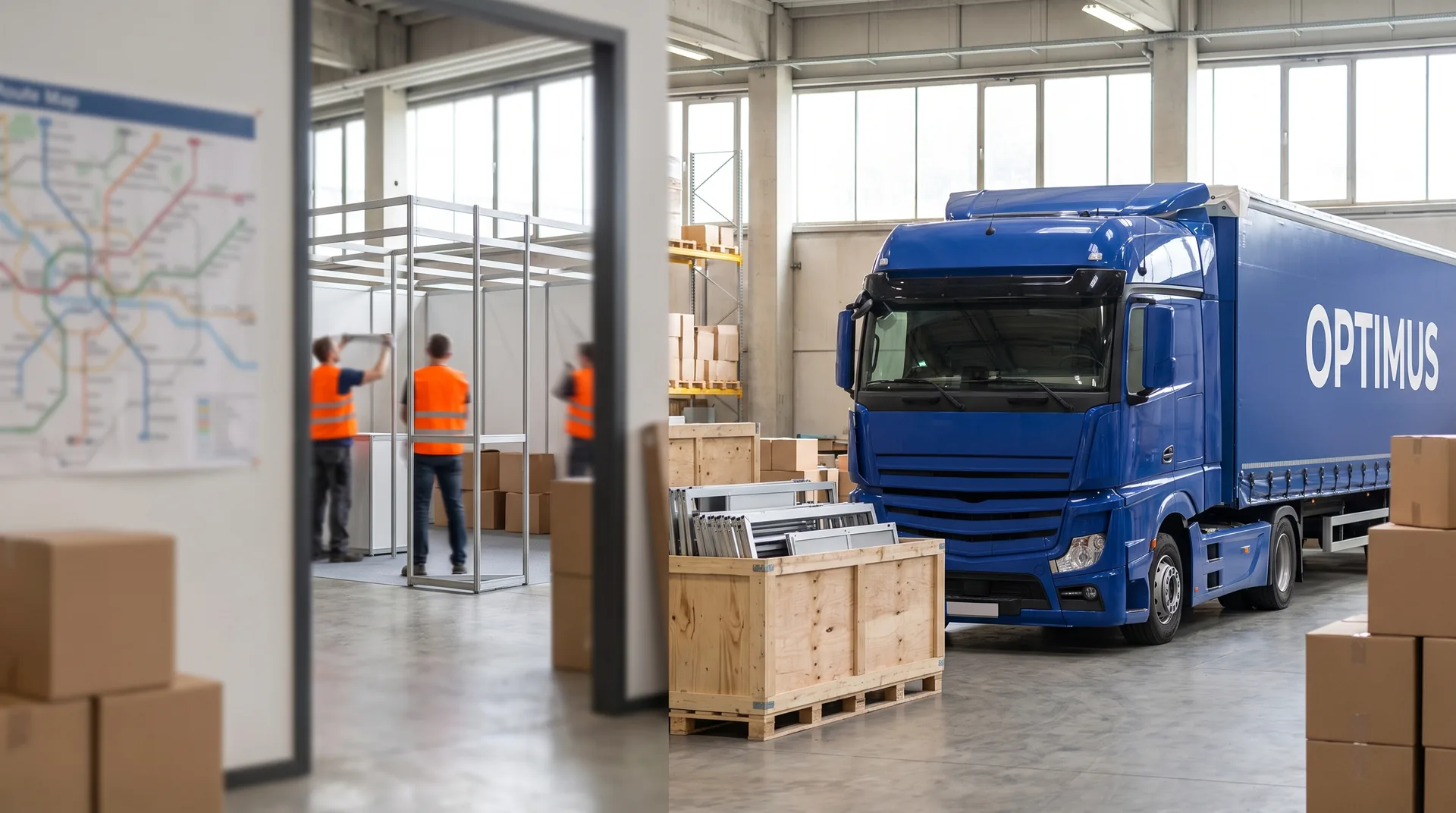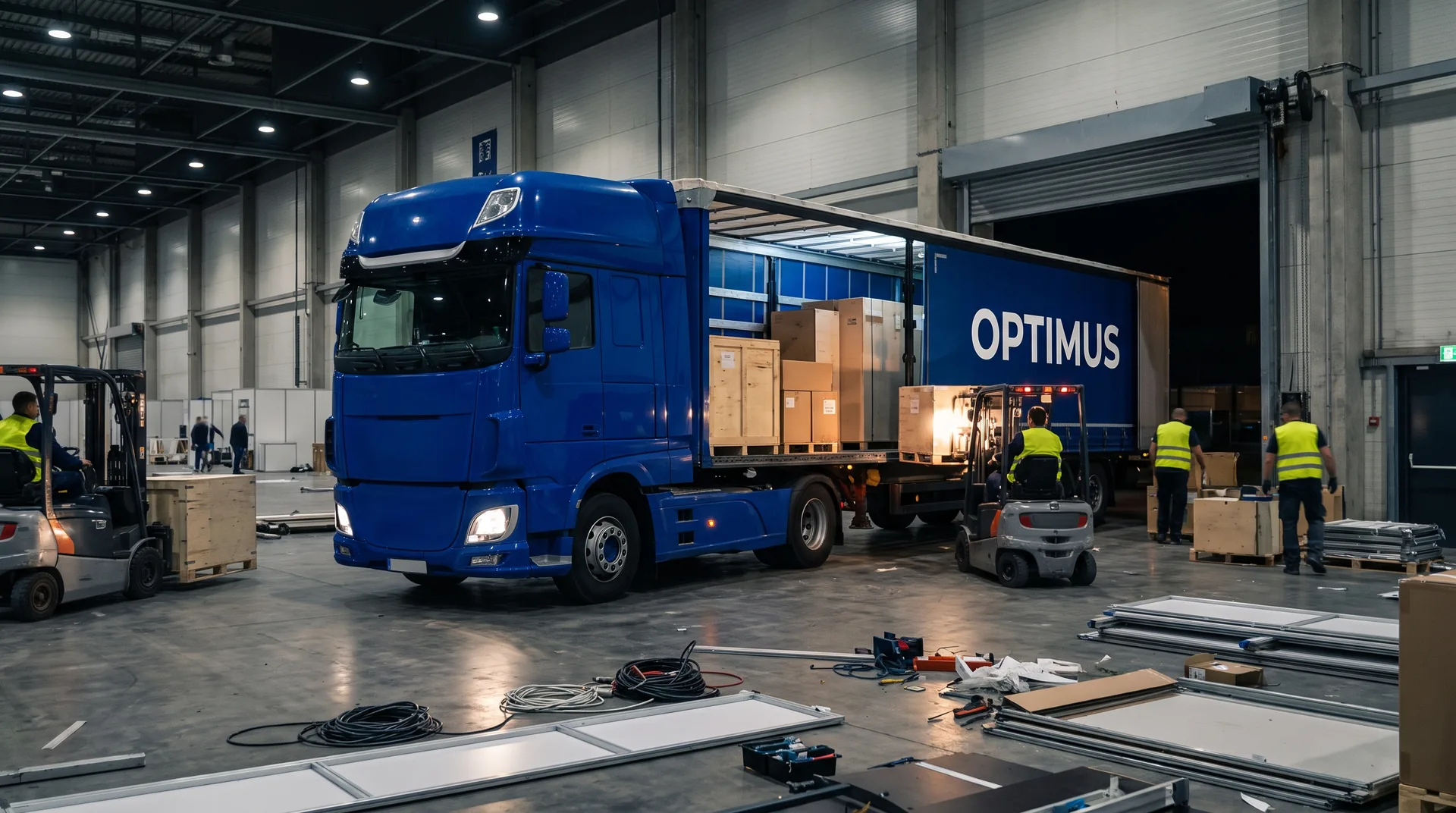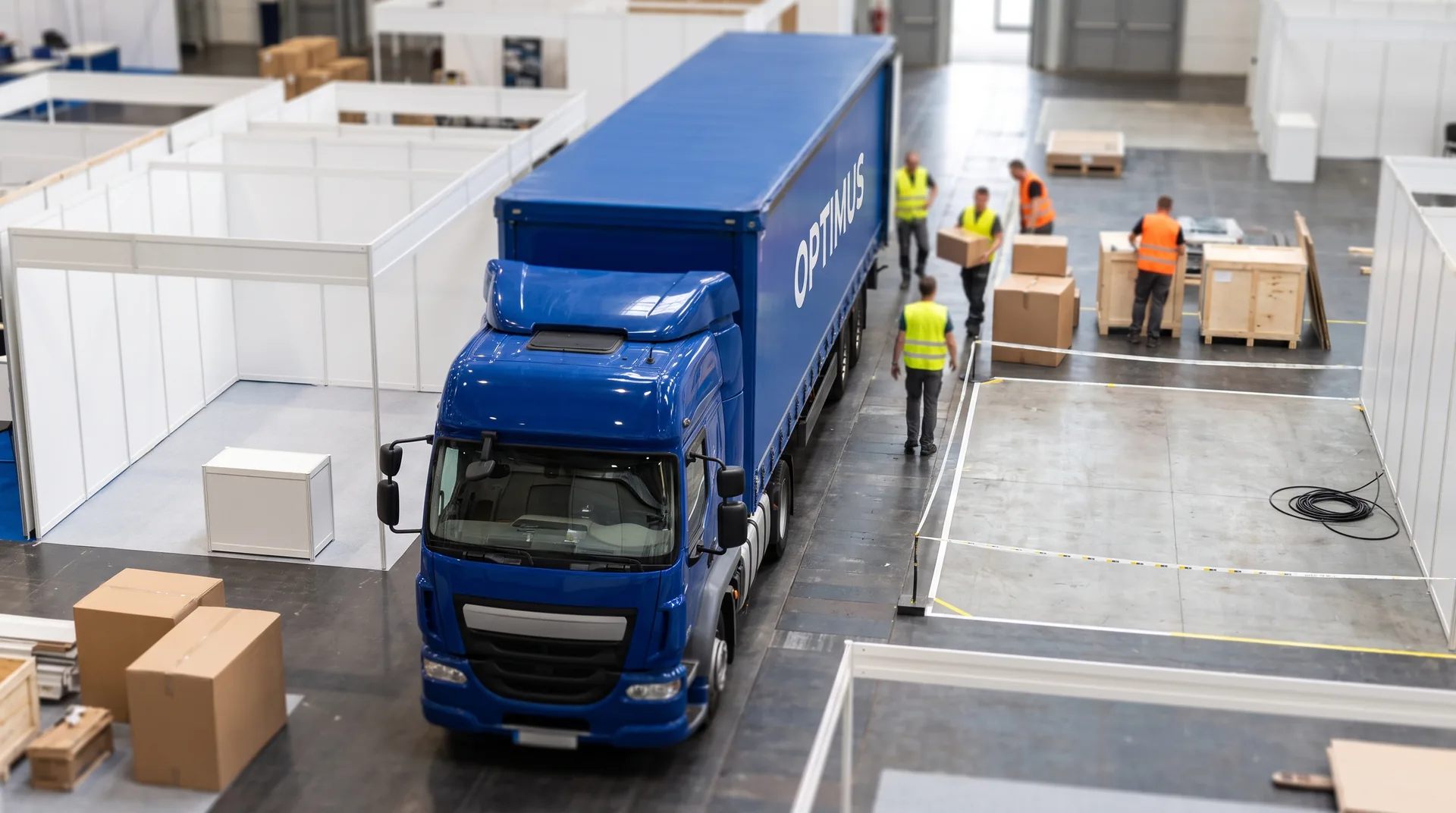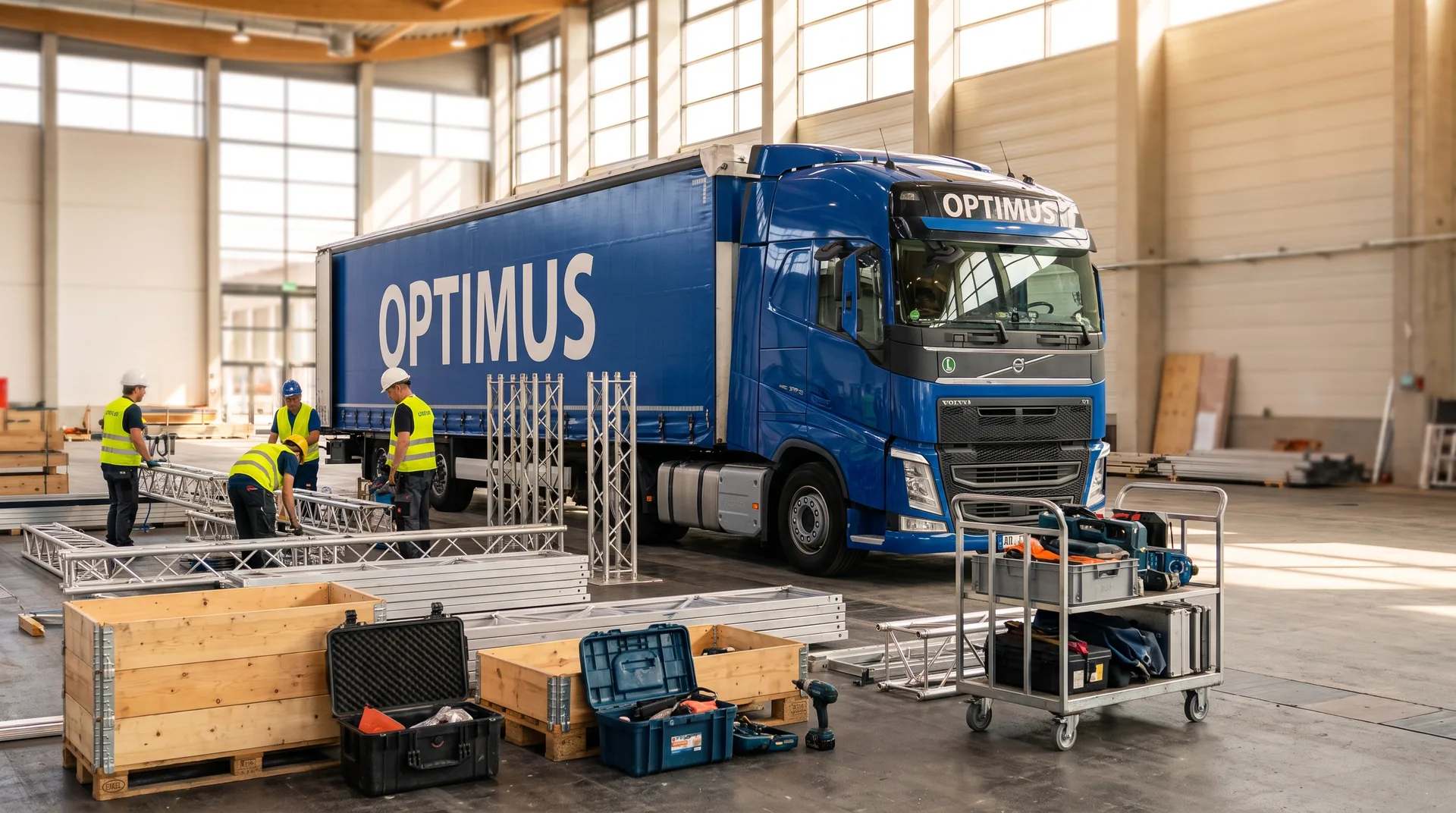
An exhibition stand in England is organised in a few steps: booking the space with the organiser, designing and producing the stand, the customs decision (an ATA carnet for returning elements, clearance for goods staying in the UK), transport delivered in the build-up slot, and after the show breakdown and return. Below is the full timeline and an exhibitor checklist.
Timeline: from booking to breakdown
- Booking the space. The organiser confirms the stand location, the venue rules and the build-up and breakdown windows: the whole plan counts back from these dates.
- Stand design and production. Fix the packed dimensions and weights of the elements at this stage, because they drive the choice of vehicle and the transport quote.
- The customs decision. The stand structure, furniture and exhibits returning to Poland travel best on an ATA carnet; goods sold, given away or consumed need ordinary export and import clearance.
- Booking the transport. We recommend 2-4 weeks before build-up, to align documents, venue slots and collection in Poland without stress.
- Carriage and customs. Export clearance in the EU, the Dunkirk-Dover crossing with an ENS declaration and a GMR, entry on the carnet or GB import clearance.
- Delivery in the slot. Unloading per the booking and the venue rules, within the build-up window. Moving goods deeper into the hall is done with venue equipment under show rules, and setting the stand up is the exhibitor or contractor side of the job.
- Breakdown and return. Collection of the stand after the show closes, a full set of stamps on the carnet and the return transport to Poland.
Exhibitor documents: ATA or sale
The basic decision is: what returns and what stays. Stand elements and exhibits returning in full are best entered on an ATA carnet: they cross borders without duty and VAT, provided they return unchanged and the stamps are complete. Goods that stay in England (sales, samples, catalogues, competition prizes) must go through standard clearance. Both groups can travel on one vehicle, but on separate documents: so we split the load list before departure, not at the border. The order matters, because the customs document is built from the load list and not the other way round, and matching the carriage itself to the venue build-up windows is covered separately in transport to UK fairs and the ATA carnet.
Pre-departure checklist
- Confirmed build-up and breakdown windows and an unloading slot at the venue.
- A load list with dimensions, weights and values: split into "returns" and "stays".
- An ATA carnet issued and matching the general list, or documents for clearance.
- EORI numbers on the export and import side if part of the goods stays in the UK.
- A contact person at the stand to receive the delivery in the build-up window.
- An agreed collection date for breakdown and a return plan.
Moving the stand: LTL, van or FTL
A small stand with a counter and graphics fits into groupage or a dedicated van; a full build with platforms and exhibits usually needs a whole vehicle. We cover moving the structure itself in our article on transport of exhibition stands, and everything we do for exhibitors is described in the exhibition logistics hub. The carnet rules are explained in ATA carnet, what it is. Print and giveaways are planned separately, because they do not return to Poland and carry a different customs status from exhibits; we cover it in print, catalogues and giveaways.
We cover individual venues separately, because they differ more than their size suggests: the Bath & West Showground near Shepton Mallet, Westpoint Exeter, the Kent Event Centre at Detling, the Brighton Centre, Sandown Park at Esher, the Royal Cornwall Events Centre near Wadebridge, Newark Showground and the Staffordshire County Showground near Stafford.
Looking for a carrier to take your stand to a fair in England and bring it back? Write to us: send the venue, the build-up and breakdown dates and a list of elements, and we will prepare a plan and a quote.