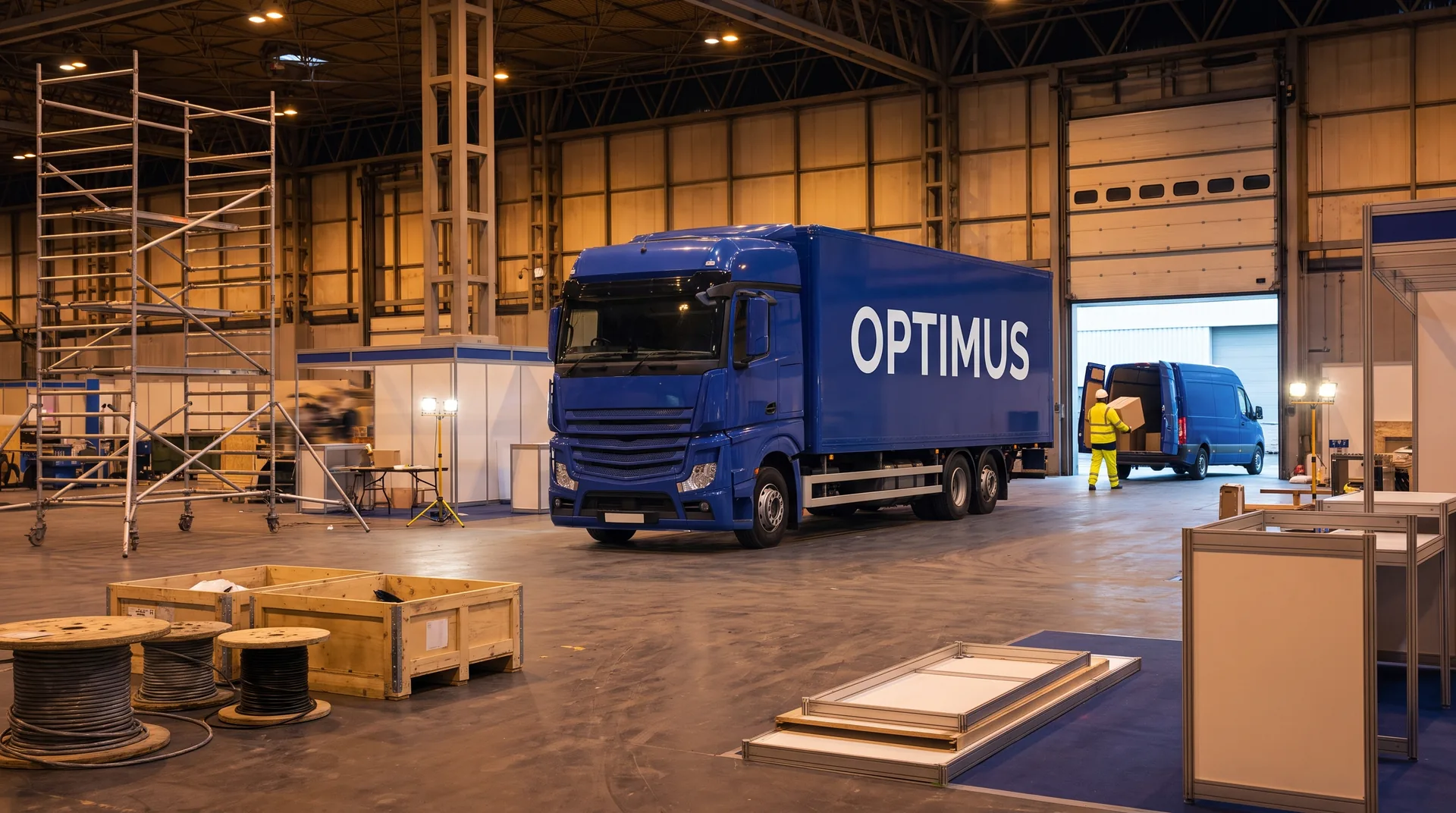
Exhibition stand transport means moving structure, walls, platforms, furniture and technical kit: high-volume cargo in awkward shapes. The vehicle is matched to dimensions and weight, not to a pallet count. On top comes a hard deadline: the stand has to be in the hall inside its build-up window, neither earlier nor later.
How stand build differs from ordinary groupage
A standard pallet has a predictable footprint and can be counted in loading metres. Stand build offers no such comfort: modular walls travel flat in stillages, platforms and carpet in rolls, truss sections as pieces several metres long, and a reception counter or exhibit in a purpose-built crate. So the vehicle is loaded for cube and for unloading order, because whatever gets built first has to stand by the doors. A poor loading plan costs the build crew hours on site.
What vehicle carries a stand
- A curtainsider or mega trailer for typical modular build, where internal height and side loading matter.
- A van or small rigid for compact stands and top-up deliveries, especially where the venue restricts large vehicles.
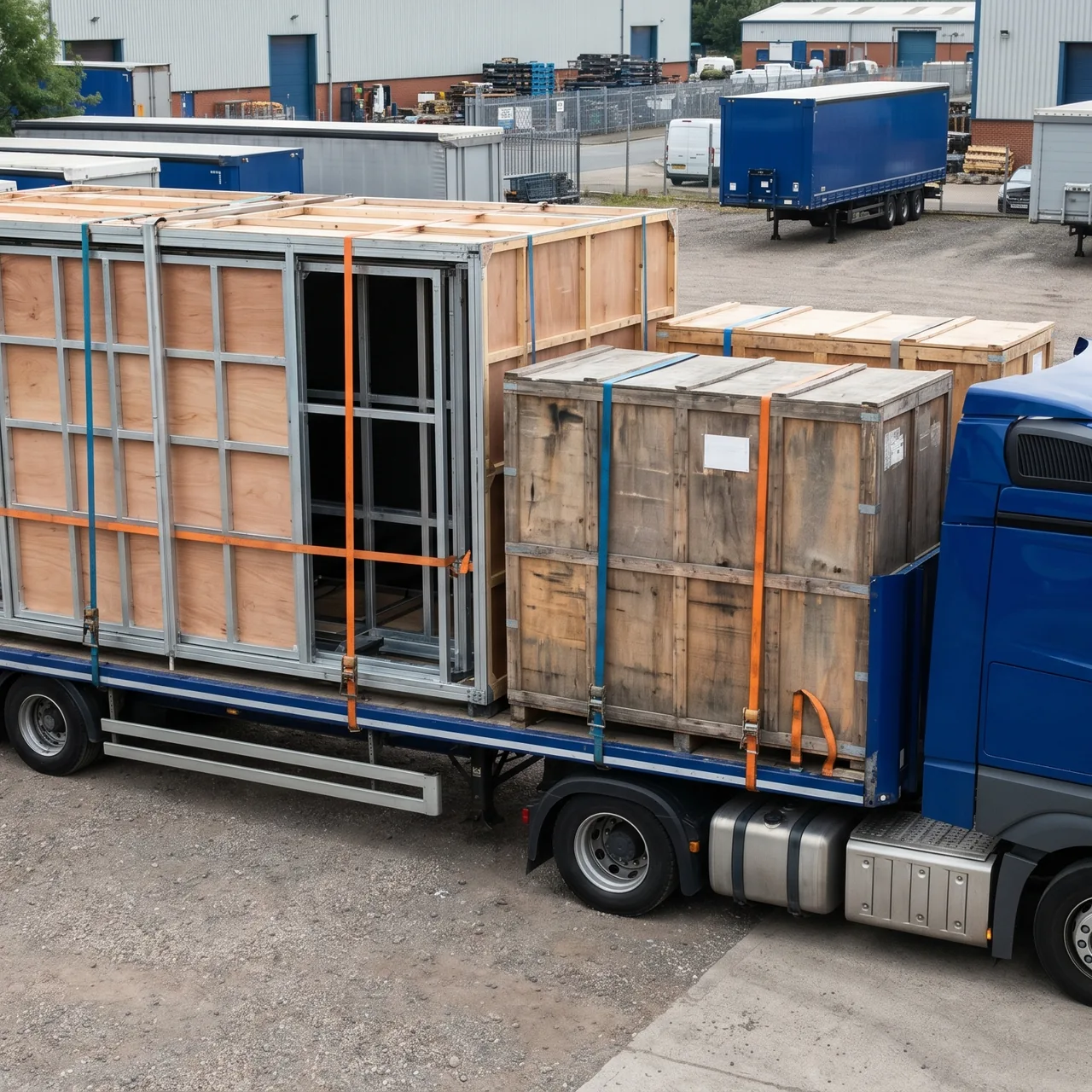
- A flatbed or low-loader for pieces beyond normal profile, such as heavy structures or machines displayed on the stand.
Which trailer suits which load is compared in tautliner, mega or curtainsider, and movements beyond normal limits in oversized transport to the UK.
Securing: no room for improvisation
Stand build is light relative to its volume, so it shifts easily and damages easily. Walls and panels travel upright in stillages, strapped against the side; glass and lacquered parts get interleaving; carpet rolls are chocked against rolling. The basics are even weight distribution and straps rated for the job rather than whatever is on board. The securing rules are covered in cargo securing to EN 12195.
Timings and site access
UK exhibition venues run booking systems: the vehicle gets a slot and a gate, and the driver reports to a marshalling area. Being late usually means waiting for the next free window rather than jumping the queue. So for stand build we plan arrival with margin, and for major shows we use a buffer at our Milton Keynes warehouse: the goods wait in the UK and enter the site exactly on their slot. Deliveries to the largest venues are described in transport to ExCeL London and transport to the NEC Birmingham.
Customs: structure versus exhibits
Stand structure and exhibits can fall under different regimes. Exhibits returning intact normally travel on an ATA carnet, while consumables, print and anything left behind are regularised on normal terms. Separating those two streams in the paperwork saves trouble on the way home, as discussed in post-show logistics.
What to include in your enquiry
- Venue name, stand number and the build-up window given by the organiser.
- Dimensions of the largest pieces and total cube, not just a pallet count.
- The weight of the heaviest item and whether it is lifted by forklift or crane.
- Whether side unloading is needed and whether the build crew will be on site.
- The return date and method, if the build is coming home.
Non-standard and out-of-gauge loads run under our oversized loads service, and the whole show cycle is described on the exhibition logistics page.
Building a stand at a UK show? Send the dimensions and schedule through the quote form and we will match the vehicle, the loading plan and the site entry time.