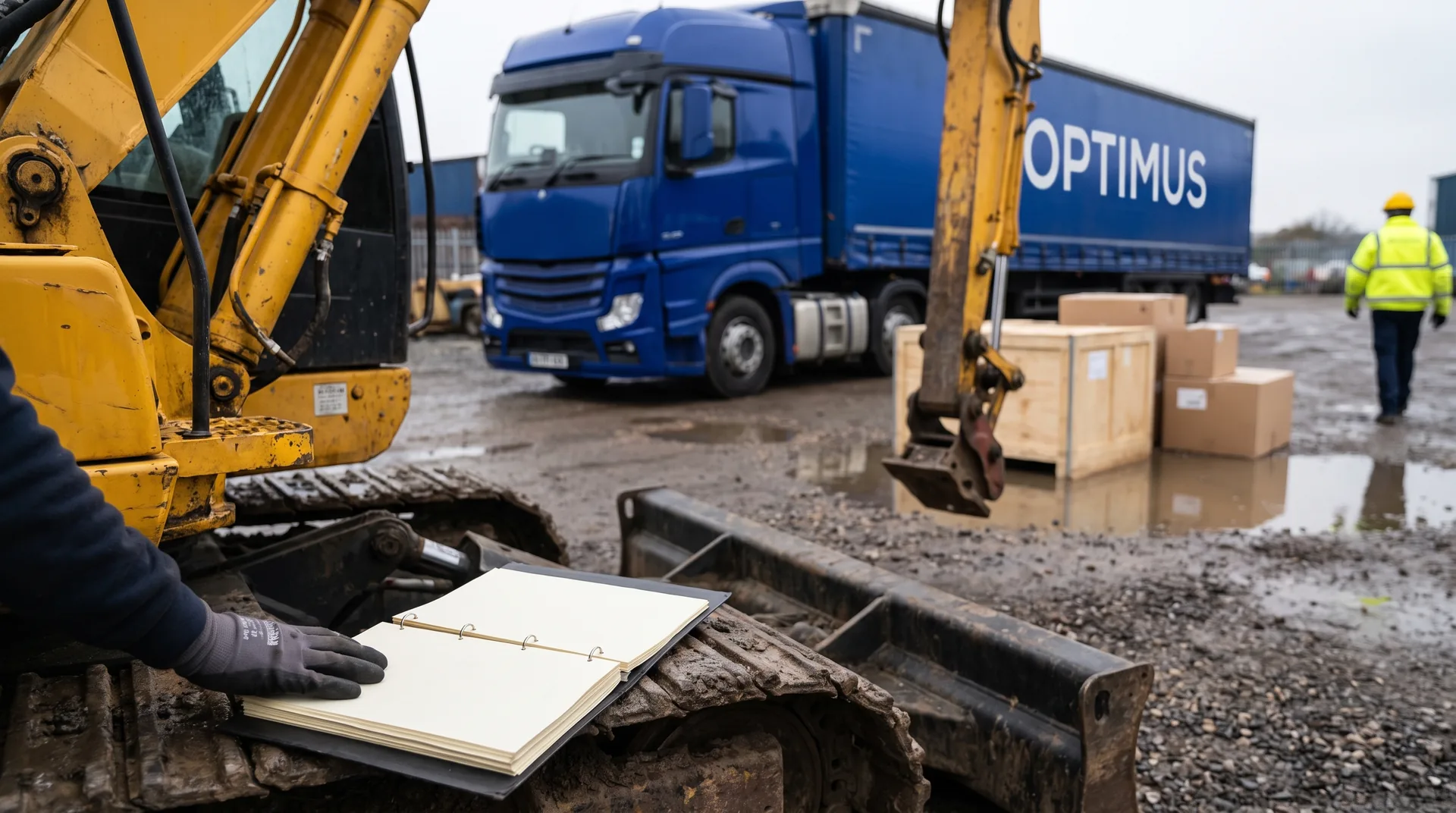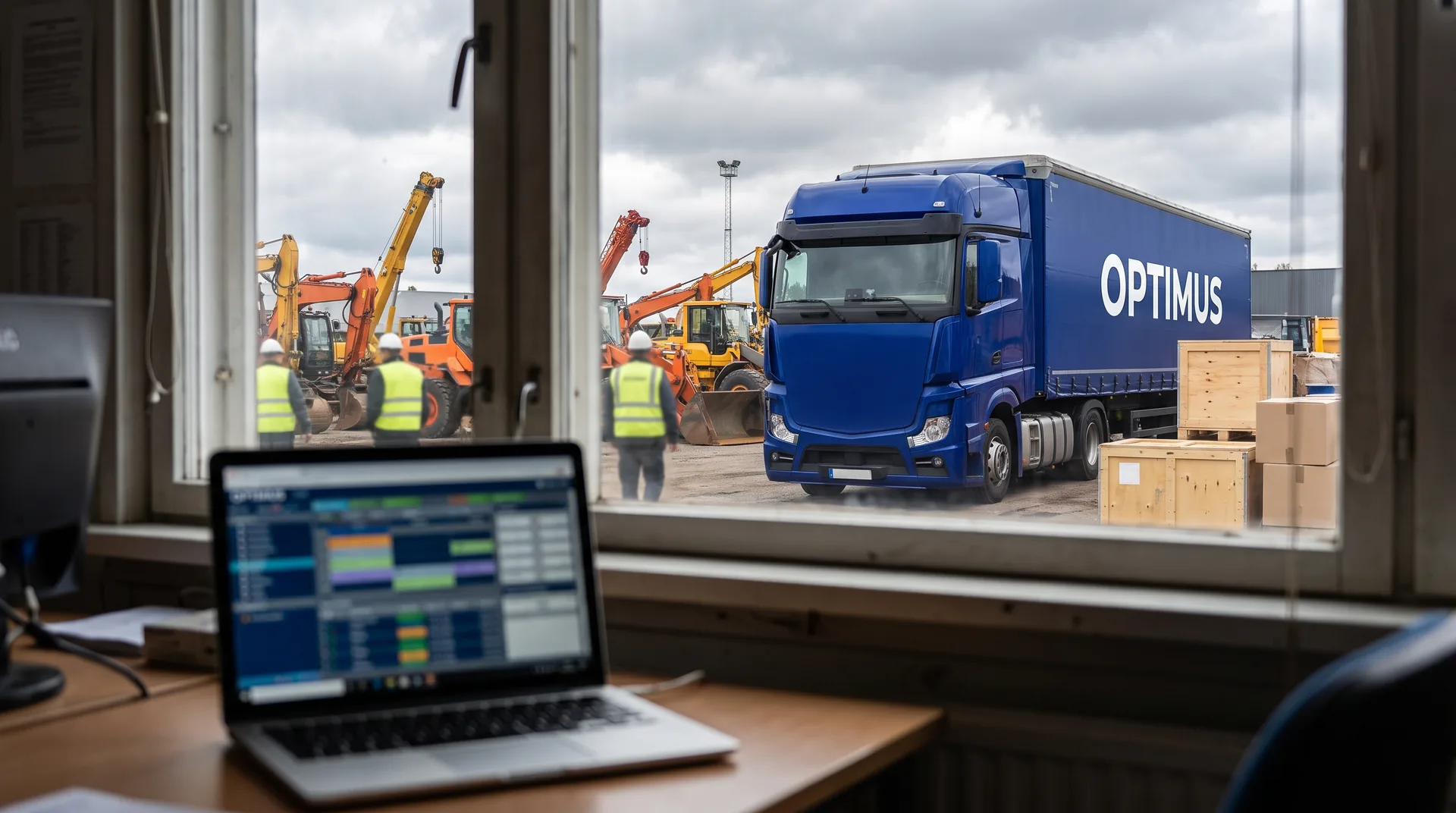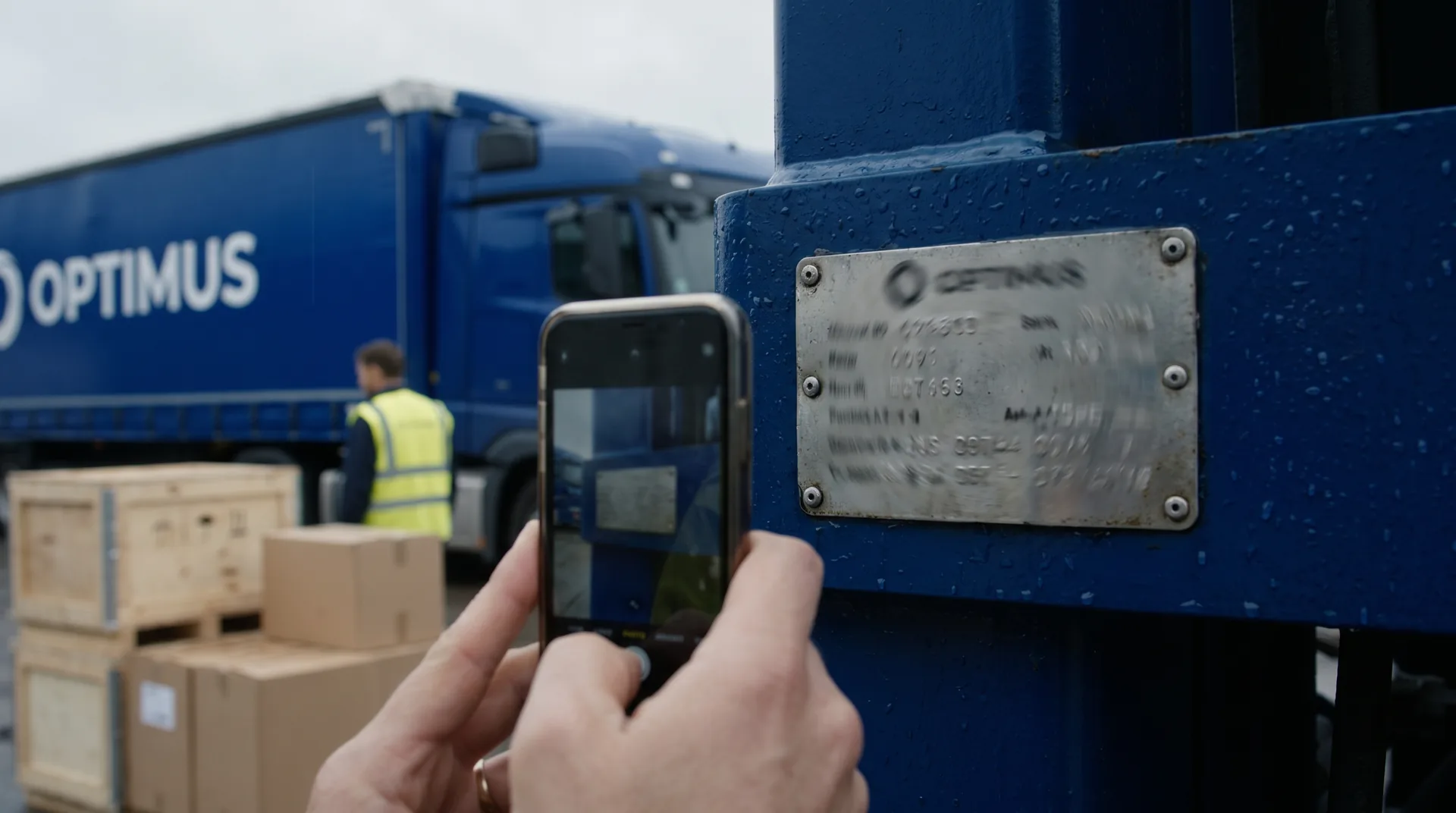
The serial number read off the machine, together with the data on the nameplate, is what ties a specific unit to the invoice, the customs declaration and the proof of payment. A mismatch between the paperwork and the machine is one of the commonest reasons for an examination of the goods and a delayed clearance.
Why customs wants the serial number
A customs declaration describes goods, and the authority is entitled to check whether the description matches reality. Article 188 of the Union Customs Code allows the authorities, for the purpose of verifying the accuracy of the particulars in an accepted declaration, to examine the declaration and the supporting documents, to require the declarant to provide other documents, to examine the goods and to take samples for analysis or detailed examination. On a used machine the serial number is the only element that unambiguously links the unit sitting on the trailer to the paper describing the transaction. Without it, a description along the lines of tracked excavator, around 2015 cannot be verified.
Who pays for the examination
This detail surprises buyers, and on a machine it costs real money. Article 189(1) of the customs code provides that transport of the goods to the places where they are to be examined and where samples are to be taken, and all the handling necessitated by such examination or sampling, is carried out by or under the responsibility of the declarant, and that the costs incurred are borne by the declarant. On a twenty-tonne machine that means unloading, a crane, a yard and the driver's time. The declarant also has the right to be present or represented at the examination, and the authorities may require it where they have reasonable grounds.
What to check before collection from the yard
- Read the serial number directly off the machine and photograph the nameplate at a resolution that lets every character be read.
- Compare that number with the number on the invoice and the sale note, character by character. The letter O and the digit zero are the classic mix-up.
- Check whether the plate is fixed to a guard that has to come off before transport. If it is, agree who will carry it and where it will be at the moment of clearance.
- Record the manufacturer, type, model and year of manufacture in the form they appear on the machine, not the shortened form from the listing.
- If the machine carries additional markings, such as an engine or chassis number, note those too.
- Ask the seller whether the machine has been renumbered or the plate replaced after a repair.
When there is no plate
A missing or illegible plate does not rule out clearance, but it changes how the work is done. Identification then has to rest on other durable markings, on service records, on a number stamped into the frame, or on confirmation from the manufacturer. It is worth settling before collection, because trying to add a number at the port ends in an amended declaration or a wait. What matters is that nobody improvises: entering a number in the declaration that cannot be read off the machine is a declaration of false particulars, and Article 15(2) of the customs code makes the person lodging the declaration responsible for the accuracy and completeness of the information and for the authenticity and accuracy of the documents supporting it.
The second reason this matters
Identifying a machine does not end with customs. In the Blue Guide the European Commission states that Union harmonisation legislation applies to used and second-hand products imported from a third country when they enter the Union market for the first time, and that the CE marking must be affixed to used and second-hand products imported from third countries that are subject to legislation providing for it. The same guide states that a person who places on the Union market second-hand products from a third country must assume the role of the manufacturer. Without unambiguous identification of the unit, no technical file, no history and no responsibility can be attached to the machine. That is the buyer's task, not the carrier's: we do not assess whether a machine meets EU market requirements.
What we do at collection
We organise and run clearance on both sides as part of the job, working with our regular customs agencies, and at collection from the yard we ask the driver for a photograph of the nameplate and general photographs of the machine before loading. That serves two purposes: it gives the agency material for the declaration and it documents the condition of the machine at the moment of takeover, which matters if damage is later disputed. Technical data and value are supplied by the buyer. The full document set for an auction purchase is gathered in documents for a machine bought at auction, and the technical requirements and valuation in importing used machinery from the UK. What an error in the description of the goods does to classification is covered in wrong HS code.
Sources
- EUR-Lex: Union Customs Code, Articles 15, 188 and 189 (accessed 2026-08-20)
- European Commission: the 2022 Blue Guide, second-hand products from third countries and CE marking (accessed 2026-08-20)
- European Commission: the customs union, controls and verification of declarations (accessed 2026-08-20)
Collecting a machine from a yard in England? Send a photograph of the nameplate and the invoice through the contact form and we will check the data match before the vehicle sets off. The scope of the formalities is on our customs clearance page. This text is general information, not customs advice.