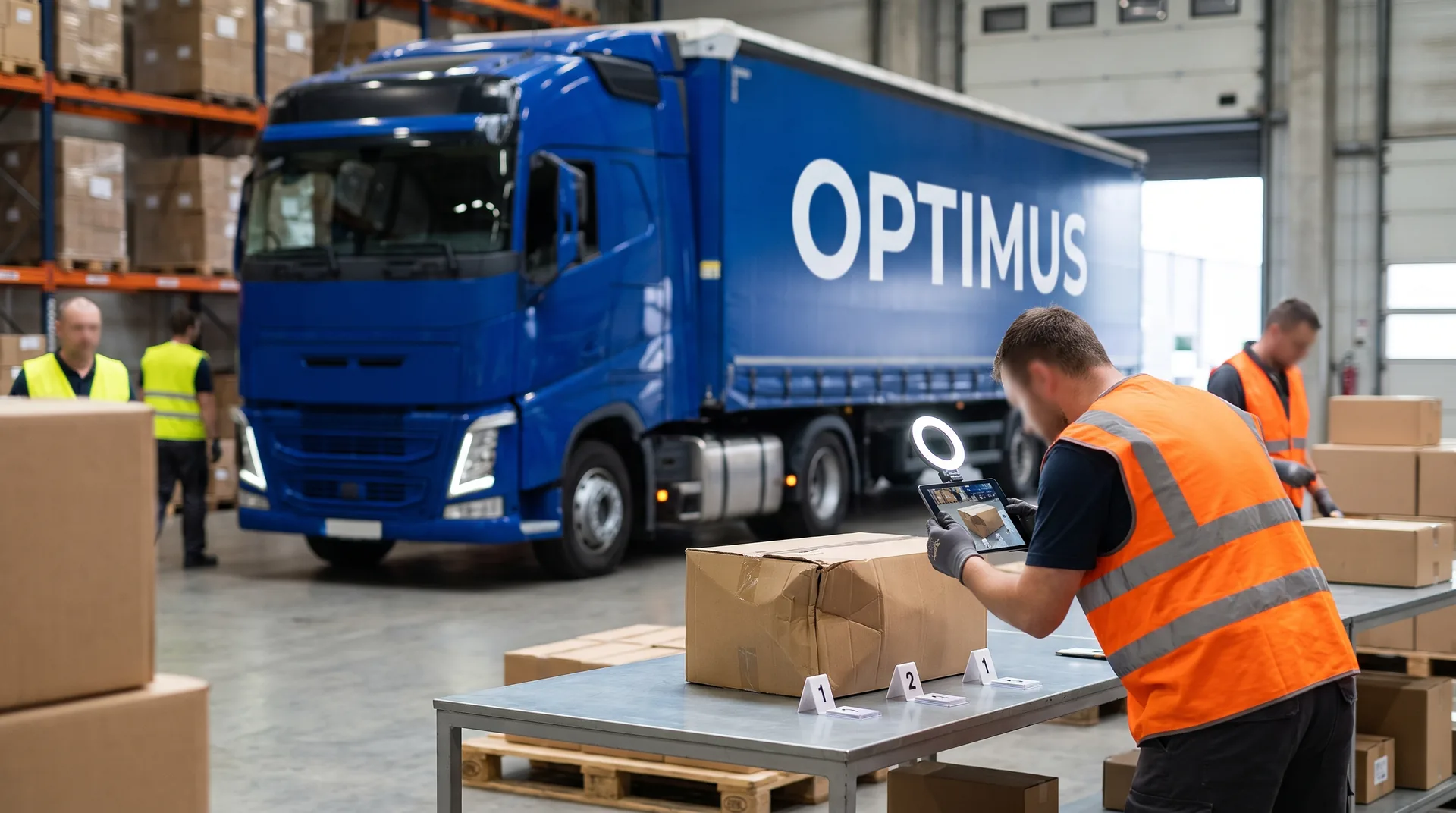
Food sold in the United Kingdom must carry a label compliant with UK food information rules: the name, ingredients with allergens emphasised, dates, the FBO's details with a UK address and the other mandatory elements. The consumer label must arrive applied by the producer. At the Milton Keynes warehouse we check it for completeness on a sample from the batch, and we correct and print only the logistics markings on outer cartons and pallets before the batch travels to the consignee.
What must a UK food label contain?
The catalogue is longer than it seems: the product name, an ingredient list with allergens emphasised within it, net quantity, durability dates, storage conditions, the responsible food business operator's details with an address in the UK or Northern Ireland, and for some products the country of origin and nutrition information. For goods from Poland the most common gap is precisely the UK FBO address and the English ingredient list. The address requirement is covered in detail in food labels for export to the UK.
Who does Natasha's Law apply to?
The PPDS rule covers food packed at the same place where it is offered to the consumer: sandwiches packed on site, salads, baked goods in packaging. Since 1 October 2021 such food must carry a label with the name and a full ingredient list in which allergens are clearly emphasised. For a Polish exporter the impact is indirect but real: British food service and retail customers demand complete ingredient and allergen data from suppliers, because without it they cannot meet their own duties. Gaps in the specification come back to the supplier as held orders.
How does the label check work in Milton Keynes?
- The consignee or exporter provides the approved label artwork: EN ingredients, allergens, the FBO address, codes.
- We verify the artwork against the batch specification: dates, batch numbers, weights.
- We check on a sample from the batch that the consumer labels are complete; gaps are reported before dispatch, because we do not label retail units.
- We print and apply the logistics markings on outer cartons and pallets: SSCC, the retailer's pallet labels, batch data.
- When outer packaging changes, we repack at carton and pallet level with segregation and hygiene maintained.
- The batch returns to the dispatch zone with documentation of the operation.
The GS1 and SSCC logistics codes used in retail deliveries are described in relabelling and GS1 codes in the UK.
Why check labels in the UK rather than at the consignee?
Because requirements often arrive too late. A retail chain can refine the label format after the goods have shipped, an ingredient translation comes back with comments, and printing a new packaging batch in Poland would take weeks. The check in Milton Keynes catches such a gap before the batch reaches the chain, and carton and pallet markings are corrected on site in a day or two; unit labels are fixed by the producer, so the earlier a gap is known, the less stock travels back across the Channel. Polish grocery shops use the same operation, described in Polish packaged food for UK shops.
The most common label faults from Poland
In warehouse practice the same gaps come back regularly:
- No FBO address in the UK or Northern Ireland; the producer's Polish address alone is not enough.
- Ingredients only in Polish, or a translation without allergens emphasised within the ingredient text.
- Allergens listed in a separate box instead of being emphasised in the ingredient list, as the rules require.
- Illegible or over-stickered durability dates, which a chain treats as no date at all.
- A label covering mandatory information on the original packaging.
Each of these can stop a delivery at the consignee, We catch them on a sample in the warehouse before dispatch to the chain, but only the producer can fix them on its own line: that is exactly what the label check is for.
Consumer label versus logistics label
Two layers of markings work on a package, and they should not be confused. The consumer label, governed by FIC and Natasha's Law, describes the product: ingredients, allergens, dates, the FBO address. The logistics label describes the shipping unit: GS1 codes, the pallet's SSCC number, batch data for the consignee's warehouse systems. Chains require both layers at once and each has its own rules; missing either one ends the same way, in refusal. In Milton Keynes we check the consumer layer and complete the logistics layer on cartons and pallets ourselves, to the specific consignee's specification.
A short labelling glossary
A few abbreviations that come back in every conversation about food labels for the British market. FIC: the food information for consumers rules, the basis of the whole catalogue of mandatory label elements. PPDS: food prepacked for direct sale, covered by the Natasha's Law rule. FBO: the food business operator responsible for the product, whose details with a UK address must appear on the label. The list of 14 allergens: the catalogue of ingredients that must be emphasised within the ingredient list, from gluten and milk to lupin and molluscs. Relabelling: completing or replacing labels after the goods arrive; on retail units this is done by the producer or a prep operator, in our warehouse it covers outer cartons and pallets only. Knowing these five terms is enough to make a British consignee's specification stop sounding like a foreign language.
Sources
Moving food to the UK and want to be sure the labels pass at the consignee? Use the contact form and we will plan the label check and pallet marking at the Milton Keynes warehouse.