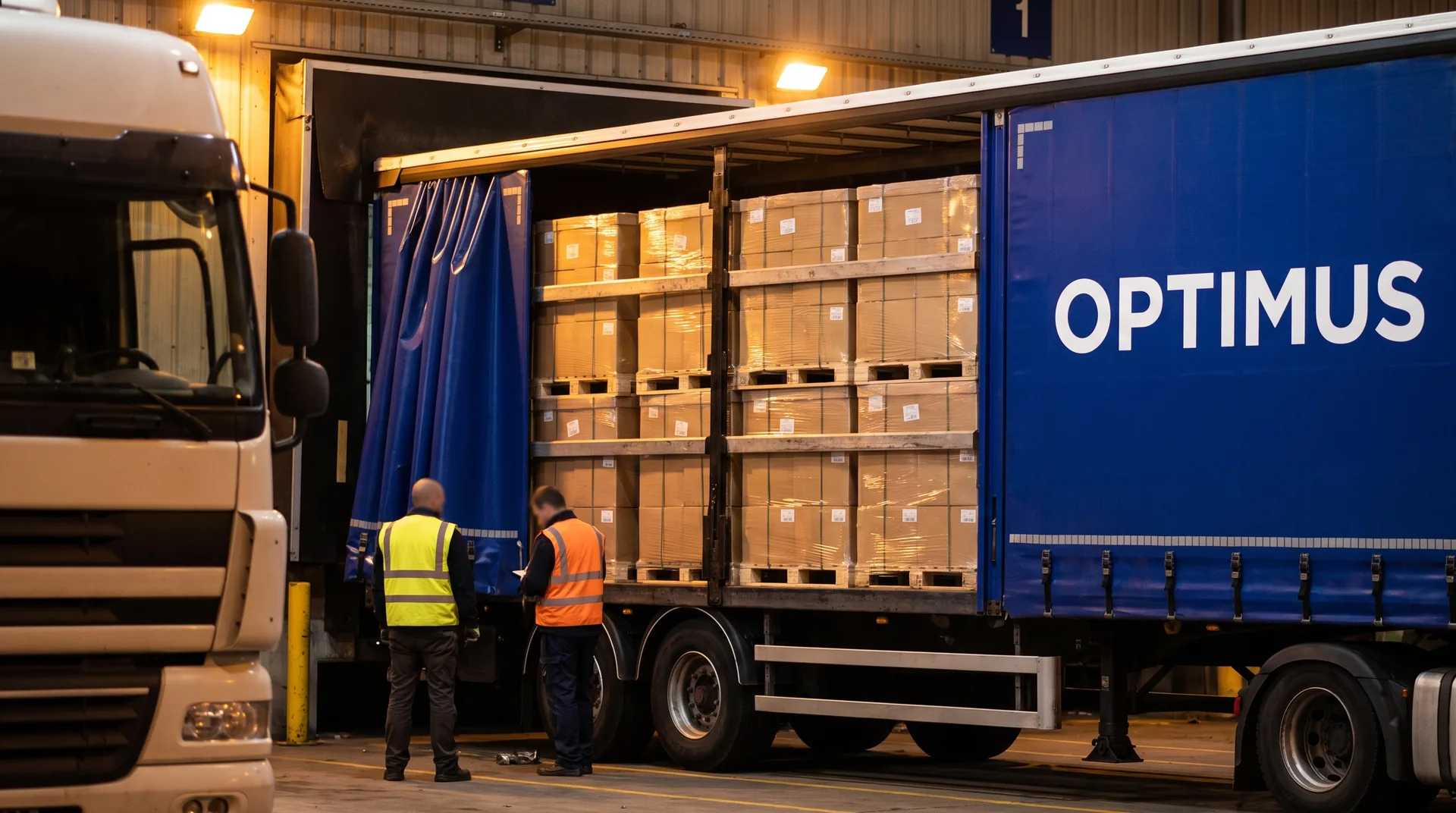
The common denominator of British retail pallet requirements: an undamaged pallet in a standard size (usually UK 1200 x 1000 mm or EUR 1200 x 800 mm), no overhang beyond the footprint, stable layers stretch-wrapped to the pallet, a height limit set by the chain's specification, and a logistics label with an SSCC number on every pallet.
The pallet: size and condition
- In British trade the UK 1200 x 1000 mm pallet is the standard; EUR 1200 x 800 mm pallets are widely accepted, but chain specifications can be precise about the type.
- The pallet must be sound: broken boards, protruding nails or rotten blocks are a straight road to refusal.
- Wooden pallets moving between the EU and the UK must meet ISPM 15 (heat treatment and marking), which since Brexit also applies to shipments from Poland.
Height, overhang and stability
The pallet height limit is set by the chain in its supplier specification and can differ between warehouses and product categories, so we quote no single safe number. Three rules are universal: goods must not overhang the pallet footprint (overhang blocks racking and damages neighbouring units), layers must be stacked stably and wrapped to the carrier, and heavy items go at the bottom. The technical side of preparing a pallet is covered in our articles on preparing a pallet for the UK and on EUR and EPAL pallets.
The logistics label and markings
Chains expect a GS1 standard logistics label with an SSCC number, placed according to the standard on adjacent sides of the pallet, readable by a scanner without removing the wrap. Handling symbols on the packaging (ISO 780: this way up, fragile, keep dry) matter for sensitive goods. Missing labels are, next to overhang, the most frequent cause of trouble at an RDC gate; at Milton Keynes we can fix them before delivery, as described in our article on GS1 and SSCC labelling.
The most frequent reasons a pallet is rejected
- Overhang beyond the footprint or the specified height exceeded.
- A damaged carrier or a pallet type other than required.
- A missing SSCC label, an unreadable one, or one that disagrees with the booking.
- An unstable load: leaning layers, wrap that does not bind to the pallet.
- Wooden pallets without ISPM 15 marking.
What happens when a pallet is rejected at the gate
A refusal rarely covers the whole delivery: the warehouse accepts the pallets that meet the specification and rejects individual units. The trouble is that the rejected pallet goes back on the vehicle and has to go somewhere, while the gate window is already closed. The standard way out is to take it to the Milton Keynes warehouse, fix whatever failed (wrapping, logistics label, height, repacking onto a sound carrier) and book it in again for the next free window. It costs one extra run and a few days, but it saves the goods from a trip back to Poland. The alternative, fixing the pallet in the car park in front of the distribution centre, usually ends in a second refusal.
Where our role ends and yours begins
The boundary is simple and worth knowing before the first delivery: the pallet and the outer carton are ours, the retail item is yours or a parcel operator's. We will fix a pallet, restack layers, repack the goods onto a sound carrier, apply a logistics label to the shipping unit. What we do not do is mark individual retail items or prepare goods for a specific sales channel. Settling this at the outset saves misunderstandings the moment a chain sends over a specification with requirements reaching down to item level.
Sources
- GS1: the SSCC number and the logistics label
- GOV.UK: wood packaging material for import and export (ISPM 15)
- IPPC: the ISPM 15 standard for wood packaging material
Want to be sure your pallets clear the gate first time? At our Milton Keynes warehouse we fix pallets, wrapping and labels before retail delivery. Write through the contact form.