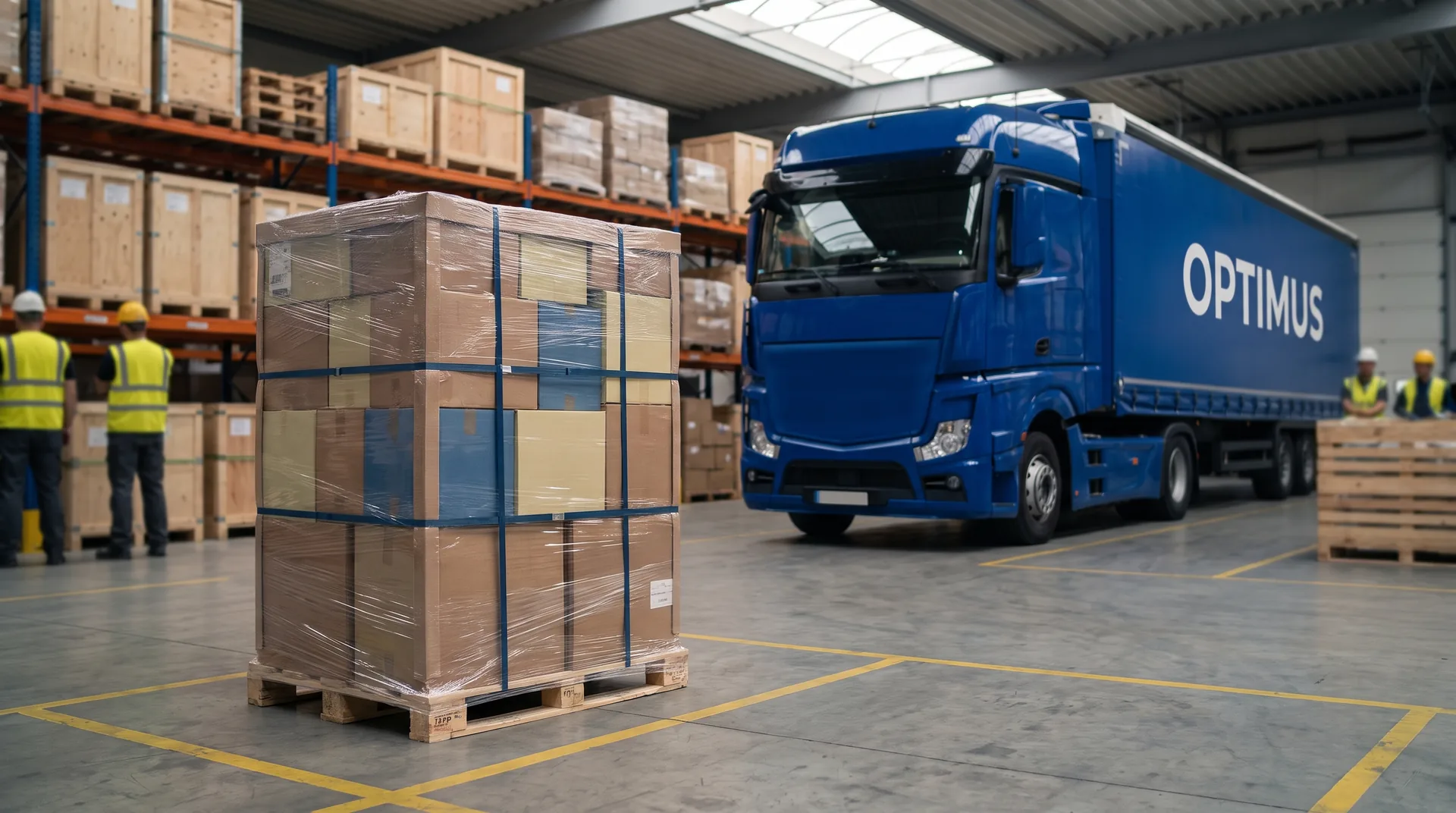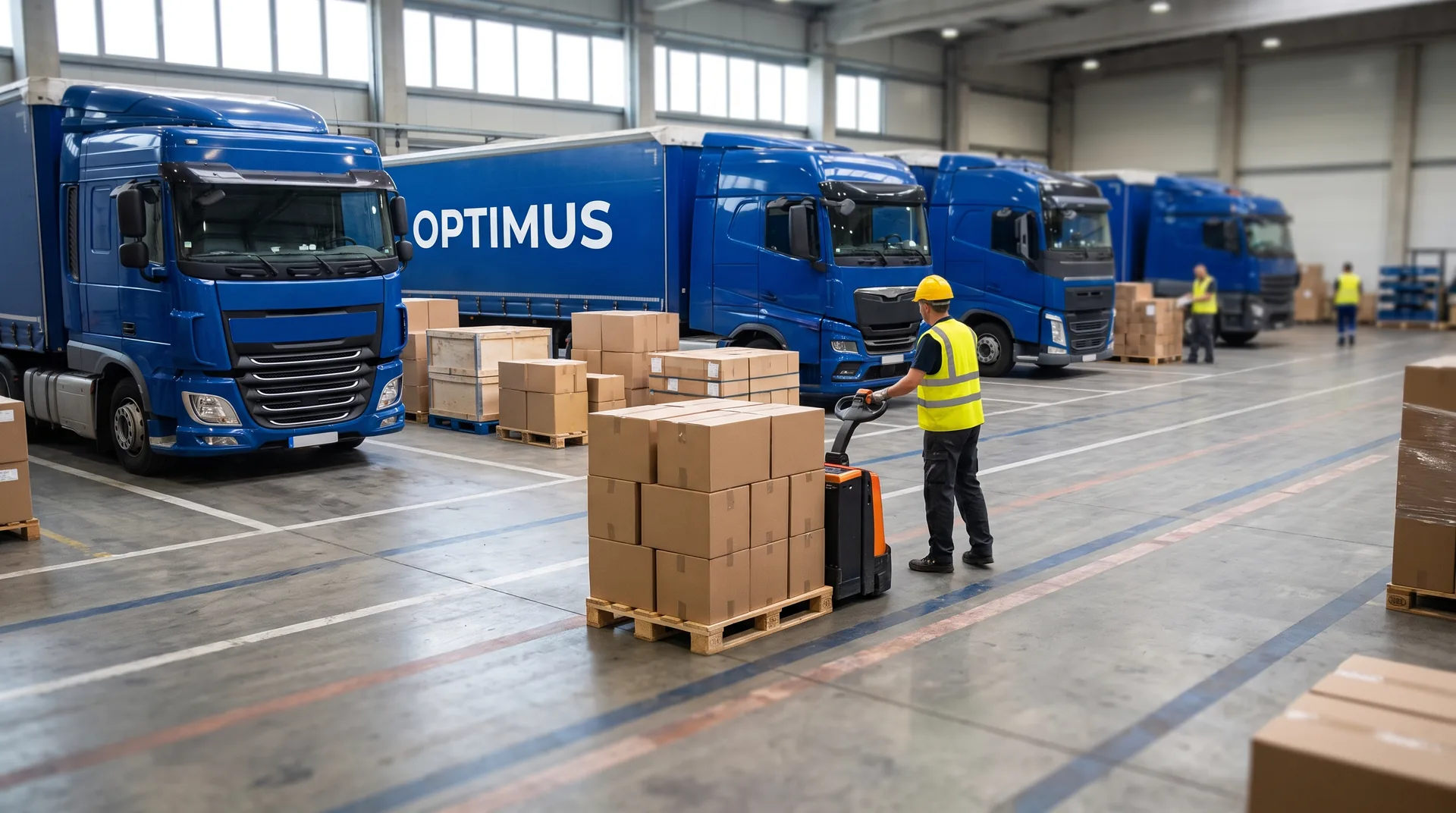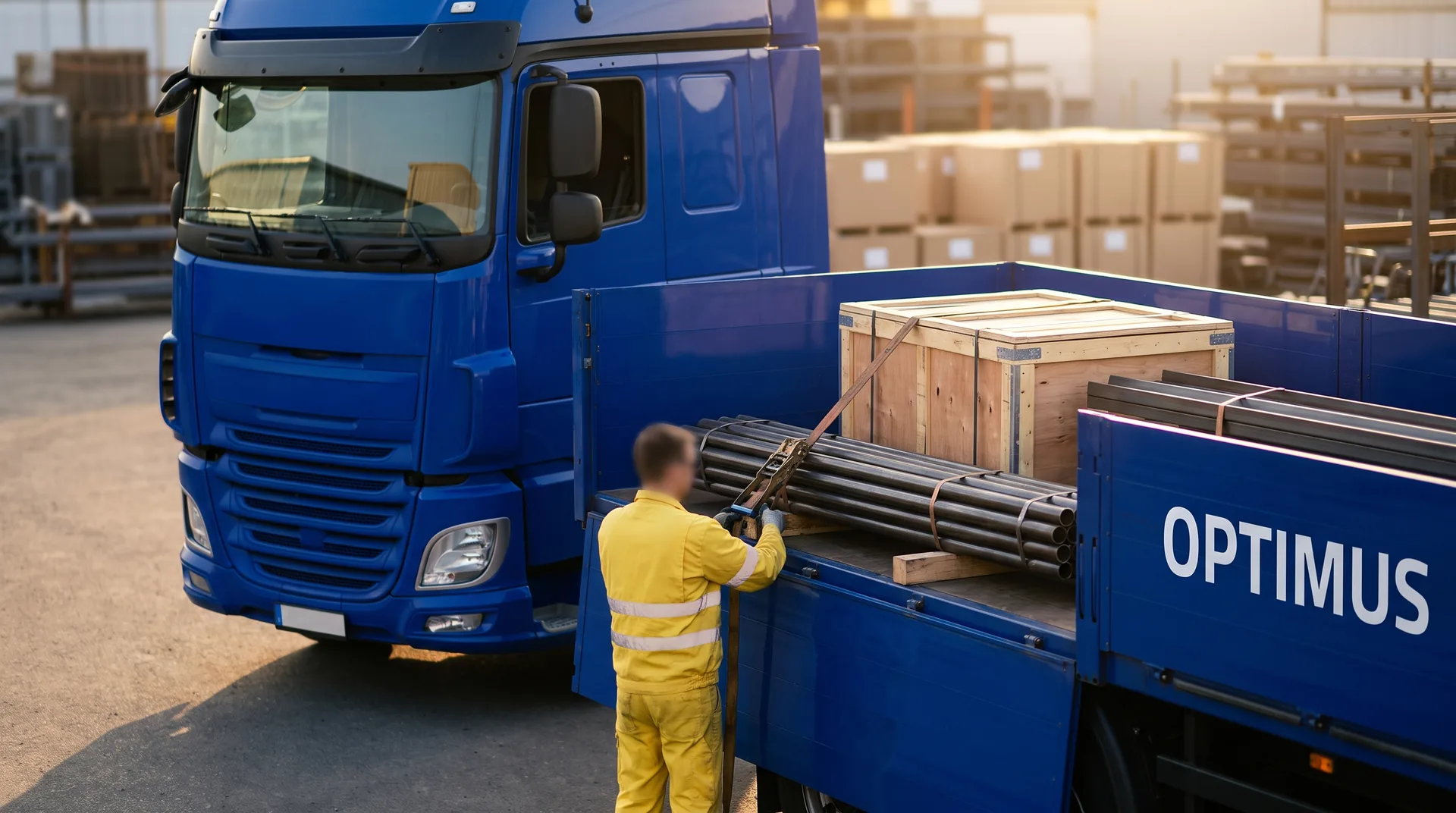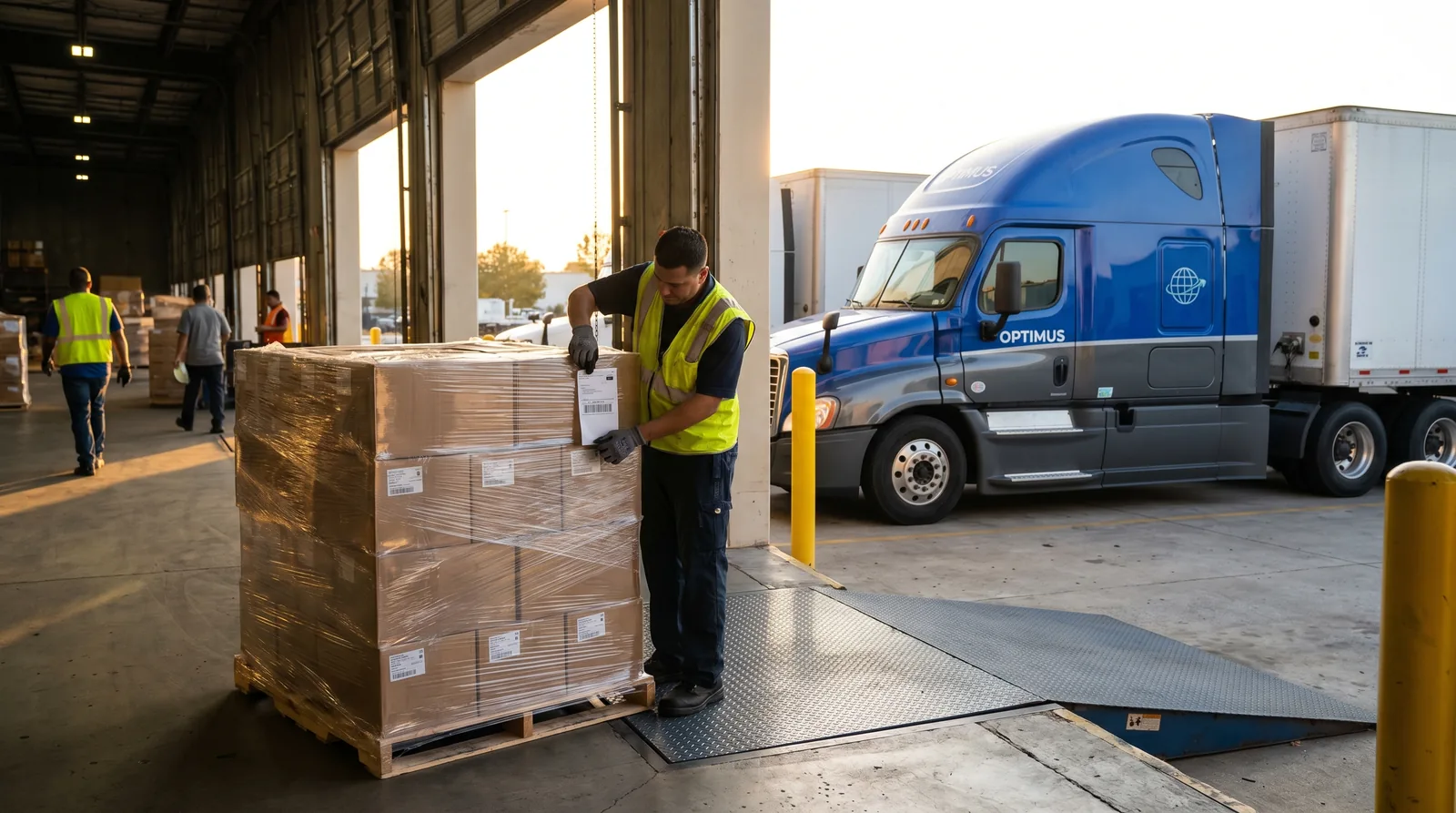
A pallet bound for the UK has to survive not only the drive but also transhipment and the company of other loads. The goods should be strapped to the carrier, wrapped, kept within the pallet footprint, with heavy packages at the bottom and a legible label. Plus a document set that matches what is actually on it.
Why exporting to the UK is harder than a domestic shipment
A pallet heading to the United Kingdom goes through more operations than the same pallet moved within Poland. Transhipment in consolidation is added, movement on a ferry or in a shuttle wagon where the vehicle brakes and accelerates differently than on the road, and often another transhipment on the British side before final delivery. On top of that comes the risk of a customs check, where the trailer is opened and pallets may be moved around. Cargo prepared for one single drive usually does not survive it.
The carrier: what goes under the goods
The choice of pallet affects everything that follows. A EUR pallet has repeatable dimensions and is exchangeable, an industrial pallet takes more but sits differently on a trailer. A cracked carrier with a broken board or a protruding nail is a guaranteed problem at the first lift. We take the differences apart in the EUR pallet and the EPAL system and in EUR versus industrial pallets.
Timber is a separate matter. Wooden pallets and crates in trade with non-EU countries fall under phytosanitary requirements: the wood must be treated and marked in line with the ISPM 15 standard. Checking that marking is often the first flashpoint at the border, so we covered it separately in the ISPM 15 standard for wooden pallets.
Stacking the goods: order, weight, height
- Heavier packages at the bottom, lighter on top, centre of gravity as low as possible.
- Layers tied together, ideally with cardboard sheets between levels.
- Nothing overhanging the carrier footprint, including after wrapping.
- Height matched to stackability: a pallet taller than declared blocks the space above it.
- Corners protected with edge boards where the goods are prone to crushing.
Film, strapping and bonding to the carrier
Stretch wrapping serves two purposes: it unifies the load and protects it from moisture and dust. What matters most, though, is not wrapping the goods but bonding them to the pallet. Film run several turns through the base of the carrier turns the pallet into one solid block that does not slide under braking. With heavy loads film alone is not enough and strapping is needed. Securing rules inside the trailer follow the standard described in cargo securing under EN 12195, and packing practice in how to secure a pallet for export.
Labels and markings
A label should answer the questions asked by the person handling the load, not by the person who packed it. It should carry: shipper, consignee with address and postcode, the pallet number within the consignment in the form „1 of 3”, the order number or consignee reference, and any special markings. The last group includes „do not stack”, „this way up”, „handle with care” or a required temperature. It is worth applying the label to two adjacent sides, because a pallet in a trailer rarely stands the way the shipper imagines. Retail consignees and marketplaces have their own rigid requirements: those for Amazon are covered in Amazon UK pallet requirements and those for supermarkets in UK retail pallet standards.
Documents that must match the pallet
The most common reason a load is stopped is not a bad pallet but a mismatch between the paperwork and the contents. The commercial invoice and packing list must describe what is actually travelling: package count, weights, and a goods description specific enough to derive a tariff classification from. Shorthand such as „trade goods” ends in a request for completion or in an inspection. We describe the consequences in an incomplete packing list.
Before you book the transport
Before sending an enquiry, count the pallets and measure them with the goods on, not the bare carrier. Note the weight of each pallet separately, because weight distribution decides how they sit in the trailer. Mark which ones can be stacked. How to convert that into vehicle space is shown in how many pallets fit and how to calculate LDM.
Sources
- DEFRA Plant Health Portal: wood packaging material requirements
- IPPC: phytosanitary standards, including ISPM 15
Want to check whether your pallets are fit for consolidation? Send dimensions, weights and a photo of the load through the quote form and we will tell you what to fix before loading. The transport itself is described on the groupage LTL page.