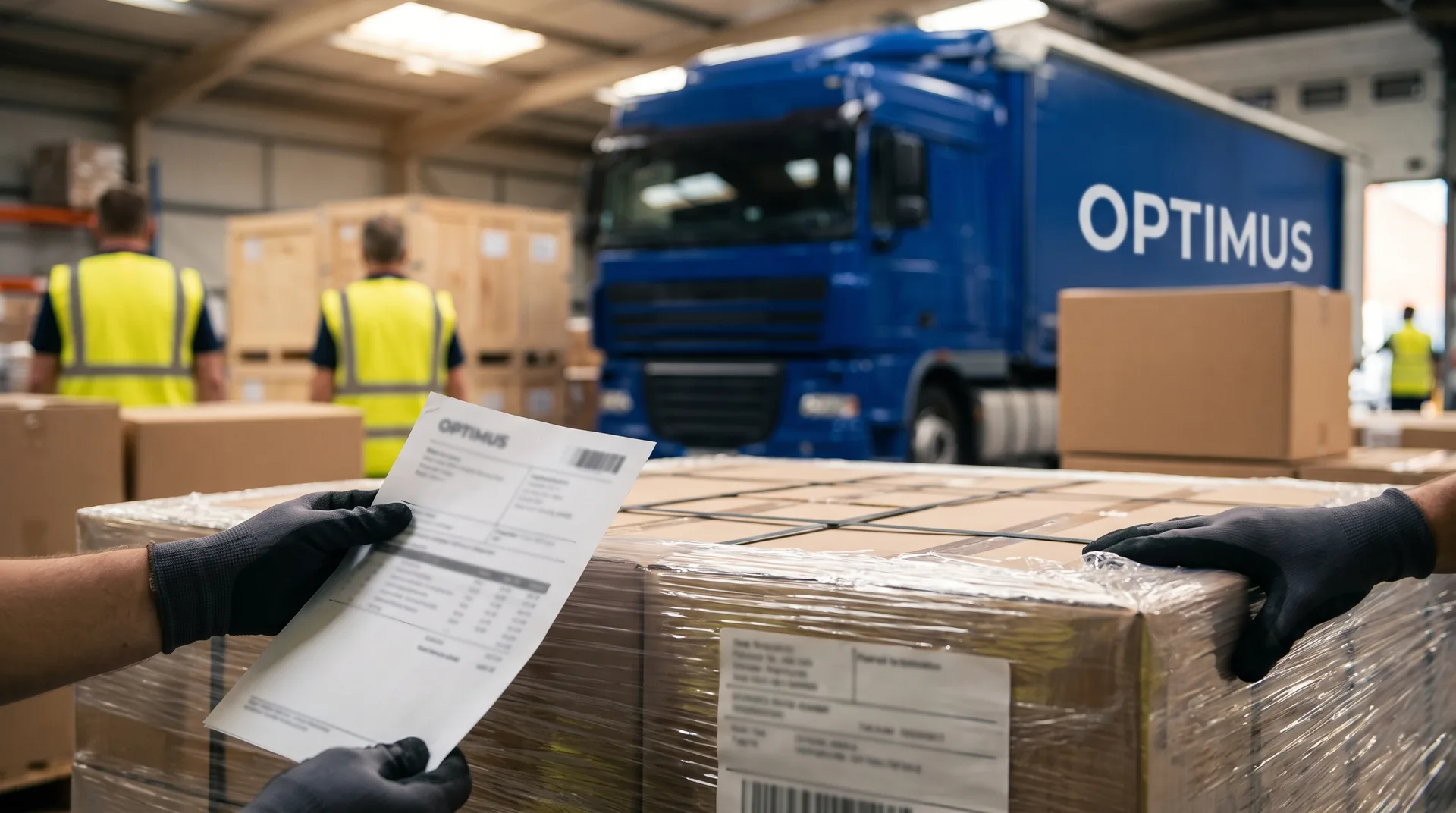
Four things have to agree before arrival: the FBA shipment ID on the labels, the Amazon Reference ID in the booking, the numbers quoted on the bill of lading, and the pallet and carton counts entered in Carrier Central. Amazon requires the carrier to deliver exactly the quantity specified in the booking. A mismatch in any one of the four stops the delivery at the gate.
Four numbers and what each one describes
These terms collide constantly on a first delivery, so it is worth separating them once and properly.
- FBA shipment ID identifies a batch planned in the seller account for one site. It appears on the box labels and ties the freight to the shipping plan.
- Amazon Reference ID is the order number. Amazon requires the bill of lading to reference every reference ID contained in the delivery.
- PRO number is the carrier's consignment number. The seller enters it in the account at the final step of shipment creation when not using an Amazon partnered carrier.
- Bill of lading number holds the rest together. Amazon advises putting it on the box or pallet label where possible, because it speeds up verification at receipt.
The counts that must be identical
Numbers are one layer, counts are the other, and counts wreck more deliveries. Amazon requires the carrier to fill in box and pallet counts in Carrier Central and to deliver exactly that quantity. Delivering more pallets than stated in the booking appears explicitly on Amazon's own list of reasons for refusing a delivery.
That sounds trivial until the freight passes through a transfer. On a run from Poland a pallet is sometimes rebuilt at the hub, because the base did not meet the consignee's requirement or the load had to move from a 1200 by 800 footprint to the one required in the United Kingdom. We cover that in the article on restacking to meet a UK consignee's spec. After that operation the unit count changes, and the booking has to catch up before the vehicle leaves for the crossing.
Where it drifts apart in practice
Four scenarios repeat. First: the seller books against the shipping plan and the despatching warehouse adds one more pallet at the last minute. Second: two shipments go to the same site and someone files two bookings instead of one request carrying both numbers. Third: the pallet label comes from a cancelled shipment, so the number no longer exists in the system at all. Fourth: the PRO number never reached the seller account, so on Amazon's side the consignment has no transport trail.
Each looks different at the gate and ends the same way: the load waits and the driver has nothing to argue with, because the system record decides, not the paperwork in his hand. What that costs is set out in our article on waiting time charges on UK transport.
One bill of lading or several
Amazon gives a simple rule here: when two or more orders travel from the same pickup location to the same fulfilment centre with the same required delivery date, they are consolidated into one shipment with one bill of lading. The conditions are cumulative, not alternative. A different destination site splits the deliveries even when they ride on the same vehicle. Amazon also states that FBA freight must not be combined in one shipment with other customers' orders.
On our side a parallel documentary rule applies: a separate CMR note per consignment, except where a single contract covers a single consignee. How the paperwork splits in consolidation is set out in the article on whether consolidation to the UK takes one CMR or several.
What we check before departure
We check three things in this order. First the physical state: how many units are on the dock and how many cartons sit on them. Then the labels: whether the shipment number on the pallet belongs to this shipment and not the previous one. Last the system: whether the Carrier Central booking says the same thing as the dock. Only agreement across all three closes preparation. The labelling rules themselves are collected in our piece on Amazon pallet labels, and the wider picture in the article on deliveries to Amazon FBA in the UK.
Sources
- Amazon Seller Central: bill of lading, appointments and reasons for delivery rejection
- Amazon Seller Central: confirm carrier and pallet information
- Amazon Seller Central UK: information required to book an appointment
Want these numbers checked before departure rather than at the gate? Describe the shipment in our quote form and we will walk through the full data set with you.