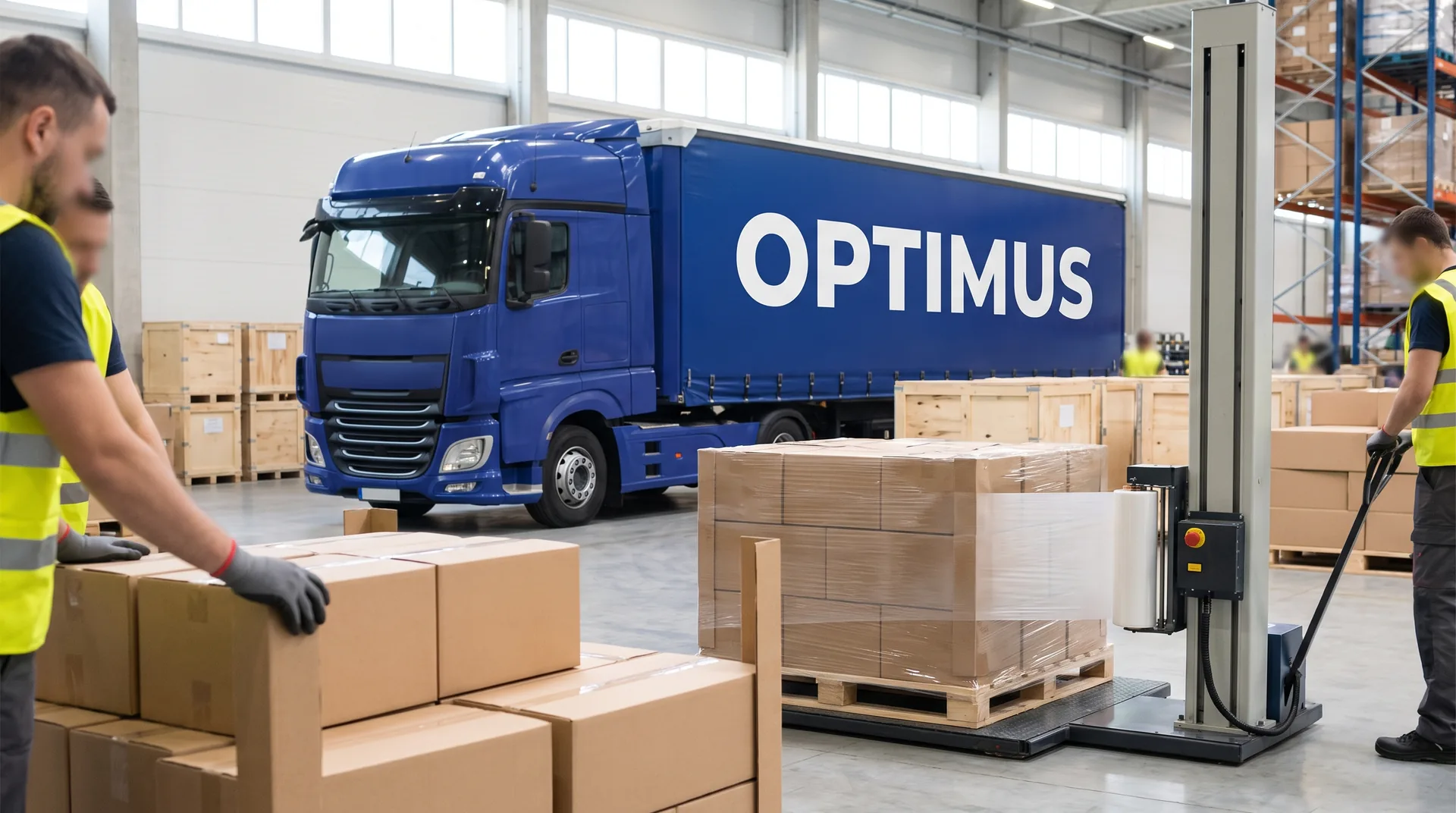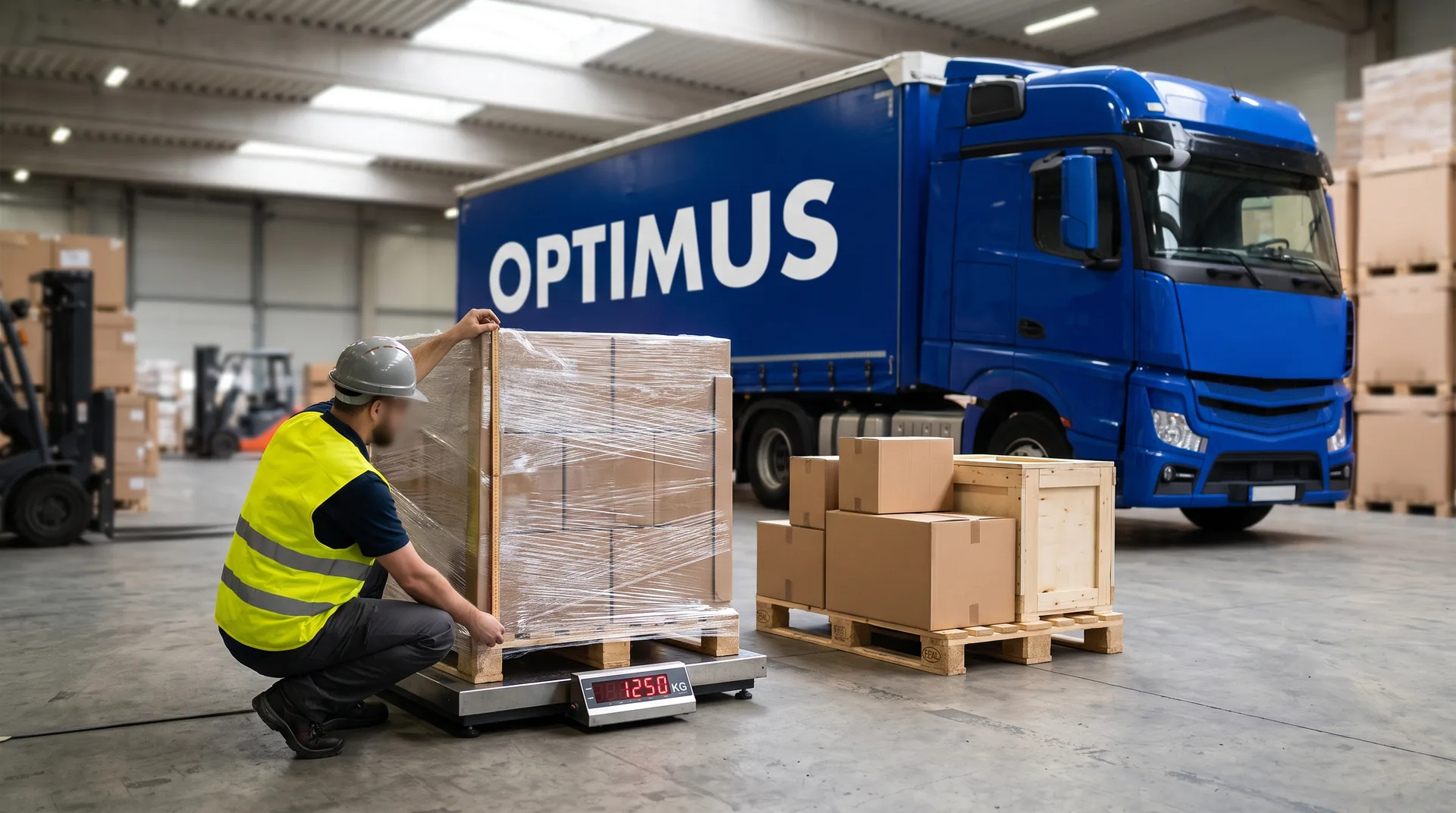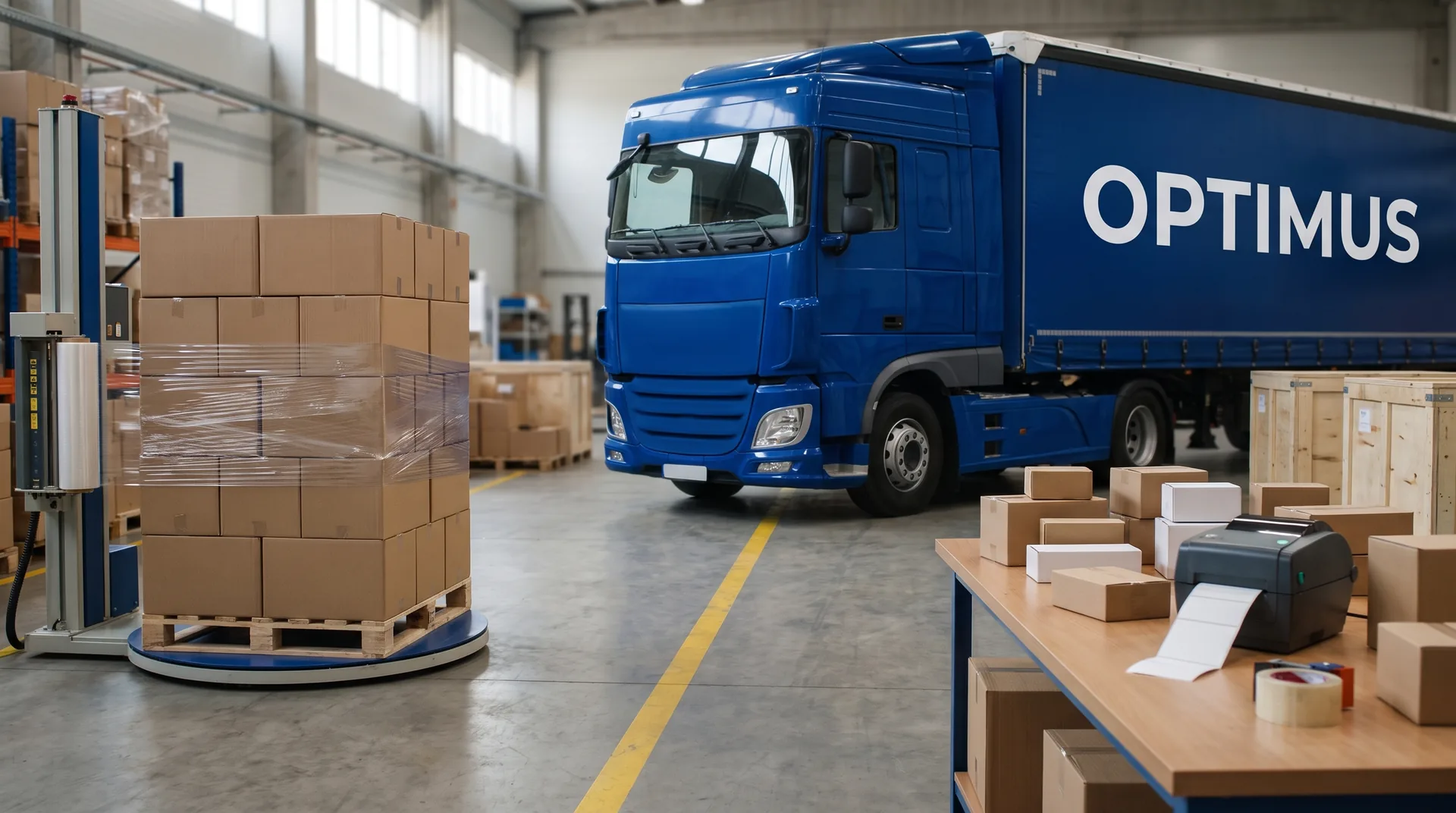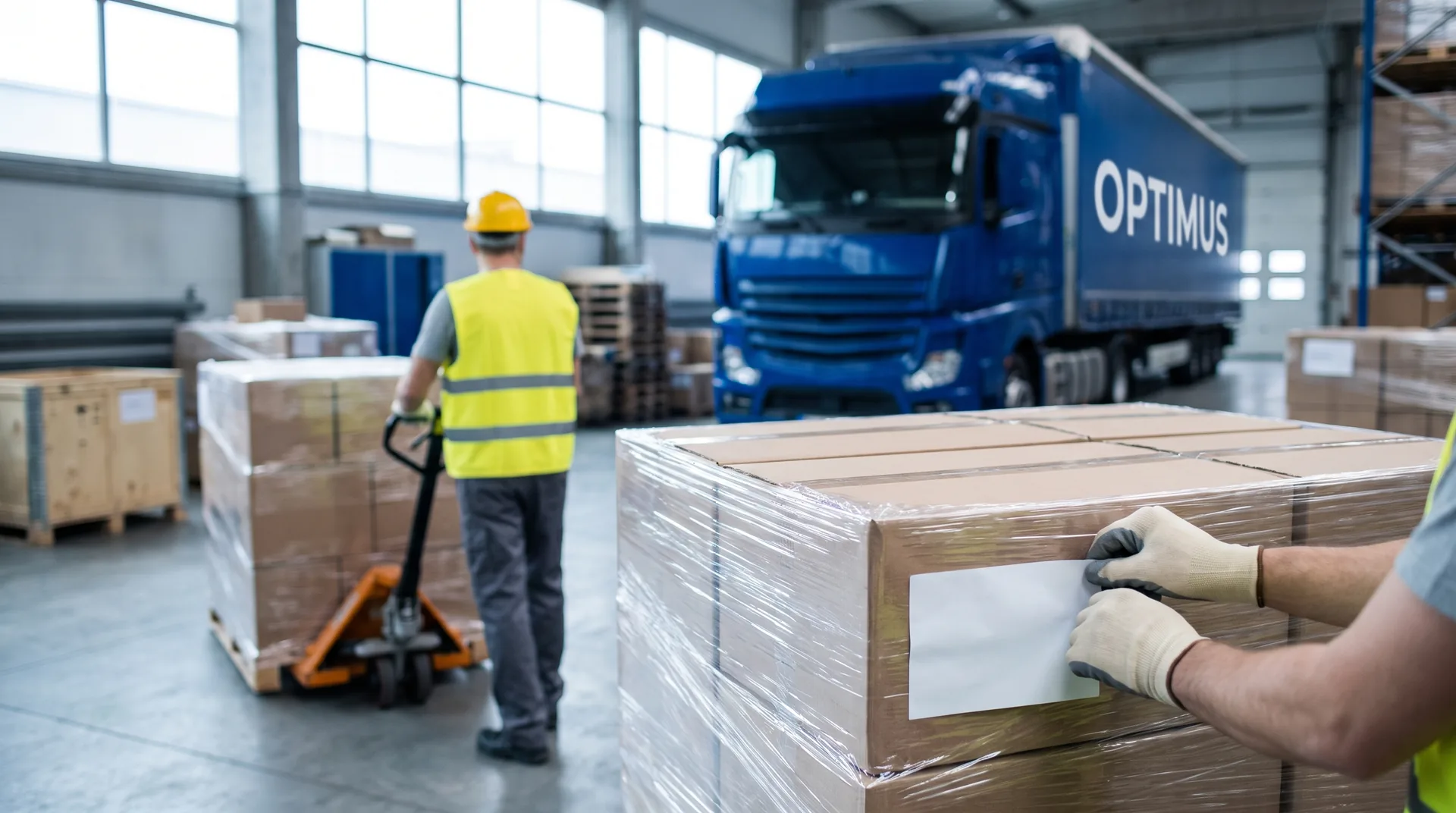
An Amazon pallet label comes in four copies, one on each side of the unit, centred near the top and on the outside of the stretch wrap. We apply markings at pallet level: shipment labels, unit numbering and the destination site marking. We do not label individual retail units, because that belongs to the seller or to the preparation service offered by Amazon itself.
What the pallet label must carry
Amazon states the content plainly. Each pallet must show the seller name, the from and to addresses, the order numbers and the number of boxes, plus a marking in the form pallet number so-and-so of so many. That last one goes in the top right-hand corner of one of the sides of the unitised load, so it can be seen without turning the pallet. Amazon also advises including the bill of lading number on the label where possible, because it speeds up freight verification at receipt.
On a shipment prepared through the seller account there is also a pallet ID label generated by Amazon. The system prints four copies per unit and requires one on each of the four sides, centred near the top, on the outside of the stretch wrap. The labels must go on squarely rather than at an angle, so a forklift driver can read them from the seat.
What we apply
- Pallet labels supplied by the customer or printed from their material, in the positions Amazon specifies.
- Unit numbering in the pallet X of Y form, when a delivery is split or rebuilt at the hub.
- Destination site markings for the driver and the drop order.
- Transport markings required by the carrier and arising from the consignment note.
We do this at the hub in Poland or at the warehouse in Milton Keynes, depending on where the freight happens to be. Logistics labelling standards are described in the article on GS1 and SSCC labelling.
What we do not apply
We do not mark individual retail units or prepare goods at unit level. That is a separate service and in the Amazon model it has two sources: either the seller does it in house, or the seller assigns it to Amazon in the account settings, where the party responsible for preparation is chosen. Amazon states that inventory arriving without proper preparation or labelling may attract a preparation fee.
Nor do we print box labels on the seller behalf. Amazon requires every carton in a shipment to carry its own unique label printed from the account on a laser printer, applied to a flat surface and not crossing the box seam. We can check that those labels are present and legible, but their source is the seller account. Where the service boundary runs is set out in the article on where our job ends, and more broadly in the piece on the limits of the warehouse service.
Labels from a cancelled shipment
This is the most common trap and worth knowing separately. When a seller cancels a shipment in the account, previously generated labels stop being valid, and Amazon places the duty squarely on the seller to remove them from boxes and pallets and not to ship anything carrying them. A unit marked that way has no counterpart in the system, so there is nothing the gate can do with it.
That is why every time we rebuild a pallet we strip the old markings rather than stick new ones beside them. Two labels on one unit are two different answers to the same question, and the scanner takes whichever it sees first. What happens when a delivery is turned away regardless is covered in the article on a rejected FBA delivery.
Wrap and legibility
Pallet labels go on the outside of the wrap, not underneath it. That sounds like a detail until you set it beside a second Amazon requirement: the stretch wrap must be clear, and units wrapped in black or opaque film may be rejected. Both rules serve the same end, namely that a marking can be read and a load assessed without cutting the packaging open. The unit parameters themselves are collected in the article on pallet height, weight and wrapping.
One level down, at carton level, the same logic applies with a different boundary of responsibility. We describe it in our article on carton labels on an Amazon shipment.
Sources
- Amazon Seller Central: labelling and preparing pallets
- Amazon Seller Central: print pallet labels
- Amazon Seller Central: change or cancel your shipment
Want your pallets to leave Poland marked the way the consignee requires? Describe the shipment in our quote form and we will agree the labelling scope before loading.