A pallet travelling from Poland to a British warehouse is not secured “for transport” but for a specific sequence of events: five or six forklift lifts, a dozen hours of road vibration, roll and surge at the crossing, and at least one transhipment on the way. Each of those acts on the unit differently, so the choice of film, corner boards and straps follows from the route rather than from the packing room’s habits.
How many times the pallet is moved on this route
Counting honestly: a lift at the sender’s loading bay, off and on again at the hub in Poland, loading onto the line departure, possibly off and on at a transhipment in England, and unloading at the consignee. That is five operations in the simple case and six or seven where the batch is split en route. Two transhipments are the standard on this lane: the first at the hub in Poland, the second in Milton Keynes. The build of the unit has to allow for that from the outset, because adding protection halfway rarely works.
What each stage does to the pallet
- The road run. Low-amplitude vibration over a very large number of cycles. The effect is slow: layers settle, the film slackens, the unit loses plumb. You cannot see it after an hour; you see it after a thousand kilometres.
- Braking and pulling away. Longitudinal acceleration pushes the upper layers forward. The classic picture is a pallet with a leaning top and an untouched base.
- The crossing. Lateral roll plus the manoeuvring on and off. A tall, narrow unit takes this worst.
- Forklift tines. Point forces at two places in the base. Here it is the condition of the base that decides, not the wrapping.
- Setting down. A vertical shock where the unit is lowered too fast. This is what most often delaminates a heavy load.
Film: what actually holds
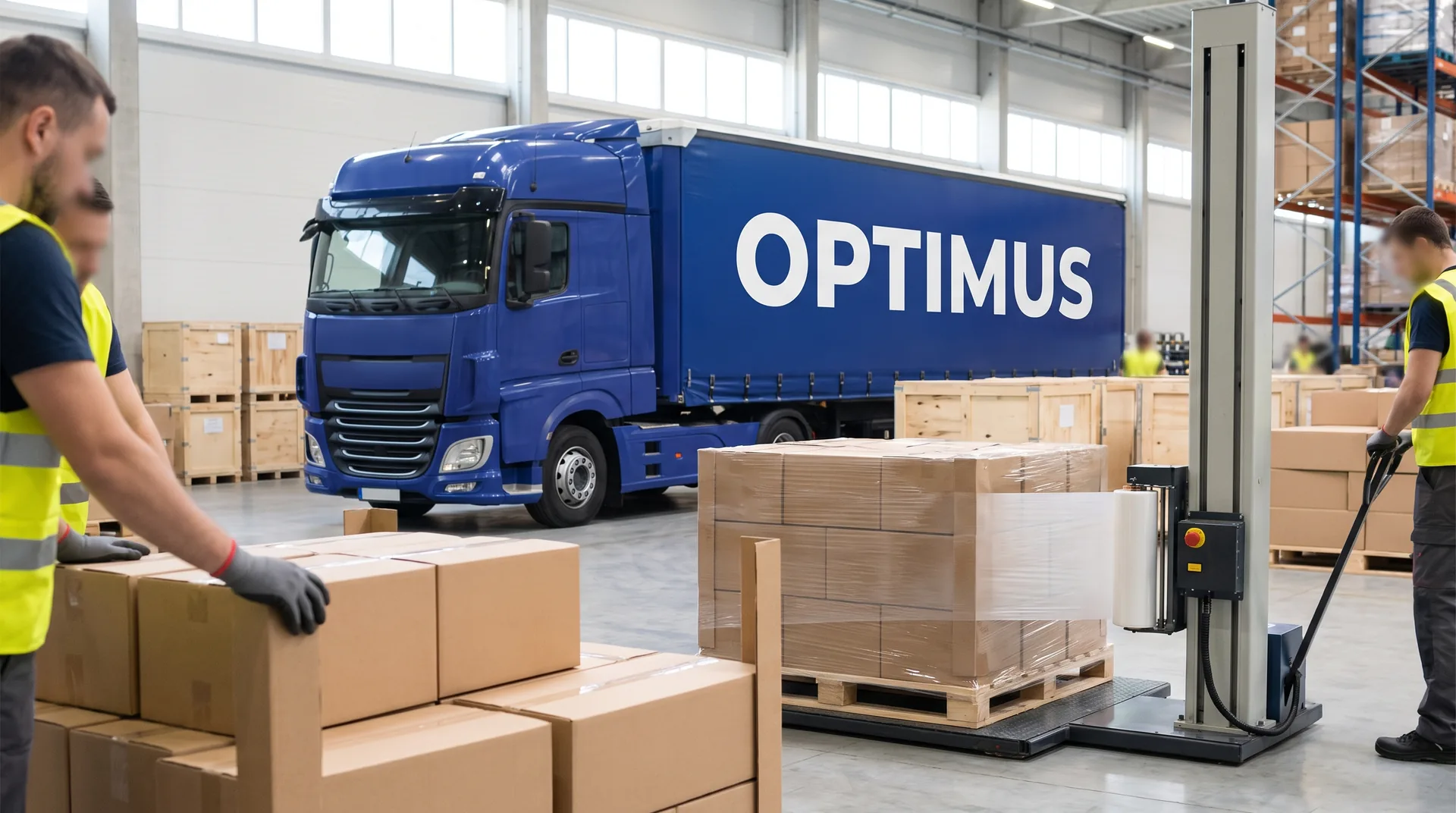
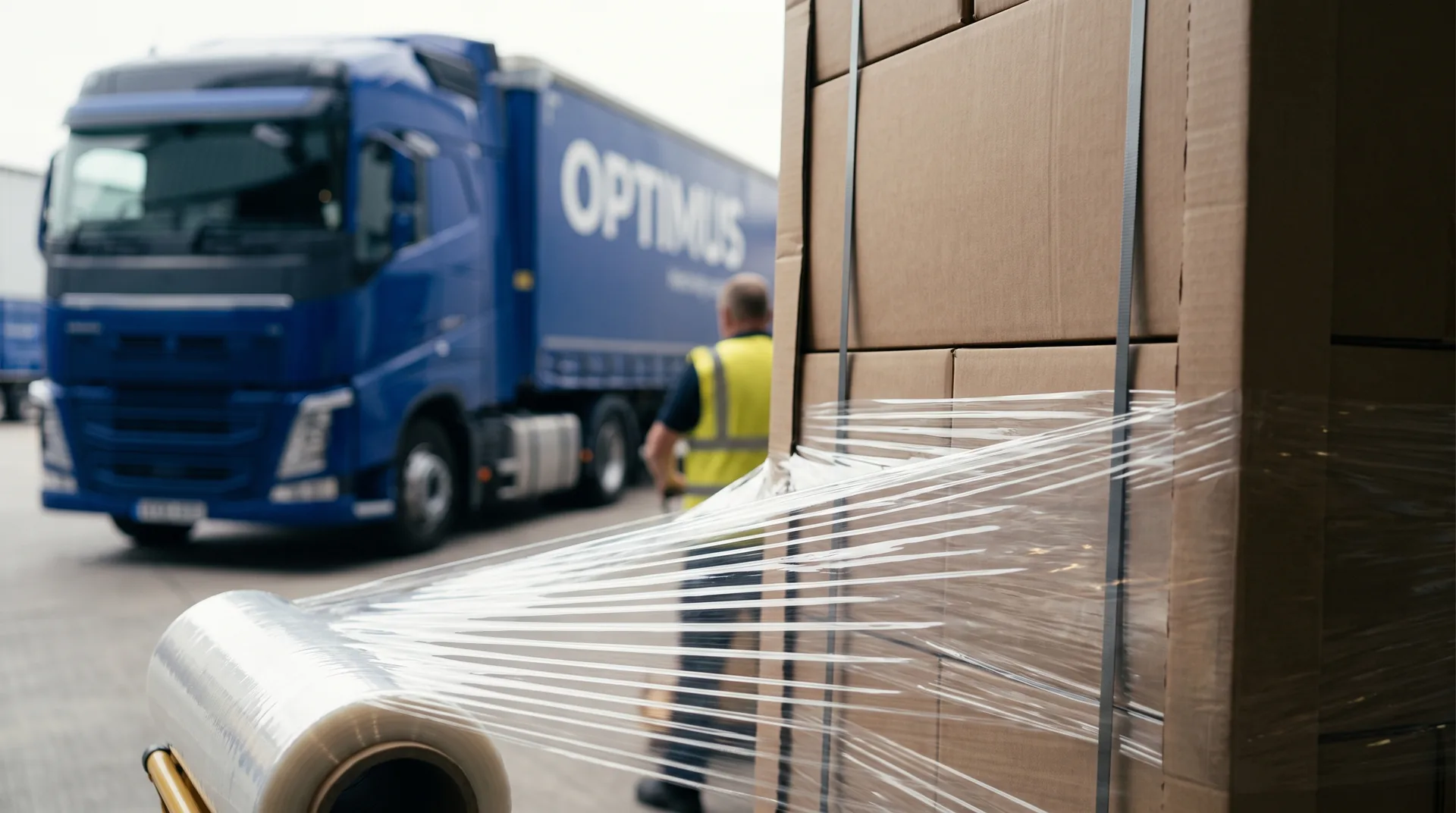
Stretch film does not hold a load by itself. It holds it when it ties the load to the base rather than merely wrapping around it. Hence the rule we start every unit with: several full turns at the bottom taking in the base, then upwards with an overlap, then back down. Wrapping that starts above the base looks tidy and achieves nothing, because at the first lean the load slides off the base as one piece. The underlying technique is covered in the articles on securing a pallet for export and on preparing a pallet for the UK.
When film is not enough
Three situations recur on this route. A heavy load with a small contact area, where the film pulls tight on the edges and cuts into the carton, so corner boards are needed to spread the pressure. A tall unit, where film alone does not stop the top leaning, so a vertical strap ties the load to the base. And a mixed load, where layers of different stiffness settle unevenly. Choosing between the options is covered in the article on edge protectors, corner boards and straps.
Securing against readability
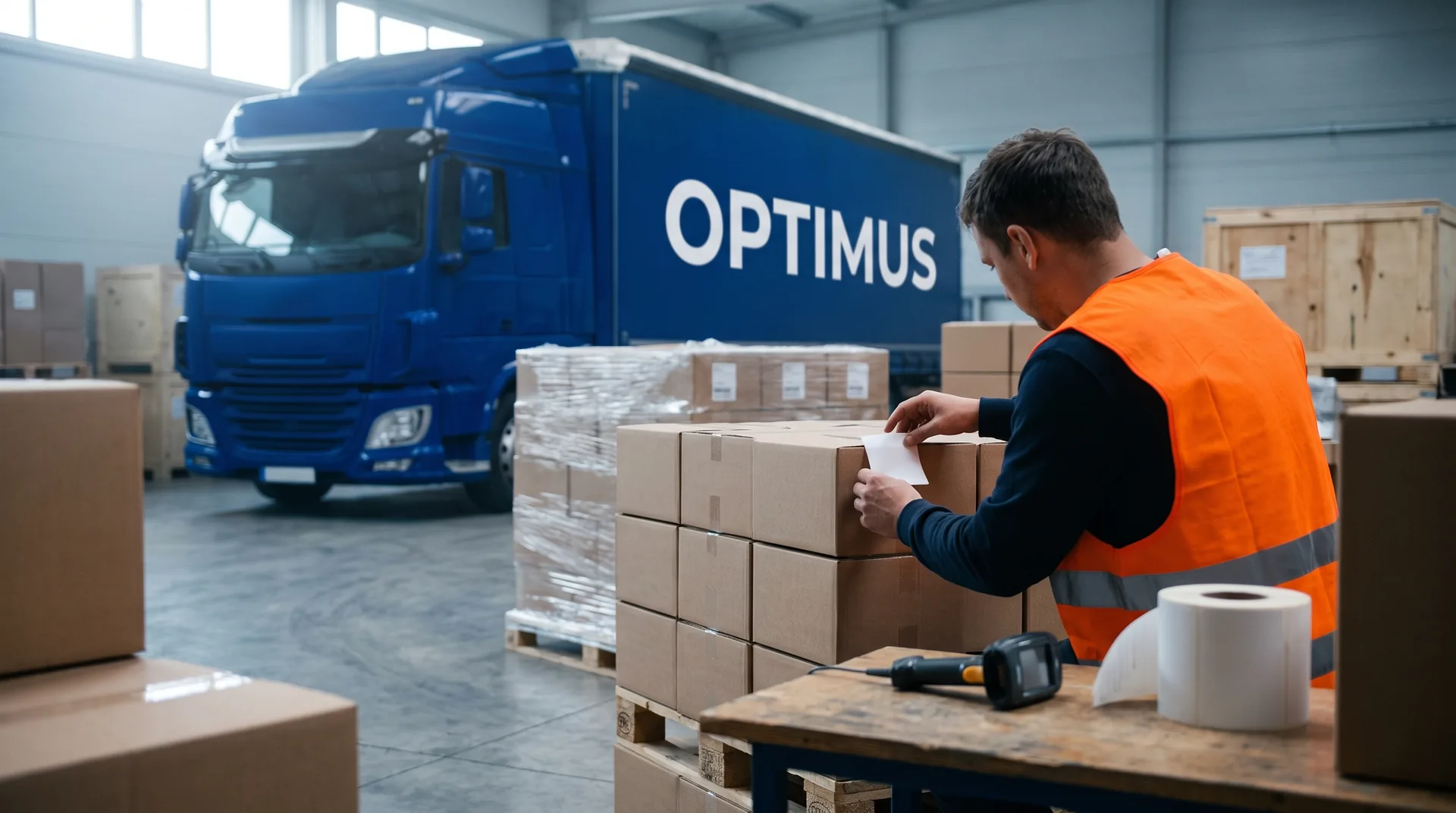
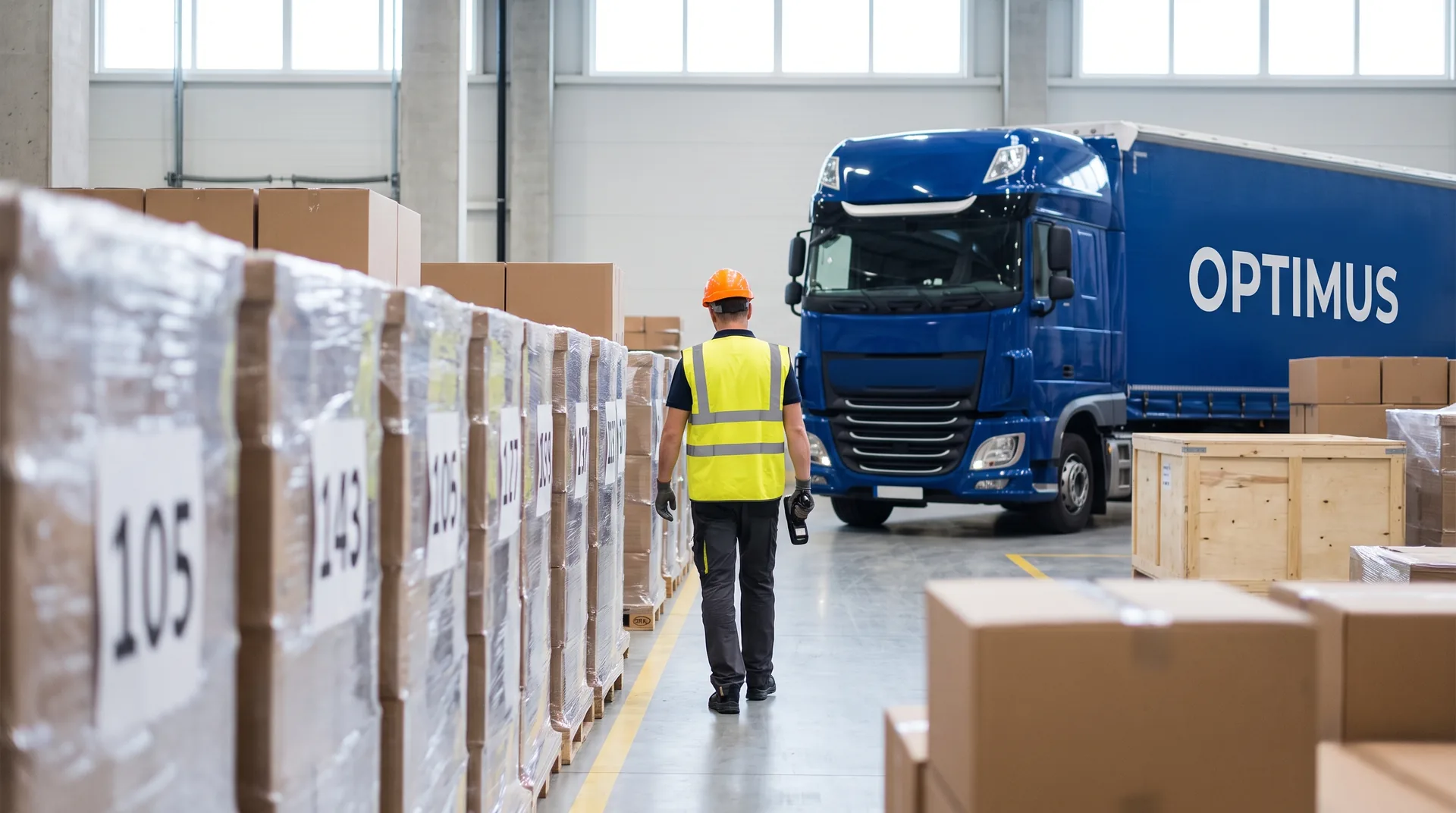
This is the point at which a well-secured pallet can still be turned away. A label under film is often unreadable to a scanner, because the film scatters light, and over several turns it becomes a grey smear. A strap running across a barcode does the same. So the order is always the same: full securing first, then marking on top, on a flat surface, on two adjacent faces. The rules for marking units are collected in the article on numbering pallets in a multi-pallet shipment, and the consignee’s requirements in the article on Amazon pallet requirements in the UK.
Footprint: the one thing wrapping cannot fix
A load hanging over the edge of the base is a problem however tightly it has been wrapped, because the first thing that touches it is a neighbouring pallet or a rack upright. Wrapping such a unit carefully locks the fault in rather than correcting it. Why warehouses react to this so firmly is described in the article on overhang beyond the pallet footprint.
Restraint on the trailer is a separate matter
Securing the unit and restraining the load inside the vehicle are two different responsibilities. The first belongs to whoever builds the pallet; the second to the carrier, and it is done with straps, anti-slip mats and how the units are arranged. A well-built pallet badly restrained falls over just like a badly built one. Where we improve units en route, we do it in a warehouse, in the way described in the article on pallet preparation before an Amazon delivery.
More on this: Pallet height, weight and wrapping for an Amazon site.
Sources
- GOV.UK: wood packaging material and ISPM 15 requirements
- Amazon Seller Central UK: preparation requirements for palletised units
Want to know whether your pallets will survive this route? Describe the goods and how they are packed in the quote form and we will point out what to change before the first shipment. The full lane is described on the United Kingdom transport page.