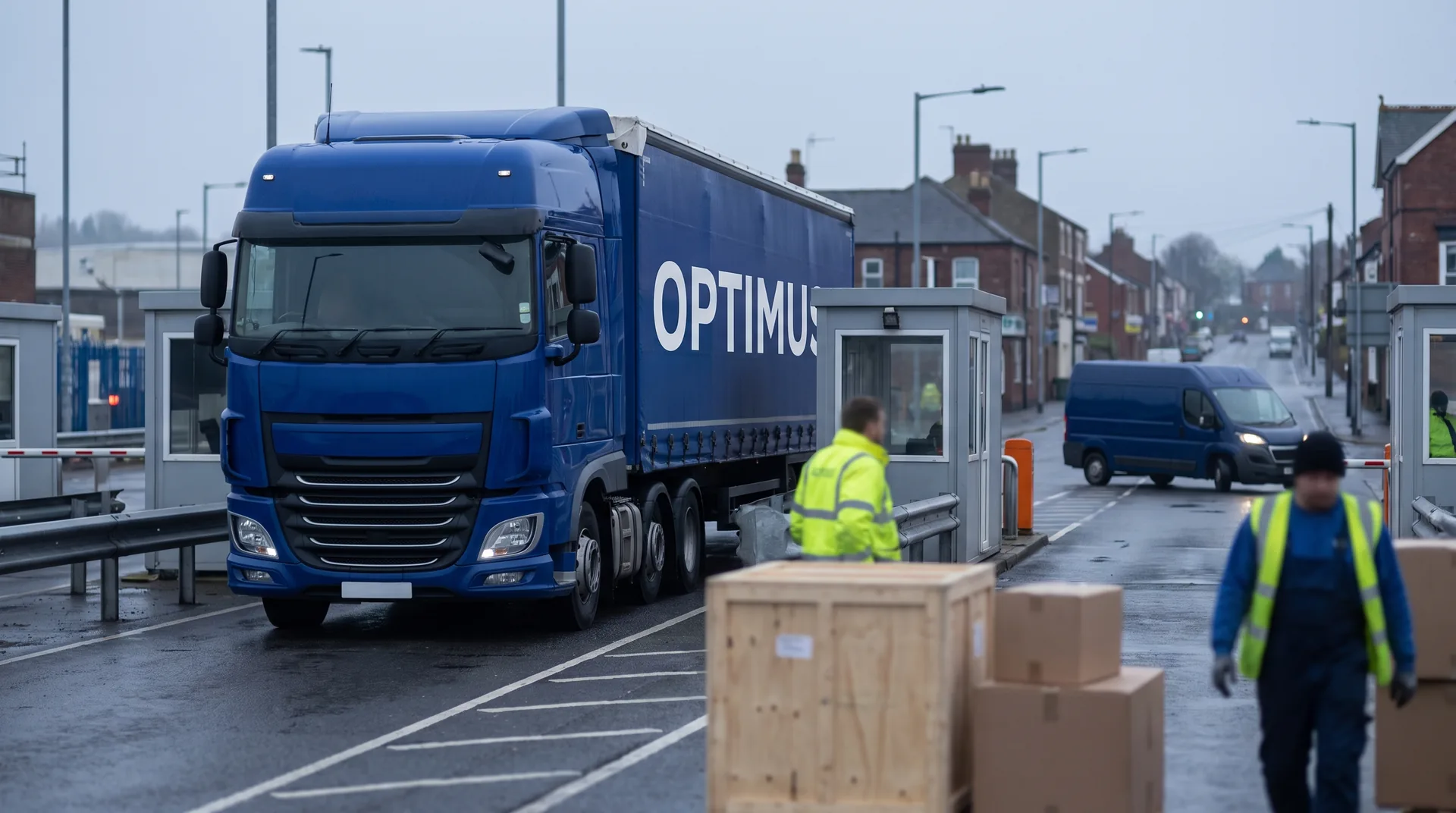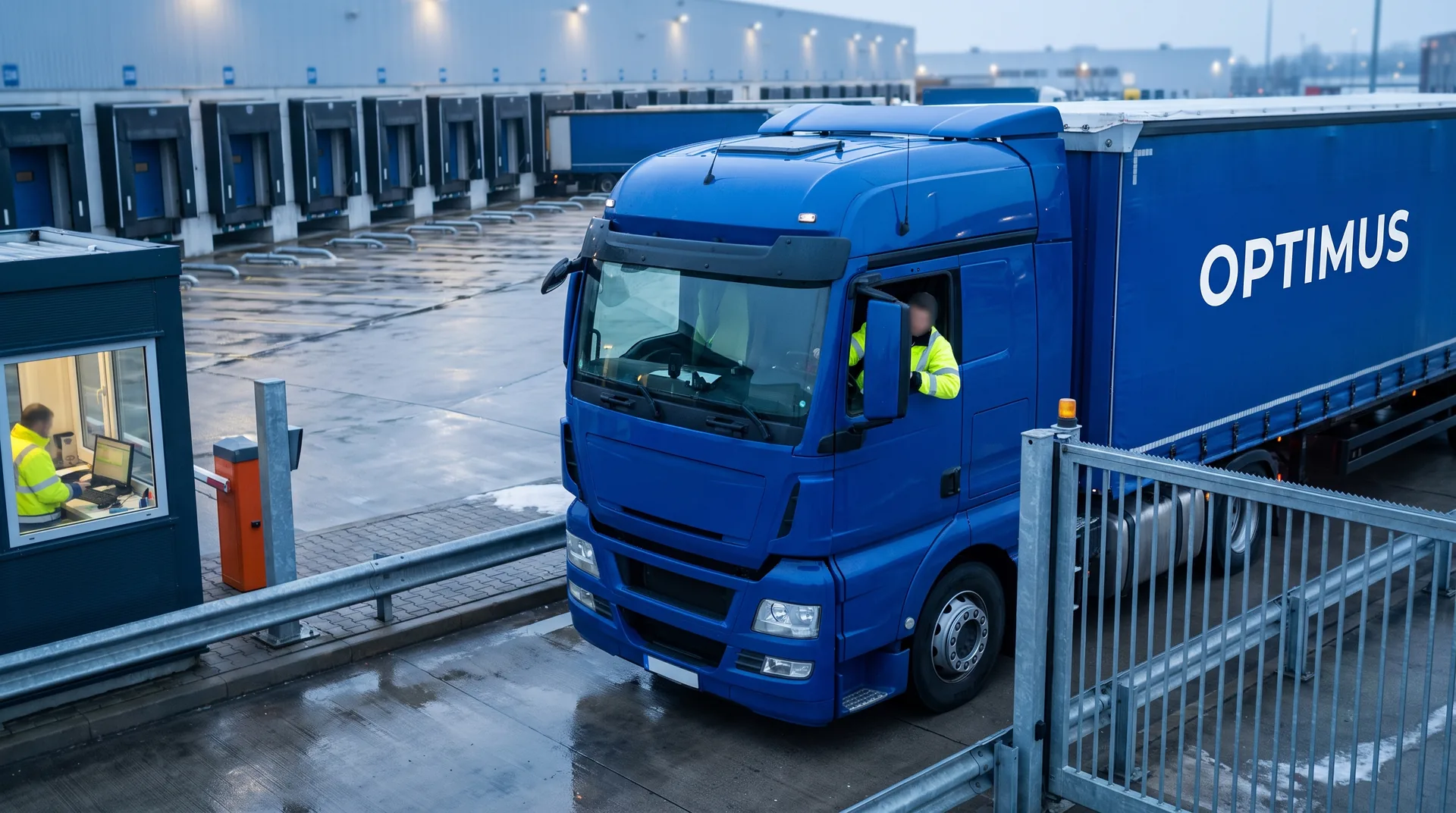
A delivery into Amazon FBA in the UK works when three things line up at once: labelling (FNSKU on the unit, carton and pallet labels carrying the shipment number), a booked delivery window in Seller Central, and complete post-Brexit customs paperwork with a GMR. Miss any one of them and the site either turns the vehicle away or the slot is gone.
What the fulfilment centre checks on arrival
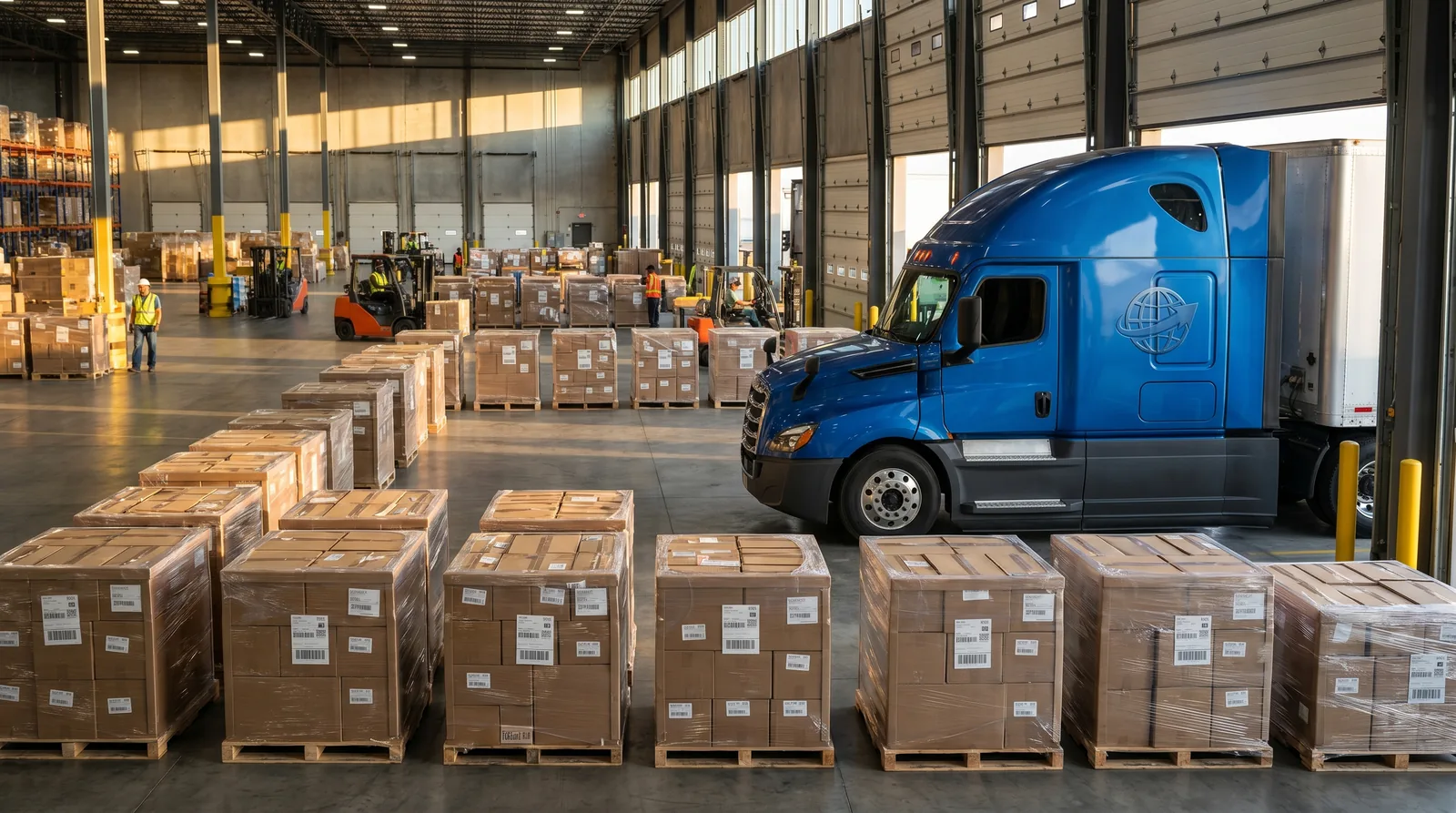
Goods-in is mechanical and leaves no room for a driver to explain anything. The site matches the shipment number on the label against the booking, the pallet and carton count against the appointment, pallet dimensions and height against its own specification, and the condition of the packaging. A mismatch on any of these means a correction on the spot at best, and refusal of the whole delivery at worst. That is why FBA deliveries are planned backwards: warehouse requirements first, then routing and loading date, never the other way round.
Labelling: where things usually go wrong
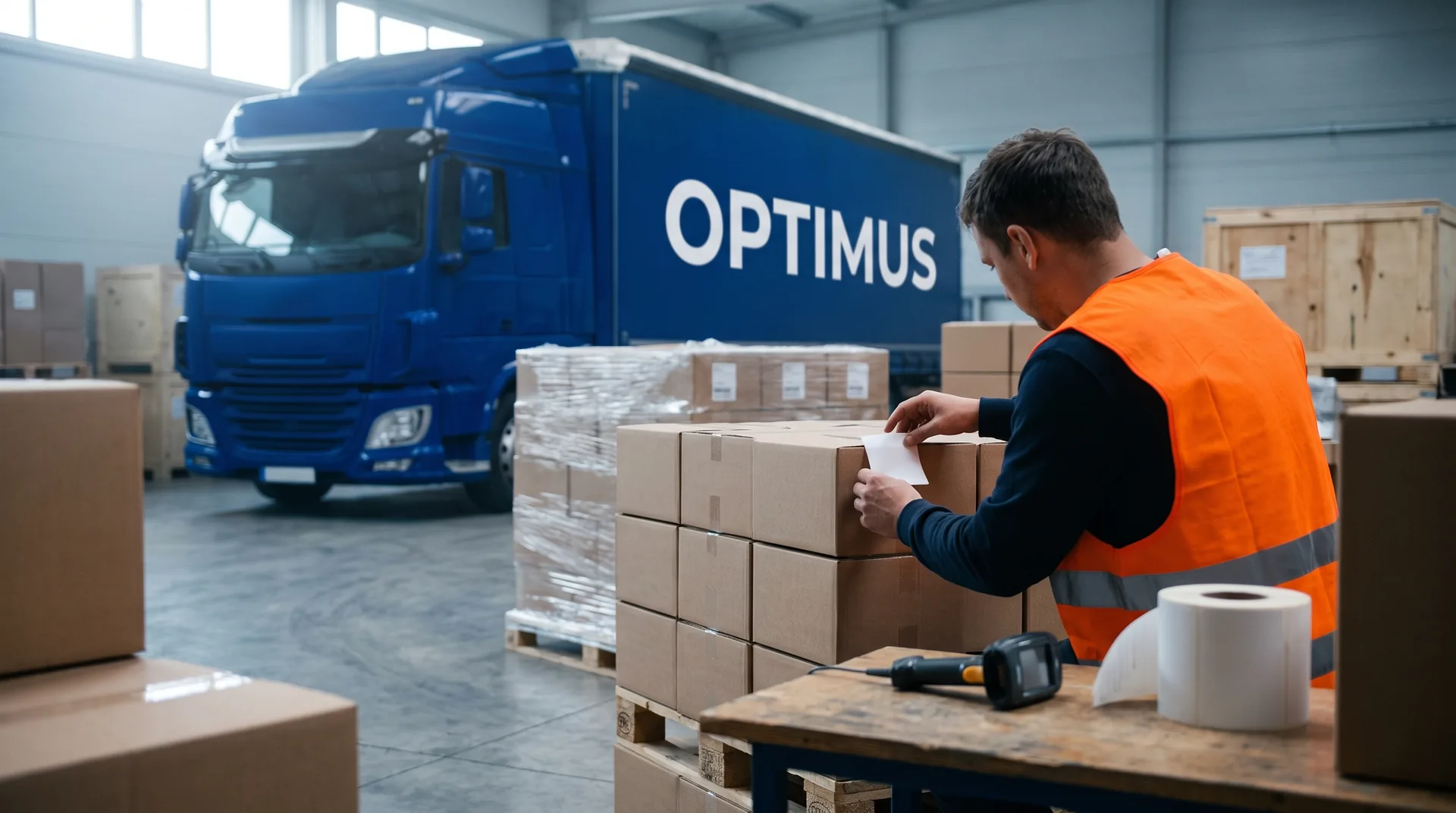
Labelling has three layers and each of them causes trouble. The product label (FNSKU) must be readable and must not cover or duplicate another barcode on the packaging, otherwise the scanner picks up the wrong number. The carton label identifies the outer box within a specific shipment. The pallet label ties everything back to the shipment number generated in Seller Central. Classic failures: a label stuck across a fold in the box, stretch film pulled over the barcode, printing at the wrong scale, and a leftover label from a cancelled shipment. All of them take five minutes to catch before loading, and a lost day to catch in England.
Booking a window, and what to do when it is lost
Amazon accepts pallet deliveries only in booked windows. The booking is made by the seller or by us on their behalf, stating pallet count, shipment number and vehicle details. Windows are narrow and availability moves with how busy a given site is, so in the pre-Christmas peak they are booked well ahead. When a slot is lost to congestion or a slow clearance, the procedure is the one we set out in our article on a missed Amazon delivery window: rebook immediately, and do not leave the goods sitting on a trailer while you wait.
Customs: who is the UK importer
Amazon is not the importer of your goods. The importer is the seller or their UK representative, which means a GB EORI number and, where stock is sold from inside the country, UK VAT registration. On the transport side we run the EU export declaration, the UK import declaration and the GMR that ties them together at the border, as described in our piece on the GMR and the GVMS system. Before committing to a sales model, it is worth comparing the logistics of both options in FBA or FBM from Poland.
A pallet that passes without comment
Amazon publishes its own requirements for palletised deliveries: pallet type, wrapping, maximum height and whether pallets may be stacked. We check them before every shipment because they get updated, and we have collected the detail in our article on Amazon UK pallet requirements. In practice three things cause most rejections: cartons overhanging the pallet footprint, a loosely wrapped top layer that leans once a forklift moves it, and a wooden pallet in poor condition. Timber heading into the UK must also meet the ISPM 15 standard.
What happens if the delivery is refused
A refusal does not close the matter, it hands it to you: the vehicle is standing with the goods on board while the next jobs wait. That is why we build a buffer into Amazon work. The load comes into our own warehouse in Milton Keynes, where we correct pallet and case labels, re-stack and re-wrap pallets or split the consignment into smaller batches for a new window. The vehicle goes back to work and the pallet waits on a rack rather than in a trailer. The ways out of that situation are covered in our article on a rejected FBA delivery.
How we plan FBA deliveries
We carry groupage from a single pallet and full loads into UK Amazon sites, with customs handled in the same process. The working standard is simple: paperwork closed before departure, the appointment confirmed in writing, photographs of the pallets at loading kept on file, and an operations contact reachable while the vehicle is running. On top of that, a time buffer for the crossing, because the border is what eats the margin most often. Service details are on our Amazon UK deliveries page.
Sources
- Amazon Seller Central UK: delivery requirements and appointment booking
- GOV.UK: EORI number
- GOV.UK: Goods Movement Reference (GMR)
Planning a shipment into a UK Amazon site? Describe the goods, pallet count and timing in our quote form and we will come back with a delivery plan, a document checklist and a loading date. The full picture of the lane is on our transport to the United Kingdom page.