Before you hand a Polish carrier or forwarder your UK-bound freight, verify five things: a valid Community Licence, current insurance with adequate sums (carrier liability plus cargo cover), documented experience on the Poland to UK lane including customs, checkable references, and a clear ban on passing your load down an unknown subcontractor chain. AEO status and a real, reachable office are supporting signals, not a substitute for the checks.
Why the wrong Polish partner costs a UK importer more than the freight rate
Poland runs the largest road-haulage fleet in the European Union, so most UK importers buying from or through Poland will, sooner or later, deal with a Polish carrier or forwarder. The market is deep and competitive, which is good for price and bad for due diligence: a rate that looks too cheap usually means the operator has quietly resold your load to whoever bid lowest on a freight exchange. When that unknown truck disappears with your goods, your recovery is against a paper trail, not a partner. The lane to Great Britain adds a second failure point, because since Brexit every consignment needs correct customs formalities on both ends, and a carrier who has never cleared a full customs export will learn on your cargo.
The stake is not the difference of a few pounds per pallet. It is a production line waiting for components that sit at a port, a supermarket order rejected because paperwork was wrong, or a total loss with no insurer behind it. Vetting the partner properly is cheaper than any of those outcomes.
1. Community Licence and legal capacity to operate
A carrier running international road transport for hire or reward inside the EU must hold a Community Licence issued under Regulation (EC) No 1072/2009, plus certified true copies for each vehicle. This is the baseline proof that the operator is licensed, financially standing and professionally competent under the road-transport access rules. Ask for the licence number and the name of the entity on it, and confirm it matches the company invoicing you. A forwarder that is not itself a carrier should still be a properly registered transport or forwarding business; verify the company registration (in Poland, the KRS or CEIDG entry) and the VAT number before the first load, not after a dispute.
2. Insurance: carrier liability and cargo cover, with real sums
This is where most importers stop too early. Two different policies matter, and confusing them is expensive.
- Carrier liability (in Poland, OCP). This covers the carrier's own legal liability under the CMR Convention. That liability is capped: Article 23(3) CMR limits compensation for lost or damaged goods to 8.33 SDR per kilogram. For light, high-value cargo that ceiling can be far below the invoice value, so the carrier's liability policy alone does not make you whole.
- Cargo insurance (all-risk on the goods). This covers the value of the goods themselves regardless of whether the carrier is legally liable, up to the insured amount. For valuable or fragile loads it is the policy that actually protects you.
Ask for the insurance certificate, the insurer, the validity dates and the sum insured, and check the exclusions: many carrier-liability policies exclude theft from unattended parking, or cap it. The difference between the two covers, and when each pays, is set out in cargo insurance versus carrier liability. If the sums are too low for your consignment, arrange a value declaration or separate cargo cover before dispatch.
3. Proven experience on the UK lane and on customs
Moving a pallet within the Schengen area and moving one from Poland to Great Britain are not the same job. Since the end of the Brexit transition, UK-bound freight needs export and import declarations, correct commodity codes, proof of origin where a preference is claimed, and the right border model at the crossing. A partner who genuinely runs the lane will speak fluently about export MRN, GVMS and the goods-movement reference, safety and security declarations, and who lodges the UK import entry. Vague answers here are a warning. What documents a UK import actually needs is summarised in export to the UK: required documents, and the official UK rules sit on gov.uk.
4. References you can actually check
Ask for two or three current customers on comparable lanes, and contact them. A serious operator will give names; a broker with nothing behind it will stall. Look for how long the relationship has run and whether the referee has had a claim and how it was handled, because how a partner behaves when something goes wrong tells you more than a clean run. Combine references with the public record: company age, filed accounts, court or enforcement history where available.
5. The subcontractor chain and double brokering
The single biggest hidden risk on a cheap cross-border rate is that your load is not carried by the company you contracted. A forwarder legitimately subcontracts carriers; the danger is the load being resold down an anonymous chain until an unvetted, sometimes fraudulent, truck collects it. Two related scams recur: a thief poses as a legitimate carrier on a freight exchange and steals the load, or a broker takes your order and quietly re-posts it for a margin with no control over who turns up.
- Ask, in writing, whether the operator carries the load itself or subcontracts, and require its consent for any further subcontracting.
- Require the actual vehicle and driver details before loading, and check they match at collection.
- Be suspicious of a rate well below the market and of last-minute vehicle swaps.
How the impersonation works and how to spot it is set out in the fake carrier on a freight exchange, and the resale mechanism in double brokering: freight resold down a chain.
6. AEO status: a signal, not a guarantee
Authorised Economic Operator status is a certification granted by customs authorities under the Union Customs Code to operators that meet standards of compliance, record-keeping, financial solvency and security. It is a genuine trust signal: an AEO has been audited and vetted by customs, and it can bring simpler formalities and fewer controls. Treat it as a positive marker of a serious, compliant operator, not as a stand-alone guarantee for your specific load, and not as a replacement for the insurance and subcontracting checks above. The scope and criteria are defined by the EU authorities and published on europa.eu.
Contact and visibility: the quiet due diligence
A legitimate operator is easy to find and easy to reach: a real registered address, a working contact channel, consistent company details across its website, invoices and registration, and a person who answers substantive questions instead of deflecting. A partner that only exists as a mobile number on a freight exchange, with no traceable office, is a partner you cannot pursue when a load goes missing. Consistency of name, address and registration number across every document is a cheap, powerful check.
Quick vetting checklist
| Check | What to ask for | Red flag |
|---|---|---|
| Community Licence | Licence number and entity name | No number, or name differs from the invoicing company |
| Carrier liability (OCP) | Certificate, insurer, sum insured, exclusions | Low sum, theft-from-parking excluded |
| Cargo insurance | All-risk cover and insured amount | None offered for high-value goods |
| UK lane and customs | Export MRN, GVMS, who lodges the UK entry | Vague answers, no customs process |
| References | Two or three current customers | Refusal or stalling |
| Subcontracting | Consent clause, vehicle and driver details | Rate far below market, unnamed carrier |
| Contact and identity | Registered office, consistent details | Only a mobile on a freight exchange |
How we run this
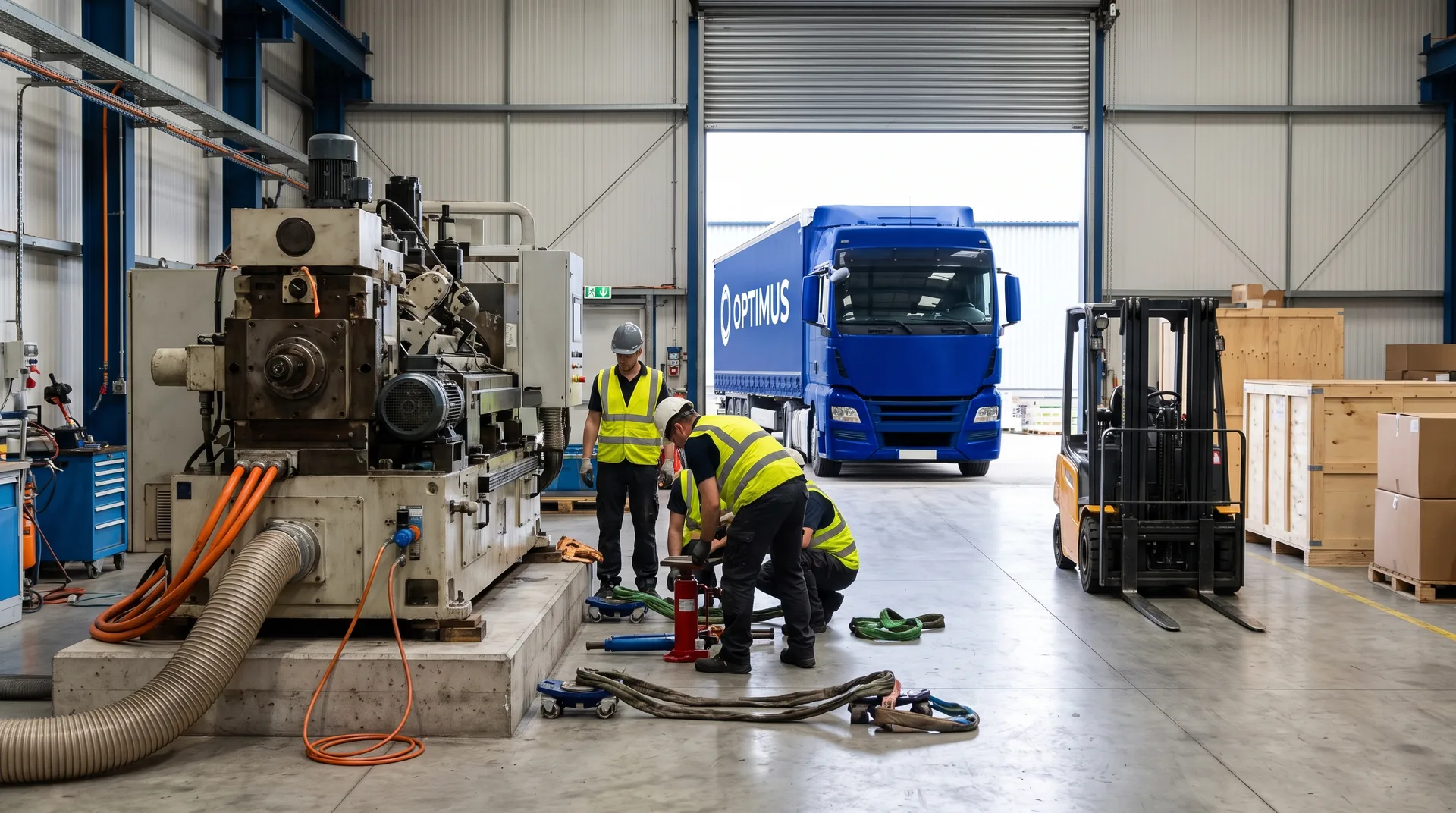
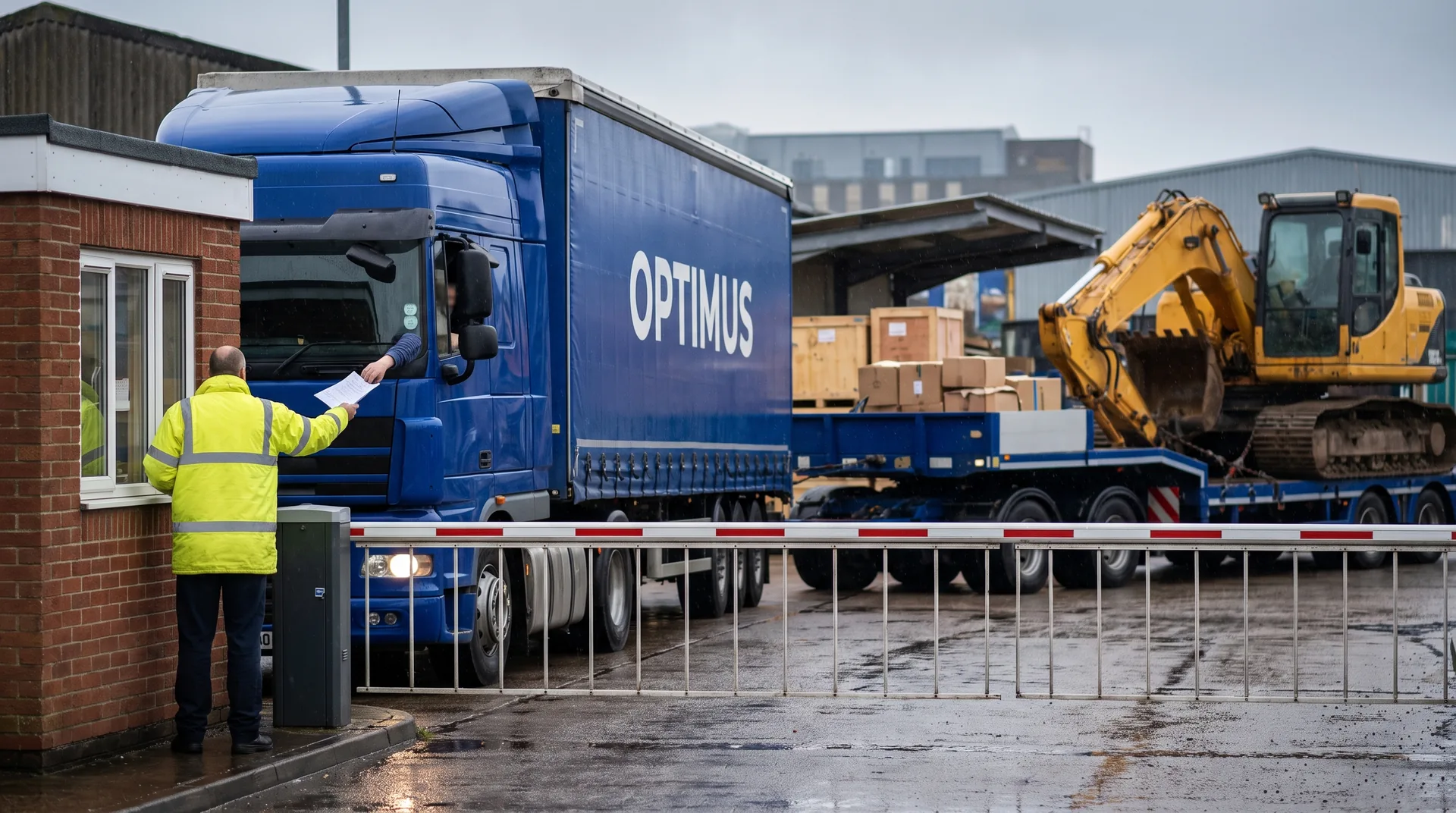
OPTIMUS TRANSPORT is a Polish road haulier that runs the Poland to United Kingdom lane every week, with our own equipment and vetted subcontractors, our own warehouses in Kielce, Legnica and Milton Keynes, and customs handling on both ends. For a UK importer that means one accountable partner instead of an anonymous chain: named vehicles, insurance you can read, and paperwork that clears. We also move exhibition, project and recovery loads between Poland, the UK and Ireland. More failure scenarios sit in our transport risks section and on the export to the UK hub, and you can put a specific shipment in front of us through the contact form.