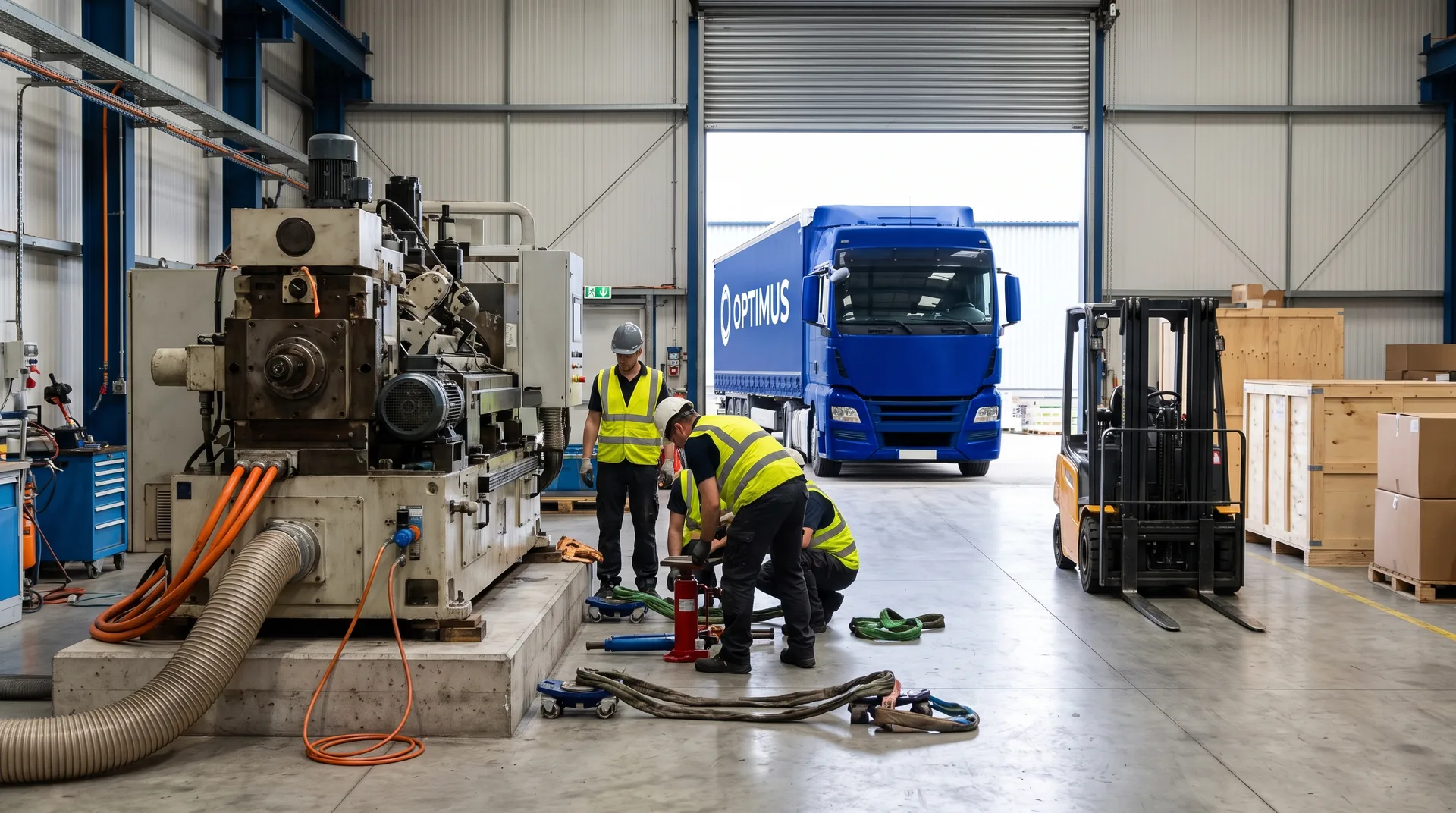
In a plant closure the machine does not stand on an auction yard but where it worked: in the production hall, on its foundation, wired to power, compressed air and extraction. The buyer gets a right to the goods and an obligation to get them out. Dismantling, disconnection of services by competent people and removal within the stated window all sit with the buyer, not with the seller.
Three questions before a bid is placed
On a sale in situ what decides the job is not what the machine weighs but whether it can be got out at all. We always ask the same things. Is the exit route wider than the machine, meaning the doorway, the aisle, the columns, the floor level and whether a vehicle can enter the hall at all. Who disconnects the services, and does the site still have anyone with electrical competence on the premises, because once the closure finishes the staff disappear. And until when the site is accessible, because halls get locked or handed to a new owner on a date that has nothing to do with the buyer.
One machine is usually several loads
A dismantled line breaks down into the main frame, the control cabinet, conveyors, attachments, tanks and crates of small parts. Every one of those has different dimensions and different securing needs, and the transport plan is built from a list of items with weights and dimensions, not from a photograph of the whole machine in the hall. The main frame often comes out as an oversize load, which triggers a separate permit route described in our article on oversize transport to and from the UK. The rest usually travels as groupage or follows on a second vehicle, which means one machine can have two departure dates and two separate sets of transport documents.
The sequence that works
- An item list. Written before dismantling, not after. Without it neither the haulage can be quoted nor the goods described in the customs declaration.
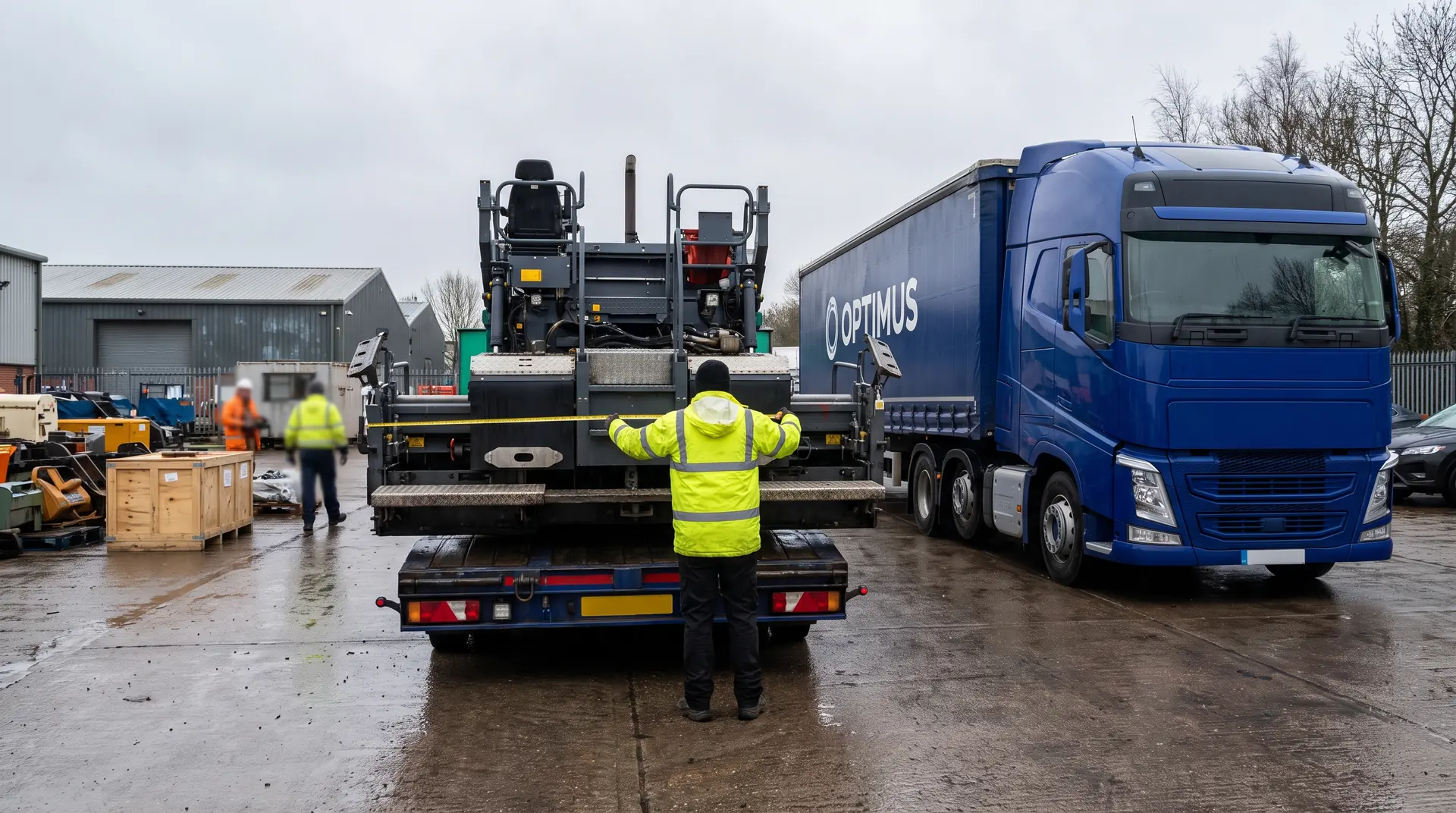
- Inspection and measurement. The doorway and the machine are measured with a tape, not read off a catalogue drawing. We go on site where the seller allows it, as described in our piece on inspection before collection.
- Dismantling and disconnection. Done by the buyer own team or a firm the buyer engages. We do not do it: we carry out no dismantling and no servicing work.
- Marking and packing. Items labelled and photographed before loading are the only way anyone reassembles the machine after unloading in Poland.
- Removal inside the window. The site gives a day and hours; outside them nobody gets on site.
What changes at customs
A machine taken apart is still a machine, but the description on the declaration has to match what is actually on the trailer. A functional unit shipped together is classified differently from attachments shipped separately, and we set out that mechanism in our article on the customs tariff code. The customs value follows the price paid for the lot, not the proportion in which the machine ended up split across two vehicles, and we return to that in our piece on the customs value of an auction machine. If the machine enters the Union through the Netherlands or France, the transport documents have to show one movement even where two vehicles physically run, which is one of the conditions covered in our article on customs procedure 42.
What we do not do on this job
We do not dismantle machines, we do not disconnect installations, we do not service equipment and we take no position on its mechanical condition. We collect items prepared for removal, secure them properly and haul them out. If a crane or a high-capacity forklift is needed inside the hall, we agree it with the site before arrival, because once a closure ends the handling equipment leaves with the staff.
Sources
- GOV.UK: exporting goods from the United Kingdom
- European Commission: the EU customs tariff, TARIC
- UNECE: CMR convention on the contract for the international carriage of goods by road
Bought a machine out of a UK plant closure? Send the item list with weights and dimensions and the removal window through the quote form. See also loading a machine at the auction yard.