Copart runs its UK auctions entirely online, with vehicles held at operations centres spread across the country. For a buyer in Poland two things matter that the price does not show: the damage category, because it decides whether the vehicle may be exported whole, and whether the vehicle rolls and drives, because that decides how it is loaded and on what.
Where the vehicles are
Copart UK has operations centres including Belfast, Bristol at Avonmouth, Sandycroft near Chester, Colchester, Corby, East Kilbride, Gloucester, Newbury and Peterlee. The company advises visiting the centre holding the vehicle and inspecting it in person before bidding. That advice is worth taking: auction photographs show bodywork, not whether the vehicle rolls on its wheels or can be manoeuvred around the yard.
Damage categories and what follows from them
- Category B. Structural damage so severe that the body and frame are not permitted to return to the road. Only authorised treatment facilities may handle such vehicles, and once usable parts have been removed the structure must be destroyed. Copart only allows bidding once documents proving eligibility have been supplied and accepted. Where these leave the country, it is parts that are exported, not a complete vehicle, and that too requires documentation to be reviewed and approved.
- Category S. Structural damage assessed as repairable.
- Category N. Non-structural damage: elements not integral to the structure, such as body panels, doors, windows, engine, battery or alternator. Copart states that over a quarter of the vehicles it sells fall into this category.
- Unrecorded vehicles. Sold as used, with no recorded total loss.
The category is not a matter of description but the basis for deciding whether the vehicle can leave the country at all in one piece. That is established before bidding, not after.
Paperwork for exporting a vehicle from the UK
For a permanent export from the United Kingdom, meaning twelve months or more, you fill in the permanent export section of the V5C registration document, detach it and send it to DVLA in Swansea, keeping the rest of the document because it is needed to register the vehicle abroad. The seller should hand over the full V5C, not just the new keeper slip. DVLA will not send a registration document to an address outside the UK, so the document has to be in hand before the vehicle leaves. The same notification duty applies to exports to the Isle of Man, Jersey, Guernsey and Ireland.
What this changes for transport
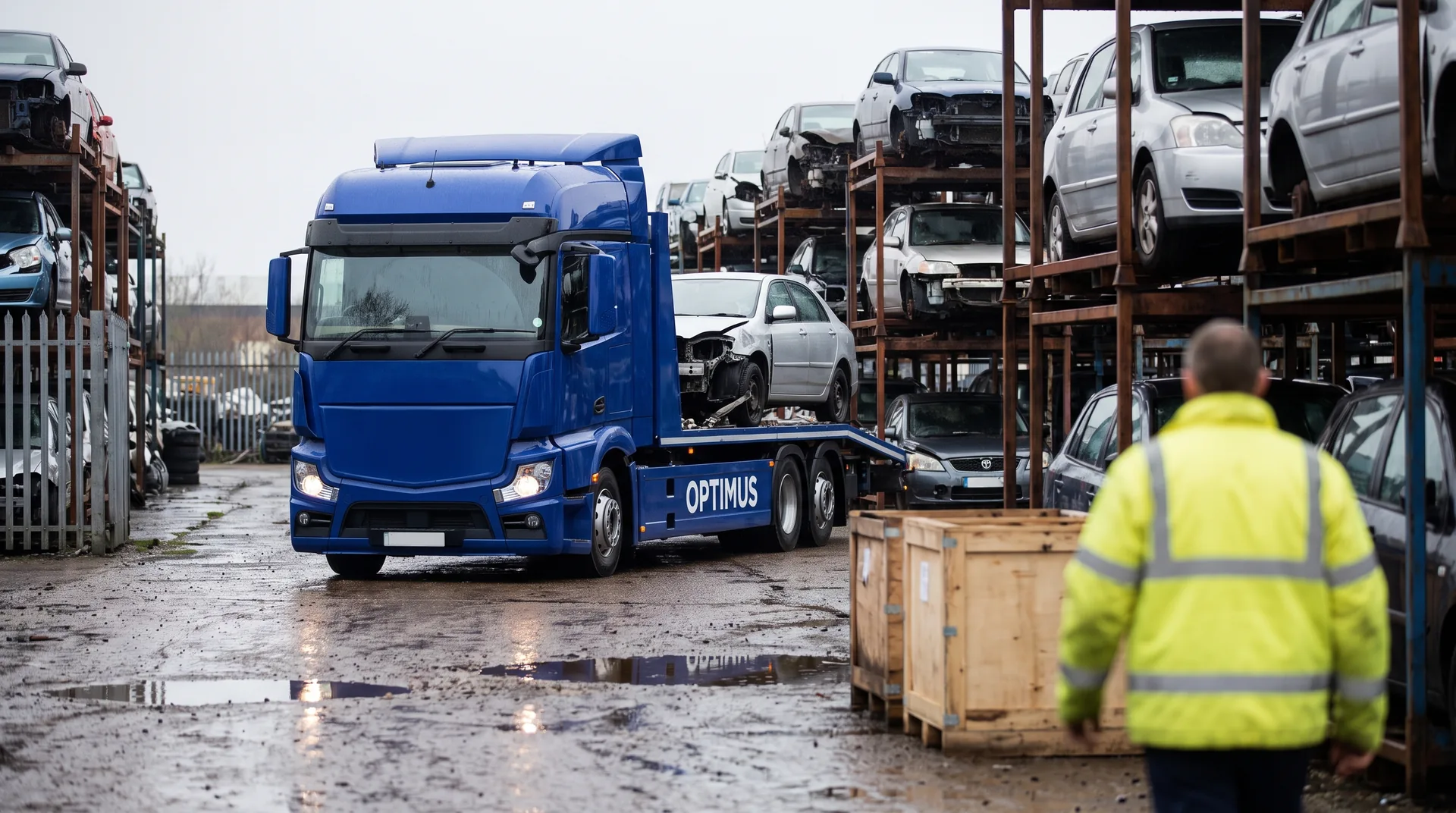
- A non-runner has to be winched. Rolling, winching, lifting: settle it with the yard before a vehicle is sent. A car with no wheels or a seized steering system is a completely different job from one that drives on.
- Fluids and battery. A damaged vehicle leaks. Containing leaks and disconnecting the battery are part of preparing it for carriage, not an extra.
- An electric vehicle with a damaged battery. This is a separate risk class with separate carriage requirements. We do not treat such a vehicle as an ordinary wreck; the basics of carrying cells are in our article on lithium batteries.
- The description on the consignment note. A damaged vehicle is described with its damage, with photographs taken at loading. Without that, every further scratch becomes a dispute.
Clearance
The route is the same as for any import from outside the Union: export in the UK, import in Poland, the tariff code, a customs value based on the auction price. For vehicles, national registration and tax formalities on the Polish side come on top, and their scope depends on the type of vehicle; that is settled with the customs agency and the authorities, not with the carrier. The basis for calculating charges is in our article on how duty is calculated, and what gets added to the value in our piece on customs value.
What we do, and where we stop
We price transport before the purchase, collect from the yard and arrange clearance with the customs agencies we work with regularly. For a vehicle that cannot be rolled or driven onto a trailer, the loading method is settled before bidding, because it determines the type of vehicle and the price. We do not assess the extent of damage, we do not value the vehicle and we do not advise whether a repair is worth it. If the damage category rules out exporting a complete vehicle, we say so straight away rather than planning a movement that cannot lawfully happen.
A separate question, settled before bidding, is whether the vehicle can later be registered at all. We set out the routes in our article on vehicle type approval and individual approval.
Sources
- Copart UK: list of operations centres
- Copart UK: rules for buying Category B vehicles
- Copart UK: Category N vehicles
- GOV.UK: taking a vehicle out of the UK permanently, the V5C section and the DVLA notification
Buying a vehicle at Copart? Send the lot number, the operations centre and whether the vehicle is a runner through our contact form. See also BCA and Manheim vehicle auctions.