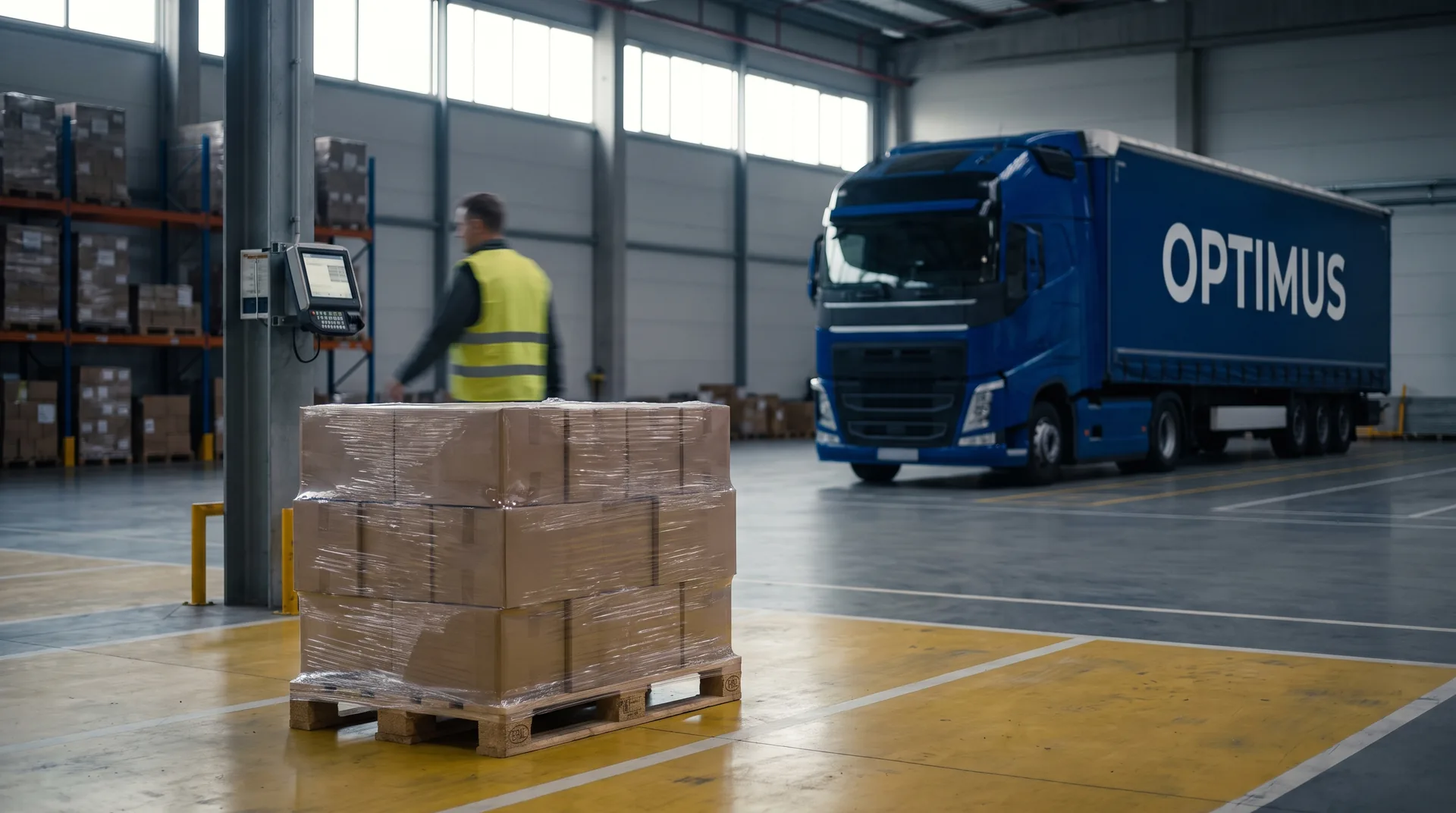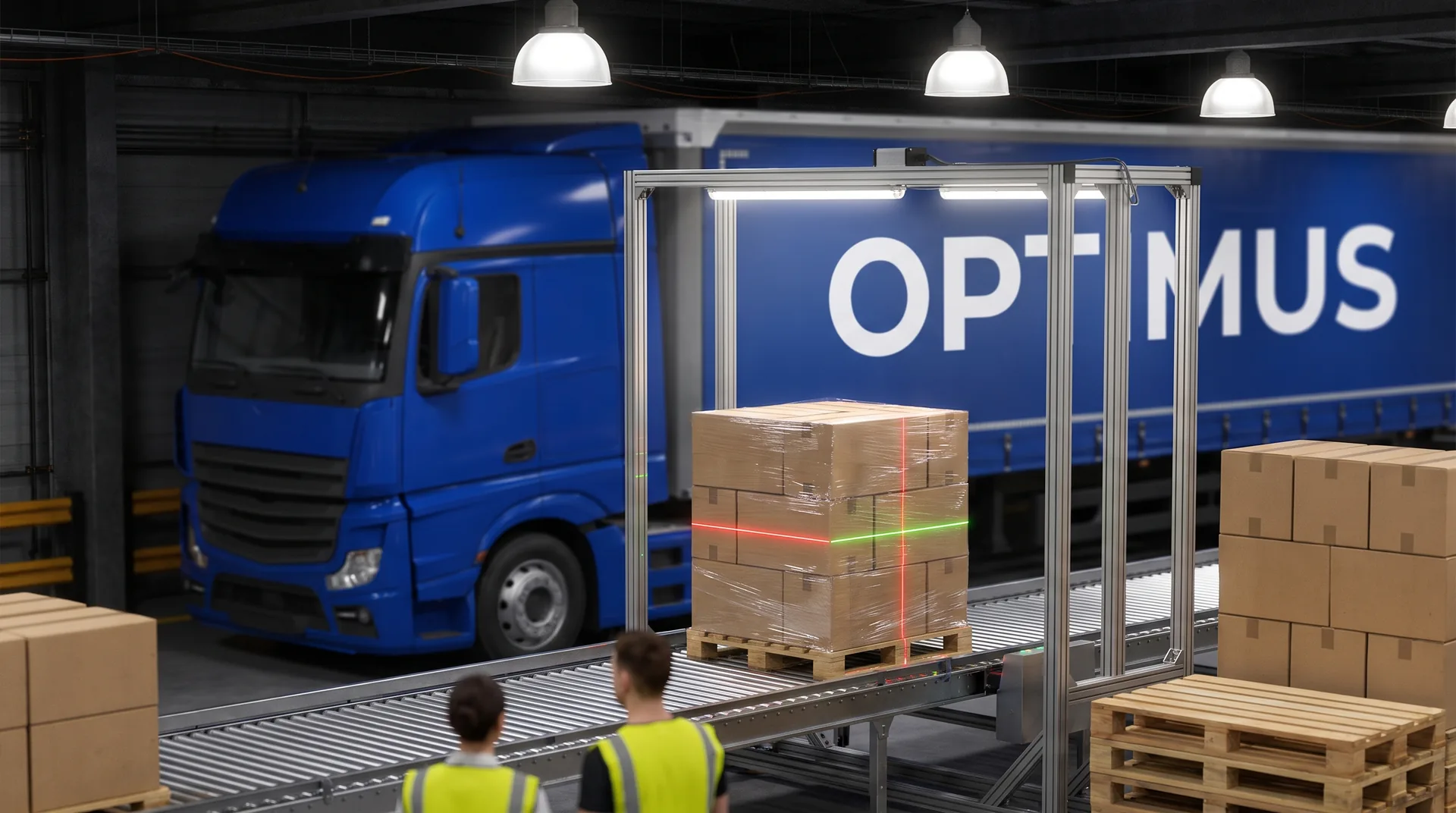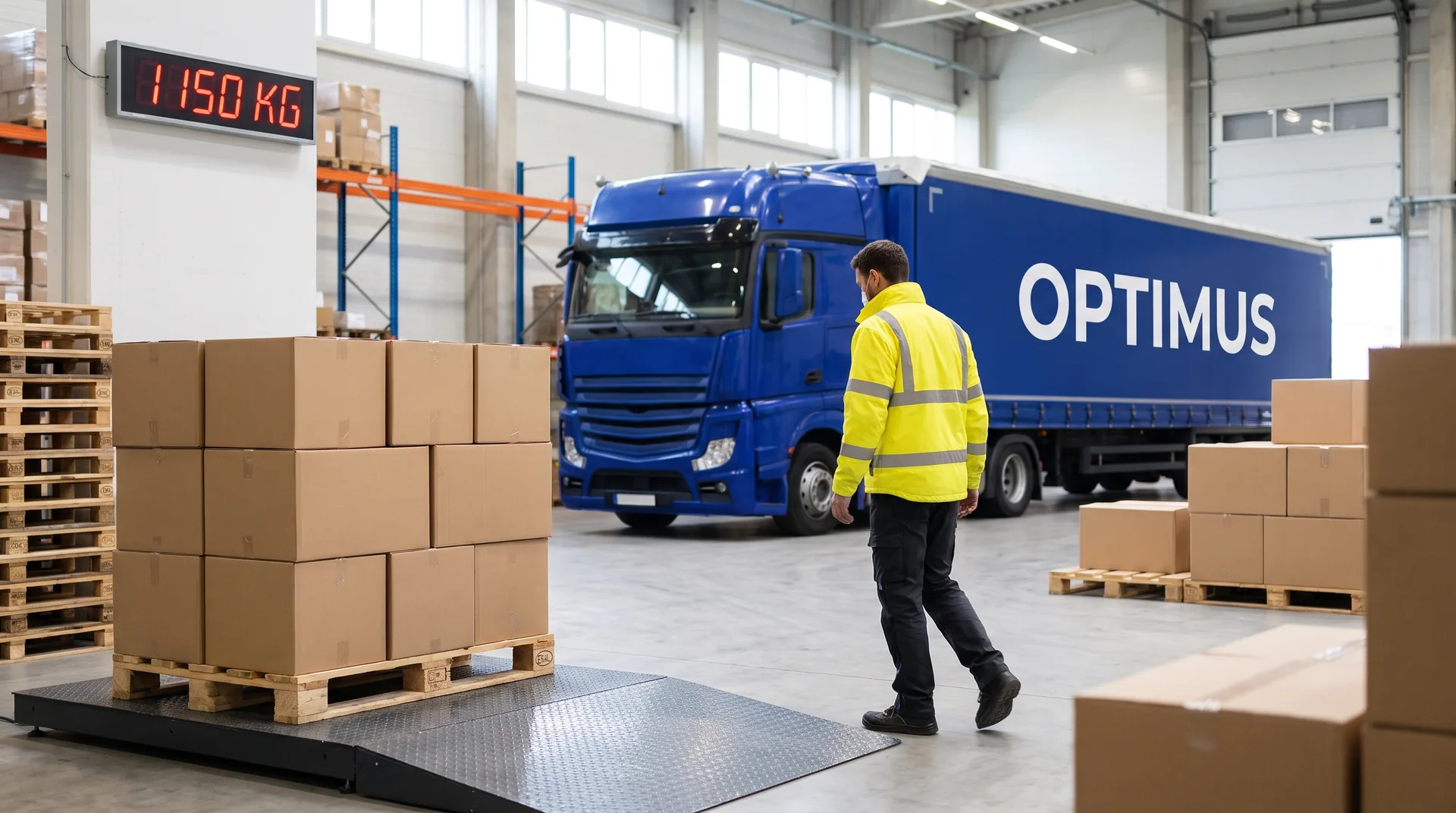
At the hub a pallet goes through goods in with a quantity and condition check, weighing and measurement, repacking or reinforcement where needed, labelling and assignment to a specific UK departure. Finally it takes its place on the truck according to a load plan that accounts for weight, axle loads and the unloading order in the UK.
Goods in: the first quality gate
At unloading we check consistency with the documents: package count, markings, visible damage. This is where problems are caught more cheaply than at the border or at the consignee: a crushed carton corner, a cracked pallet foot, one piece missing against the packing list. Discrepancies are recorded and clarified with the consignor straight away, before the goods travel on.
Weighing and measurement
Every consignment gets its real weight and dimensions, not the ones from the form. That is the basis of fair billing for space on the truck, but also of safety: the load plan that avoids overloading an axle is built from real weights. Why that matters is described in our article on misdeclared weight and DVSA checks.
Repack and securing
- Replacing a pallet that is damaged or does not meet the consignee requirements, for example those of a retail chain.
- Topping up film, straps and corner boards so the load survives the sea leg and the loading docks.
- Consolidating small consignments for one consignee into a larger unit when that lowers the cost.
- Marking: labels referencing the documents, so the pallet stays identifiable at every stage.
How to prepare a pallet so that repacking is not needed is covered in preparing a pallet for the UK.
Load plan and departure
Pallets go onto the truck according to a plan: heavy ones low and over the axles, the order reversed against UK unloading stops, sensitive goods away from the edges. The driver receives the full document set and the manifest. From that moment the pallet is part of a consolidated load with one border reference for the whole vehicle.
Where this happens
Our consolidation facilities are Kielce and Legnica on the Polish side and the Milton Keynes warehouse on the British side, where the same process runs in reverse for imports from the UK and distribution across the country. Details are on the warehousing page.
Cross dock and storage: two different processes
Cross dock is transhipment without putting goods on a rack: a pallet comes in through one door, waits a few hours on the dock and leaves through another, already on a truck for the UK. Storage is a deliberate hold, with a pallet space and separate billing. Customers confuse the two when planning dates, and the difference matters: cross dock requires matching the inbound to a specific departure, storage removes that need. A groupage truck waits for the next scheduled line departure, so a pallet arriving the day after it left will spend several days with us whatever we call that stay.
The most common mistake in building a pallet
A pallet is often built for the consignor's own warehouse rather than for the road. A carton overhangs the footprint, the film is wrapped around the goods but not pulled down onto the pallet, the label sits on one side only, and the stack is tall and light at the bottom. Such a unit stands perfectly on its own racking and comes apart at the first braking on the ferry. At the hub we catch this at goods-in and fix it, but the fix costs time and space, and sometimes a departure a day later.
What happens when a pallet fails goods-in
We record the discrepancy with photographs and contact the consignor the same day. From there three roads are open: we improve the securing and the goods travel as planned, we hold the consignment pending clarification, or we send it with a note on its condition if the consignor so decides. The worst is the fourth option, which we avoid: letting a doubtful pallet travel on and discovering the problem at the British consignee, where every hour of clarification costs many times more.
Sources
- GOV.UK (DVSA): load securing guidance for vehicle operators
- GOV.UK: international road haulage, the CMR consignment note
- UNECE: the CMR Convention
Want your pallets to pass through the hub without surprises? Describe the goods and packaging in our contact form. The full scope is on our services and warehousing pages.