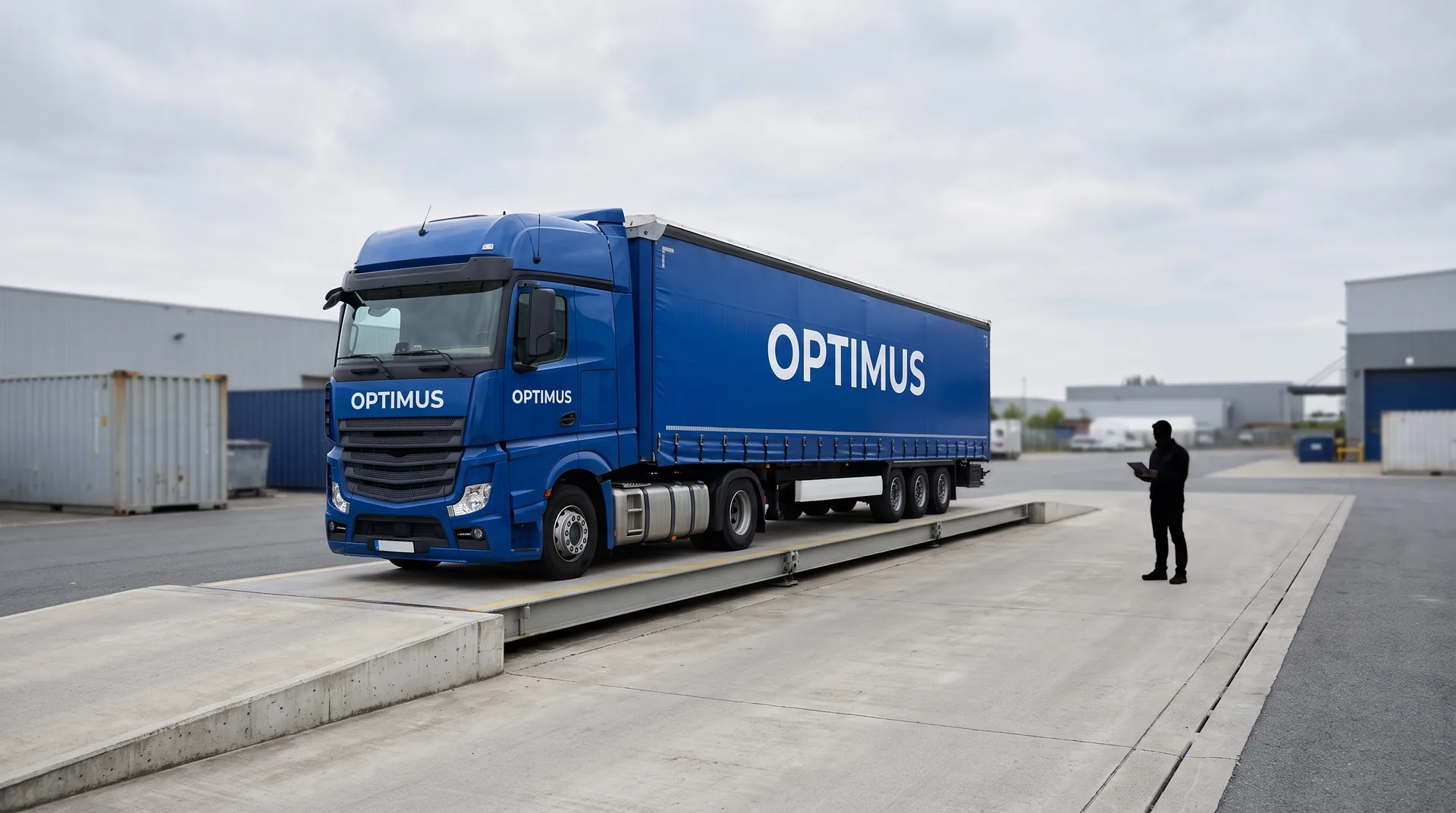
An understated weight leads to an overloaded truck or axle. DVSA weighs vehicles at roadside checks and, as of August 2026, applies graduated penalties: 100 GBP for less than 10 percent over, 200 GBP from 10 to 15 percent and 300 GBP from 15 percent upwards, while an overload of around 30 percent or 5 tonnes goes to court. In practice DVSA turns a blind eye to up to 5 percent over, as long as the excess stays under a tonne. Add a prohibition until the excess is removed.
Where the wrong weight comes from
- The net weight of the goods is declared, without pallets, packaging and securing gear, and on a full truck the difference runs into hundreds of kilograms.
- A catalogue weight instead of a weighed one: the manufacturer quotes a theoretical value, the actual batch comes out heavier.
- Rounding down so the freight fits the limit of the truck that happens to be on the route.
- Groupage: several consignors each understate a little and the sum breaches the limit, although every line looks innocent on its own.
How it surfaces at a check
DVSA runs roadside enforcement and uses weighing, including preselection sensors that pick vehicles out for the weighbridge. Both the gross weight and the individual axle loads are checked. Here lies the trap: a truck can be within its total weight and still have one axle overloaded, because heavy goods were placed in the wrong part of the trailer. Load distribution is the carrier's and driver's responsibility, but without an honest weight from the consignor the loading plan cannot be right.
What is at stake and who pays
- Graduated penalties by the size of the excess: 100 GBP below 10 percent, 200 GBP from 10 to 15 percent, 300 GBP from 15 percent upwards. An overload of around 30 percent or 5 tonnes over the limit means a court summons instead of a roadside penalty; only up to 5 percent tends to be tolerated, and only when the excess stays under a tonne.
- A prohibition: the truck stands until the excess is removed, which means organising a second vehicle and a transfer of cargo en route.
- The CMR convention makes the consignor liable for damage caused by inaccurate particulars in the consignment note, so the cost travels back to the source of the error.
How to declare and sleep well
Declare the gross weight including the pallet and packaging, ideally from a scale at loading rather than a catalogue. In groupage stick to the rule: better to declare 20 kg too much than 200 kg too little. How to count space and weight on a truck is covered in our article on pallets and loading metres, and placement and strapping in the piece on cargo securing to EN 12195.
What happens when the overload surfaces en route
The sequence is always similar. The vehicle is directed to the weighbridge, the result exceeds the limit, the driver receives a prohibition and the vehicle stays where it stopped. From that moment it is no longer about the penalty but about logistics: a second vehicle has to be brought in, a place with transfer capability has to be found and part of the load moved across, often without a ramp and without a forklift. In groupage there is a further problem with no elegant answer: splitting the load means the consignments of several senders will arrive on different dates, and each of them needs its own set of transport documents. That is why we verify weights before loading, not after.
Groupage and full loads: who keeps an eye on the limit
On a full load the weight sits with one consignor and an error is easy to catch, because you only have to compare the declaration with what was weighed at loading. In groupage the limit is the sum of declarations from several companies, none of which sees the whole picture. We assemble that data and we are responsible for the load distribution on the trailer, but the input comes from the consignors. If one line is understated by two hundred kilograms, those kilograms are missing at the end, at the last pallet, which then has to be left behind.
Sources
- GOV.UK: DVSA roadside checks, fines and financial deposits (overloading bands)
- GOV.UK: roadside checks for HGV, van, bus or coach drivers
- UNECE: the CMR convention (liability for consignment note particulars)
Rather not guess whether your cargo fits the limits? Send dimensions and weights through the contact form and we will match the vehicle and plan the loading as part of our transport services.