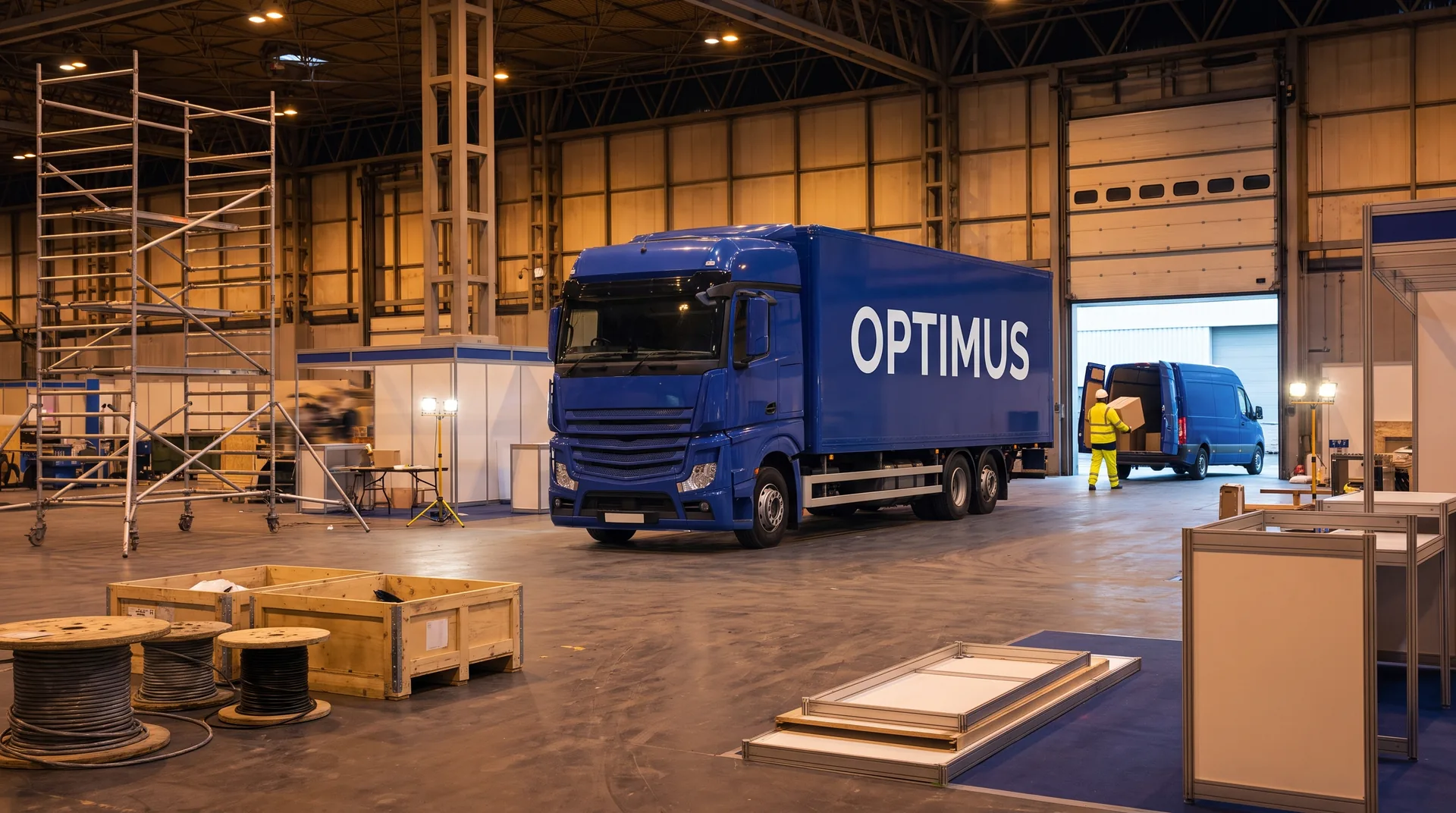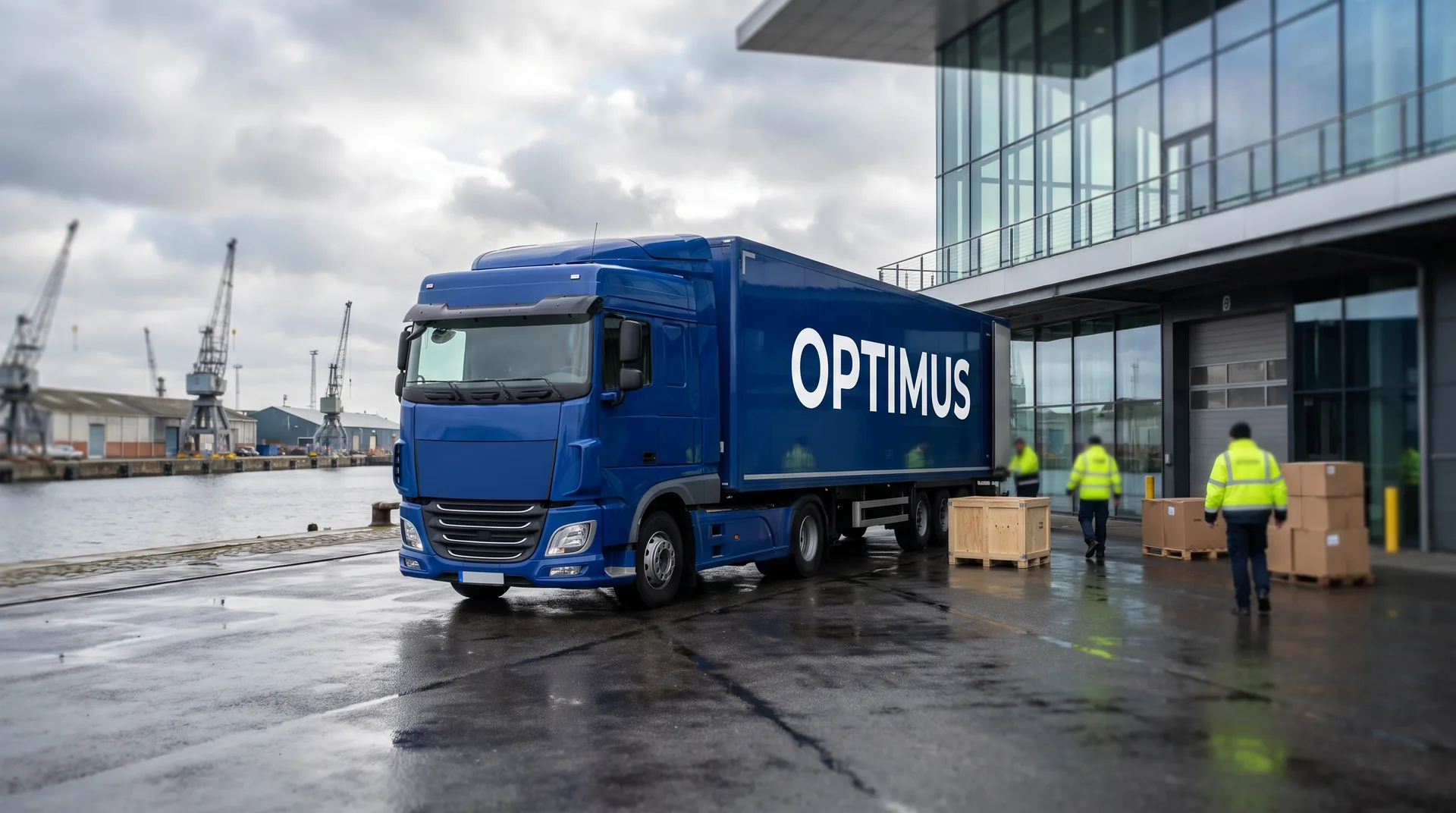
Exhibition Centre Liverpool stands on Kings Dock on the Mersey waterfront, in a group of buildings that also includes a convention centre and an arena. In 2026 the campus rebranded: the group that traded as ACC Liverpool now presents itself as the Liverpool Experience Campus, and the old domain redirects to the new one. For a carrier, though, the most important feature of the place is different: it has a dedicated vehicle holding area before entry to unloading. We carry stands and exhibits here from Poland.
The rebrand: what changed and what did not
Until 2026 the campus traded under the ACC Liverpool group name, covering a convention centre, an exhibition centre and an arena. After the rebrand the venues are described as the convention centre and the exhibition centre within the Liverpool Experience campus, while the arena kept its existing commercial name. The address, the site and the infrastructure are unchanged, and the group former domain now redirects to the new one.
The practical effect is twofold. First, the venue name on the order and the booking should be the current one, because gate verification works from the booking data. Second, the loading documents circulating among organisers are partly still branded under the old name, and one of them carries a date from several years back. We describe their structure below, because it is consistent and useful, but the specific numeric values are confirmed in the version current for your own show.
Three loading zones, each different
The campus handles freight through several separated zones rather than one entrance, and that is its second distinctive feature. The loading documents describe the arrangement like this. One zone serves the convention centre hall and the conference level, with an adjustable dock at which the venue recommends vehicles with a tail lift, because without one the only route from the lower level to dock level is by stairs. A second zone serves the hall beside the arena, with control at a gatehouse and the option of sending a vehicle first to a holding area. A third zone serves the exhibition centre halls, has its own gatehouse, allocates space on a first come first served basis, uses a vehicle identification form displayed in the windscreen, and is uncovered, so it imposes no height limit on vehicles.
That last point can be decisive. A waterfront venue whose loading zone for the exhibition halls is open to the sky takes vehicles no covered dock will accept. It has to be set against a second rule from the same documents, though: the venue does not supply trolleys or pallet trucks, and a forklift is ordered in advance. Handling equipment is therefore planned together with the vehicle rather than on arrival.
A campus, meaning several buildings and shared roads
Unlike venues wedged into street blocks, the dockside site is open and has its own service roads, but shares them between several buildings and a hotel. A multi-storey car park of well over a thousand spaces stands beside the campus, though with a height restriction typical of passenger car parks, so a delivery vehicle leaves the site after unloading anyway. The loading documents state plainly that once unloaded a vehicle clears the zone and parks off site.
A separate rule applies to breakdown and is worth knowing in advance: vehicles are admitted only once the stand is dismantled and the goods are ready to load, with articulated vehicles admitted last. That is exactly the moment when a return vehicle booked without margin stands idle. We gather the options after a show closes in the article on what to do with a stand after breakdown.
The approach and the zones
The campus sits on the waterfront and is approached on roads running alongside the dock. The venue itself publishes no motorway junction numbers, so neither do we; we describe the region and its arteries in the article on transport to Liverpool, Leeds and Yorkshire. Liverpool does not appear on the government list of charging clean air zones, which covers Bath, Birmingham, Bradford, Bristol, Portsmouth, Sheffield and Tyneside, so there is no zone charge here. We gather the rules in the article on UK clean air zones.
What to settle before arrival, and what we do
To the organiser: hall and stand number, the designated loading zone and gatehouse, how the vehicle is booked in, whether it needs a tail lift, whether a forklift has been ordered, and where the vehicle parks after unloading. We do not quote hours, because the organiser sets them separately for each edition. At our end: collection in Poland, consolidation through the hub including exhibitors from Czechia, Slovakia, Austria and Hungary, and a buffer at the Kielce base, which sits about 4 km from the fairground, a few minutes away, and works around the clock. A groupage vehicle waits for the next scheduled line departure. On the British side, usually a cross-dock in Milton Keynes, giving two transhipments across the route. At the venue we deliver to the handover point, the venue equipment takes over, and we commit to an hour at the gate. We count the schedule backwards using the method in the article on the build-up and breakdown calendar.
Groupage or a dedicated vehicle
The threshold runs at roughly a third of a trailer, about twelve pallets. Liverpool has its own twist, though: since the loading zone for the exhibition halls is uncovered and takes tall vehicles, and there is somewhere on site to wait, a dedicated vehicle running straight from Poland loses less here than at venues with a low dock and no holding area. For smaller stands, groupage with a run from the buffer remains cheaper. We break the arithmetic down in the article on choosing between FTL and groupage.
Sources
- Liverpool Experience Campus: campus venues, including the exhibition centre on Kings Dock
- GOV.UK: list of British charging clean air zones
Exhibiting in Liverpool? Send the hall number and item list through the quotation form and we will match the vehicle to the designated loading zone. See also the exhibition logistics page.