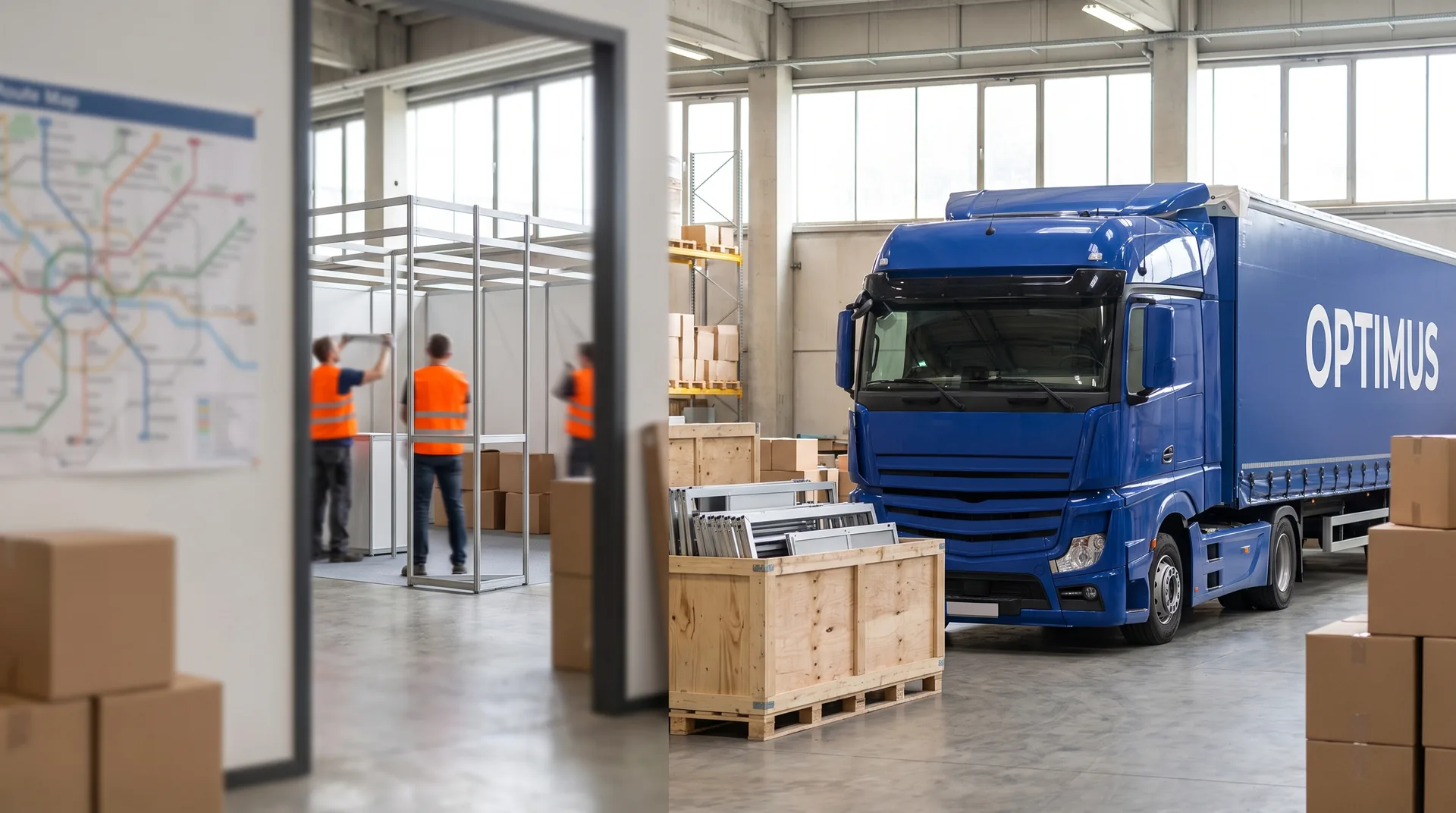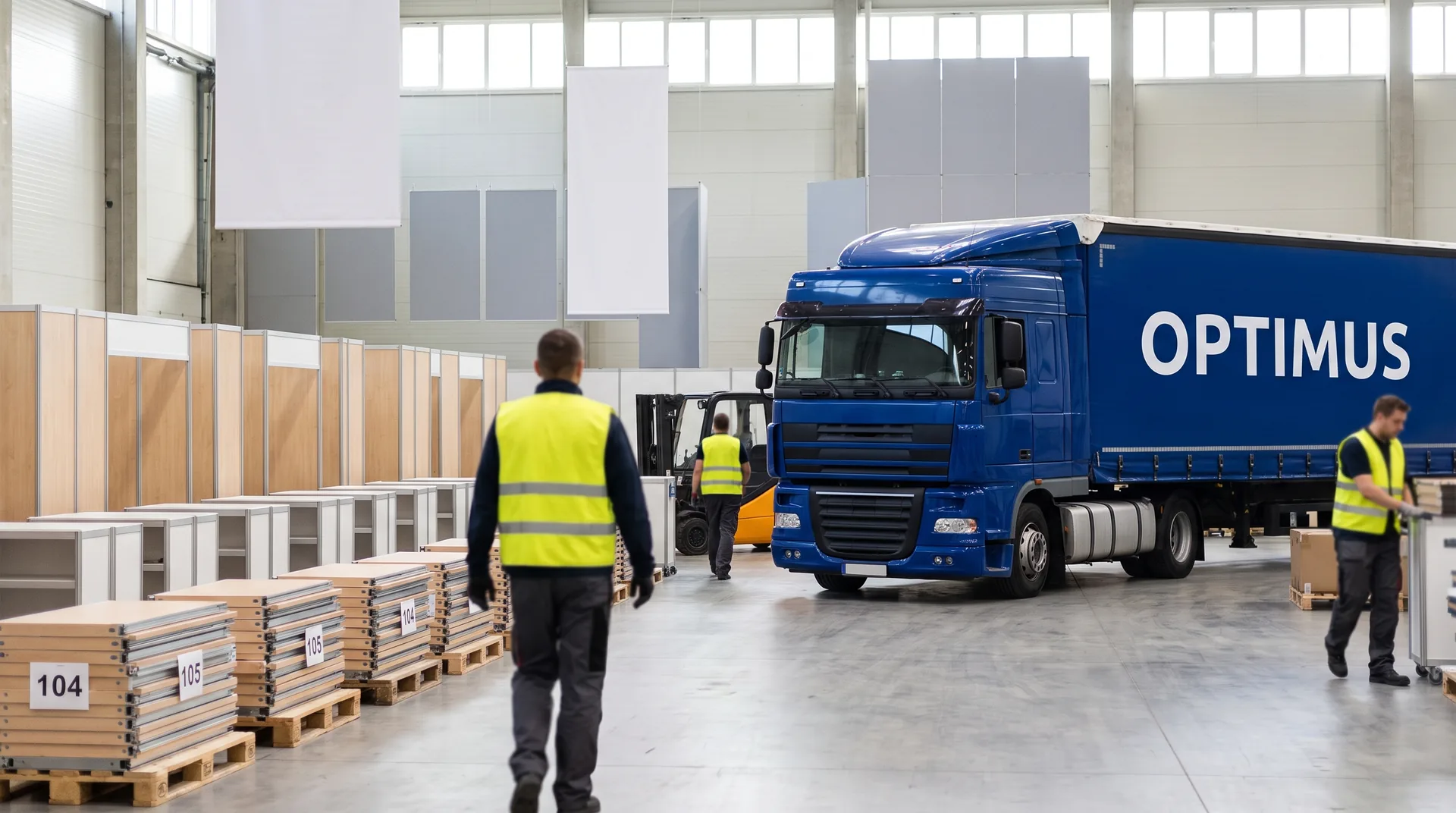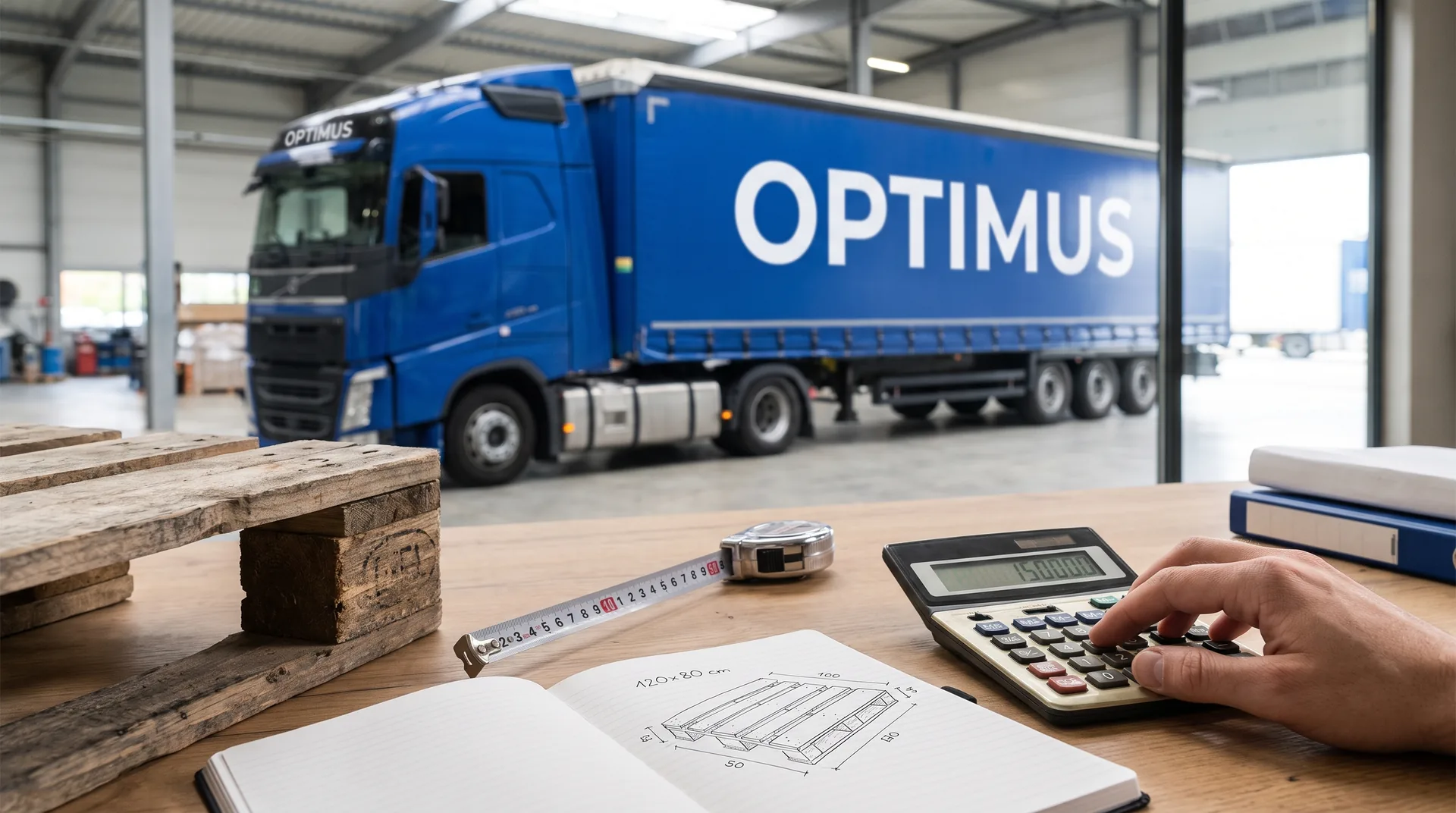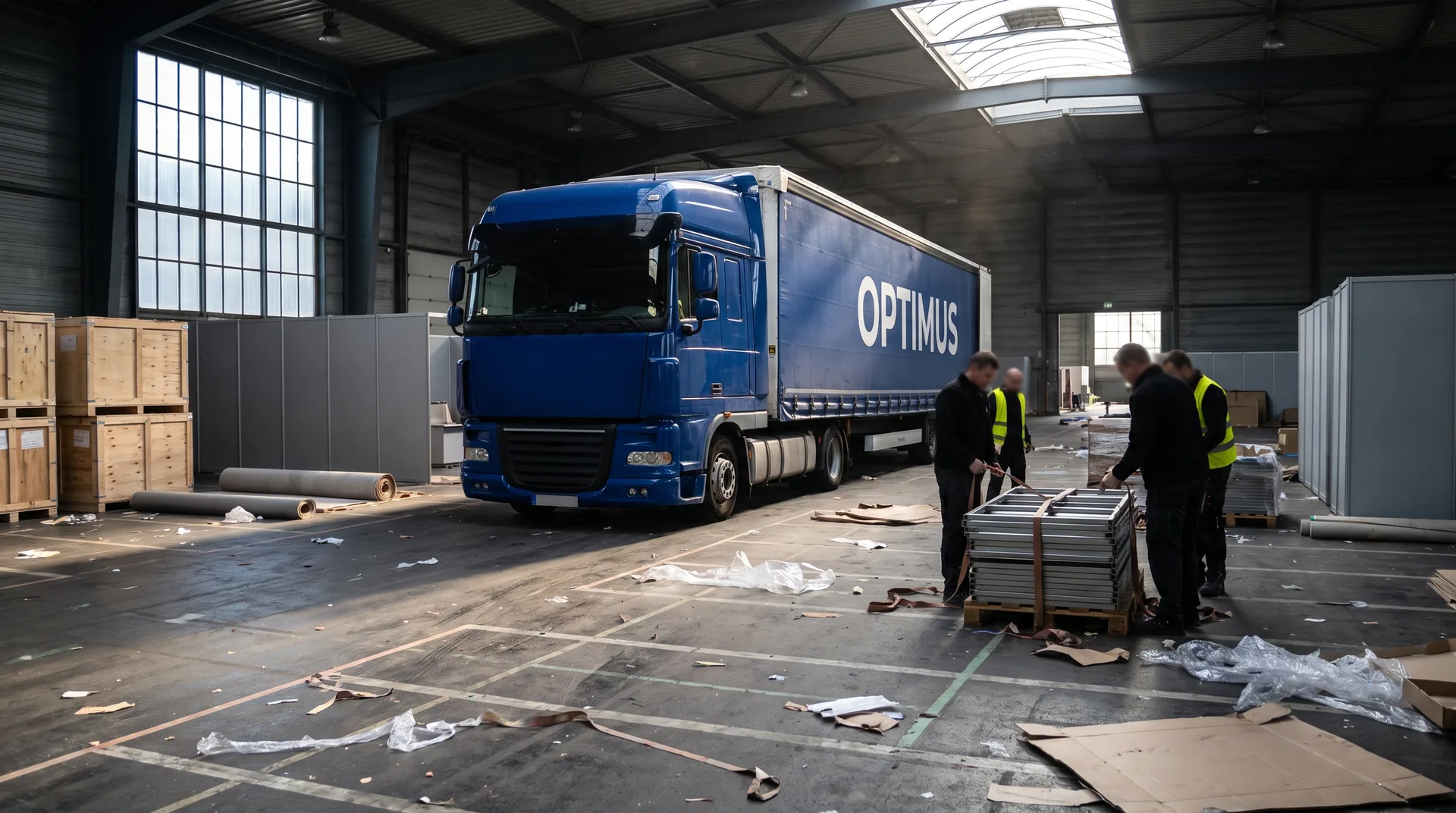
After a show closes a stand can go back to its owner, wait in a warehouse for the next edition, or be disposed of with a confirmation document. The choice is arithmetic, not taste: the cost components on each side are predictable, and the most expensive scenario is having no decision by breakdown day.
Option one: the return
The cost components are return freight, loading under breakdown conditions and, on non-EU routes, clearance. Add the hidden cost: wear from another full load and unload cycle. Returning is the only sensible option where the stand needs repair, where components are needed elsewhere, or where the next show is distant in time and undecided in place.
There is one practical problem with returning: breakdown day is the worst moment to look for a vehicle, because everyone is looking at once. Book the return together with the delivery, as covered in the article on the build-up and breakdown calendar. That crush has its reasons and can be planned around, which we cover in breakdown after a show.
Option two: storage until the next edition
The cost components are a short run to the warehouse, storage for the agreed period and a run to the next show. Set those against the two full journeys you avoid. The option wins where the next show is in the same region, where the stand is bulky and needs no work, and where the gap runs to weeks or months rather than years.
On the Polish side a stand can wait at our Kielce base, minutes from the fairground, described in the article on the buffer warehouse next to Targi Kielce. On the British side that role falls to our Milton Keynes warehouse, working around the clock, where the stand is received, restacked if needed and released for the next movement. A season spanning both sides of the Channel is covered in the article on one stand, several shows.
Option three: disposal with confirmation
Often the cheapest and nothing to be ashamed of. A single-use board stand, a large-format print with an outdated logo, carpet after four days of traffic and furniture glued for one show have zero remaining use value and a non-zero cost of transport and storage. If return freight plus storage exceeds the cost of rebuilding the stand, the decision is arithmetic.
The condition is a confirmation of destruction, because without a document you can close neither the asset register nor, for goods under temporary admission, the customs document. At our Milton Keynes warehouse we carry out disposal with confirmation, so the exhibitor receives a document rather than an assurance. The equivalent procedure for trade goods is in the article on certified disposal of rejected goods in the UK.
Stand components on an ATA carnet that are not coming back
This is the most common trap on UK routes. An ATA carnet covers property brought in temporarily with the intention that it returns. If an item on the carnet list is to be destroyed or left behind, the document will not be discharged for that part and the guaranteeing organisation will pursue the charges. The answer is not to skip it and say nothing but to regularise its customs position: declare it for release for free circulation or destroy it under supervision in line with the procedure. The consequences are in the article on an undischarged ATA carnet after a UK fair, and selling off the stand in the piece on the ATA carnet and goods sold at a fair.
Splitting the stand: part returns, part stays
In practice this is the most common answer and a sensible one. Structural components, equipment and furniture return; graphics, carpet and single-use materials stay. Success depends on the split being planned at packing before departure rather than improvised in the hall. Practically that means separate crates for what returns, separate labelling and a separate list, and with an ATA carnet an even sharper separation, because consumables should never appear on the carnet list.
The calculation worth doing once
Gather four numbers: stand volume in loading metres, the cost of rebuilding the components, the planned gap to the next show and its likely location. Set them against the three options. In most cases the answer is obvious after the first comparison; less often the options come out close and something else decides, for example the risk of damage in transit. The wider picture of getting exhibits home is in the article on post-show logistics and the return of exhibits.
What not to do
Leave the decision to breakdown day. Leave the stand in the hall hoping somebody will take it; the space has to be cleared within a set time and clearance costs fall on the exhibitor. And ship home a stand that will be rebuilt anyway, because then you are paying to store something destined for the skip a year from now.
Sources
Not sure what to do with the stand after a show? Send the volume, the next show date and its location through the quotation form and we will price all three options. See also the exhibition logistics page and the Milton Keynes warehouse.