A driver on the route from Poland to the UK works under the same limits as before Brexit: at most 9 hours of driving a day (10 twice a week), a 45 minute break after 4.5 hours of driving, up to 56 hours a week and 90 hours over two consecutive weeks. The UK carried Regulation 561/2006 into national law, so the rules match on both sides of the Channel. Valid as of August 2026.
Three legal regimes, one practice
Formally, three systems meet on the Poland to UK route: EU Regulation 561/2006 (in Poland and while crossing the EU), the UK version of the same rules (assimilated law, applying in England, Scotland and Wales) and the AETR agreement as the international umbrella. The good news is that the driving, break and rest limits agree across these systems, and the tachograph records the journey the same way on both sides. Enforcement is run by DVSA in the UK and ITD in Poland.
The limits in a nutshell
- Daily: 9 hours of driving, extendable to 10 twice a week.
- Break: at least 45 minutes after 4.5 hours of driving (can be split 15 + 30).
- Weekly: at most 56 hours of driving, 90 over two consecutive weeks.
- Daily rest: regularly 11 hours (with reductions allowed by the rules).
- Weekly rest: regularly 45 hours.
The rules also contain specific provisions for crossings: interrupting a rest to board a ferry or train follows separate rules, which matters in practice on the Channel route. The limits are covered in detail in our article on drivers' hours under 561/2006.
What Brexit really changed
Not the limits, the surroundings. First, border formalities now eat into the driver's day: document checks, possible referral for inspection and port queues. Second, since 12 October 2025 the EU Entry/Exit System registers biometrics of non-EU drivers entering the Schengen area, which can stretch processing at peak times. Third, break planning must respect fixed ferry departure times: missing the booked sailing means waiting for the next one.
What this means for delivery times
Real transit time is not distance divided by speed, it is the number of driver days with limits, a crossing and a border in the middle. That is why a reliable carrier quotes a deadline with a buffer, not from a map calculator. How typical transit times add up is shown in our article on how long transport from Poland to the UK takes; we also cover tachographs in vans from July 2026.
The most common mistake in planning a date
The customer measures the route with a distance calculator, divides by an average speed and adds a day of slack. The result is a date that cannot be met, because the sum contains no daily rest, no queue for the crossing and no recognition that a driver does not start driving at an arbitrary minute. The driver day is the unit in which this corridor is planned, and it is that unit, not the odometer, which sets the realistic unloading date.
What this means in groupage
On a dedicated run the limits apply to one journey from loading to unloading. In groupage two further stages with their own rhythm enter the sum: the feeder run to the hub and the warehouse handling before departure, and on the British side usually a cross dock in Milton Keynes before delivery. A groupage truck waits for the next scheduled line departure, so a consignment reaching the hub after it has left waits for the following one regardless of how many hours the driver has left in the week.
Crossings and rest in practice
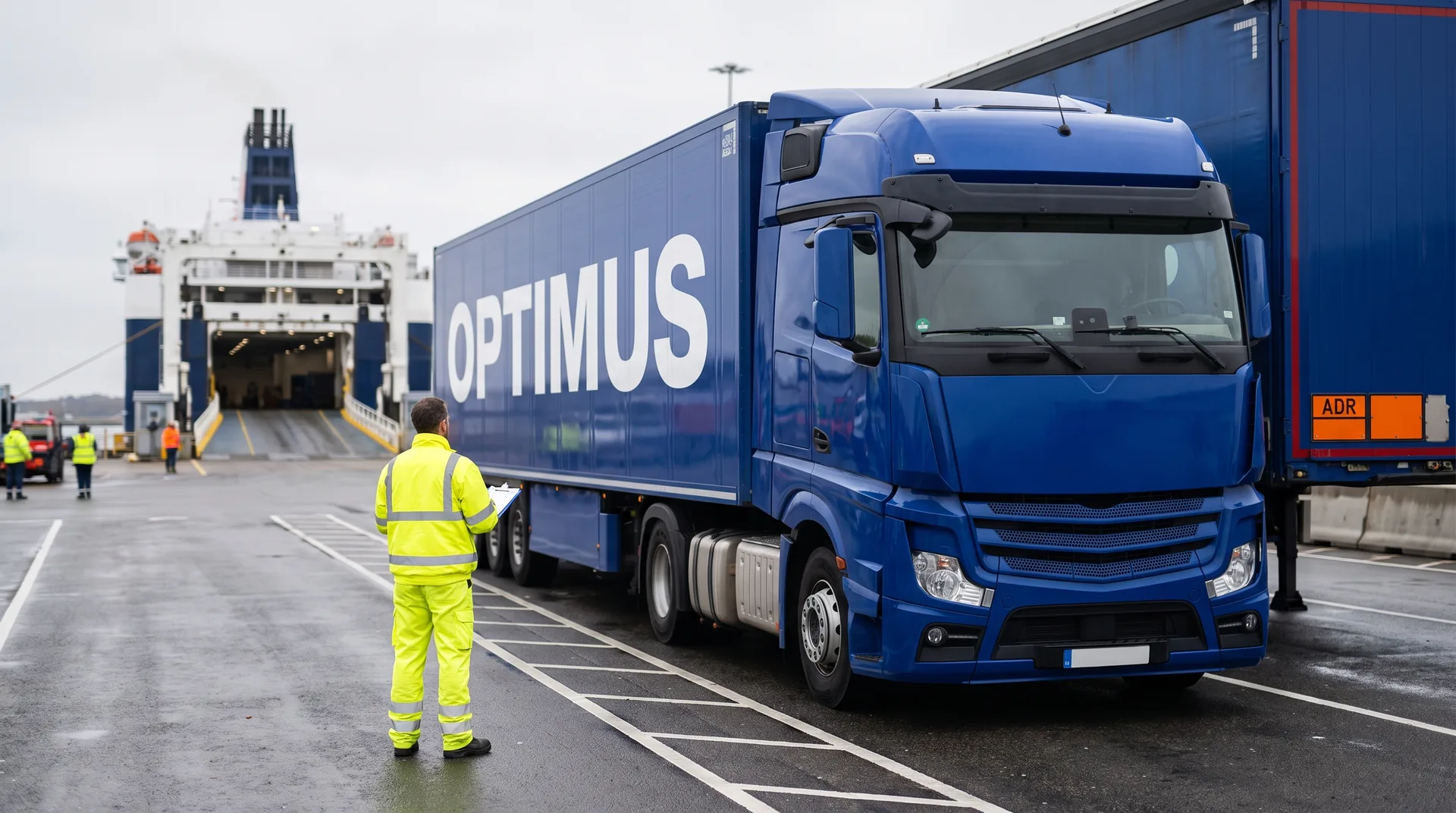
On the Channel route sailings have fixed times, and boarding and disembarking take time that cannot be compressed. The rules contain specific provisions on interrupting a rest for ferry and rail crossings, but in planning a simpler relation often matters more: a driver with half an hour of driving left will not reach a port an hour away. So breaks are planned around the sailing time, not the other way round.
Sources
- GOV.UK: drivers' hours (limits in the UK)
- EUR-Lex: Regulation (EC) No 561/2006
- UNECE: the AETR agreement
We plan our regular departures around the limits and the crossings. See our transport services or ask about a date via the contact form.