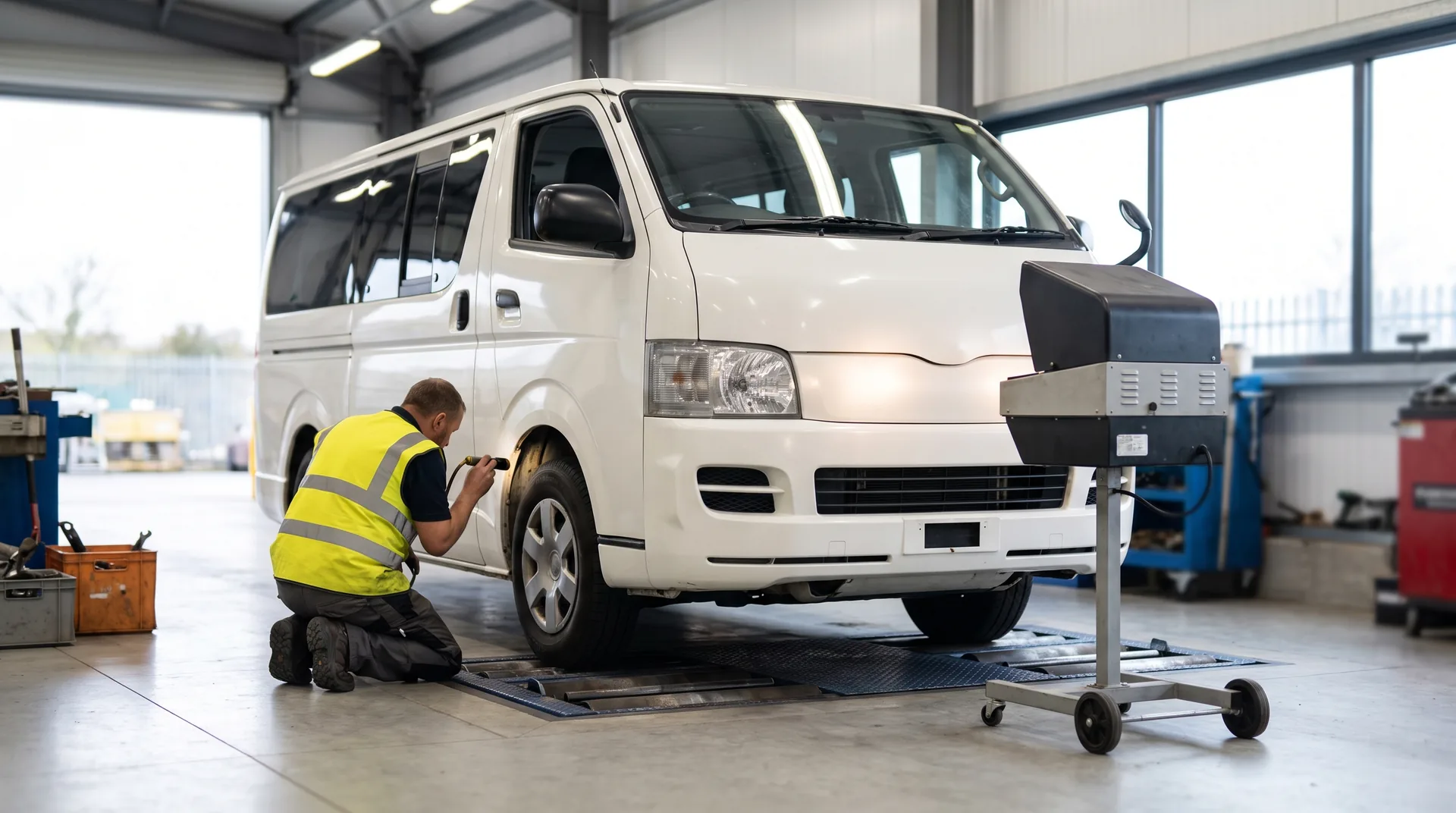
From 1 July 2026, light commercial vehicles above 2.5 and up to 3.5 tonnes maximum permissible mass used in international hire-and-reward carriage of goods must be fitted with a tachograph and fall under drivers hours rules. It is part of the EU mobility package. Our vans already comply, so express work on the Poland-UK lane continues unchanged.
Who the change affects
- Vehicles and vehicle combinations above 2.5 and up to 3.5 tonnes in international hire-and-reward transport.
- Cabotage performed by such vehicles inside another member state.
- The drivers of those vehicles, who become subject to driving, break and rest rules.
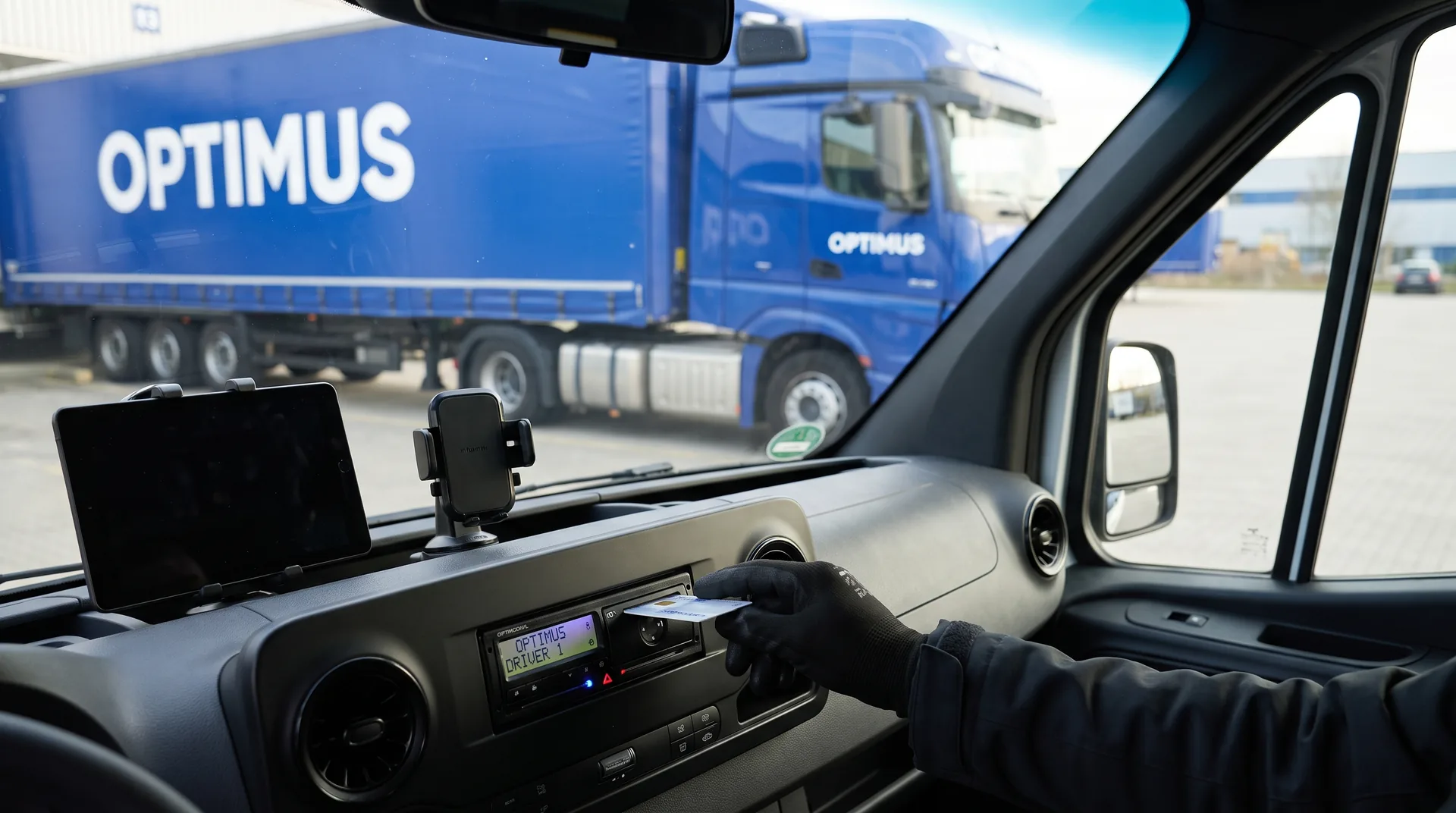
Own-account transport stays outside the scope, meaning carriage of a company's own goods ancillary to its main business. As a hire-and-reward carrier we fall under the full requirements, so our vehicles carry tachographs and our drivers carry cards.
What it changes for a shipper
The biggest change is in planning. Until now a van under 3.5 tonnes was seen as a vehicle without limits: it runs as long as the driver can. From July 2026 the same arithmetic applies as for a truck: a daily driving limit, a break after a set period at the wheel and a daily rest. So delivery dates have to be calculated realistically, around drivers hours rather than distance alone. The rules are unpacked in drivers hours.
Why this tidies up the market
Until recently some operators competed on prices built on the fact that a light vehicle escaped drivers hours enforcement. The result was runs without any limits, risk for the driver and unpredictability for the customer, because the vehicle could stop anywhere. Tachographs level the rules: everyone plans the same way, and the difference comes from organisation rather than from avoiding regulation. For a shipper that means more credible dates, even if the quoted running time is longer than the old promises.
What we do when the deadline is genuinely tight
Drivers hours do not abolish urgent deliveries; they only change how they are run. On genuinely short deadlines we use double-manned vehicles or a handover between vehicles at an agreed point, described in multi-vehicle express. Typical time-critical work runs on express transport, and the choice between a dedicated van and an express part load is discussed in express LTL or a dedicated van.
Vans below 2.5 tonnes
Vehicles up to 2.5 tonnes stay outside the tachograph obligation on this work. They still have their place on small, urgent consignments where fast collection and access to a difficult address matter. The limit there is payload and cube, not regulation. That option is described in vans under 2.5 tonnes.
The UK lane adds another layer
On the Poland to Britain route, border formalities and the crossing sit on top of drivers hours. A vehicle waiting outside a port with incomplete paperwork loses not only its sailing but part of the next day's allowance. So documents are ready before loading, and the crossing booking is matched to the driver's rest plan. Practical examples of urgent work are in urgent car parts transport.
Sources
This is general information, not legal advice. Need a reliable, compliant express run to the UK? Describe the consignment and the deadline through the quote form and we will match the vehicle and the route plan.