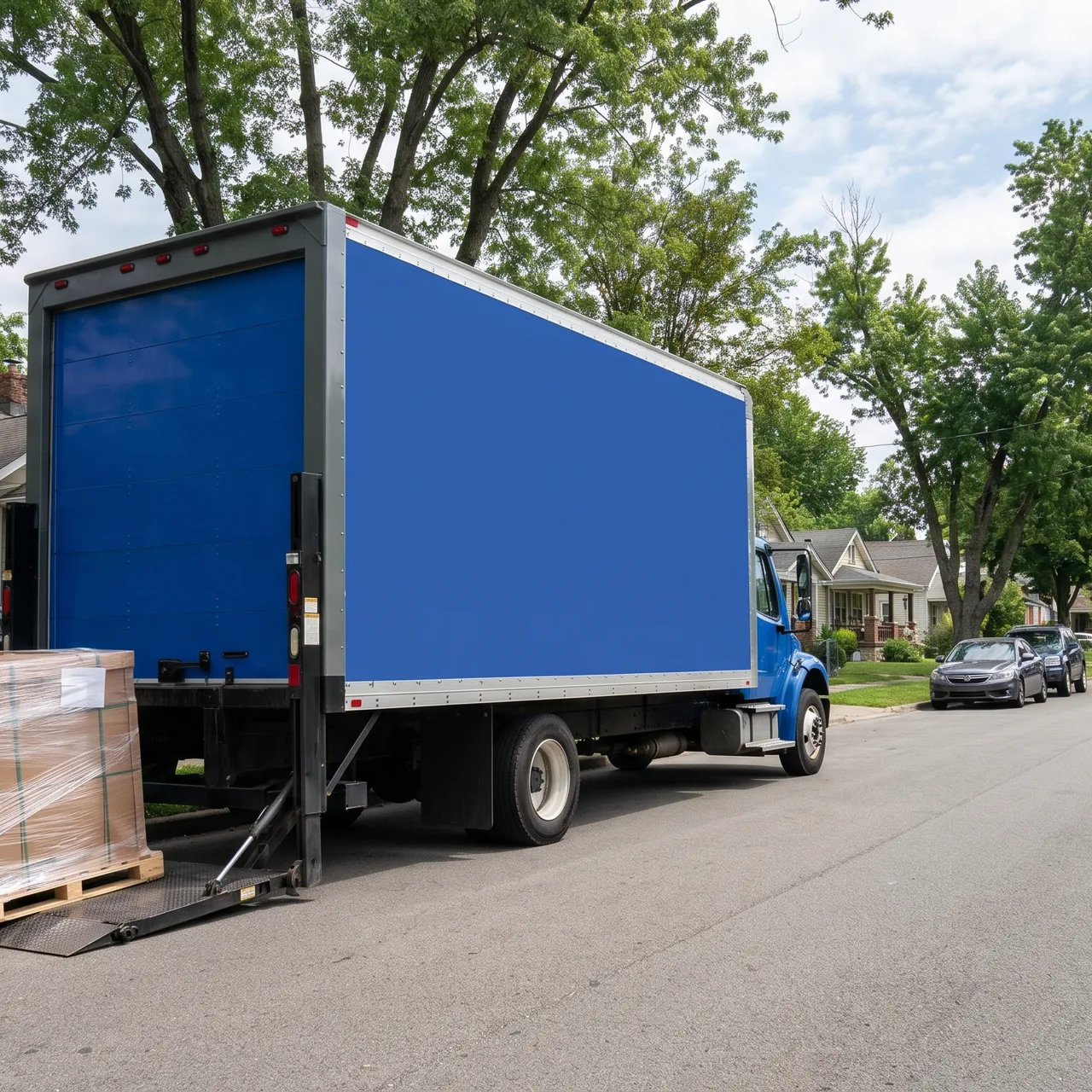
A tail lift is a hydraulic platform at the rear of a vehicle that lowers a pallet to street level where there is no dock and no forklift. It has to be ordered with the transport, because not every vehicle carries one. Access matters too: a tail lift needs firm, reasonably level ground and room to deploy the platform.
When a tail lift is genuinely needed
- Delivery to a private address with no unloading infrastructure at all.
- A small workshop, shop or service unit with no dock and no forklift.
- A construction site or a building under refurbishment where the equipment is not yet running.
- A timed delivery when nobody qualified to operate a forklift is on site.
What a tail lift will not do
This is the commonest source of disappointment, so it is worth saying plainly. The lift puts the pallet on the ground beside the vehicle and the transport service ends there. It will not carry goods up stairs, drive onto grass or gravel, pass through a narrow gateway or unpack the load. If the receiver expects goods taken inside, that has to be agreed separately, along with the access conditions. For deliveries to end customers, kerbside delivery is the market standard, as described in furniture transport to end customers.
What to check before ordering
- The surface at the delivery point: a tail lift needs firm, reasonably level ground.
- Space to stop the vehicle and deploy the platform without blocking the carriageway.
- Access width and height restrictions, especially on estates and in yards.
- The weight and dimensions of a single pallet, because they decide feasibility.
- Whether the receiver will be present, and how delivery will be confirmed.
Pallet weight: lighter is safer
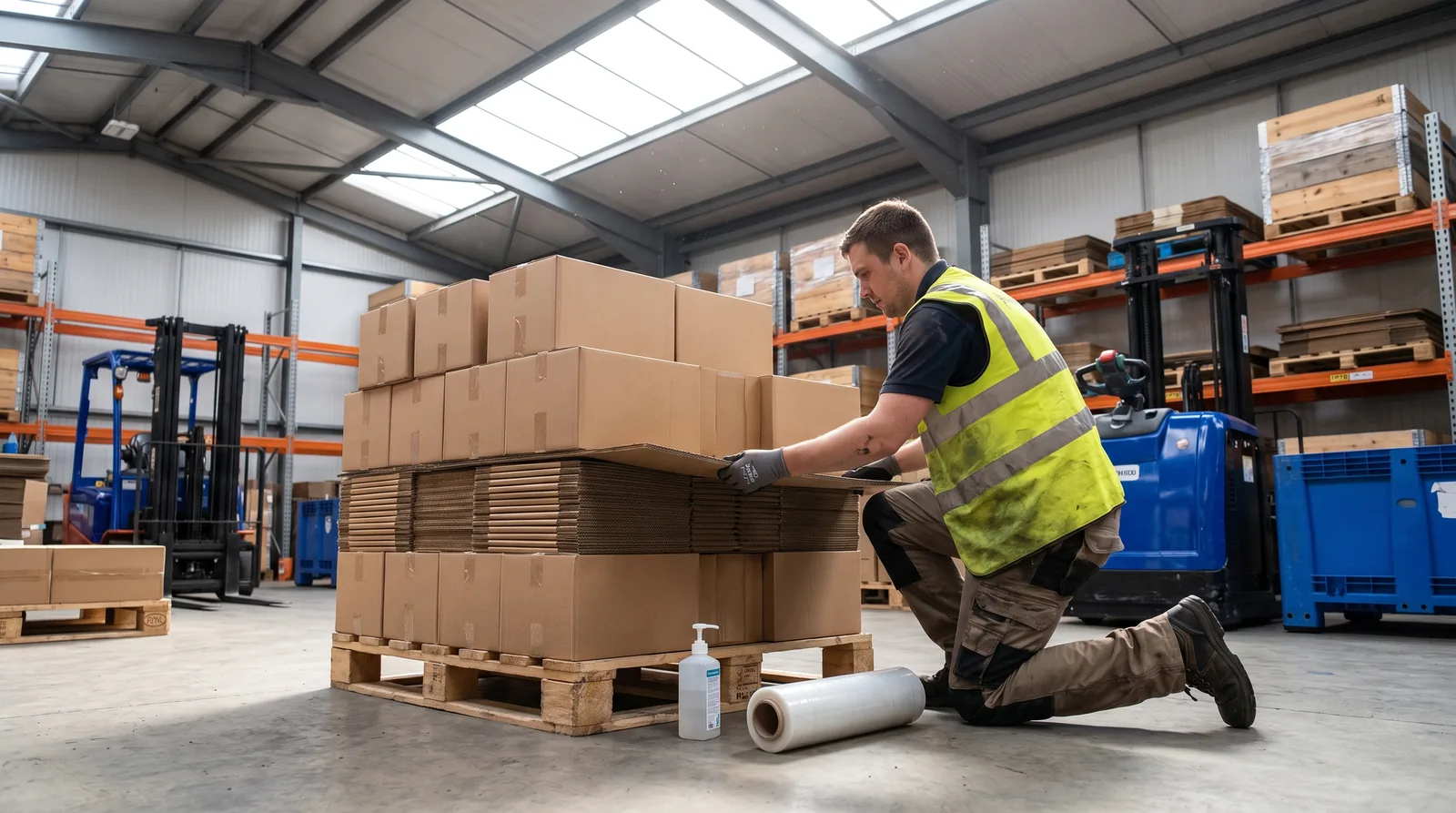
Lift capacity is limited by construction, and on top of that the pallet has to be wheeled by hand across uneven ground. In practice a light, stable pallet unloads without difficulty, while a heavy or badly balanced one can be awkward even when it formally fits the capacity. So for deliveries to addresses without a dock it is worth splitting goods into smaller units at the packing stage. The differences between pallet types are covered in euro versus industrial pallets, and preparation rules in securing a pallet for export.
Booking in: without it the delivery fails
Tail-lift deliveries need the receiver present, because nobody leaves a pallet on a pavement without a signature. So we agree a time window and a phone contact before the vehicle sets off. Many UK warehouses and shops work to booking systems, described in booking in at UK warehouses. A failed first attempt means another journey, so a quarter of an hour spent agreeing the slot pays for itself several times over.
When a different delivery model suits better
For a single pallet to a difficult address it is sometimes more sensible to use a dedicated smaller vehicle than to squeeze the drop into a line-haul route. With several deliveries to private addresses it is worth considering distribution from a local UK buffer, for example our Milton Keynes warehouse, from which we run smaller vehicles. A comparison of models is in pallet courier, groupage or dedicated transport, and the service basics on the groupage LTL page.
Tail lifts and liability for the goods
Tail-lift unloading is a moment of raised risk: the pallet descends to street level and is then wheeled by hand across a surface nobody controls. So two things are worth attention on this kind of delivery. First, unit stability: a well-wrapped pallet with no overhang survives the manoeuvring, while a loosely wrapped one collapses at the first kerb. Second, confirming the condition of the goods at handover. If the receiver sees damage, the note is claused there and then rather than the next day; the rules are described in claims and damage reports.
Have a delivery to an address with no dock in the United Kingdom? Send the postcode, pallet weight and access conditions through the quote form and we will match a tail-lift vehicle and a realistic date.