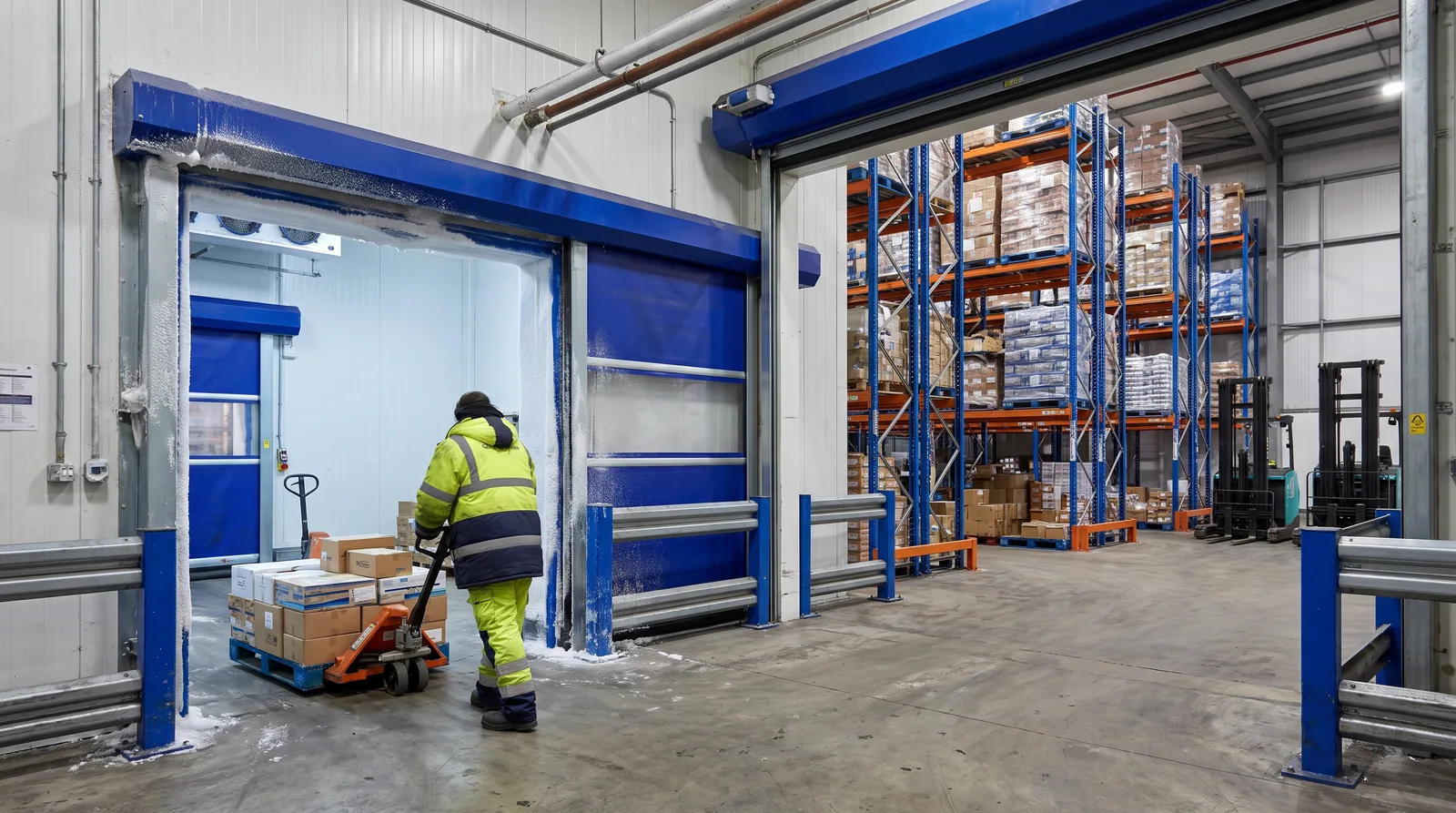
Multi-temperature storage is holding goods at several ranges from one operation: ambient for dry goods, a chilled range and a frozen range. The food market normally works to roughly 2 to 8 degrees Celsius for chilled and about minus 18 degrees Celsius for frozen, but the range we can actually hold for a given consignment in Milton Keynes is confirmed before we take it in. We keep the cold chain and record it, so a mixed load does not have to be split across three sites.
Why three temperatures, and why together
A real food or FMCG load is rarely all one temperature. A single delivery can carry dry ambient goods, chilled dairy or produce, and frozen lines, each with its own safe range. Split that load across a dry warehouse, a separate chiller and a separate freezer and you add handovers, time and cost, and every handover is a chance for the chilled and frozen stock to sit out of range. Handling all three from one operation removes those handovers: the load is received once, sorted to the right temperature, and held there until it moves. For a consignee that runs to retail goods-in standards, an unbroken and recorded cold chain is not a nicety, it is the difference between the load being accepted or rejected at the gate.
The three ranges the market works to
| Range | Typical temperature | Typical goods |
|---|---|---|
| Ambient | room temperature, dry | tinned and dry grocery, packaged FMCG, non-perishables |
| Chilled | about 2 to 8 degrees Celsius | dairy, fresh produce, chilled ready meals |
| Frozen | about minus 18 degrees Celsius or below | frozen food, ice cream, long-hold frozen stock |
The chilled range around 2 to 8 degrees Celsius and the frozen range around minus 18 degrees Celsius are the standard reference points of the food market, not a statement of our own site parameters. The exact set point for a given product follows its own specification, so before we take a consignment in we establish what range it requires and whether we can hold it. If we cannot, we say so straight away rather than accepting the goods on a trial basis.
Keeping the cold chain unbroken
The whole value of temperature-controlled storage is lost if the chain breaks during handling. We receive chilled and frozen loads with the aim of getting them off the dock and into the right environment quickly, rather than leaving them standing. Product is held at its range while in store, and when it moves on it goes out at temperature. Because the ambient, chilled and frozen handling sits together, a mixed load is broken down and each part goes straight to its correct environment instead of the cold items waiting while the dry items are dealt with.
Recording temperature, not just holding it
A retailer does not only want the product kept cold, it wants proof it stayed cold. Temperature is recorded so there is evidence the product was held in range for the whole time it was with us. If a load arrives already out of range, that is caught at goods-in and flagged rather than quietly stored, because a product that lost temperature before it reached us is a food-safety decision, not something to hide. Where a temperature failure has happened in transit, the inspection and fit-or-unfit decision is the one described in the article on distressed load management.
Food and FMCG, and what we do not do
Multi-temperature storage matters most for the goods where temperature is a safety and compliance issue, not just a quality one. Food and FMCG run to FSA and HACCP principles, where holding the correct temperature and being able to show it are part of the consignee standard. We mark the boundary straight away: we do not take medicinal products into storage, because handling them requires authorisation under Good Distribution Practice (GDP), which we do not hold. Our food handling is covered in the article on storing and handling food in a UK warehouse, and the dedicated chilled side in the article on cold storage.
Where we do it
We handle ambient, chilled and frozen goods at our Milton Keynes warehouse, running 24/7 between London and Birmingham, within our warehousing and cargo handling services. Multi-temperature storage sits alongside cold storage and food handling as part of the full Milton Keynes value-added service.
Sources
- Food Standards Agency: HACCP and food safety for businesses
- Food Standards Agency: chilling and temperature control of food
- HSE: warehousing and logistics, safe handling
Have a mixed food or FMCG load that needs ambient, chilled and frozen kept apart and in range, from one site in the UK? Describe it in the contact form and we will store each part at its correct temperature and keep the cold chain recorded.