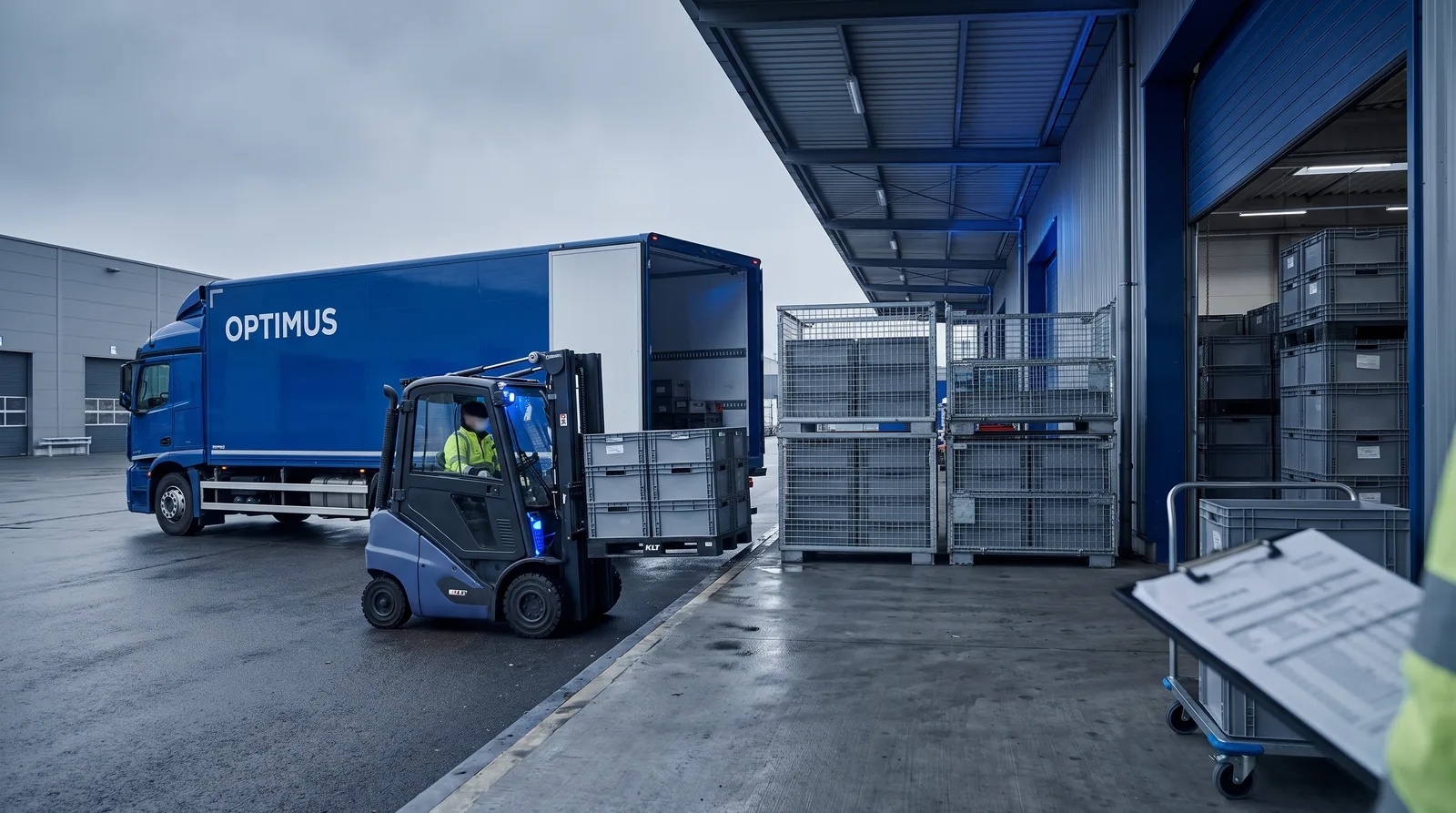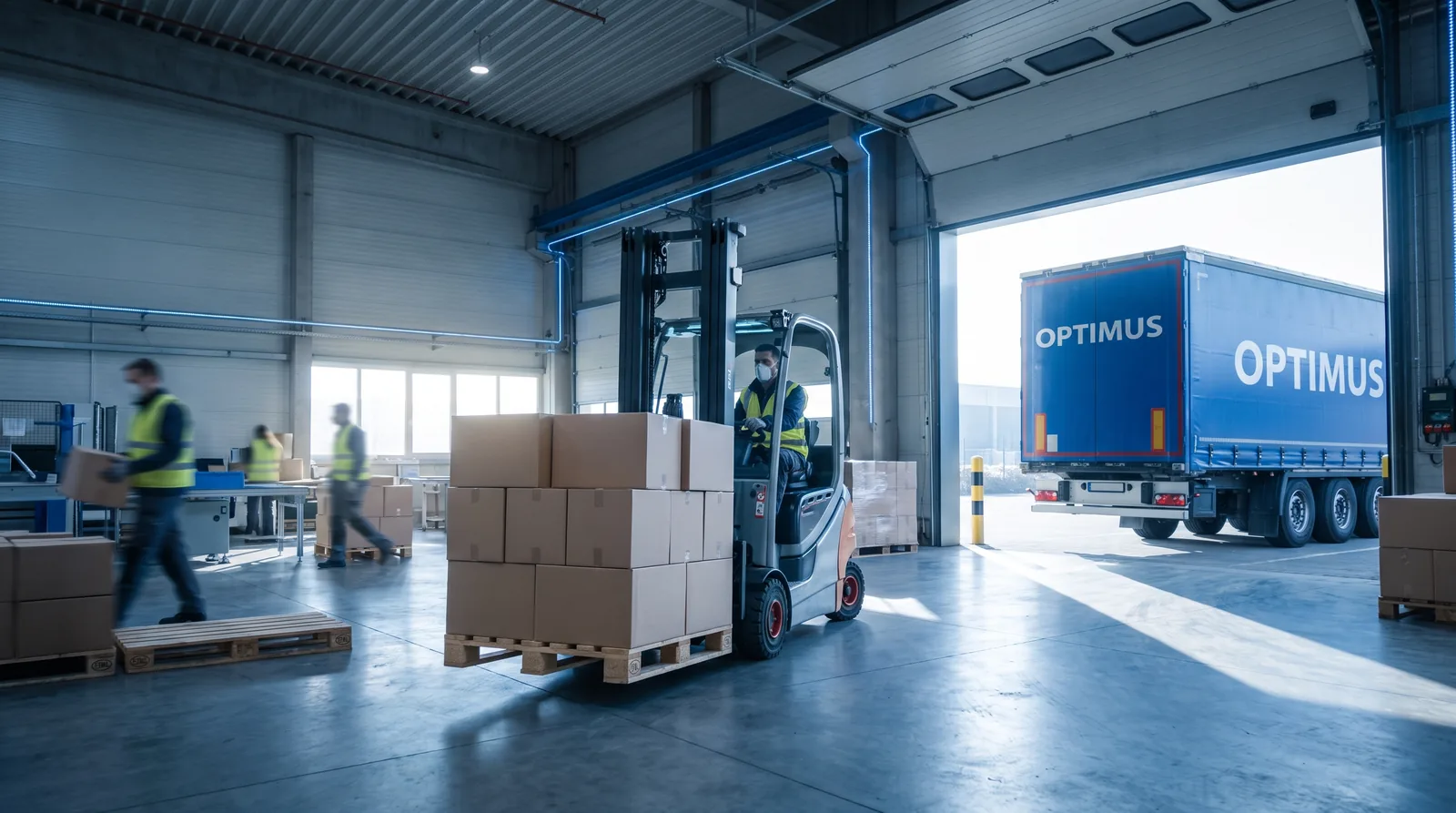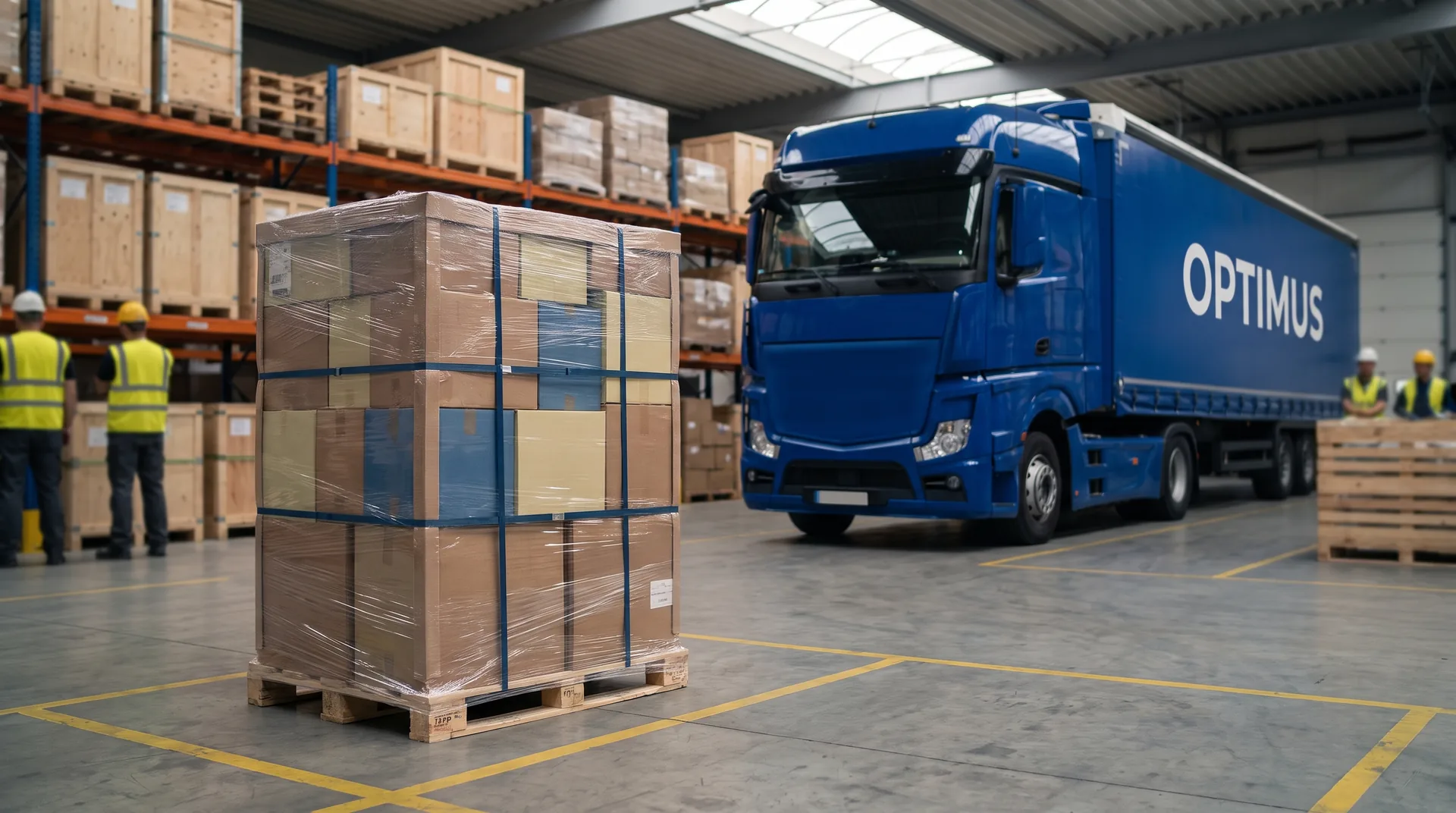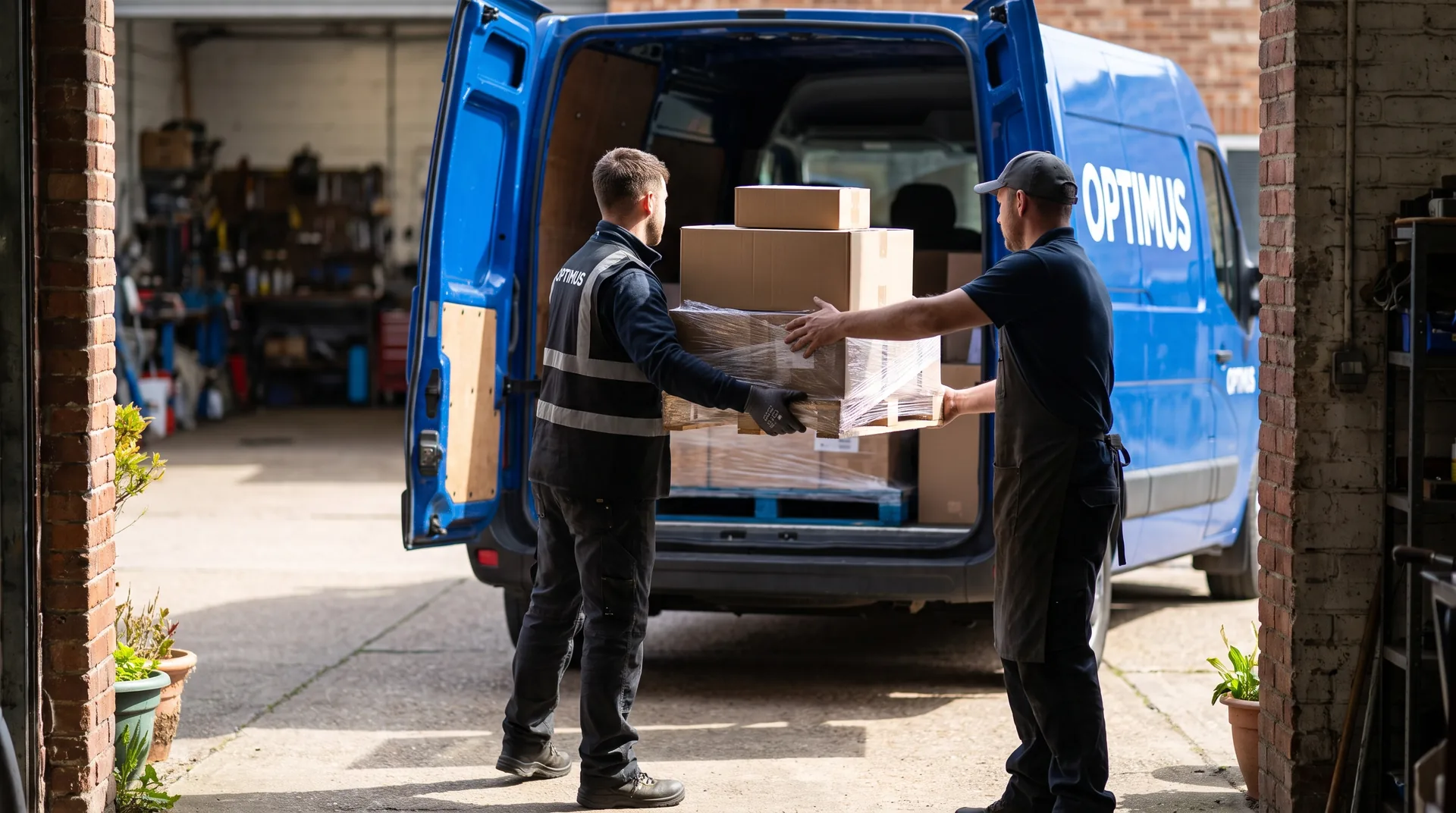
An envelope or a single small carton travels fastest by courier, and we say so plainly: our transport starts at one pallet. Small B2B consignments, sample sets, pilot batches and a few cartons ahead of a full order, we carry in consolidation once packed onto a pallet, with full customs and document handling.
Honest about scale: courier versus pallet
Below a certain size the courier networks cannot be beaten on cost or speed, because small parcels are their core product. The sensible threshold sits where a shipment stops being a parcel: weight climbs into the tens of kilograms and beyond, several cartons head to one consignee, or the goods are fragile, valuable or need proper clearance with a commercial invoice and a specific tariff code. Then a pallet in groupage wins: the goods are rigidly secured, they travel in one vehicle rather than through several sorting hubs, and the paperwork is run by one team from loading to delivery. The line runs where the cartons fill a full layer of a pallet or exceed the weight or size limit for a single parcel; we take it apart in when a parcel shipment should become a pallet.
Samples and customs clearance
A commercial shipment of samples is still an export and an import. An invoice is needed, or for free-of-charge samples a pro forma invoice with a realistic value for customs purposes, plus a goods description and a tariff code. The rules provide relief for samples of negligible value, but whether it applies depends on the nature of the goods and how they are marked, so we treat it as an option to confirm rather than a certainty. The foundation is correct classification, described in the CN and HS tariff code.
When the sample has to come back
For samples and display items that return to Poland after a customer presentation, temporary admission on an ATA carnet is worth considering. The document avoids duty and import tax provided the goods return unchanged. It suits demonstration equipment, sample boards and show units, and suits less well samples that stay with the counterparty. We describe the mechanism in what an ATA carnet is. Watch the trap: goods sold during the visit need a normal import entry rather than carnet discharge.
How to pack a small consignment onto a pallet
- Stack cartons evenly within the pallet footprint, with nothing overhanging the edge.
- Secure the whole with film and tape, heavier cartons at the bottom.
- Label the pallet: shipper, consignee, carton count, order number.
- Attach a packing list, and with several product lines break down the contents of each carton.
- If the pallet is low, consider edge boards, because a light load slides more easily.
The practical rules are collected in how to prepare a pallet for the UK.
When the batch is urgent
Small shipments are often the most time-critical, because a purchasing decision on the other side depends on them. If the deadline will not tolerate the standard cycle, express is the alternative, described in express LTL or a dedicated van. It is worth assessing soberly: with one pallet the gap between options is often smaller than expected, and certainty of arriving before a commercial meeting is usually worth more than the saving.
From sample to regular deliveries
Small consignments are usually a beginning: the sample set is followed by a pilot batch and then by regular orders. The advantage of entering groupage from the first pallet is continuity: the same documents, the same team and the same procedures grow with the volume, without changing operator halfway. How our groupage LTL from one pallet works is described separately, and the whole route into the British market in a first UK export for a small business.
B2B versus shipping to a consumer
Two situations look similar but carry different tax and documentary consequences. Sending a sample to a company is B2B trade. Sending the same product to a private individual falls under different rules, particularly on the tax side. We take the differences apart in B2C versus B2B differences in UK clearance.
Sources
Have a sample set or a pilot batch to send? Describe the shipment through the quote form and we will advise honestly: a pallet with us, or a courier if that is the better route.