SENT is the Polish system for monitoring road and rail movements of goods, introduced by the act of 9 March 2017. It covers goods treated as sensitive, among them fuels, denatured alcohol, dried tobacco and certain oils. Movements are registered on the PUESC platform and the vehicle must transmit position data throughout the journey.
Which goods are covered
The catalogue lists commodity groups defined in the act and implementing rules, identified by tariff code. It includes motor and heating fuels, oils, denatured alcohol, dried tobacco and further categories added as risks are identified. The catalogue changes, so we check whether a specific commodity falls within it against the current rules and its tariff code, not its trade name. How to establish the code is covered in finding the CN and HS tariff code.
When the obligation arises
Monitoring applies to movements starting in Poland, ending in Poland and transiting the country. For a carrier running from Poland to the islands that means the duty attaches to the domestic leg, wherever the load eventually ends up. On consolidation from Czechia, Slovakia, Austria or Hungary through a Polish hub each leg has to be considered separately. The international context is set out in SENT and international transport.
Position reporting: the core of the system
A filing alone achieves little if nobody can verify that the goods actually took the declared route. So the carrier must transmit vehicle position throughout the movement on Polish territory. A gap in transmission is visible and treated as a failure, even where the goods arrived without incident. In practice this is the most common source of problems: not a missing device, but a flat phone, a closed app or a long stretch without signal.
Role allocation and what happens when it is confused
The system assumes three parties working together: consignor, carrier and consignee. Each is responsible for its own part and its own failures. The most common mistake is assuming that ordering transport hands the whole filing to the carrier. It does not: goods data comes from the consignor and confirmation of receipt from the consignee. The practical route is set out in a SENT registration step by step.
Roadside checks and penalties
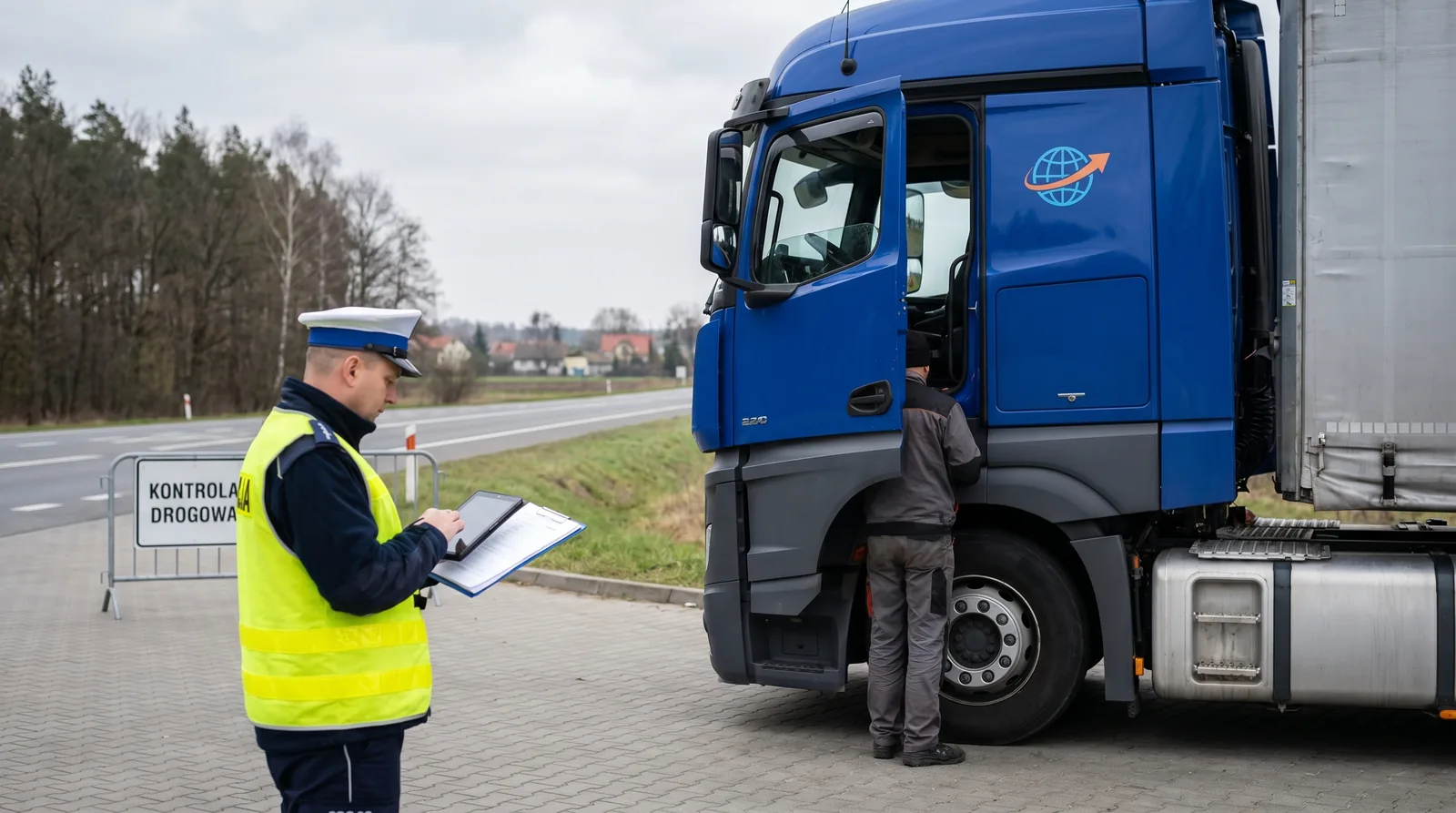
Enforcement officers can stop a vehicle, compare the filing with what is actually on board and direct the vehicle to a designated place until matters are clarified. The act provides financial penalties for a missing filing, for data that does not match reality and for failures around position reporting. We do not quote amounts, because they depend on the breach and the party, and the rules are amended from time to time. We check them against the current text before accepting work on sensitive goods.
SENT alongside other duties on sensitive goods
Monitoring sits on top of other regimes. Excise goods have their own document and guarantee system, covered in alcohol transport and the EMCS system. Dangerous goods fall under ADR, which we discuss in ADR basics. Export outside the EU requires a customs declaration, described on our customs clearance page. These duties do not replace one another, so a single movement can be subject to several at once.
Preparing the business before the first job appears
Monitoring obligations are best dealt with away from time pressure, because they all require registration and grants of authority, and none of that happens instantly. Preparation comes down to four things. First, registering the business on the platform and assigning the people who will file, with a defined scope of authority. Second, deciding internally who owns this part of the work, so the process does not stop when one person is on leave. Third, reviewing the product range against tariff codes and identifying which lines fall under monitoring. Fourth, agreeing with the carrier how data and the reference number will be exchanged, so the driver does not learn about the obligation at the loading bay. Those four steps are done once and then repeated in minutes for each shipment. The practical filing route is described in a SENT registration step by step.
Sources
- Journal of Laws: the act of 9 March 2017 on monitoring road and rail movements of goods (Dz.U. 2017 item 708)
- PUESC: SENT filings and entity registration
This is general information, not legal advice. Planning a movement that may fall under monitoring? Send the tariff code and the route through our quote form and we will check the obligations and prepare the filing alongside the transport.