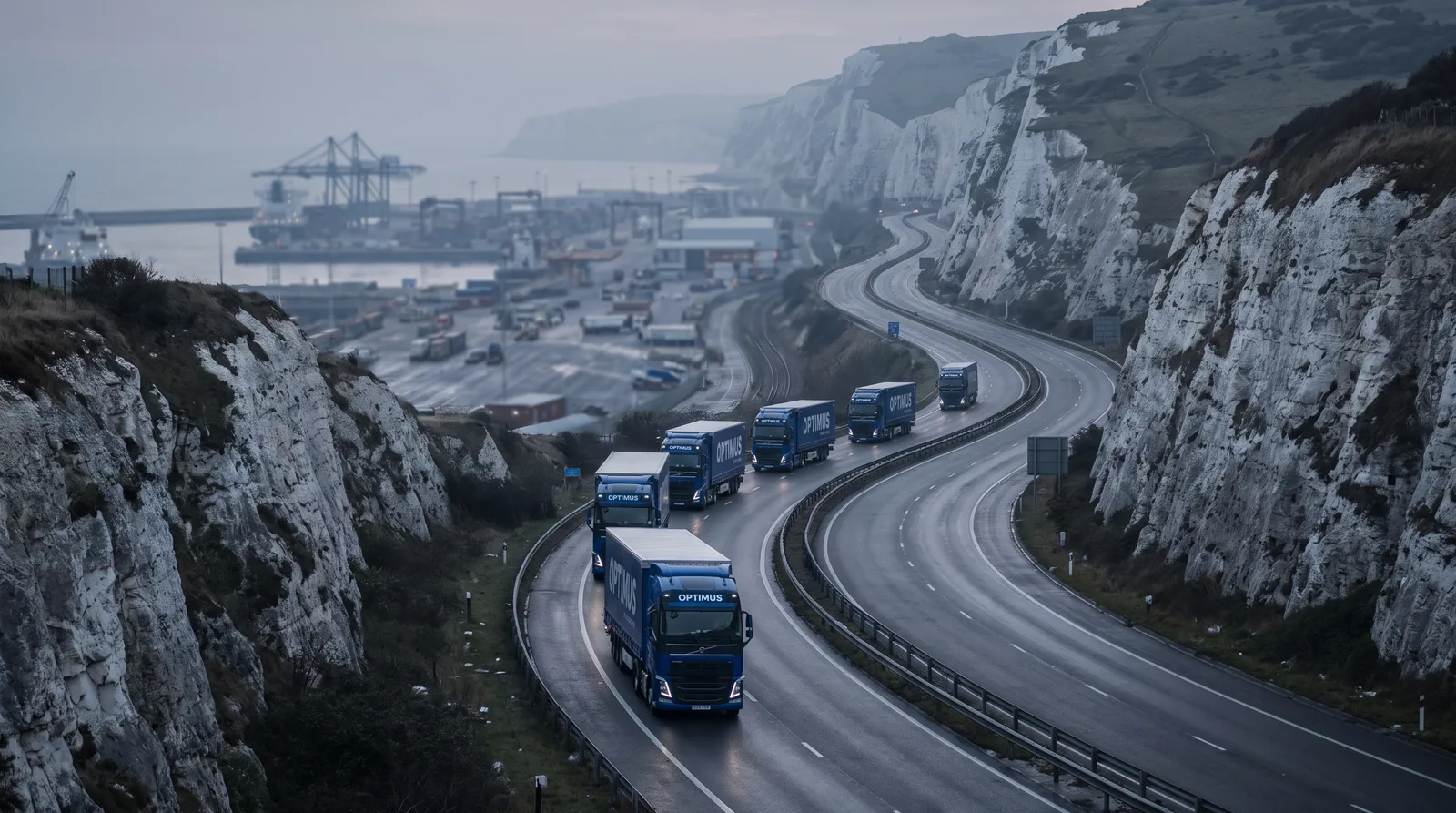
SENT is the Polish system for monitoring the carriage of sensitive goods, introduced by the Act of 9 March 2017. It covers the domestic leg of an international movement, so a vehicle running from Poland to the United Kingdom with goods inside the system needs a registration in PUESC, a reference number and live geolocation data until it leaves the country.
Why a carrier on the UK route cares about this at all
Because the system applies to the territory of Poland, not to the direction of travel. If monitored goods run from a plant near Poznan to a consignee in Birmingham, the leg up to the border is covered by SENT exactly as a domestic movement would be. That surprises senders who think in export terms: since the goods are leaving the country, Polish procedures seem irrelevant. They are not, and a missing registration or out of date data risks the vehicle being stopped and penalties which, on international work, cost not only money but the delivery date.
Which goods it applies to
The list of sensitive goods is set by legislation and implementing acts and covers, among others, certain fuels and oils, denatured alcohol, dried tobacco and selected products under specific fiscal supervision. The scope is amended from time to time, so we check the classification of the actual goods before shipping rather than relying on memory. In practice we meet it most often with industrial chemicals, alcohol-containing products, and loads a customer regards as ordinary trade goods which by commodity code fall inside the list. That is why establishing the code early matters, covered in our text on the customs tariff code.
Who registers what
Duties are split between three parties. The dispatching party registers the movement before it starts and receives a reference number. The carrier completes the registration with vehicle and journey data and is responsible for transmitting geolocation data during the run. The receiving party confirms receipt, though on a movement to another country that role looks different from domestic traffic. The driver is responsible for the movement running with a valid reference and working position transmission. The division of roles is covered in more depth in our texts on monitoring transport in Poland and on SENT registration step by step.
Geolocation: the part people forget
The registration alone is not enough. The vehicle has to transmit position data throughout the carriage on Polish territory, using a device or an application meeting the requirements. A break in transmission, a phone switched off, a flat battery or a closed application can be treated as a breach even where the carriage itself was perfectly correct. In practice that becomes part of the driver's routine: checking transmission at loading, after every stop and before leaving the country. Trivial, until it ends in an inspection.
Keeping data current: a change of route changes the registration
The registration has to match reality. A change of vehicle, a change of delivery point, a change of carrier details or a transhipment all require updating. On UK traffic such situations arise more often than you might expect: a vehicle breaks down, a load is transferred, a consignee changes address. The rule is simple: if what was registered changes, the registration is corrected before the movement continues, not after arrival.
SENT alongside excise and other systems
SENT does not replace excise or customs procedures and should not be confused with them. Excise goods have their own movement regime with an electronic document, and export to the United Kingdom separately requires an export declaration and a full document set on the British side. One movement can fall under several regimes at once, and each then has to be handled on its own terms. Alcohol movements are covered in our text on alcohol transport to the UK, and the customs side in the article on EU export clearance.
How we run this in practice
When taking a booking we ask about the nature of the goods and the commodity code, to establish whether the movement is monitored. If it is, we agree the split of duties with the sender before loading: who files the registration, when the reference number is passed over and what vehicle data is needed. The driver receives clear instructions on position transmission. On groupage, where a dozen or more consignments share a vehicle, one monitored line is enough to bring the whole run into scope, so we ask every sender separately. Groupage carriage is described on the groupage LTL page, and chemical loads on the ADR and chemicals page.
What this means for scheduling
The registration has to exist before carriage starts, not during it. On next-day shipments that can be a genuine bottleneck, particularly where the data needed for registration is only being created. So for goods inside the system we ask for a heads-up at enquiry stage rather than on the day the vehicle arrives. This is general information rather than legal advice; confirm the scope of obligations in current legislation and on PUESC.
Sources
- PUESC: Polish electronic tax and customs services platform
- PUESC (Polish National Revenue Administration): carriage of goods monitored under SENT
Shipping goods that may fall under monitoring? Give the type and commodity code through the quote form and we will check the obligations and plan the carriage together with the formalities. Border work is collected on the border procedures page.