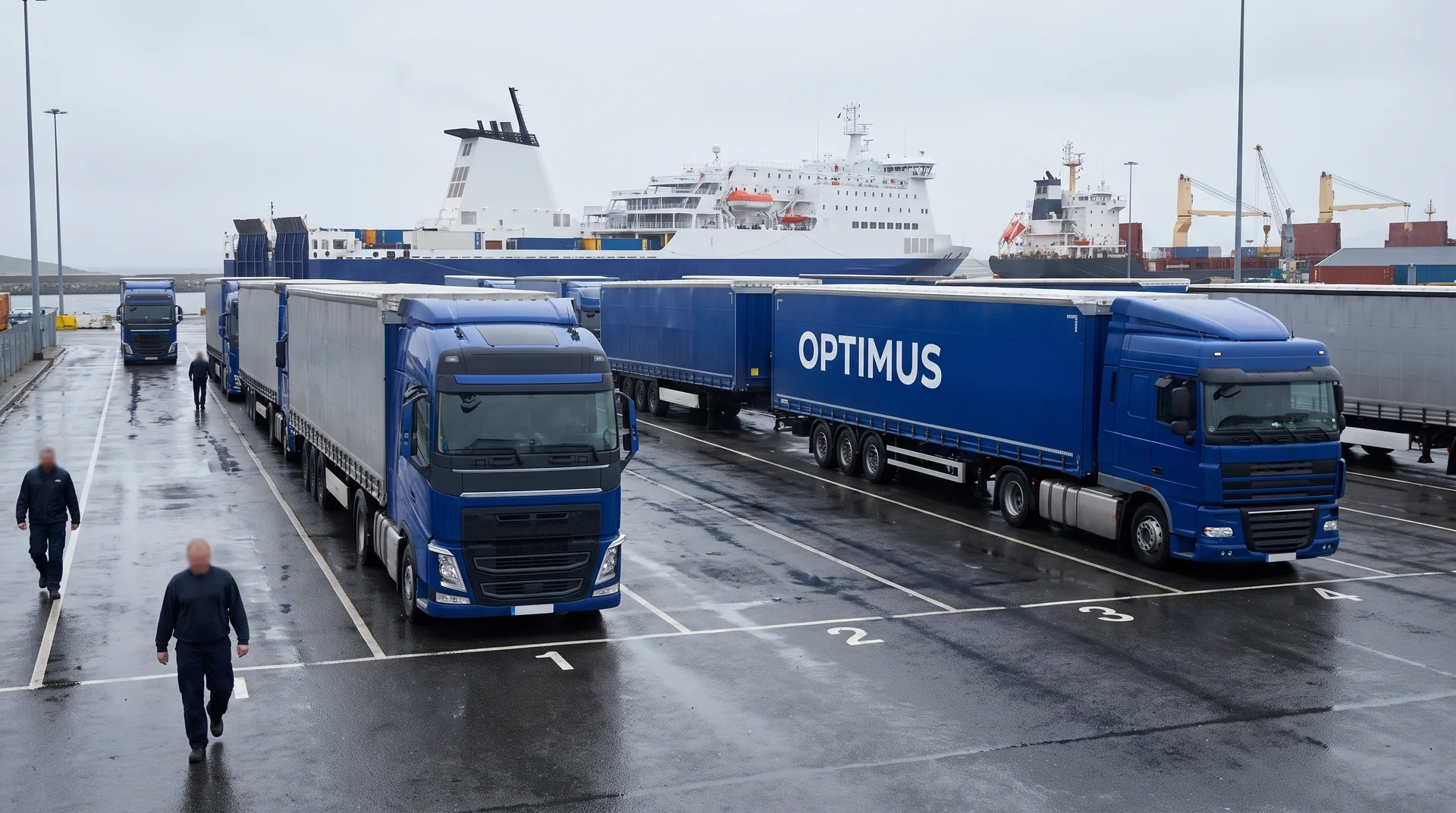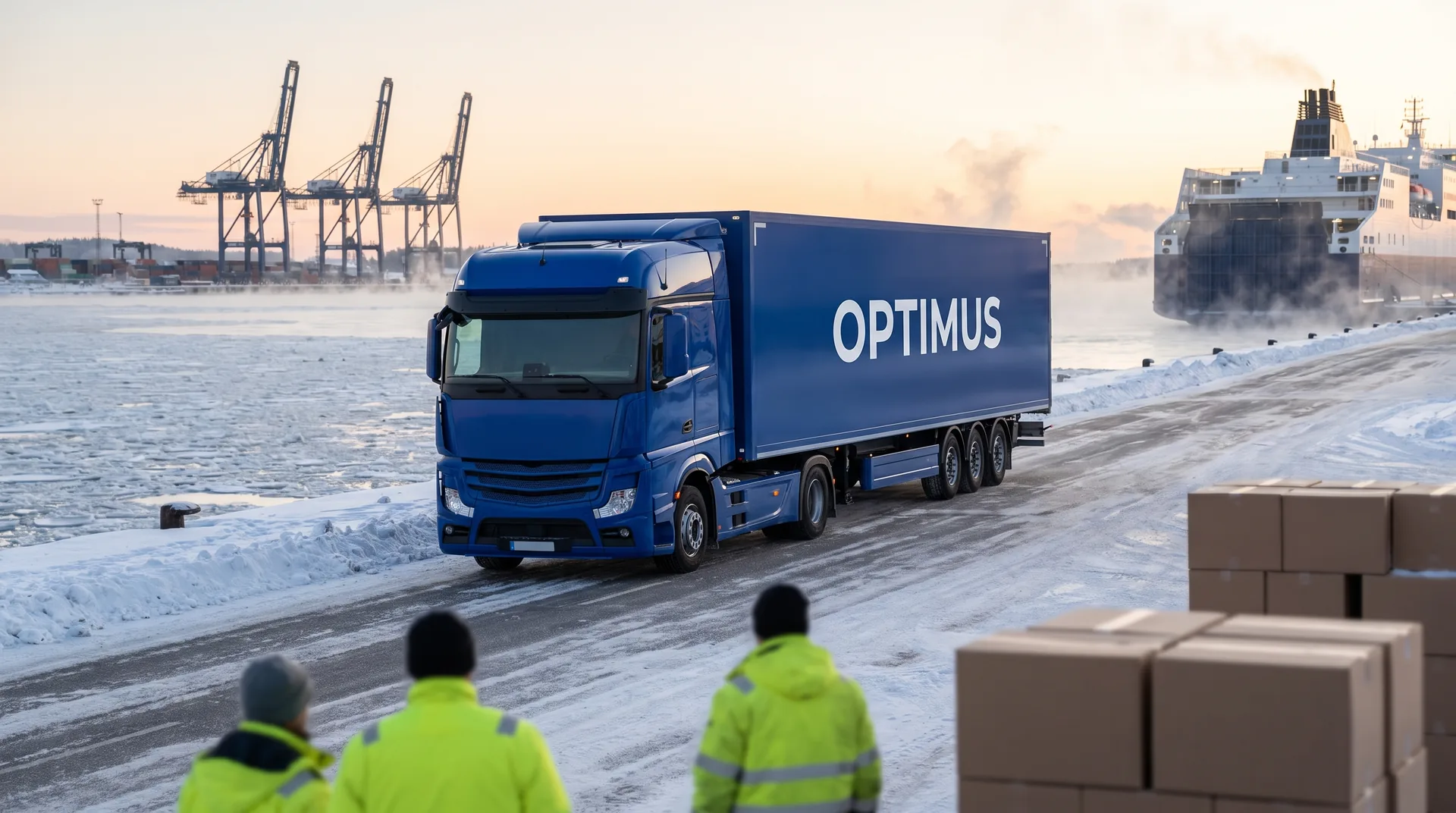
Consolidation via Poland pays off for smaller lots from Sweden and Denmark: when the load does not fill a truck and the deadline has a few days of slack. Goods cross the Baltic by ferry to a Polish port or drive from Denmark through Germany, join UK groupage at the hub and continue with customs formalities handled within the carriage.
How the goods reach the hub
From Sweden the natural way is a Baltic ferry crossing: among others from Ystad and Trelleborg to Świnoujście and from Karlskrona to Gdynia. These are short sea legs served by freight ferries, followed by a road run to the hub. From Denmark, depending on whether the cargo sits in Jutland or on Zealand, goods travel overland through Germany or use the strait crossings. Geography helps here: both countries sit close to our routes and ports. For Finland the same pattern looks different, because the choice lies between a crossing to Estonia with a run down the Via Baltica and a longer ro-ro sailing to a Polish port; we compare both in Finland-UK transport: time, routing and costs.
When the numbers work in your favour
- Lots of one to a few pallets, which in a dedicated truck would pay for empty space.
- Repeat but irregular shipments: two pallets one week, five the next, without steady volume for a full truck.
- A deadline with a few days of slack, enough to match the run to the hub with the consolidated departure.
- Third country goods already cleared into the EU that pass through warehouse consolidation anyway.
When a direct run is better
A full truck from Sweden or Denmark to England does not need an intermediate hub: consolidation adds a transhipment and a stage that bring nothing at FTL scale. The same goes for very tight deadlines where every hour counts. Then we propose dedicated transport. We draw the line between the two in FTL or LTL.
What you gain beyond the price
In consolidation the export declaration, border formalities and the crossing to the UK are part of the carriage, not a separate project on the consignor side. We collect the documents before departure, check their consistency and take the goods to the consignee door in the UK. The full set of formalities is described in our pieces on EU export clearance and on the GMR.
What we do not promise
We do not quote fixed transit times or timetables up front: they depend on ferry space, Baltic weather and the consolidated departure schedule. You get specifics, with dates and a price, in the quote for your particular load.
How many transhipments a pallet goes through
Consolidated via Poland, a pallet from Sweden or Denmark usually sees two transhipments: the first at our hub, where it joins the UK load, the second on the British side if the delivery runs through the cross dock in Milton Keynes. Every transhipment is a moment when the packaging is inspected but also handled, which is why pallets from this corridor are worth building for the road rather than for your own racking: a stable stack, film pulled down onto the pallet itself, a label on two adjacent sides.
Where this route makes no sense
Consolidation via the Polish hub stops paying off in three situations. The first is a load close to a full truck: we draw the line at roughly a third of a trailer, around twelve pallets, above which a dedicated run is worth pricing. The second is a consignor in northern Sweden, for whom the run to a Baltic port alone can be longer than the rest of the journey. The third is a deadline with no slack: a groupage truck waits for the next scheduled line departure, and that rhythm cannot be accelerated for one pallet.
What to prepare before collection
- An exact loading address with ramp working hours and the person releasing the goods.
- Invoice and packing list complete, with weights and dimensions matching reality.
- EORI numbers of both parties and clarity on who acts as the exporter.
- Whether the pallets are exchangeable or one way: it changes how the British consignee receives them.
Sources
- GOV.UK: import goods into the UK, step by step
- European Commission: customs union, export formalities
- GOV.UK: get a Goods Movement Reference (GVMS)
Groupage in Sweden or Denmark and a consignee in the UK? Write through our contact form and we will price both options: dedicated and consolidated. The scope of service is on our services and customs clearance pages.