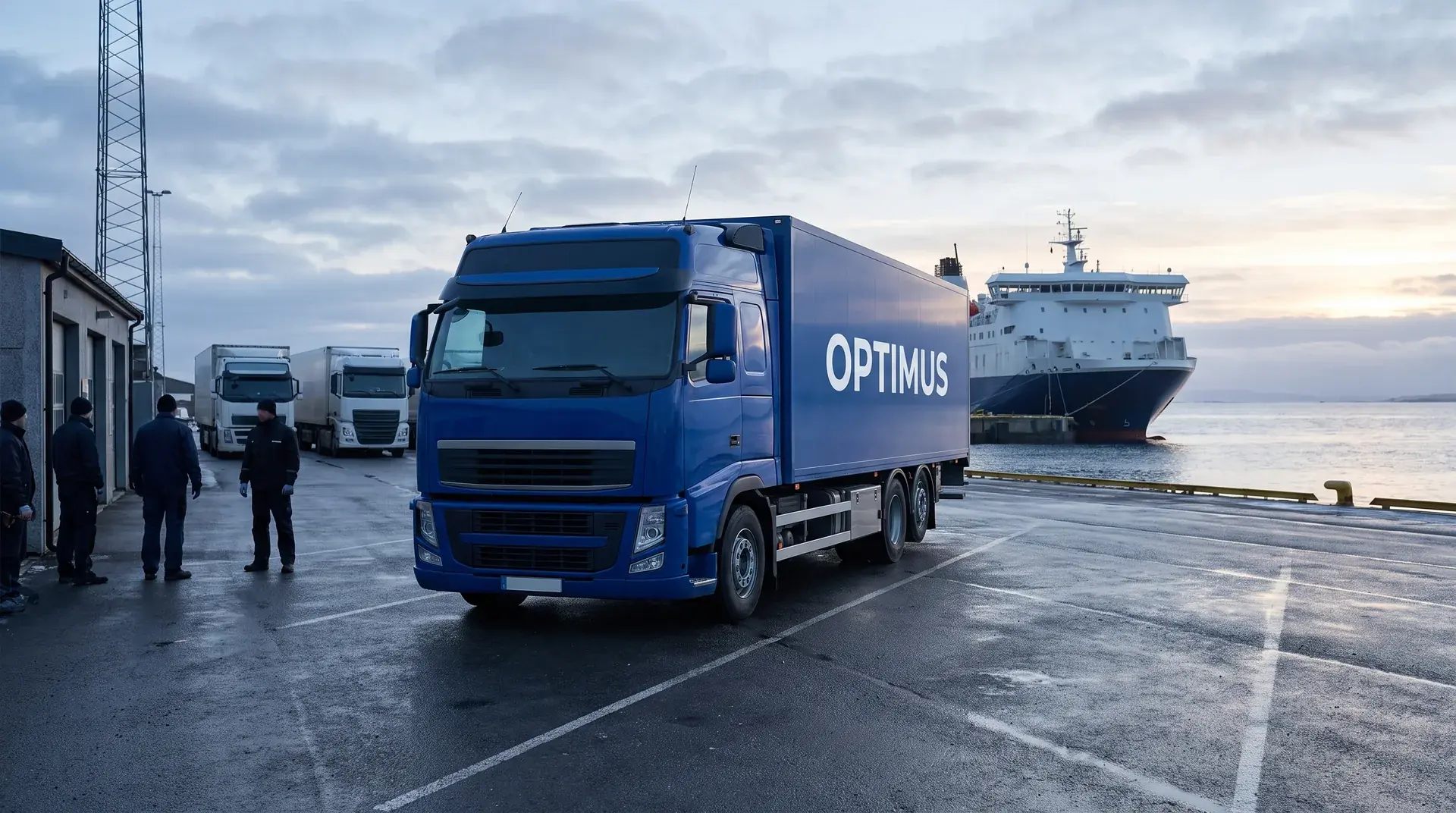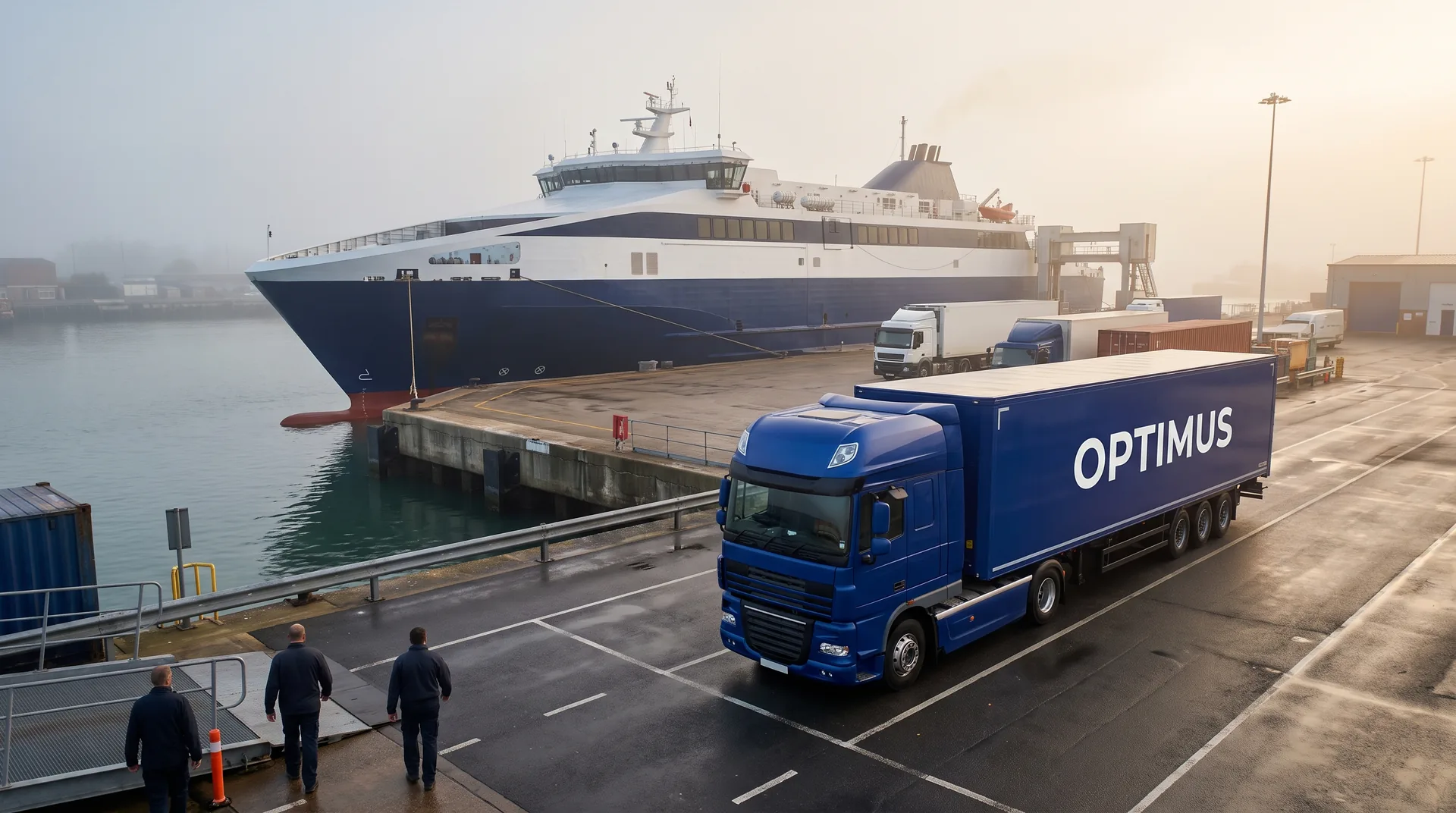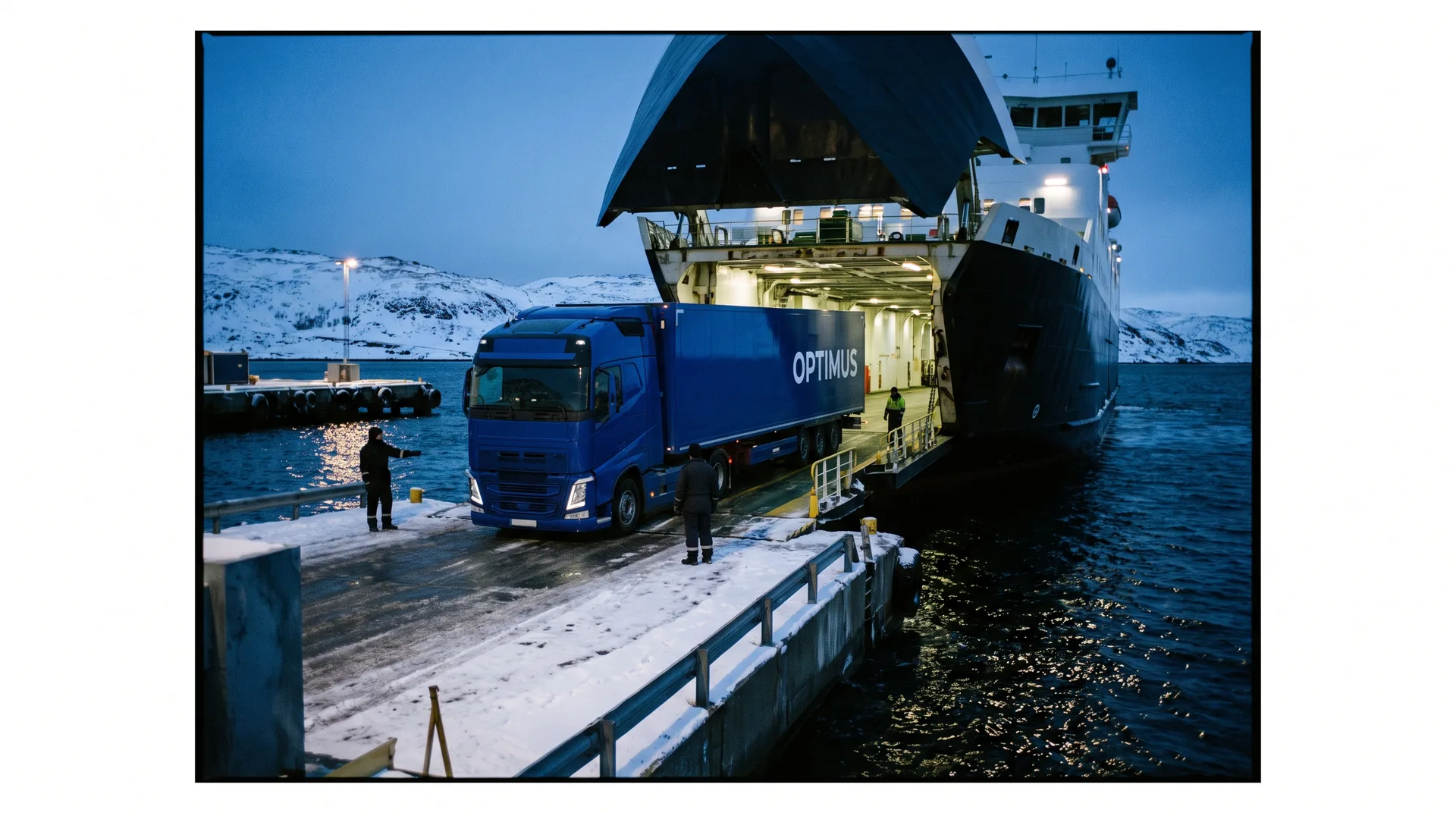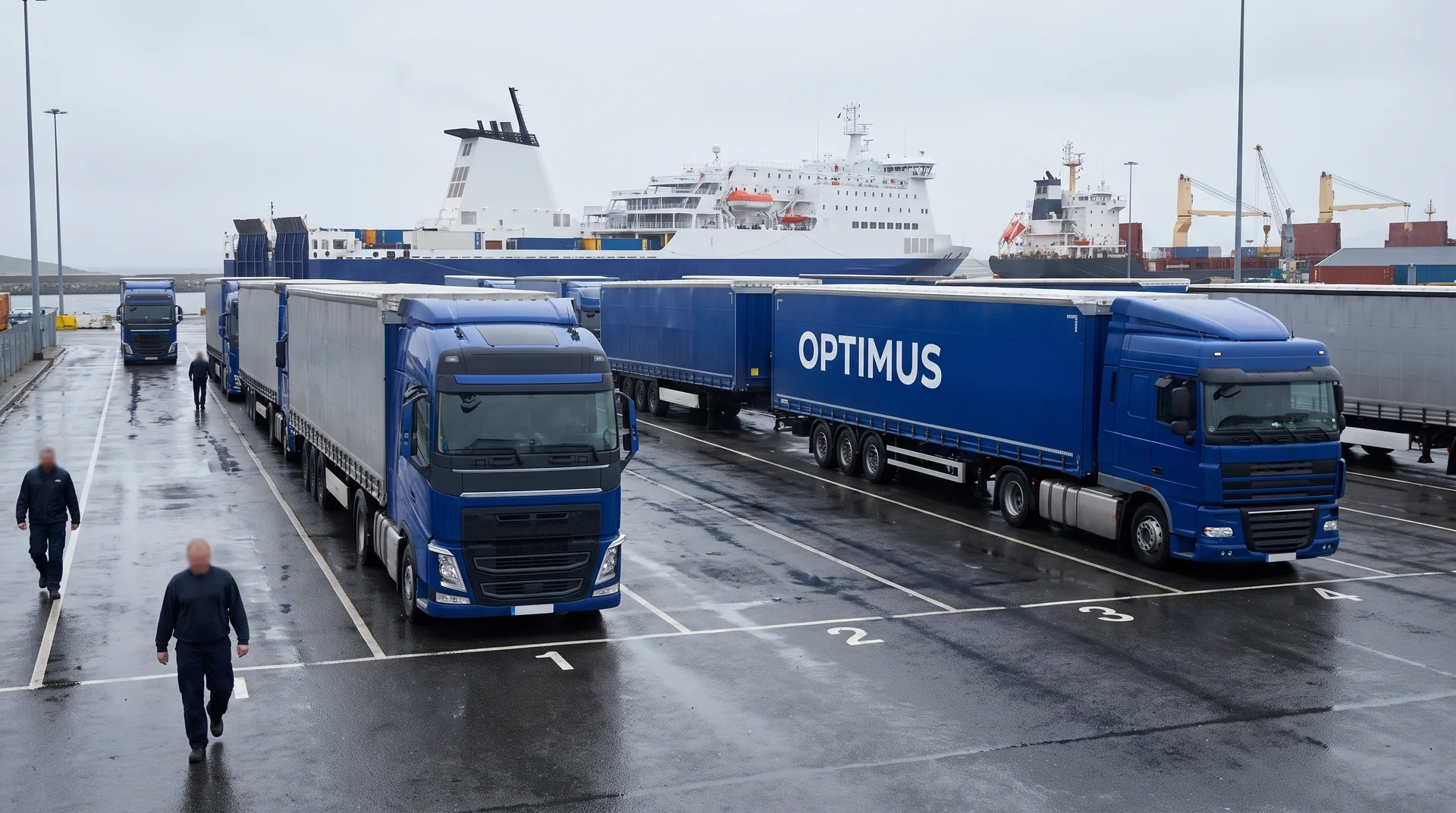
We show an island crossing as its own line in the quote, because it is a variable cost: it depends on the route, the vehicle class, the booking lead time and the season. Folding it into a base rate would mean averaging it up or down — and either way the client pays for something they cannot see. We publish no prices or ranges; they are always given for a specific job.
What drives the crossing cost?
- The route — a short strait crossing and a multi-hour sailing are entirely different rates.
- Vehicle class and dimensions — operators charge freight on vehicle parameters, not on cargo value.
- Booking lead time — space booked early is available; space hunted at the last minute may be unavailable at any price.
- Season — at the tourist peak, heavy vehicle capacity is squeezed by car traffic.
- Carriage format — accompanied or not, as described in our text on unaccompanied trailers.
Is the cost shared on groupage?
On consolidated carriage the crossing cost attaches to the vehicle, not to a single pallet — so it spreads across every consignment sailing on the same crossing. That is the only mechanism that makes delivering one pallet to a remote island economically sensible at all. The consequence is that the unit cost depends on how many shippers travel together — which in turn depends on when the job is booked. A job booked early joins a flow; a job booked at the last minute needs a run of its own. Groupage rules are described in our text on groupage LTL from one pallet.
Postcode zones: where surcharges come from
Quite apart from the crossing itself, deliveries in northern and western Scotland and on the islands are treated in carriage practice as higher-cost areas. The postcode zones concerned are ZE (Shetland), KW (Orkney and Caithness), HS (Outer Hebrides), and parts of the IV, AB, PA and PH areas covering the north and west together with the islands. This is not an official charge or a tax — it reflects the real run, the driver hours and the low density of return loads. Every carrier defines its own zone list, which is why we always ask for the consignee's postcode before giving a date and a price.
Who bears the cost when a sailing is cancelled?
Waiting time and rescheduling terms follow from the job conditions, and we settle them before departure rather than after the event. Our practice is to describe the cancelled-sailing scenario in the job confirmation: where the cargo waits, who informs the consignee and how waiting time is accounted for. That is more honest than silence, because on island routes a cancelled sailing is not an accident but a foreseeable risk. We cover it more fully in our text on what happens when a storm cancels a crossing.
How to read an island delivery quote
A quote has several layers and they are worth separating: road freight from Poland, clearance costs, the island crossing, any local delivery on the island side, and extras such as a tail lift or storage. A client who can see those layers can decide consciously — for example dropping the island leg and collecting at the mainland port. General principles are described in our texts on how to read a carrier quote and what builds the price of pallet transport.
What we do not do
We do not publish price ranges for crossings, because they vary between operators, routes and seasons — publishing them would be misleading. Nor do we bury the crossing cost inside a per-kilometre rate to make the quote look simpler. A simpler quote whose contents are unknown is convenient only for the carrier.
What to supply for a binding quote
- The consignee's island postcode and the place name.
- Pallet count, dimensions, weight and packed height.
- The deadline, and whether it is hard.
- Unloading conditions: ramp, forklift, whether a tail lift is needed.
- The nature of the cargo, including any ADR or required temperature.
Without a postcode and dimensions we can offer an indication at best, not an offer — and it is better to say so plainly.
Sources
- CalMac: commercial handling and freight booking rules
- NorthLink Ferries Freight: Northern Isles freight service
- List of postcode areas in the United Kingdom (ZE, KW, HS, IV, AB, PA, PH)
Want to know what a delivery to a specific island costs? Give us the postcode and cargo description in the quote form and we will break the cost into lines. Island destinations are gathered on the island transport page.