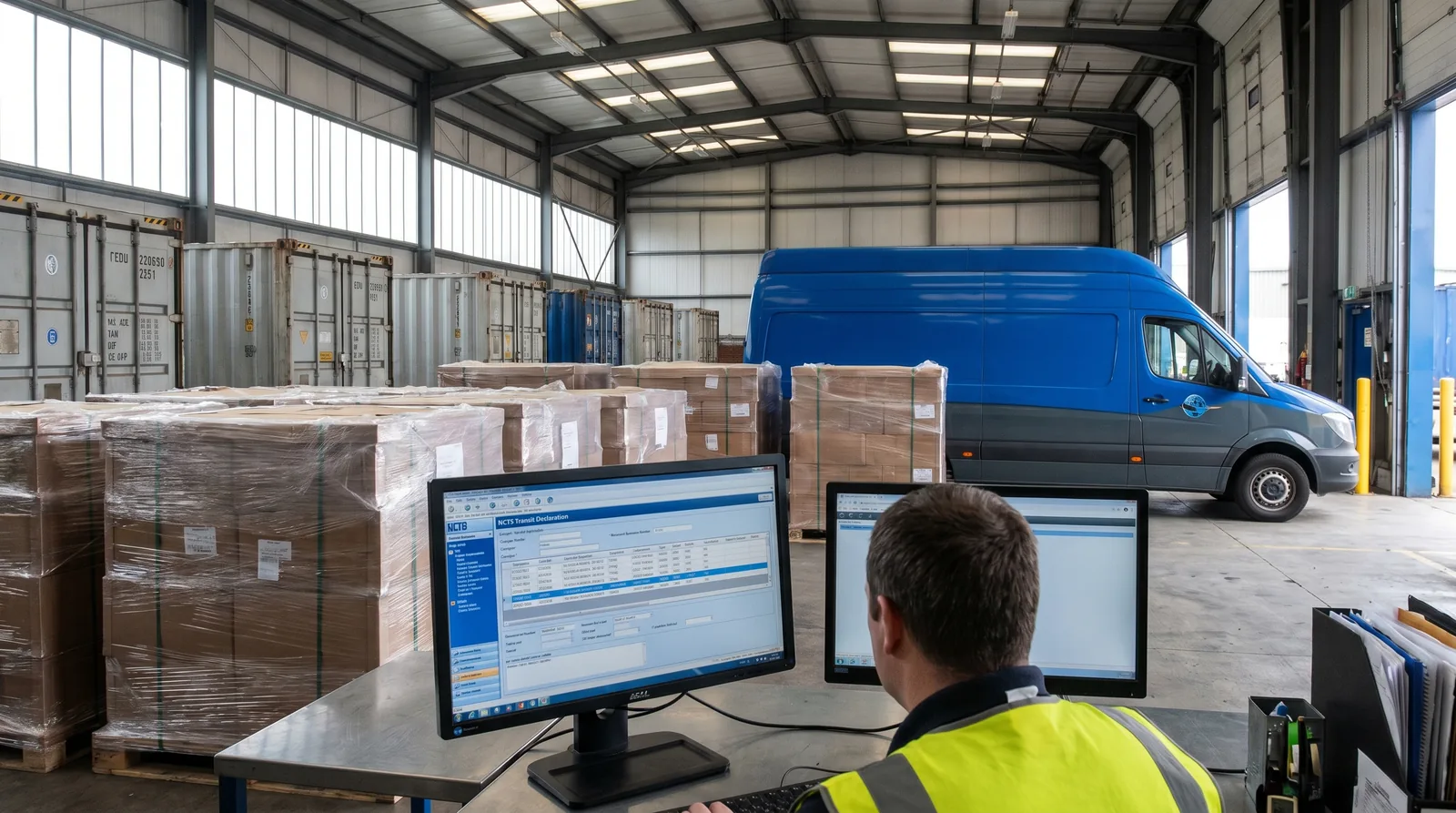
T1 and T2 are transit declarations lodged in the NCTS system. T1 moves non-Union goods, suspending duty and taxes until the office of destination. T2 covers Union goods moving across territory outside the Union. The choice follows the customs status of the cargo, not the direction of travel or the country of loading.
Where does transit come into a run to Britain?
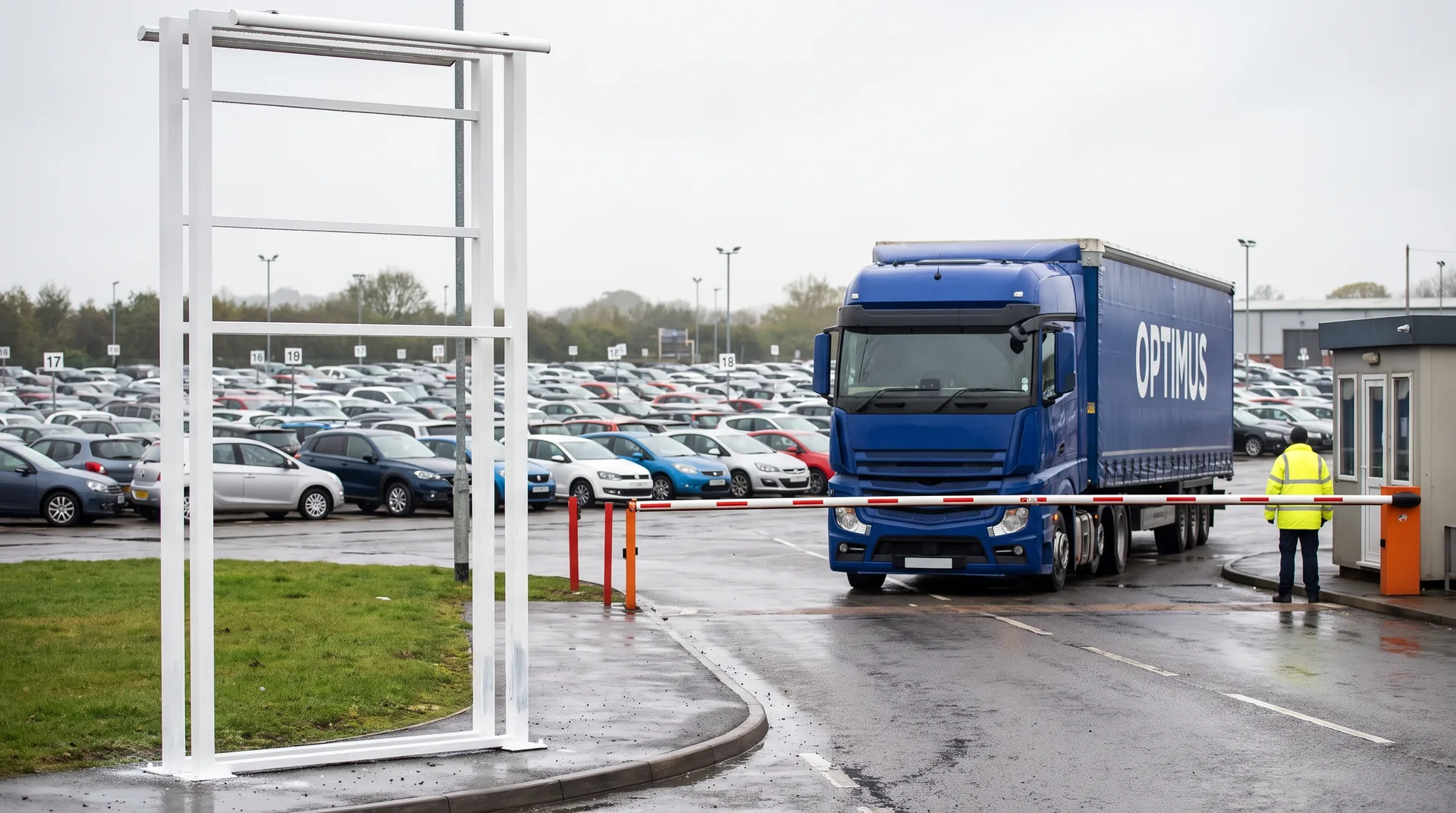
After Brexit the United Kingdom became a third country but stayed in the Common Transit Convention. That lets goods cross British territory, or travel inland, without clearing at the border itself, provided transit has been opened. The second familiar case is the route to Ireland across Great Britain, the land bridge: Union goods cross a third country and must prove they have not lost their status. The third is moving uncleared goods from a port to an inland warehouse.
T1 or T2: the simple rule
- T1: non-Union goods, for example brought in from outside the EU and not yet released for free circulation. Duty and taxes stay suspended until transit is discharged.
- T2: Union goods moving across territory outside the customs territory of the Union and keeping their status.
- T2L and T2LF: not transit declarations at all, but documents evidencing the Union status of goods; they are used instead of transit where proof of status is all that is needed.
Who opens transit and who carries the risk
Transit is opened by the holder of the procedure, usually a customs agent acting for the shipper or the carrier. It requires a financial guarantee covering the potential debt. That matters, because if transit is not discharged at the office of destination, a customs debt arises against that very guarantee. Chasing the discharge is therefore as important as opening the procedure, and it is not a box to tick after the fact.
How transit runs in practice
- The declaration is lodged in NCTS, an MRN is issued and a transit accompanying document with a barcode is printed.
- Customs seals are applied if the office of departure requires them; the driver must not break them.
- The goods travel within the set time limit and along the route stated in the declaration.
- The goods are presented at the office of destination or at an authorised consignee.
- The procedure is discharged in the system and the guarantee is released.
The usual problems
First, missing the time limit for presenting the goods, normally through a breakdown or a badly planned rest period. Second, a broken seal, which has to be reported immediately, because staying quiet costs far more than the incident itself. Third, an undischarged transit that nobody notices until a demand for payment arrives. All three shrink with one habit: checking the MRN status after delivery rather than at month-end reconciliation.
Where transit meets the rest of the paperwork
Transit replaces neither export nor import clearance: it is a movement procedure, not a release for free circulation. The transit reference can, however, sit inside a GMR when entering Great Britain, as described in the GMR article. The external procedure itself is covered in the T1 procedure, and the route to Ireland across Britain in the land bridge and T2. The full running order of clearance steps is in EU export clearance step by step.
Sources
This is general information, not customs advice; the status of goods follows from the documents of the individual consignment. Need a movement with transit opened? Write through the quote form and we will plan the route and the paperwork together. Our customs scope is on the customs clearance page.