The Republic of Ireland is an EU member state, so a movement from Poland is intra-Union transport with no customs clearance. Formalities appear only when the route runs through the United Kingdom: Union goods then pass through a third country and need T2 transit or proof of Union status so they do not lose that status on the far side.
Two routes and the real difference between them
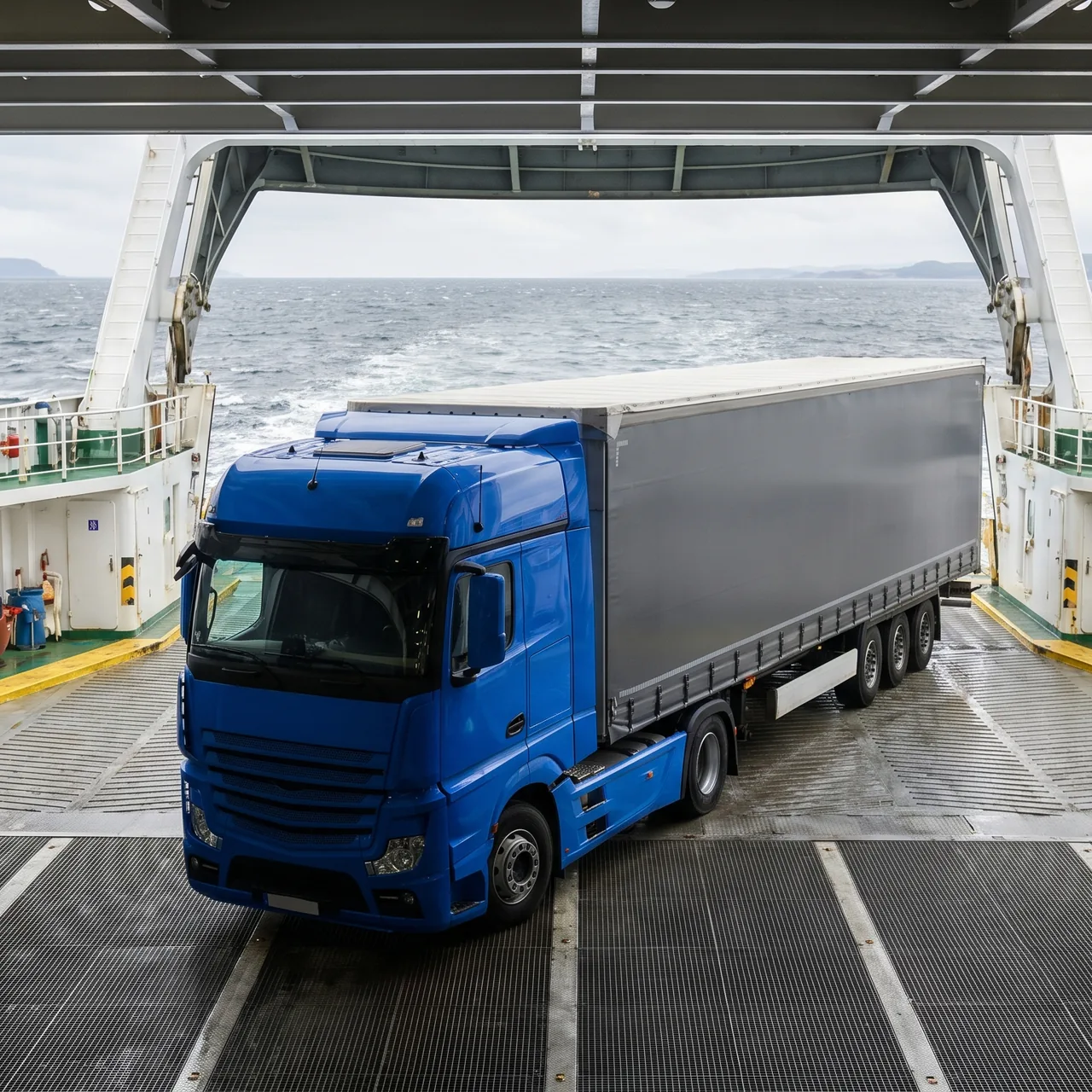
Choosing a route to Ireland is not a matter of sailing length. The land bridge gives shorter sea legs and more flexibility on timings, but inserts a third country into the middle of the trip: two crossings, two sets of controls and the need to maintain the status of the goods. A direct ferry removes the customs layer but ties the route to a sailing schedule that is thinner than on the Channel. In practice the decision depends on what matters more: flexibility of dates or simplicity of paperwork. We develop the comparison in direct transport versus the land bridge.
Why the T2 procedure exists at all
Union goods that leave the customs territory of the Union lose their status simply by leaving it. Re-entering without any procedure they would be treated as non-Union goods and subject to duty and import tax, even though they never changed owner or were sold. The Union transit procedure solves that: the goods cross a third country under customs supervision and keep their status on return to Union territory. The transit mechanism itself is described in the T1 procedure, and the differences between documents in T1 and T2 transit documents.
When proof of status is enough
Not every crossing of the United Kingdom requires opening a transit. An alternative is proving the Union status of the goods with the document the rules provide for, which in some arrangements is simpler and faster. The choice depends on the nature of the movement, on who acts as declarant and on the requirements of the office at the port of arrival. We take the question apart in the T2L document and Union status. The path is chosen before loading, because changing the concept at the port ends in waiting time.
Notifications on the Irish and British sides
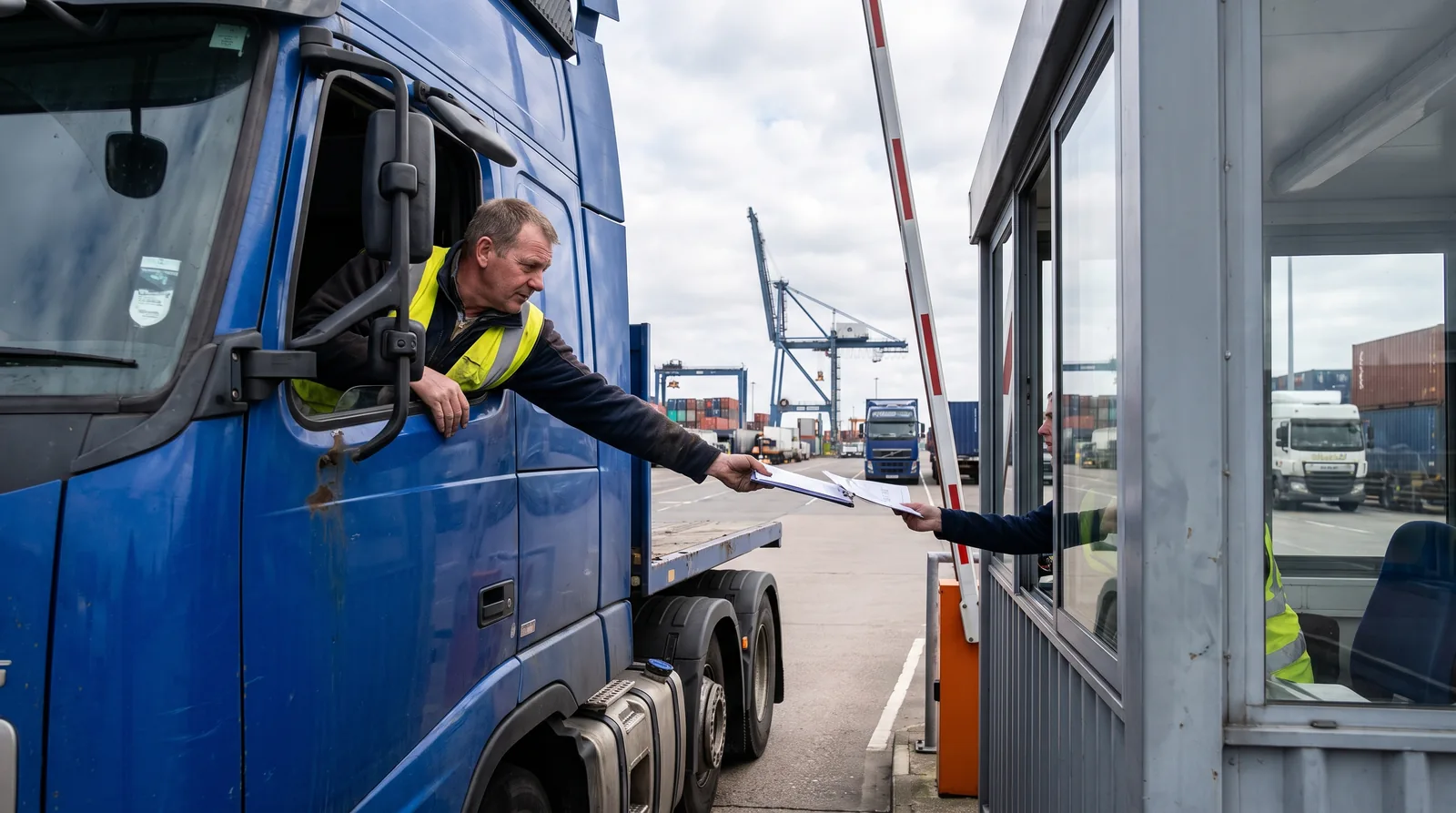
The land bridge also means two sets of movement notifications. On the British side a vehicle entering and leaving must have its movement declared in GVMS, described in the GVMS system. On the Irish side a separate pre-boarding procedure applies before the vehicle checks in for a sailing. A missing notification is one of the most common reasons cargo is held, covered in cargo stuck in Ireland. The formalities are predictable provided somebody attends to them in advance.
What we carry to Ireland
We serve the Irish lane with groupage from a single pallet and with full loads. Building materials, interior fit-out, furniture, industrial components, trade goods for distribution and hospitality equipment all travel there. The largest concentrations of consignees sit around Dublin and Cork, but we also serve the west of the island. We describe the regions in transport to Dublin and Cork and in transport to Limerick and western Ireland.
The return leg and backhaul
A route to Ireland makes economic sense when the vehicle comes back loaded. So we plan the return load alongside the delivery rather than after unloading. On a return through the United Kingdom the same status logic applies, only in reverse. Details in returns from Ireland to Poland. Bear in mind that Northern Ireland runs its own regime, different from the Republic: we describe it in Northern Ireland versus the Republic.
Sources
- Revenue: customs procedures and notifications in Ireland
- European Commission: taxation and customs union, transit procedures
Planning a shipment to Ireland? Send the address, pallet count and date through the quote form and we will match the route and the document path. The whole lane is described on the transport to Ireland page. This text is informational and does not constitute legal advice.