A T2L is proof of the Union status of goods: confirmation they are in free circulation in the EU and pay no duty on return. It is useful when Union goods leave the customs territory without changing status, classically on the Ireland land bridge. Since March 2024 proofs are issued electronically in the PoUS system, with an MRN and 90-day validity.
When is a T2L genuinely needed?
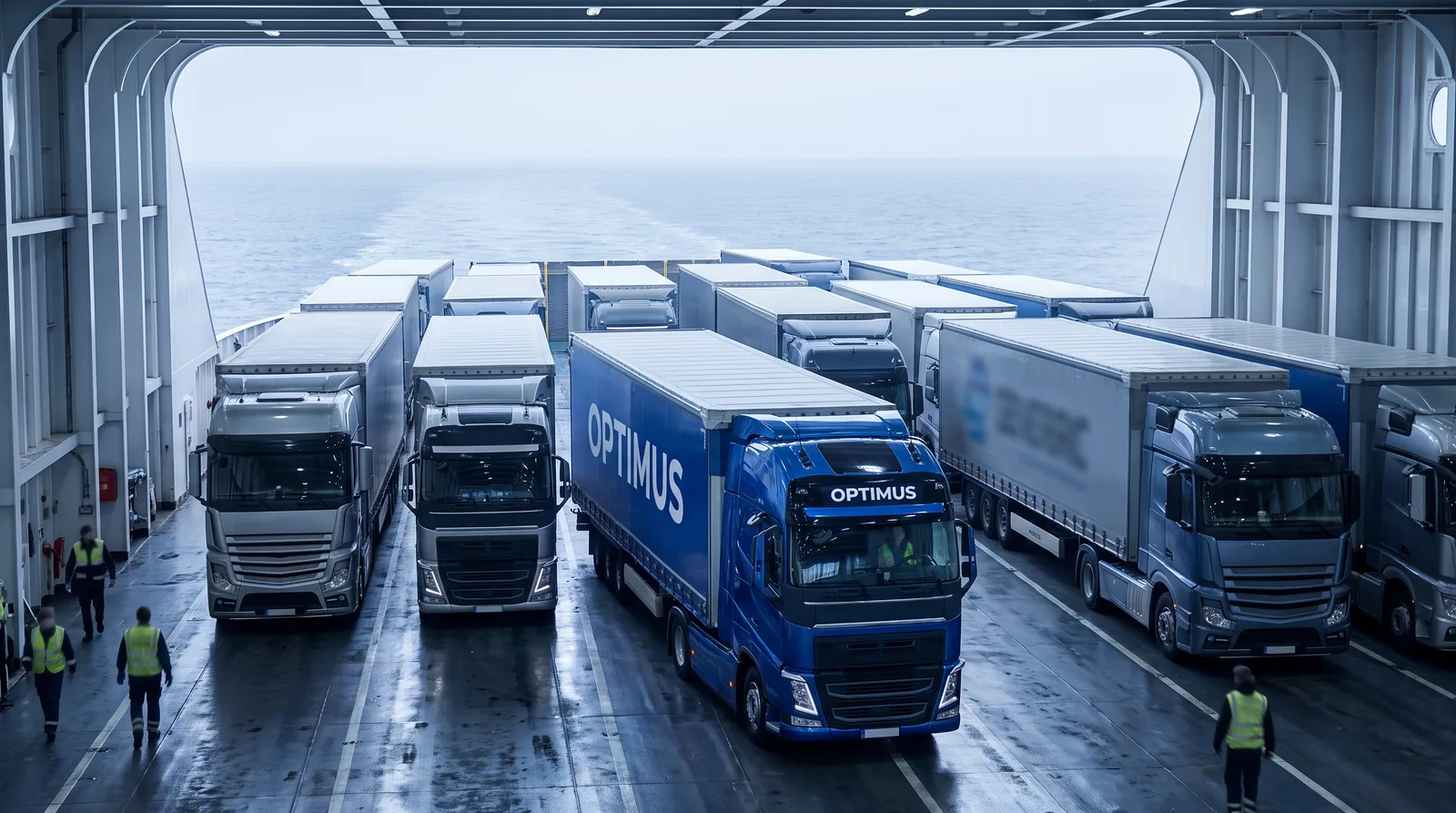
The most frequent case on our routes is the land bridge: goods travel from Poland to the Republic of Ireland through Great Britain. The carriage starts and ends in the EU, but along the way the goods physically sit in a third country. To avoid import clearance on arrival in Ireland you must show the goods kept their status: either through T2 transit or precisely with a T2L or T2LF status proof, as described in our article on transport to Ireland via the land bridge. The second typical case is sea carriage outside a regular shipping service, and movements through other third countries. T2LF concerns the EU's special fiscal territories, for example the Canary Islands.
How does the electronic PoUS system work?
- Before the goods leave, you apply for a T2L attestation in the EU Customs Trader Portal, directly or through a customs agency.
- The PoUS system registers the proof and assigns an MRN, which you use en route.
- When the goods re-enter the EU customs territory, for example in the port of Dublin, you present the MRN and the administration confirms the status in the system.
- The proof is valid, as a rule, for 90 days from registration, so the movement must close within that window.
Paper T2L forms stopped being accepted when the system went live in March 2024; fallback exceptions are defined by the customs administration.
T2L or T2 transit: which for the land bridge?
Both tools solve the same problem with a different mechanism. T2 transit is a procedure: the goods move under customs supervision with a guarantee, and the offices of departure and destination close the operation; details in our piece on T1 and T2 transit documents. A T2L status proof creates no procedure: the goods formally leave the customs territory and return, and the document serves only to demonstrate status on re-entry. In practice, regular movements through GB more often run on T2 transit, because it closes procedurally and meshes with the crossing systems, while T2L can be simpler for one-off movements and sea cargo. The choice is best left to whoever runs the clearances for the whole route.
What does it mean in carriage practice?
For the driver and the schedule the difference is small: the documents are prepared before departure, and the declaration and proof numbers must be tied to the crossing booking, on the British side to GVMS, on the Irish side to the PBN. A missing status proof surfaces only in the destination port, and then the goods face import clearance in Ireland with charges that could have been avoided. That is why on land bridge orders we verify the full set of status documents at the planning stage, just like the GMR and the PBN without which cargo gets stuck in Ireland.
And what about Northern Ireland?
The route to Belfast follows different rules from the land bridge to Dublin. Northern Ireland remains under the special regime of the Windsor Framework: separate EU-UK arrangements apply there for Union goods, and a T2L proof is not the tool that settles the matter the way it does for the Republic of Ireland. In practice, movements from Poland to Northern Ireland are planned as a separate documentary variant, which we describe in our article on the differences between Northern Ireland and the Republic. If your deliveries cover both markets, split them in planning from the start, because the document sets, declaration systems and control points differ even though both addresses sit on the same island.
Sources
- European Commission: the Proof of Union Status system, PoUS (accessed 17 Aug 2026)
- European Commission: launch of the central PoUS system, March 2024 (accessed 17 Aug 2026)
Shipping to Ireland through Great Britain, or by sea outside a regular line? Write via our contact form: we will pick T2 transit or a T2L proof and prepare documents for the whole route.